“All things must pass; only a void, perhaps, remains.”
— A recurring thought throughout the novel, reflecting the central theme of absence.

Sign in to track this book
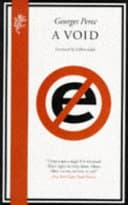
In a city missing an essential piece, a detective uncovers a conspiracy where every clue is a gap, and the letter 'e' has vanished.
The novel begins with the sudden disappearance of Anton Vowl, a young, eccentric man in a rundown Parisian apartment. His landlord, Monsieur V., finds Vowl's room in disarray, with a half-finished manuscript on his desk. This manuscript and a journal become the first clues. The journal entries are unusual, filled with philosophical thoughts and a growing sense of dread about a 'void' that seems to consume his mind. Anton's friends, including journalist Amaury and historian Arthur Wilburg, grow worried as weeks pass without a trace of him. The police, initially uninterested, are eventually drawn into the perplexing case by Vowl's strange writings.
Amaury, a sharp journalist, and Arthur Wilburg, a careful historian and close friend of Anton's, decide to find Anton Vowl. Amaury uses his contacts and investigative skills, while Arthur looks into Anton's past, his intellectual interests, and the odd patterns in his writings. Both become focused on a peculiar absence in Anton's journal—a consistent avoidance of a specific linguistic element. Their individual searches often lead to dead ends, but they slowly piece together a fragmented picture of Anton's final days, uncovering his increasingly isolated and obsessive behavior. They question mutual acquaintances and visit places Anton frequented, finding more questions than answers.
As Amaury and Arthur examine Anton Vowl's writings, especially his journal and the unfinished manuscript, they find a remarkable and unsettling pattern: the letter 'e' is clearly missing from all of Anton's recent texts. This discovery is a major turning point, explaining the unusual phrasing and word choices in Anton's writing and suggesting a deliberate, self-imposed rule. This immediately raises the stakes, turning the search for a missing person into a baffling intellectual puzzle. They begin to suspect that Anton's disappearance might be linked to this linguistic obsession, and that understanding the 'e'-less world he inhabited might be the key to finding him or understanding what happened to him.
The investigators now re-examine all of Anton Vowl's belongings and communications through the lens of the 'e'-less constraint. They find that Anton had corresponded with a secret society, the 'Oulipo,' which specialized in literary constraints. This connection suggests that Anton's personal project might have been part of a larger, more dangerous game. They discover cryptic messages and coded references that, when deciphered under the lipogrammatic rule, point to a hidden conspiracy involving ancient texts and a powerful organization seeking to control knowledge. The absence of 'e' is not just a stylistic quirk but a deliberate act of concealment, a way for Anton to communicate without being fully understood by those who do not share his particular insight.
As Amaury and Arthur follow the trail of 'e'-less clues, they start to uncover a shadowy, powerful group Anton had been investigating. This group, often called 'The Group,' is a clandestine organization with deep historical roots, possibly linked to ancient secret societies and esoteric knowledge. They appear to be obsessed with controlling information and suppressing certain truths, and Anton's research into a particular historical artifact or text seems to have put him directly in their path. The investigators realize that Anton's disappearance is not random but a calculated move by this group, who see Anton as a threat to their guarded secrets and influence. Their methods are ruthless, and their reach is extensive.
The clues Anton Vowl left, interpreted through the lipogrammatic constraint, lead Amaury and Arthur on a frantic pursuit across Europe. Their journey takes them from the dimly lit archives of Paris to the bustling markets of Istanbul, and then to the ancient ruins of Greece. Each location holds a piece of the puzzle, often an 'e'-less document, an obscure inscription, or a contact who speaks in riddles. They meet various eccentric characters, some helpful, some obstructive, all seemingly connected to Anton's research or 'The Group.' The chase is full of danger, as they are constantly aware that 'The Group' is also following them, trying to stop their progress and silence them before they can uncover the full truth.
Finally, after much danger and deduction, Amaury and Arthur find a hidden manuscript, a companion to Anton Vowl's initial writings. This manuscript, also written entirely without the letter 'e,' details Anton's discovery of a lost ancient text that challenges traditional historical narratives and holds immense power. It reveals that 'The Group' is desperately trying to suppress this text, as its contents could destabilize their influence and control over global knowledge. The manuscript also contains Anton's growing fears for his own safety and his certainty that he would be targeted. It becomes clear that Anton sacrificed his own life and freedom to expose this truth, using the lipogram as a shield and a key.
The story's climax sees Amaury and Arthur confronting 'The Group' at a secluded, ancient location where the original lost text is supposedly hidden. A tense standoff occurs, as 'The Group' tries to seize the manuscript and silence the investigators. In a dramatic turn, one of the protagonists, possibly Arthur, makes a significant sacrifice to ensure the manuscript's safety and its eventual exposure to the world. This sacrifice is not necessarily a physical death but a deep personal loss or a permanent change in their life, ensuring that Anton Vowl's legacy and the truth he sought to reveal are preserved. The confrontation highlights the immense power of knowledge and how far some will go to control it.
Following the confrontation, the lost ancient text that Anton Vowl dedicated his life to uncovering is finally brought to light. Its contents are revolutionary, challenging long-held historical beliefs and exposing 'The Group's' manipulations throughout centuries. The revelation sends shockwaves through academic and political circles, forcing a re-evaluation of established narratives. While 'The Group' may not be entirely dismantled, their power is significantly weakened, and their secrets are exposed to the public. Anton Vowl, though still missing, is posthumously cleared, his peculiar literary project revealed as a brilliant, if dangerous, method of communication and resistance against an oppressive force.
Even after the truth is exposed and 'The Group' is weakened, Anton Vowl himself is never truly found. His fate remains unclear, a lingering question that highlights the novel's central theme of absence. Was he killed? Is he in hiding, living a life forever limited by his linguistic project? The story leaves his ultimate whereabouts unresolved, suggesting that some voids can never be fully filled. However, his work lives on, a testament to his intellect and courage. The final pages reflect on the impact Anton's unique literary approach had on uncovering a monumental truth, and how his personal disappearance became a powerful symbol of truths often hidden in plain sight, or in plain absence.
The Protagonist/Missing Person
From an isolated intellectual, Anton transforms into a silent martyr, sacrificing his presence to reveal a monumental truth.
The Supporting/Investigator
Amaury evolves from a curious journalist into a committed truth-seeker, risking his life for a cause larger than himself.
The Supporting/Investigator
Arthur transitions from a detached scholar to an active participant in a dangerous pursuit, his intellect becoming a weapon against deception.
The Supporting/Minor
Monsieur V. serves as a catalyst, his initial observation sparking the larger investigation, then fading into the background.
The Antagonist
Initially a mysterious threat, 'The Group' is gradually exposed and ultimately weakened, though their full eradication remains uncertain.
The Mentioned/Minor
Olga's role is static, serving to provide minor background details about Anton's past.
The most prominent theme, shown by Anton Vowl's disappearance and symbolically by the absence of the letter 'e' throughout the novel. This absence is not empty but a strong presence, shaping the narrative, characters' views, and the language itself. It forces readers and characters to face what is missing and how that missing piece defines what remains. Anton's 'e'-less writing is a deliberate act of communication through omission, highlighting how what is *not* said can be as important as what is said. The lasting mystery of Anton's fate reinforces that absence can be a profound and lasting condition.
“''But what if absence, far from being a void, was a form of presence, a signal, a word made of silence?'”
The novel explores how language can be both a tool for communication and a self-made prison. The lipogrammatic constraint (the absence of 'e') is central, showing how arbitrary rules can lead to incredible creativity and hidden meanings. Anton's use of this constraint is not just an artistic exercise but a way to encode truth and resist oppression. It highlights that limitations can unlock new forms of expression and understanding, forcing a deeper engagement with words and their alternatives. The struggle to communicate without a fundamental building block of language mirrors the struggle to uncover suppressed truths.
“''Constraint is a tool, not an obstacle. It is a path to a labyrinth that might just hold the truth.'”
At its heart, the novel is a mystery driven by the search for truth and the uncovering of deep secrets. Anton Vowl's disappearance is linked to a vast conspiracy by 'The Group,' who actively suppress historical knowledge to maintain power. The narrative explores how far individuals will go to expose truth and the dangers of challenging established narratives. It examines historical revisionism and the idea that much of what we accept as fact might be carefully constructed fiction, maintained through censorship and control. The lipogram serves as a metaphor for hidden truths that require a different way of seeing or reading to be understood.
“''History is not what happened. It is what is told, and who controls the telling.'”
Anton Vowl's decision to live and write without the letter 'e' is a deep act of self-definition. It raises questions about how much our identity is shaped by our choices and the limits we place on ourselves. His linguistic constraint becomes an integral part of his being, influencing his thoughts, his interactions, and ultimately, his fate. The novel explores whether such extreme self-limitation leads to freedom or further isolation, and how an individual's unique 'voice' can be both amplified and obscured by their chosen boundaries. Anton's 'e'-less existence is a radical embrace of a unique identity.
“''To cast off a common thing is to become uncommon, to find a new way of being, a new way of seeing.'”
The literary constraint of deliberately omitting a common letter, specifically 'e'.
The lipogram is the central plot device, shaping the entire narrative. The novel itself is written entirely without the letter 'e', mirroring Anton Vowl's own linguistic obsession. This constraint functions as a puzzle for the reader, a key for the investigators, and a method of encoding for Anton. It creates unique stylistic challenges and forces the author and characters to invent ingenious circumlocutions, making the absence itself a powerful narrative element. It's not just a stylistic quirk but an integral part of the plot, revealing Anton's state of mind and the nature of the conspiracy.
Anton Vowl's disappearance serves as the inciting incident and primary narrative hook.
The classic mystery trope of a missing person drives the initial plot. Anton Vowl's sudden vanishing creates urgency and provides the motivation for Amaury and Arthur's investigation. This device allows for the gradual unfolding of clues, red herrings, and the introduction of various characters and locations. The mystery of his whereabouts is not just about finding him, but about understanding the deeper reasons behind his absence, leading to the larger conspiracy. It transforms a personal quest into an intellectual and existential one.
Anton Vowl's journal provides fragmented, 'e'-less clues to his research and state of mind.
Anton Vowl's journal entries are a crucial plot device, offering direct access to his thoughts and discoveries, albeit in a highly constrained and cryptic form. These entries are the first clues to the lipogrammatic constraint and the unfolding conspiracy. They build suspense, reveal Anton's intellectual journey, and hint at the dangers he faced. The fragmentary nature of the entries forces the investigators and the reader to actively participate in piecing together the narrative, making the process of deduction a central part of the reading experience.
A shadowy organization ('The Group') acts as the antagonist, driving the conflict.
The existence of 'The Group' provides the overarching conflict and antagonist for the story. This secret society, obsessed with controlling knowledge, gives Anton Vowl's disappearance a sinister and far-reaching implication. It elevates the personal mystery into a grander struggle against systemic oppression and historical manipulation. This device allows for elements of espionage, pursuit, and high stakes, as Amaury and Arthur uncover the vast reach and ruthless methods of this hidden power, making the investigation dangerous and compelling.
“All things must pass; only a void, perhaps, remains.”
— A recurring thought throughout the novel, reflecting the central theme of absence.
“It is, as if, for a long, long time, I had had within my mind a word, a sound, a vision of what I wanted to say, of what I wanted to do, of what I wanted to know, and had found myself unable to do so.”
— The protagonist, Anton Vowl, struggles with an unnameable affliction.
“A void had grown, a void had spread, a void had swallowed up all that was vital.”
— Describing the pervasive sense of loss that affects people and things.
“His world, his ways, his words, his works, his whims, his will, had all, without warning, for no good reason, vanished.”
— Highlighting the sudden and inexplicable disappearance of a key element from the protagonist's life.
“For a long, long time, I had had a word, a sound, a vision of what I wanted to say, of what I wanted to do, of what I wanted to know, and had found myself unable to do so.”
— Anton Vowl's internal struggle with the missing letter.
“It was as if a part of his mind, a part of his soul, a part of his very being, had simply, without prior warning, ceased to exist.”
— The profound impact of the absence on Anton Vowl's identity.
“A void, a hollow, a blank, a gaping chasm, had opened up in his world.”
— Metaphorical description of the emptiness that permeates the narrative.
“All sorts of things, all sorts of words, all sorts of thoughts, all sorts of forms, had, without his knowing, simply gone.”
— The insidious nature of the absence, affecting various aspects of life.
“What was it that was missing? What was it that had vanished? What was it that was no longer? What was it that was no more?”
— The central mystery driving the plot, the search for the missing element.
“A world without it was a world diminished, a world impoverished, a world incomplete.”
— Reflecting on the impact of the missing letter on the richness of language and experience.
“His mind, his mouth, his hand, his thoughts, his words, his works, all found him wanting.”
— Anton Vowl's struggles to articulate and create without the crucial element.
“A void, a blank, a nothing, a nullity, had taken root, had grown, had flourished.”
— The personification of the void as a growing, active force.
“All that was good, all that was vital, all that was human, was slowly, but surely, being drawn into that vast, dark void.”
— The encroaching nature of the void, threatening to consume everything.
Ready to see how well you understood this book? Take our interactive quiz with 10 questions.
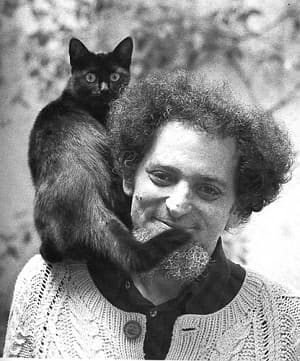
Georges Perec was a French novelist, filmmaker, documentalist, and essayist. He was a member of the Oulipo group. His father died as a soldier early in the Second World War and his mother was killed in the Holocaust. Many of his works deal with absence, loss, and identity, often through word play.