“I have always depended on the kindness of strangers.”
— Blanche's final line as she is led away to a mental institution.


Tennessee Williams (2014)
Genre
Fiction
Reading Time
120 min
Key Themes
See below
Sign in to track this book
In New Orleans, a Southern belle's attempt at maintaining her refined image clashes with her brother-in-law's rough nature, leading to her mental collapse.
Blanche DuBois, a former high school English teacher from Laurel, Mississippi, arrives by streetcar at her sister Stella Kowalski's small, two-room apartment in Elysian Fields, New Orleans. She dislikes the poverty and the working-class neighborhood. Blanche, still holding onto a faded gentility, says she is on leave from teaching due to her nerves and that she lost Belle Reve, their family plantation, because of her 'nerves.' Stella is happy to see her but is cautious of Blanche's critical attitude and clear fragility. Stanley Kowalski, Stella's husband, comes in and immediately senses Blanche's condescension and her attempts to hide the truth about her past. This creates immediate tension between them.
During a poker night at the Kowalski apartment, Blanche's presence and her use of the bathroom disrupt the men's game. She flirts with Mitch, one of Stanley's poker friends, and plays music, further annoying Stanley. Drunk and frustrated, Stanley becomes enraged, smashing the radio and hitting Stella, who is pregnant. Blanche is shocked and tries to comfort Stella. Stella runs upstairs to her neighbor Eunice's apartment. After Stanley's friends hold him back, he cries out for Stella from the courtyard. Stella, despite the violence, returns to him, showing the strong, primal bond they share, which bewilders and disgusts Blanche.
The morning after the poker night, Blanche, still upset by Stanley's violence, tries to convince Stella to leave him. She describes Stanley as ape-like and crude, appealing to Stella's former upper-class sensibilities and urging her to escape this degrading life. Blanche argues that Stella is wasting her life with such a man and that they could start over together. However, Stella, who loves Stanley deeply and is content with her life, ignores Blanche's pleas, explaining that she finds Stanley's raw passion irresistible. Blanche cannot understand Stella's attachment, which shows their basic differences in values and desires.
Blanche starts a relationship with Mitch, Stanley's friend, who is more sensitive and polite than the other men. She sees him as a possible escape from her difficult situation and a chance for a respectable future. Blanche carefully acts demure and innocent, avoiding bright light and refusing to reveal her true age or past. She tells Mitch she wants 'magic' instead of reality. Mitch, lonely and dedicated to his sick mother, is drawn to Blanche's perceived delicacy and vulnerability. Their courtship offers Blanche some hope, but her made-up stories about her past create an unstable foundation for their relationship.
Stanley, increasingly suspicious of Blanche's claims and her superior attitude, begins to investigate her past in Laurel. He learns from a traveling salesman that Blanche was fired from her teaching job for an affair with a seventeen-year-old student. He also discovers she stayed at a disreputable hotel called the Flamingo, known for prostitution, and that she was essentially driven out of town. Stanley enjoys uncovering these secrets, seeing them as ways to strip Blanche of her pretense and establish his dominance. He plans to tell everything to Mitch and Stella, destroying Blanche's last hopes.
During Blanche's birthday dinner, Stanley gives her a bus ticket back to Laurel as a 'present,' openly mocking her. He then tells Mitch all the details of her past, including her firing from the school and her activities at the Flamingo Hotel. Mitch, devastated and feeling tricked, confronts Blanche. He asks her if she ever loved him, and she admits she found him 'common.' He then tries to force himself on her, but she screams, and he leaves, shattering Blanche's hopes for marriage and a stable future. The cruel exposure of her past leaves Blanche utterly broken and alone.
Stella goes into labor and is taken to the hospital. Blanche remains alone in the apartment, her mental state quickly worsening. She drinks heavily, dresses in her old fine clothes, and engages in growing fantasies, imagining a wealthy suitor from Dallas coming to rescue her. She tries to call Mitch, but he refuses to speak to her. Blanche's hold on reality loosens further as she projects her desires onto the world around her, creating an illusion of grandeur and escape. The empty apartment becomes a stage for her breaking mind, as she desperately tries to maintain her delusions in the face of overwhelming despair.
Stanley returns from the hospital after Stella gives birth to their son. He finds Blanche dressed in a torn evening gown, talking to herself and creating fantasies about an imaginary admirer. Stanley, feeling triumphant and wanting to completely dominate Blanche, confronts her. He dismisses her fantasies and asserts his raw, physical power. Despite Blanche's frantic pleas and attempts to defend herself with a broken bottle, Stanley overpowers her and rapes her. This brutal act is the ultimate violation, destroying Blanche's already fragile mind and her ability to tell the difference between reality and illusion.
Days later, Blanche is completely disconnected from reality, believing she is going on a cruise with a rich oil magnate. Stella, though bothered by Blanche's claims of Stanley's assault, ultimately chooses to believe Stanley's denial, unable to accept the truth alongside her love for him and her family's stability. A doctor and a matron arrive to take Blanche to a mental institution. Blanche resists, terrified, but is eventually led away. She says her famous line, 'I have always depended on the kindness of strangers,' as she is escorted out, defeated and lost in her delusions. Stella weeps, but ultimately returns to Stanley's embrace, cementing Blanche's tragic fate.
The Protagonist
Blanche's arc is one of tragic decline, as her carefully constructed illusions are systematically stripped away, leading to her complete mental breakdown.
The Antagonist
Stanley remains largely static, his raw, animalistic nature asserting dominance and ultimately triumphing over Blanche's fragile world.
The Supporting
Stella experiences a moral dilemma, ultimately choosing the primal security of her life with Stanley over her sister's fragile claims and aristocratic past.
The Supporting
Mitch's arc shows his transformation from a hopeful suitor to a disillusioned and angry man after discovering Blanche's lies.
The Supporting
Eunice remains a static, grounding presence, observing and participating in the neighborhood's dramas with a blend of resignation and resilience.
The Mentioned
Static, serving as part of the background.
The Supporting
Static, serving as an agent of Blanche's tragic fate.
The Mentioned
Static, serving as a catalyst for Blanche's fleeting flirtations.
This is the main theme, shown through Blanche's difficulty in facing harsh truths. Blanche creates detailed fantasies about her past, her age, and her social status, using them as a shield against the difficult realities of her life. She constantly prefers 'magic' over reality, from her avoidance of bright lights to her made-up stories of wealthy admirers. Stanley, in contrast, represents harsh reality, systematically removing Blanche's illusions, which ends with his revelation of her past and ultimately the rape. Stella is in the middle, at first trying to protect Blanche's fantasies but eventually choosing the tangible, though brutal, reality of her life with Stanley. Blanche's final descent into madness is a complete immersion into an unshakeable fantasy world, making her unable to function in reality.
“I don't want realism. I want magic! [Mitch laughs] Yes, yes, magic! I try to give that to people. I misrepresent things to them. I don't tell truth, I tell what ought to be truth. And if that is sinful, then let me be damned for it!”
The play clearly shows the conflict between the decaying aristocratic values of the Old South, represented by Blanche, and the raw, strong energy of the new, working-class America, embodied by Stanley. Blanche holds onto a past of gentility, refinement, and social hierarchy, symbolized by Belle Reve and her 'delicate' nature. Stanley, a Polish-American, represents industrial, diverse America, valuing strength, directness, and physical ability over inherited status. His victory over Blanche symbolizes the triumph of this new, egalitarian, and often brutal, American spirit over the fading Southern aristocracy. Stella's choice to stay with Stanley means she abandons her Southern heritage for this new, passionate, and visceral life.
“What I am is one hundred percent American, born and raised in the greatest country on earth and proud as hell of it, so don't ever call me a Polack.”
Desire, both literal and figurative, drives much of the play's action and character motivations. The streetcar named 'Desire' brings Blanche to Elysian Fields, a symbolic journey. Blanche's past promiscuity, driven by a desperate need for love and escape from loneliness after her husband's death, shows the destructive power of uncontrolled desire. Stella's intense, almost animalistic, physical attraction to Stanley is central to their relationship, overcoming his violence and Blanche's pleas. Stanley, too, is driven by raw sexual energy and a desire for dominance. The play explores how desire can be a powerful, life-affirming force (for Stella and Stanley) and a destructive, self-defeating one (for Blanche), ultimately leading to her downfall through sexual violence.
“There are things that happen between a man and a woman in the dark — that make everything else seem — unimportant.”
The play explores various forms of cruelty, from emotional manipulation to physical and sexual violence. Stanley's treatment of Blanche is consistently cruel, as he enjoys exposing her weaknesses and destroying her illusions. His physical violence towards Stella during the poker game is a shocking display of his brutal nature, yet Stella's immediate return to him highlights the complex and often troubling dynamics of their relationship. The ultimate act of cruelty is Stanley's rape of Blanche, which is the final blow to her fragile sanity. This theme also includes the cruelty of society's judgment and rejection, which forced Blanche out of Laurel and adds to her despair. The play suggests that cruelty can come from insecurity, jealousy, and a desire for dominance.
“You healthy Polack, without a nerve in your body, of course you don't know what anxiety feels like!”
Blanche's character is deeply marked by loneliness and isolation. Having lost Belle Reve, her husband, her reputation, and her job, she arrives in New Orleans completely alone and desperate for connection. Her flirtations with Mitch and her reliance on fantasy are attempts to fight this deep-seated loneliness. Even with Stella, Blanche feels isolated by her sister's inability to understand her pain or her choices. Stanley's actions further isolate her, cutting her off from potential support and connection. Ultimately, Blanche's final descent into madness is a complete isolation from reality and from human connection, leaving her utterly alone in her internal world. The play suggests that deep loneliness can drive individuals to desperate and self-destructive behaviors.
“I have always depended on the kindness of strangers.”
Character and place names carry significant symbolic weight.
The names in the play are highly symbolic. 'Blanche DuBois' translates to 'white woods,' suggesting purity and a connection to nature, but 'Blanche' also implies 'bleached' or faded, reflecting her lost innocence and decaying beauty. 'Belle Reve' (beautiful dream) is the name of their lost plantation, symbolizing the fading Southern aristocracy and Blanche's unattainable past. The streetcars 'Desire' and 'Cemeteries' that bring Blanche to Elysian Fields (the Greek mythological paradise for heroes) symbolize her journey from desire, through death (of her past and sanity), to a supposed paradise that turns out to be hellish. These names enrich the play's themes and foreshadow character fates.
Light and darkness reveal character and theme.
Light imagery is crucial, particularly in revealing Blanche's character and her relationship with reality. Blanche consistently avoids bright light, preferring shadows, candles, or dimness. This aversion symbolizes her desire to hide her age, her past, and her fading beauty. She wants to live in 'magic' rather than the harsh glare of truth. Stanley, by contrast, thrives in the harsh, unfiltered light, using it to expose Blanche's lies (e.g., pulling the paper lantern off the light bulb). The manipulation of light and shadow visually represents the conflict between fantasy and reality and Blanche's desperate attempts to conceal her true self.
Music, particularly the 'Varsouviana Polka,' signals Blanche's mental state and past trauma.
Music and sound effects are integral to conveying atmosphere and character psychology. The 'blue piano' music often plays during intense or melancholic moments, representing the spirit of New Orleans and Blanche's internal turmoil. Most significantly, the 'Varsouviana Polka' is heard only by Blanche, growing louder and more frantic when she is under stress or recalling her traumatic past, specifically the suicide of her young husband, Allan. This auditory hallucination serves as a powerful objective correlative for Blanche's deteriorating mental state and her inability to escape her past traumas, acting as a constant reminder of her guilt and grief.
Characters are often described with animalistic traits, highlighting primal desires.
Animal imagery is frequently used, especially in relation to Stanley and Blanche's perception of him. Blanche often refers to Stanley as an 'ape,' a 'brute,' or a 'sub-human creature,' emphasizing his raw, instinctual, and aggressive masculinity. This dehumanization reflects Blanche's class prejudice and her fear of his untamed nature. Conversely, Stanley's animalistic qualities—his roaring, his physical dominance, his primal cries for Stella—are what attract Stella. This imagery underscores the theme of raw desire and the clash between refined society and untamed instinct, ultimately suggesting that humanity's more primal urges are powerful and inescapable.
“I have always depended on the kindness of strangers.”
— Blanche's final line as she is led away to a mental institution.
“Whoever you are—I have always depended on the kindness of strangers.”
— Blanche's final line, slightly more complete, as she is taken away.
“Stella for Star!”
— Stanley's passionate cry for Stella after their fight.
“You healthy Polack, without a nerve in your body, of course you don't know what anxiety feels like!”
— Blanche's bitter retort to Stanley.
“I don't want realism. I want magic!”
— Blanche expressing her desire to escape harsh realities.
“There are no papers, no papers! I've lost my house, my home, my everything!”
— Blanche's frantic outburst about losing Belle Reve.
“I pulled you down off them columns and how you loved it, having them colored lights going!”
— Stanley reminding Stella of their passionate, earthy love.
“Some things are not excusable. A man like that is not to be trusted.”
— Blanche trying to warn Stella about Stanley's true nature.
“He acts like an animal, has an animal's habits! Eats like one, moves like one, talks like one!”
— Blanche describing Stanley to Stella, trying to persuade her.
“You're not clean enough to bring in the house with my mother.”
— Mitch's cruel rejection of Blanche after learning about her past.
“I couldn't believe her story and go on living with Stanley.”
— Stella's reason for choosing Stanley over Blanche's truth.
“Oh, you can't describe someone you're in love with!”
— Stella's response when Blanche asks her to describe Stanley.
“It's only a paper moon, Sailing over a cardboard sea—But it wouldn't be make-believe If you believed in me!”
— Blanche singing a song that reflects her desire for illusion and acceptance.
“What I am is one hundred percent American, born and raised in the greatest country on earth and proud as hell of it, so don't ever call me a Polack.”
— Stanley's angry assertion of his identity to Blanche.
Ready to see how well you understood this book? Take our interactive quiz with 10 questions.
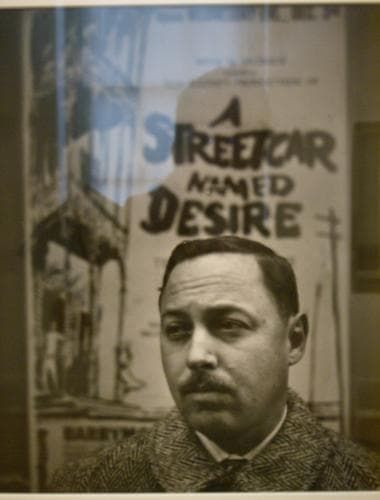
Thomas Lanier Williams III, known by his pen name Tennessee Williams, was an American playwright and screenwriter. Along with contemporaries Eugene O'Neill and Arthur Miller, he is considered among the three foremost playwrights of 20th-century American drama.

Ashley Antoinette
4.6

Mark McDonald
4.4
Luo Guanzhong
4.4

Mia McKenzie
4.3

Dorothy Parker
4.3

Joaquim Maria Machado de Assis
4.3

James Thurber
4.2

Terry Kay
4.2