BookBrief
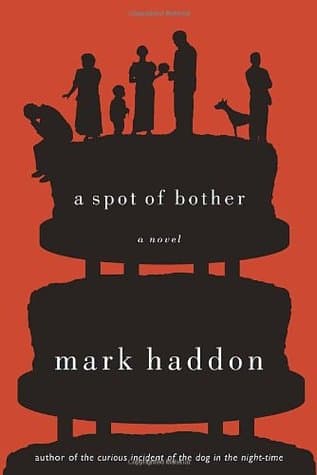
A Spot of Bother cover
Archivist's Choice

A Spot of Bother

Mark Haddon (2006)

Genre

Fiction

Reading Time

450 min

Key Themes

See below

Track Your Reading

Sign in to track this book

As his family falls apart around a chaotic wedding, the reserved George Hall finds a suspicious spot and quietly descends into a polite madness.

Synopsis

George Hall, a reserved 61-year-old, wants to enjoy retirement, but his carefully built world starts to crumble. His daughter, Katie, announces her engagement to Ray, a man her family dislikes. Katie herself feels unsure about the marriage, while her brother Jamie tries to keep his relationship with his boyfriend, Tony, private amid the family drama. George's wife, Jean, is having an affair, adding more stress to the household. As these family secrets and conflicts grow, George finds a suspicious 'spot' on his hip, which he becomes convinced is cancerous. This perceived illness, along with the growing family chaos, sends George into a quiet mental breakdown. The story follows the family's attempts to navigate Katie's chaotic wedding day, George's increasingly strange behavior, and their eventual confrontation and reconciliation. George ultimately seeks professional help, and the family slowly begins to heal, finding a new, imperfect understanding of each other.
Reading time
450 min
Difficulty
Medium
Pacing
Moderate
Mood
Darkly Humorous, Anxious, Wry, Melancholy
✓ Read this if...
You enjoy dark comedy, character-driven stories about dysfunctional families, and explorations of mental health with a touch of British wit.
✗ Skip this if...
You prefer fast-paced plots, clear-cut resolutions, or stories without themes of anxiety and marital infidelity.

Plot Summary

The Spot on the Hip

George Hall, a 61-year-old retired heating engineer, is enjoying a quiet life in Nottingham when he finds a red spot on his hip. Convinced it is cancerous, he visits Dr. Malcolm, who says it is just eczema. Unconvinced, George obsesses over the spot, Googling symptoms and self-diagnosing fatal diseases. This discovery starts his growing anxiety and mental breakdown. He hides his fears from his wife, Jean, and children, Katie and Jamie, believing he must keep his impending doom a secret. This further isolates him and fuels his paranoia. The spot becomes a real sign of his underlying worries about aging and death.

Katie's Wedding Announcement

George's daughter, Katie, an impulsive woman, announces she will remarry Ray, a man her family finds unsuitable. Katie's brother, Jamie, especially dislikes Ray, describing his hands as 'strangler's hands.' George, already worried about his health, finds himself caught between the family's disapproval and Katie's decision. The upcoming wedding becomes a major source of stress and conflict, taking attention away from George's silent struggles and showing the family's problems. Katie herself feels unsure about Ray, moving between affection and doubt, which further complicates family relations.

Jean's Affair

Unknown to George, his wife Jean is having a long-term affair with David, George's former colleague. Jean finds comfort and excitement in this relationship, feeling neglected by George's emotional distance. Her affair contrasts with George's internal struggles, revealing the hidden lives and emotional gaps in their marriage. Jean's focus on David and the wedding preparations means she mostly misses George's growing mental health crisis, further emphasizing his isolation. The affair adds another layer of complexity to the family's already strained relationships, creating a web of secrets and unspoken desires.

Jamie's Secret

Jamie, George and Jean's son, lives an orderly life with his partner, Tony. However, he struggles with his family's unspoken expectations and his inability to fully include Tony in his family life, especially for Katie's wedding. Jamie's internal conflict and his failure to invite Tony to the wedding create a rift in his relationship, adding to the general family discord. His desire for his family's approval clashes with his true self, causing significant personal stress. Jamie's efforts to keep up appearances contribute to the overall theme of hidden truths and suppressed emotions within the Hall family.

Escalating Paranoia

George's initial health anxiety quickly turns into full paranoia. He begins to suspect his family, especially Jean, of plotting against him. He believes they are trying to poison him, watching his movements, and attempting to commit him to a mental hospital. These delusions come from his misinterpretations of everyday events and conversations. He starts hiding food, checking locks repeatedly, and having vivid hallucinations. His once-orderly world becomes a terrifying place of imagined threats, pushing him further into isolation and making communication with his family almost impossible. His behavior becomes increasingly erratic and frightening.

The Wedding Day Chaos

Katie's wedding day is chaotic, marked by underlying tensions and open conflicts. George's mental state worsens significantly, ending in a public breakdown during the ceremony. He struggles to tell reality from his delusions, leading to strange and embarrassing behavior. The family's attempts to manage him only make his paranoia worse. At the same time, Jean's affair with David is almost exposed, and Jamie's relationship with Tony faces a crisis. The wedding, meant to be a happy occasion, instead becomes a test for the family's long-simmering issues, with George's growing madness at its center.

The Confrontation and the Drive

After his breakdown at the wedding, George's family tries to help, but his paranoia makes him resist. He believes they are trying to harm him, leading to a desperate escape in his car. He drives aimlessly, experiencing vivid hallucinations and becoming more detached from reality. This drive shows his flight from his perceived persecutors and his spiraling mental state. During this time, he deals with broken memories and distorted perceptions, further highlighting his deep confusion and fear. His family, now fully aware of how serious his condition is, sets out to find him, fearing for his safety.

Reunion and Realizations

George is eventually found by his family, disoriented and distressed. The reunion is full of emotion, as the family deals with the shock and sadness of George's condition. For the first time, they truly face the reality of his mental illness, moving past their own personal dramas to focus on his well-being. This moment marks a turning point, as the family begins to communicate more openly, though awkwardly, about their fears and observations. The immediate crisis of finding George forces them to acknowledge the depth of his suffering and its impact on all of them.

Seeking Help

The family takes George to see a psychiatrist, Dr. Choudhury, who diagnoses him with depressive psychosis. This diagnosis provides a way to understand George's erratic behavior, offering relief and a path forward for the family. George begins medication and therapy. Seeking professional help forces the family to confront their own denial and the ways in which George's illness was overlooked. It also shows the importance of mental health awareness and the complexities of supporting a loved one through such a crisis.

Slow Recovery and Reconciliation

With medication, George's delusions begin to fade, and he slowly starts to grasp reality again. The recovery process is gradual and difficult, but it allows for tentative steps towards family reconciliation. Jean and George begin to address their unspoken marital issues, Katie finds some clarity regarding Ray, and Jamie makes peace with his choices. While not a complete return to normal, there is a sense of hope and a new, fragile understanding among the family members. George's illness, though devastating, ultimately forces them to confront their own lives and relationships.

Principal Figures

George Hall

The Protagonist

George descends from a state of controlled, if emotionally distant, contentment into profound mental illness, only to slowly begin the arduous journey back to a more grounded, albeit changed, reality.

Jean Hall

The Supporting

Jean moves from a state of quiet dissatisfaction and secret infidelity to confronting the reality of George's illness and beginning to address the deep-seated issues in their marriage.

Katie Hall

The Supporting

Katie navigates the complexities of her second marriage and her family's disapproval, eventually finding a more grounded understanding of her own desires and the needs of her family.

Jamie Hall

The Supporting

Jamie confronts his own insecurities and the expectations placed upon him, learning to prioritize his authentic self and his relationship with Tony over family approval.

Ray

The Supporting

Ray remains largely consistent as an outsider figure, serving as a catalyst for family conflict rather than undergoing significant personal change.

Tony

The Supporting

Tony remains a consistent anchor for Jamie, serving as a catalyst for Jamie's eventual embrace of his true self.

David

The Supporting

David remains largely a consistent, supportive figure for Jean, facilitating her emotional journey rather than undergoing significant personal change.

Jacob

The Supporting

Jacob remains a largely static character, serving as a focal point for the adults' care and concerns.

Themes & Insights

The Fragility of the Mind and Mental Illness

The novel explores the sudden and devastating onset of mental illness, specifically depressive psychosis, through George Hall's experience. It details his descent from mild health anxiety to full paranoia and delusions, showing how quickly one's perception of reality can shatter. The theme highlights the isolation of mental illness, as George struggles to explain his fears and his family initially dismisses his symptoms. It also touches on societal discomfort and lack of understanding around mental health, as the family struggles with how to help George and the stigma of his condition. For example, George's growing paranoia about his family poisoning him (Scene 5) clearly shows his fractured reality.

The secret of contentment, George felt, lay in ignoring many things completely.

Narrator about George

The Dynamics and Dysfunctions of Family Life

The Hall family is a small example of modern family problems, marked by unspoken resentments, hidden secrets, and poor communication. Each member deals with their own issues: George's mental breakdown, Jean's affair, Katie's uncertainty about her marriage, and Jamie's struggle with his identity. The upcoming wedding acts as a pressure cooker, bringing these simmering tensions to a head. The novel shows how families, despite their love, can accidentally contribute to each other's suffering through emotional distance and an inability to truly see and support one another. The chaotic wedding day (Scene 6) is a prime example of these dynamics at their peak.

Her family is not pleased – as her brother Jamie observes, Ray has 'strangler’s hands.'

Narrator

Secrets and Unspoken Truths

A main theme is the web of secrets each character keeps, both from each other and sometimes from themselves. George hides his growing fears and delusions, Jean keeps her affair with David a secret, and Jamie conceals the full extent of his relationship with Tony from his parents. These unspoken truths create emotional distance and lead to misunderstandings and isolation. The novel suggests that while secrets might offer temporary relief or control, they ultimately cause more pain and prevent real connection. George's initial decision to keep his 'spot' a secret (Scene 1) starts a chain of events rooted in concealment.

He does not understand the modern obsession with talking about everything.

Narrator about George

The Search for Identity and Belonging

Several characters struggle with their sense of self and where they fit within the family and society. Jamie struggles to balance his gay identity with his family's traditional expectations, leading him to hide Tony. Katie grapples with her choice of partner and her place as a mother and daughter. Even George, in his mental breakdown, loses his sense of who he is. The novel explores how individuals try to define themselves against family dynamics, societal norms, and personal desires, often leading to internal conflict and a feeling of being an outsider, even within one's own family. Jamie's struggle to invite Tony to the wedding (Scene 4) shows this search for belonging.

And the tidy and pleasant life Jamie has created crumbles when he fails to invite his lover, Tony, to the dreaded nuptials.

Narrator

Plot Devices & Literary Techniques

The Unreliable Narrator (George's Perspective)

George's deteriorating mental state distorts his perception of reality, making his account unreliable.

As George Hall descends into depressive psychosis, his perspective becomes increasingly unreliable. The narrative often shifts to reflect his paranoid thoughts and delusions, making it difficult for the reader to distinguish between reality and George's distorted perceptions. This device immerses the reader in George's subjective experience of mental illness, creating a sense of unease and empathy. It highlights the isolating nature of his condition, as his internal world becomes increasingly detached from objective reality. For example, his belief that his family is trying to poison him is presented as real from his viewpoint.

The MacGuffin (The Spot)

The seemingly innocuous 'spot' on George's hip acts as the initial trigger for his mental breakdown.

The 'spot of bother' on George's hip functions as a classic MacGuffin. While initially presented as a potential medical crisis, its actual physical significance quickly becomes secondary to its role as a catalyst for George's hypochondria and subsequent mental unraveling. The spot itself is not the true danger; rather, it is George's obsessive interpretation and the anxiety it unleashes that drives the plot. It serves as a tangible manifestation of his underlying anxieties about aging, mortality, and loss of control, allowing the deeper narrative of his mental illness and family dysfunction to unfold.

Foreshadowing (Jamie's 'Strangler's Hands' Comment)

Jamie's dismissive comment about Ray's hands subtly hints at the darker undercurrents and judgments within the family.

Jamie's offhand comment about Ray having 'strangler's hands' serves as a subtle piece of foreshadowing, not necessarily of literal violence, but of the deep-seated disapproval and judgment within the Hall family. It immediately establishes Ray as an outsider and a source of contention, setting the stage for the family conflicts that will erupt around the wedding. This detail, though seemingly minor, colors the reader's perception of Ray and highlights the family's tendency to form quick, negative judgments, contributing to the overall atmosphere of tension and unspoken criticism.

Tragicomedy

The blend of dark humor and profound sadness in depicting George's mental breakdown and family dysfunction.

The novel masterfully employs tragicomedy, juxtaposing the profound sadness and terror of George's mental breakdown with moments of dark humor arising from the absurdities of family life and social interactions. George's attempts to 'go insane politely,' his internal monologues, and the family's awkward attempts to manage him often elicit a wry chuckle, even as the gravity of his situation is undeniable. This device prevents the narrative from becoming solely bleak, allowing the reader to engage with the characters' struggles through a lens that acknowledges both the pain and the inherent ridiculousness of human experience.

Critical analysis

Notable Quotes

The worst thing about having a spot of bother is that it makes you feel like you are having a spot of bother, and then you start to wonder if you are having a spot of bother, and then you definitely are.

George's internal monologue about his anxieties.

He was a man who had always believed in order, in the predictable rhythm of things, and now the rhythm was broken, shattered into a million tiny pieces.

Describing George's reaction to the chaos unfolding in his life.

What was the point of being happy if you couldn't be happy about being happy?

Katie's reflection on her own complicated feelings.

You can't just decide to be normal. Normal is something other people decide for you.

Jamie's cynical observation about societal expectations.

The world was full of people making their own private hells, and sometimes, if you were lucky, they invited you in.

George's bleak view of human relationships.

It was amazing how much trouble a single, insignificant spot could cause.

George fixates on the spot, metaphor for his larger anxieties.

Life wasn't a narrative. It was a series of random events, loosely connected, and sometimes not connected at all.

George's philosophical musings on the nature of existence.

He felt like a character in a play he hadn't auditioned for, and he didn't know his lines.

George's sense of alienation and lack of control.

Love was not a feeling; it was a decision. A daily, hourly, minute-by-minute decision.

George's wife, Mary, reflects on her long marriage.

The past was a foreign country; they did things differently there. But the future was an even stranger place, because it didn't exist yet.

George contemplates time and his uncertain future.

Sometimes, the only way to get through the day was to pretend you were someone else, someone who knew what they were doing.

Jamie's coping mechanism for dealing with his own life.

He had always thought that growing old meant becoming wiser, more settled. He had been wrong.

George's disillusionment with the reality of aging.

The silence in the house was no longer peaceful. It was a silence that hummed with unspoken words, with unacknowledged fears.

Describing the atmosphere in the household as tensions rise.

It wasn't that he didn't care. It was that he cared too much, and caring too much sometimes felt like not caring at all.

George's internal struggle with his emotions.

Quiz

Test Your Knowledge

Ready to see how well you understood this book? Take our interactive quiz with 10 questions.

10
Questions
~5
Minutes
?
Best Score

Key Questions (FAQ)

George Hall, a man who values emotional distance and ignoring problems, discovers a suspicious lesion on his hip, which triggers a quiet but profound descent into mental instability. This personal crisis unfolds against the backdrop of his daughter Katie's chaotic wedding plans and other family dramas, making his internal struggle largely unnoticed by those around him.

About the author

Mark Haddon is an English novelist, best known for The Curious Incident of the Dog in the Night-Time (2003). He won the Whitbread Award, the Dolly Gray Children's Literature Award, Guardian Prize, and a Commonwealth Writers Prize for his work.