“Sometimes, the only way to hold on is to let go.”
— Reflecting on difficult choices and resilience.


Jodi Picoult (2018)
Genre
Fiction
Reading Time
7-8 hours
Key Themes
See below
Sign in to track this book
A desperate hostage negotiator faces his worst nightmare when his own daughter is trapped inside a women's reproductive health clinic under siege by a gunman. An intense countdown reveals the interwoven lives that led everyone to that fateful, divided day.
The story opens with a hostage situation at The Center, a women's reproductive health clinic in Mississippi. George Goddard, a distraught and armed man, has burst into the clinic, shooting several people and taking the remaining staff and patients hostage. Among the hostages are Dr. Louie Ward, a devout Christian OB/GYN, and nurse Janine, who attends to the wounded. Outside, police negotiator Hugh McElroy arrives on the scene, unaware that his own fifteen-year-old daughter, Wren, is inside the clinic. George's motivations are initially unclear, but his rage is palpable as he demands to speak to someone who will listen to his grievances regarding abortion.
As Hugh McElroy, the police negotiator, establishes communication with George Goddard, he receives a text message from his daughter, Wren, revealing she is inside The Center. Wren, along with her stepmother, Bex, had gone to the clinic that morning. This revelation plunges Hugh into a personal crisis, intensifying his professional responsibilities with parental fear. He must maintain his composure and strategic thinking while his deepest fears are realized. He struggles to keep his personal connection to the situation a secret from his team, knowing it could compromise his ability to negotiate effectively.
Inside The Center, Wren is terrified but observant. She witnesses the chaos and the bravery of others. Nurse Janine, despite her own fear, prioritizes the wounded. Joy, a patient who was shot by George, is bleeding heavily, and Janine works to stabilize her, using her medical expertise under extreme duress. Dr. Ward also assists where he can, his faith a source of comfort for some, while others question his presence at an abortion clinic. The tension in the room is palpable as the hostages grapple with their immediate danger and the uncertainty of their survival.
It is revealed that Wren's stepmother, Bex, was at The Center to have an abortion, a secret she had kept from Wren and Hugh. Meanwhile, George Goddard's motive slowly comes into focus. He is a grieving father whose daughter, Beth, died from a botched illegal abortion years prior. He believes the clinic represents everything he dislikes about abortion and is seeking a platform to voice his pain and condemnation. His actions are fueled by a sense of loss and a misguided desire for justice, believing he is protecting unborn lives.
Among the patients is Olive, who is initially presented as a scared young woman. However, it is revealed that Olive is a pro-life activist who had deliberately scheduled an appointment under false pretenses to gather information and potentially disrupt the clinic's operations from the inside. Her presence adds another layer of complexity to the hostage situation, as her ideological stance aligns, in some ways, with George's, yet she is still a victim of his violence. Her internal conflict between her beliefs and her survival instincts becomes apparent.
The story's unique structure begins to count backward, moving from the intense hostage crisis to earlier hours of the day. This allows the reader to understand what brought each character to The Center. We see Bex and Wren's strained relationship as they drive to the clinic, Bex grappling with her decision and Wren's naive curiosity. We also see Dr. Ward preparing for his day, his faith guiding his medical practice, and nurse Janine arriving, dedicated to her work. These scenes slowly build a picture of the ordinary morning that tragically spiraled out of control.
The narrative looks at Dr. Louie Ward's background, revealing his deep Christian faith and how he reconciles it with his work at a reproductive health clinic that performs abortions. He believes in providing comprehensive care, seeing his role as a healer for all women, regardless of their choices. His internal struggle and commitment to his oath are highlighted, showing him to be a compassionate and complex character who grapples with the ethical dilemmas in his profession. His presence challenges preconceived notions about those who work in such clinics.
Bex's storyline explores her past, including her relationship with Hugh and the complexities of blending families. Her decision to terminate her pregnancy is deeply personal, influenced by her age, her current family situation, and her desire to be a good mother to Wren. The narrative avoids judgment, instead focusing on the emotional and practical considerations that led her to The Center. Her vulnerability and strength are revealed as she confronts this difficult choice, highlighting the reasons women seek reproductive healthcare.
The story goes further back to reveal George Goddard's devastating past. His daughter, Beth, died from complications of an illegal abortion she underwent in secret. This traumatic event shattered George and his wife, leading to the dissolution of their family and his descent into deep, unyielding grief. His actions at The Center are a desperate, misguided attempt to prevent other families from experiencing similar pain, driven by a sense of injustice and a desire for retribution against a system he believes failed his daughter.
The narrative reaches the beginning of the day, detailing the mundane moments before the violence erupted. We see George Goddard, consumed by his grief and a sense of righteous anger, arriving at The Center. The tension builds as he enters the waiting room, his intentions clear only to himself. The first shots are fired, shattering the ordinary calm of the clinic and instantly transforming it into a scene of terror and chaos. This moment marks the irreversible turning point for all characters present, setting in motion the harrowing events of the standoff.
Hugh McElroy continues his negotiations with George Goddard, carefully navigating George's emotional state and demands. The stakes are incredibly high, especially with Wren's life on the line. Hugh uses his skills to de-escalate, offering George a platform to share his story while trying to secure the release of the hostages. The climax of the standoff involves a tense confrontation, where Hugh must make critical decisions that will determine the fate of everyone inside, including his daughter. The resolution is hard-won and leaves lasting scars on all involved.
Following the resolution of the hostage crisis, the surviving characters grapple with the trauma they have endured. Wren, Bex, Janine, and Dr. Ward begin to process the events, each in their own way. Hugh is relieved but also deeply affected by the experience and the revelation of Bex's secret. The novel concludes with a sense of the lasting impact of the day's violence and the complex, often irreconcilable, viewpoints surrounding reproductive rights. The characters are left to pick up the pieces of their lives, forever changed by the spark of light that illuminated their shared humanity and their differences.
The Protagonist
Hugh's arc is one of profound personal challenge and revelation, as he confronts his own biases and the secrets within his family while fighting to save his daughter.
The Supporting
Wren's arc involves a rapid loss of innocence and a forced maturity as she confronts the realities of violence and the complexities of her family's secrets.
The Supporting
Bex's arc centers on her wrestling with a profound personal decision and ultimately finding the courage to communicate her truth to her family.
The Antagonist
George's arc is one of tragic descent, fueled by unaddressed grief and anger, leading him to a desperate and destructive act.
The Supporting
Dr. Ward's arc is about the steadfastness of his faith and principles under extreme duress, reaffirming his belief in compassionate care for all.
The Supporting
Janine's arc showcases her unwavering commitment to her professional oath and the resilience of a healthcare provider in a crisis.
The Supporting
Olive's arc involves a forced confrontation with the human cost of extremism, challenging her black-and-white worldview.
The Supporting
Joy's arc is primarily physical, representing the immediate and brutal consequences of violence and the fight for survival.
The Mentioned
Beth's arc is entirely in the past, her death serving as the tragic inciting incident for George's actions.
The novel explores the many and often irreconcilable viewpoints surrounding abortion. It presents characters from all sides of the debate: the pro-choice patient (Bex), the pro-life protester (Olive), the doctor who performs abortions out of care and faith (Dr. Ward), and the anti-abortion extremist driven by personal tragedy (George Goddard). By giving each character a voice and a detailed backstory, the book humanizes every perspective, showing that the issue is rarely black and white but deeply personal and emotional. This theme is central to the entire narrative, with the clinic itself as a microcosm of the broader societal debate.
“What does it mean to be a good parent? How do we balance the rights of pregnant women with the rights of the unborn they carry?”
George Goddard's actions are rooted in the overwhelming and unprocessed grief over his daughter Beth's death from a botched illegal abortion. His inability to cope with this trauma transforms his sorrow into a burning rage and a misguided mission for vengeance, leading him to commit an act of extreme violence. The novel illustrates how profound grief, when left unaddressed, can consume an individual and lead to destructive behavior, not only for themselves but for innocent others. His backstory provides a tragic, though not excusatory, explanation for his actions.
“He knew, with the clarity of a man who had lost everything, that he had to make them listen.”
The McElroy family dynamic is riddled with unspoken truths. Bex's secret decision to have an abortion, hidden from both Hugh and Wren, creates a deep misunderstanding and potential betrayal. Hugh's initial ignorance of Wren's presence in the clinic, and his subsequent struggle to keep it secret, further emphasizes the theme. The novel highlights how lack of open communication, even with good intentions, can lead to painful revelations and strain relationships, especially in moments of crisis. The need for honesty, even when difficult, is subtly shown.
“How many secrets could one family keep before the weight of them crushed everyone?”
Despite the polarizing subject matter, the novel consistently aims to build empathy for all its characters, regardless of their viewpoints or actions. By employing a backward narrative structure, it gradually reveals the motivations and personal histories that led each individual to The Center on that day. This allows the reader to understand, if not condone, the reasons behind their choices and beliefs. The book encourages looking beyond surface-level judgments to recognize the shared humanity and complex experiences that shape people's lives, even those on opposing sides of a divisive issue.
“It was easy to hate someone when you didn't know their story.”
Dr. Louie Ward's character explores the relationship between deep religious faith and personal moral decisions, particularly in the context of reproductive healthcare. As a devout Christian, Dr. Ward challenges the common perception that faith is inherently anti-abortion by explaining how his beliefs compel him to provide compassionate care to all women. His internal struggle and his commitment to his medical oath, viewed through a lens of faith, offer a nuanced perspective on how individuals reconcile their spiritual convictions with their professional and ethical responsibilities.
“My faith tells me to heal the sick, not to judge them.”
The story unfolds in reverse chronological order, hour by hour.
The novel's most prominent plot device is its unique backward narrative structure, starting at the climax of the hostage crisis and counting backward through the hours of the day. This technique heightens suspense by immediately plunging the reader into the crisis, then gradually revealing the events, motivations, and backstories that led each character to The Center. It builds empathy by slowly unveiling the complexities of each character's life, forcing the reader to understand their journey before judging their actions or beliefs, making the 'why' as compelling as the 'what'.
The story is told from the perspectives of several key characters.
The novel employs multiple first-person perspectives, alternating between Hugh, Wren, Bex, Dr. Ward, Janine, Olive, and even George Goddard. This device allows the reader to gain deep insight into the internal thoughts, feelings, and motivations of a diverse cast of characters caught in the crisis. It serves to humanize each individual, presenting their unique experiences and beliefs, and highlighting the complexity of the issues at play by showing how different people perceive and react to the same events, fostering a more holistic understanding.
The Center serves as a symbolic representation of the broader abortion debate.
The Center, the women's reproductive health clinic, functions as a powerful plot device by acting as a microcosm of the larger societal debate surrounding abortion. By bringing together characters with vastly different viewpoints—pro-choice, pro-life, medical professionals, and a grieving extremist—within its confined walls, the novel effectively condenses the complex arguments and emotional intensity of the issue into a single, high-stakes setting. This allows for direct confrontation of ideologies and forces characters (and readers) to grapple with the human element behind the political rhetoric.
Characters' initial perceptions are often incomplete or biased, revealed over time.
While not a classic unreliable narrator in the sense of deliberate deceit, the multiple perspectives and backward structure create an implicit unreliability. Each character's initial understanding of events, or of other characters' motivations, is incomplete or colored by their own biases and limited information. As the narrative moves backward, more context is revealed, challenging initial assumptions and perceptions. This device encourages critical engagement from the reader, prompting them to question what they think they know and to piece together the full truth as it slowly unfolds.
“Sometimes, the only way to hold on is to let go.”
— Reflecting on difficult choices and resilience.
“Every life has a story, and every story deserves to be heard.”
— Emphasizing the importance of individual narratives.
“The past is never really gone. It's just waiting for the right moment to come back.”
— Exploring the lasting impact of past events.
“Love isn't always fireworks and grand gestures. Sometimes, it's just a quiet understanding.”
— Defining the subtle nuances of love.
“Hope is a fragile thing, but it's often all we have left.”
— Highlighting the enduring power of hope in dire situations.
“You can't choose your family, but you can choose how you let them affect you.”
— Navigating complex family dynamics.
“Sometimes the greatest acts of courage are the ones no one ever sees.”
— Acknowledging quiet bravery.
“The truth is rarely simple, and often, it's not what you want to hear.”
— Grappling with difficult realities.
“We all carry our scars, visible and invisible. They tell our story.”
— Discussing the lasting impact of trauma and experience.
“Forgiveness isn't about forgetting; it's about choosing to move forward.”
— Defining the act of forgiveness.
“A single moment can change everything, for better or for worse.”
— Reflecting on pivotal turning points.
“Justice isn't always about punishment; sometimes, it's about understanding.”
— Exploring different facets of justice.
“The hardest part of being human is realizing that sometimes, you're the villain in someone else's story.”
— Acknowledging subjective perspectives and personal accountability.
“Even in the darkest places, there can be a spark of light.”
— The central theme of finding hope amidst despair.
Ready to see how well you understood this book? Take our interactive quiz with 10 questions.
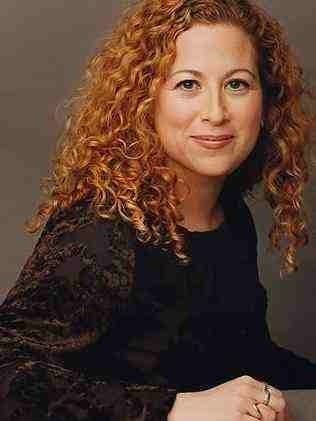
Biography coming soon.

Ashley Antoinette
4.6

Mark McDonald
4.4
Luo Guanzhong
4.4

Mia McKenzie
4.3

Dorothy Parker
4.3

Joaquim Maria Machado de Assis
4.3
James Thurber
4.2

Terry Kay
4.2