“The greatest and most insufferable pain, to a man of sensibility, is to be forced to love a woman who doesn't love him in return.”
— Martin ponders his unrequited feelings for Honor Klein.


Iris Murdoch (2008)
Genre
Fiction
Reading Time
4-5 hours
Key Themes
See below
Sign in to track this book
An academic's polite world of affairs collapses when his wife leaves him for her psychoanalyst, sending him into a dark, funny spiral through an incestuous maze of intense passions and unsettling self-discovery.
Martin Lynch-Gibbon, a middle-aged wine merchant, lives a comfortable life in London with his wife, Antonia, and has a long-term affair with Georgie Hands, a young academic. His world changes when Antonia calmly tells him she is in love with her psychoanalyst, Palmer Anderson, and plans to leave Martin to marry him. The news is delivered with an almost clinical detachment, as if it were a logical step. Martin is initially shocked and hurt, struggling to understand how his carefully separated life suddenly fell apart. He feels a deep sense of betrayal, not just from Antonia but from the very structure of his life, which he thought was stable.
After Antonia's announcement, Martin reluctantly meets Palmer Anderson, a charming and smart man who seems calm and authoritative. Palmer, instead of seeming like a villain, presents himself as a man of reason, further confusing Martin. Soon after, Martin meets Palmer's half-sister, Honor Klein, an anthropology professor. Honor is a striking and mysterious woman with an intense presence. She immediately makes a strong impression on Martin, her sharp mind and unusual beauty both pushing him away and drawing him in. Their first meetings have a clear tension, as Honor seems to see through Martin's polite front, challenging his assumptions and unsettling him.
Amidst the chaos of his failing marriage, Martin's affair with Georgie Hands takes a dramatic turn. When Georgie learns of Antonia's departure and Martin's emotional distress, she becomes very upset. Feeling abandoned and overlooked, and realizing her uncertain place in Martin's life, Georgie tries to kill herself with gas. Martin finds her in time and takes her to the hospital, where she recovers. This event makes Martin feel a new wave of guilt and responsibility, showing the devastating effect of his complicated romantic life. It also forces him to face Georgie's emotional fragility, a vulnerability he may have underestimated while living a double life.
Martin, drawn by an unexplained fascination, visits Honor Klein at her secluded house. Her home's atmosphere is as intense and unusual as she is, filled with strange objects and an almost raw energy. During his visit, Martin is both intimidated and fascinated by Honor's intelligence and strong personality. He feels a powerful attraction to her, despite her often harsh and critical manner. In a shocking discovery, Martin finds Honor and her brother, Palmer, in an incestuous embrace, confirming a dark secret and shattering his view of their intellectual and moral superiority. This revelation deeply disturbs Martin, yet it paradoxically deepens his complex obsession with Honor.
Reeling from his discovery, Martin tells Antonia about Palmer and Honor's incestuous relationship. Antonia, at first disbelieving, is eventually convinced by Martin's distressed account. This revelation creates a deep crisis, not only for Antonia and Palmer's upcoming marriage but also within the entire group. Antonia confronts Palmer, leading to a highly emotional and violent scene between the siblings. The exposure of their secret shatters the careful image of rationality Palmer had maintained, plunging them all into a more primitive and chaotic emotional state. Martin, despite the turmoil, feels a strange sense of justification, having exposed what he saw as hypocrisy.
After the explosive confrontation, Honor Klein suddenly disappears without a trace, leaving everyone to wonder about her whereabouts and intentions. Her absence casts a shadow of unease over the characters, especially Martin, who finds himself increasingly thinking about her. Just as the group starts to adjust to her absence, Honor unexpectedly reappears, her return as sudden and mysterious as her departure. Her reappearance reignites the complex emotional dynamics, especially between her and Martin. Her presence continues to be a disruptive force, challenging the established order and forcing the characters to confront their deepest desires and fears, especially Martin, who is now undeniably drawn to her.
In the aftermath of the various revelations and departures, Martin tries to fix his relationship with Antonia. There are moments when a fragile hope of reconciliation appears, as they both navigate the wreckage of their past. However, these attempts are constantly undermined by lingering emotional attachments and the volatile nature of their relationships with others. Martin's continued fascination with Honor, and the general entanglement of the characters, prevents any real or lasting peace. The story constantly shifts, with new romantic alliances forming and dissolving, showing the characters' inability to escape the intricate web of desire and betrayal they have created, leaving Martin in a constant state of emotional turmoil.
Georgie Hands, still recovering from her suicide attempt, reveals another shock: she is pregnant. Martin, assuming he is the father, is thrown into a new spiral of responsibility and panic. He struggles with the implications of fatherhood, especially given the chaotic state of his life. However, the situation quickly becomes more complicated when it is revealed that the father is actually Alexander, Martin's half-brother, who had also been having an affair with Georgie. This revelation further exposes the complex and morally unclear sexual politics at play, challenging Martin's self-perception and forcing him to confront how blind he had been and the moral compromises made by those around him.
The various romantic and family connections become increasingly unstable, leading to a series of intense confrontations. Martin finds himself caught in a complex web of desires, jealousy, and betrayal. There are verbal arguments and near-physical fights as characters compete for affection, assert control, and try to navigate their tangled relationships. Martin's own desires swing wildly, pulled between Antonia, Georgie, and the growing pull of Honor Klein. These clashes highlight the primitive, almost animalistic forces at play beneath the surface of civilized behavior, showing how deeply intertwined and destructive the characters' lives have become, with Martin at the center of the emotional storm.
Honor Klein, after her brief return and further involvement in the group's affairs, leaves again, this time with a sense of finality. Martin, now completely obsessed with her, finds himself unable to let her go. He pursues her, driven by a powerful, almost desperate passion. However, when he finally confronts her, Honor rejects him. Her reasons are complex, perhaps rooted in her own psychology and need for self-preservation. This rejection is a crushing blow to Martin, forcing him to accept the futility of his pursuit and the depth of his own emotional trap. It marks a turning point in his understanding of his own desires and the elusive nature of true connection.
In the chaotic aftermath, the romantic landscape of the characters undergoes a final, dramatic change. Palmer Anderson, after his relationship with Antonia falters, ultimately marries Honor Klein, a union that both shocks and makes a strange kind of sense given their complex history. Antonia, in turn, finds herself drawn back to Martin, perhaps out of familiarity or a shared sense of exhaustion from the emotional turmoil. Martin, having been rejected by Honor and having seen the various pairings, is left in a state of bewildered thought. He has been through an intense emotional re-education, stripped of his previous illusions about love, loyalty, and control, emerging as a character who is perhaps more aware, if not entirely content.
After things settle, Antonia, having experienced her own disappointment with Palmer and the chaos of their shared past, returns to Martin. This return is not a grand romantic reunion but rather a tired, almost expected coming together of two people who have been through a shared ordeal. Martin, changed by his experiences and his unrequited passion for Honor, accepts Antonia back, not with the innocent joy of a man reunited with his lost love, but with a deeper, more resigned understanding of their intertwined destinies. The ending suggests a cyclical nature to their relationship, acknowledging that while their lives have been irrevocably altered, certain bonds, even flawed ones, persist.
The Protagonist
Martin begins as a complacent, self-deceiving man and is plunged into a chaotic emotional re-education, emerging with a deeper, albeit more cynical, understanding of love and human nature.
The Supporting
Antonia seeks intellectual and emotional liberation from Martin but eventually finds herself drawn back to him after the chaos of her new life.
The Supporting
Georgie moves from being Martin's passive mistress to a more independent, albeit still vulnerable, woman, grappling with the consequences of her choices.
The Antagonist/Supporting
Palmer's facade of rational authority is shattered by the revelation of his incestuous relationship, leading to a more complex and human portrayal, ultimately marrying Honor.
The Antagonist/Supporting
Honor remains a largely enigmatic and powerful force, driving much of the plot's chaos and Martin's obsession, ultimately marrying her brother, Palmer.
The Supporting
Alexander's role expands from a background figure to a significant player, particularly through his relationship with Georgie.
The novel explores the many, often conflicting, aspects of love and desire. It questions traditional ideas of romantic love, showing it as a chaotic, irrational, and often destructive force instead of a beautiful ideal. Martin's initial belief in a 'sensible' love with Antonia and a 'delightful' love with Georgie is shattered by the raw, consuming passion he develops for Honor. The incestuous relationship between Palmer and Honor further pushes limits, suggesting that desire operates on basic, often amoral levels, beyond social norms. The characters are driven by an almost animalistic pursuit of connection, often mistaking obsession for love, and finding little comfort in traditional relationships.
“Love is the extremely difficult realisation that something other than oneself is real.”
A central theme is the characters' widespread self-deception and their reliance on illusions to live their lives. Martin, in particular, builds an elaborate facade of rationality and control, believing he can separate his desires and maintain a 'civilized' existence. His emotional re-education largely involves stripping away these illusions, forcing him to confront the messy, irrational reality of his own desires and the true nature of those around him. Palmer's intellectual facade and Antonia's initial 'sensible' approach to her affair are also forms of self-deception, which eventually crumble under the weight of basic emotions and shocking revelations. The book suggests that much of human interaction is built on carefully maintained fictions.
“We are all in the dark, and we have to invent our own light.”
Murdoch shows a world where traditional social and moral structures are not just challenged but actively broken down. The novel questions the very foundations of loyalty, family, and ethical behavior. Martin's affairs, Antonia's departure, and especially Palmer and Honor's incestuous relationship, all contribute to a sense of moral disorder. The characters constantly cross boundaries, and their attempts to maintain a polite image often fail spectacularly. The story suggests that beneath society's polite surface lie primitive, powerful forces that can erupt at any moment, leading to chaos and a re-evaluation of what is 'right' and 'wrong.' The 'severed head' itself can symbolize this separation between intellect and basic instinct.
“One finds the most extraordinary things when one is looking for something else.”
The novel is full of complex power dynamics, constantly shifting between the characters. Martin initially believes he has power over Georgie, but his wife's departure and Honor's strong pull quickly show him he is wrong. Palmer Anderson holds intellectual and psychological power over Antonia and initially over Martin. Honor Klein, however, is the most powerful, her mysterious nature and strong will dominating many interactions. The power struggles are not always obvious but show up in emotional manipulation, intellectual superiority, and sheer force of personality. The characters are often locked in a battle for control, whether conscious or unconscious, over each other's affections and minds.
“I was at the mercy of my own passion, and that is a terrible thing.”
A tangled web of interconnected romantic and sexual relationships.
The novel uses a highly intricate and constantly shifting network of romantic relationships as its central engine. Martin is involved with Antonia and Georgie; Antonia with Palmer; Palmer with Honor; Honor with Palmer; Georgie with Martin and Alexander. This creates a complex, almost geometric structure of desire and betrayal, where every character is connected to multiple others. This device prevents any stable pairing, constantly generating new conflicts, revelations, and emotional chaos, forcing the characters to confront the irrationality of their desires and the interconnectedness of their lives.
The gradual revelation of hidden truths that disrupt the characters' perceived realities.
The plot progresses through a series of shocking revelations that dismantle the characters' carefully constructed worlds. From Antonia's initial announcement to the discovery of Palmer and Honor's incest, and then Georgie's pregnancy and Alexander's paternity, each secret unveiled destabilizes the existing order. This device serves to constantly reorient the reader's understanding of the characters and their motives, highlighting the deep-seated hypocrisy and hidden desires that lurk beneath the surface of polite society. It keeps the narrative momentum high and drives Martin's emotional re-education.
A character whose mysteriousness and unconventional nature drive much of the protagonist's obsession and the plot's chaos.
Honor Klein serves as the enigmatic figure, a catalyst for Martin's profound emotional transformation. Her intellectual prowess, unconventional lifestyle, and morally ambiguous actions (particularly her incestuous relationship with Palmer) make her a force of nature. Her mysteriousness and unpredictable behavior fuel Martin's consuming passion, drawing him into a world beyond his comprehension. She embodies the 'demonic splendour' described in the synopsis, representing raw, untamed desire and a challenge to conventional morality, thereby pushing the protagonist and the narrative into unexplored territory.
A character who holds a position of psychological authority, yet is deeply implicated in the emotional chaos.
Palmer Anderson, as a psychoanalyst, holds a position of perceived authority and insight into the human mind. This device initially sets him up as a figure of rational understanding, a 'healer' who is meant to bring clarity. However, he quickly becomes an antagonist, not just in a romantic sense, but as a figure whose own psychological complexities and moral compromises (his affair with Antonia, his incestuous relationship with Honor) deeply implicate him in the very chaos he is meant to analyze. This subverts the traditional role of a psychoanalyst, highlighting the hypocrisy and self-deception that can exist even in those who claim to understand the human psyche.
“The greatest and most insufferable pain, to a man of sensibility, is to be forced to love a woman who doesn't love him in return.”
— Martin ponders his unrequited feelings for Honor Klein.
“We are all of us, always, in the presence of the absurd.”
— Martin reflects on the chaotic nature of his relationships.
“One does not fall in love with a person, but with a situation.”
— Honor Klein offers a cynical view of romantic attachment to Martin.
“Goodness and badness are not things that can be added up. They are qualities of the will.”
— Honor Klein discusses morality with Martin.
“The true artist is a man who can create a new form of life.”
— Martin muses on the nature of art and creation.
“Perhaps all love, in the end, is a kind of self-deception.”
— Martin reflects on his various affairs and the illusions they entail.
“There are some things which, once done, can never be undone, and there are some things which, once seen, can never be unseen.”
— Martin grapples with the irreversible consequences of his actions and discoveries.
“Human beings are endlessly interesting, especially when they are in pain.”
— Martin observes the suffering of others with a detached fascination.
“The only way to keep a secret is to tell no one.”
— Martin considers the difficulty of maintaining confidences in his entangled life.
“One must choose between being a lover and being a moralist.”
— Martin struggles with the conflict between his desires and his sense of right and wrong.
“We are condemned to be free, and every choice is a risk.”
— Martin contemplates the burden of existential freedom.
“To be truly alone is to be without a mirror.”
— Martin considers the importance of others in defining one's self.
“Love is not a feeling, it is a decision.”
— Honor Klein presents a stark, unsentimental view of love.
“The heart has its reasons of which reason knows nothing.”
— Martin reflects on the irrationality of his own affections.
Ready to see how well you understood this book? Take our interactive quiz with 10 questions.
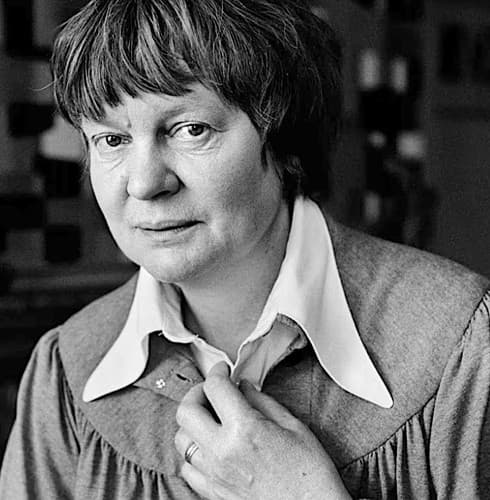
Dame Jean Iris Murdoch was an Irish and British novelist and philosopher. Murdoch is best known for her novels about good and evil, sexual relationships, morality, and the power of the unconscious. Her first published novel, Under the Net (1954), was selected in 1998 as one of Modern Library's 100 best English-language novels of the 20th century. Her 1978 novel The Sea, the Sea won the Booker Prize. In 1987, she was made a Dame by Queen Elizabeth II for services to literature. In 2008, The Times ranked Murdoch twelfth on a list of "The 50 greatest British writers since 1945".

Ashley Antoinette
4.6

Mark McDonald
4.4
Luo Guanzhong
4.4

Mia McKenzie
4.3

Dorothy Parker
4.3

Joaquim Maria Machado de Assis
4.3

James Thurber
4.2

Terry Kay
4.2