BookBrief
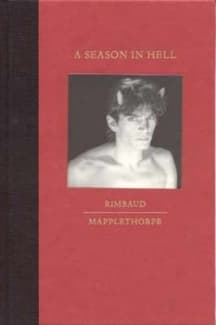
A Season in Hell cover
Archivist's Choice

A Season in Hell

Arthur Rimbaud (1991)

Genre

Fiction

Reading Time

12 Minutes

Key Themes

See below

Track Your Reading

Sign in to track this book

A teenager's raw, hallucinatory confession of love, despair, and artistic awakening after a destructive affair with an older poet.

Synopsis

Arthur Rimbaud's "A Season in Hell" is a confessional and hallucinatory prose poem, chronicling a descent into a personal hell born from a tumultuous affair and a rejection of societal and religious norms. Written after his violent split with Paul Verlaine, the work explores themes of rebellion, disillusionment, and the pursuit of an impossible truth through poetic vision and debauchery. Rimbaud grapples with his past, his identity as a poet, and his spiritual torment, ultimately emerging with a desire for a new, clearer reality, though the path to it remains ambiguous and fraught with the lingering shadows of his 'season in hell.'
Difficulty
Hard
Pacing
Moderate
Mood
Anguished, rebellious, introspective, hallucinatory, despairing, ultimately seeking resolution

Plot Summary

Prologue

The speaker, a 'wretched brother' and 'damned soul,' confesses his past, which involved a fascination with evil and a rejection of traditional morality. He mentions a time of intense suffering and 'a season in hell,' which he now tries to describe. He recalls his former self as a 'beast' and a 'negro,' living a primal, pagan life, far from 'white men' and their 'civilized' ways. This opening sets a tone of self-condemnation and a search for redemption, though it still has a lingering defiance and a sense of being lost. He speaks of a 'crime' and a 'misfortune' that led to his despair, hinting at the painful journey he is about to describe.

Bad Blood

Rimbaud explores his perceived ancestry, claiming 'Gaulish' or 'Celtic' blood, linking himself to a primitive, rebellious past. He rejects 'Christian' ancestry, embracing a pagan, 'idolatrous' heritage he believes fuels his dislike for modern society and its rules. He sees himself as inheriting a violent, lawless spirit, a 'barbarian' meant to disrupt the established order. This section rejects conventional identity and embraces a wild, untamed self. He views his 'bad blood' as both a curse and a source of his vision, allowing him to see beyond civilization's illusions and embrace a more authentic, though chaotic, existence.

Night in Hell

The speaker describes a night of intense spiritual pain, where he struggles with past sins and the fear of damnation. He has vivid hallucinations and feels profoundly isolated, abandoned by God and humanity. The imagery is dark and physical, showing a 'fire' that consumes him and a 'despair' that chokes his soul. He wants release, 'sleep' or 'death,' but finds no escape. This section shows a soul in crisis, dealing with the results of rebellious choices and facing the terrifying idea of eternal damnation. He describes the 'shame' and 'terror' that hold him, as he confronts his own 'demons.'

Delirium I: The Foolish Virgin (The Alchemical Spouse)

This section is a monologue by a 'Foolish Virgin,' a character representing the speaker's naive and destructive tendencies, especially in love. She recounts her passionate, yet ruinous, relationship with an 'Infernal Bridegroom,' a figure who embodies the seductive, dangerous, and corrupting influence of the 'other' (often seen as Paul Verlaine). She details his manipulative charm, his 'demonic' power, and her willing submission to his destructive desires. The 'Foolish Virgin' describes how she was drawn into a world of sin and depravity, losing her innocence and sense of self. This delirium explores obsession, betrayal, and the intoxicating yet poisonous nature of certain relationships.

Delirium II: Alchemy of the Word

The speaker reflects on his youthful poetic goals, his attempts to 'invent a new language' and to 'change life' through art. He describes his experiments with hallucinations, his belief in words' power to transform reality, and his pursuit of 'all forms of love, suffering, madness.' However, this section also shows his disappointment with these ambitions. He admits his failures, his inability to truly go beyond human limits, and the ultimate emptiness of his linguistic alchemy. The 'Alchemy of the Word' becomes a metaphor for his failed attempts to find meaning and redemption through art, leaving him with a bitter sense of unfulfilled promise and the realization of language's limits.

The Impossible

This section considers the elusive nature of happiness and the pointlessness of human efforts to achieve it. The speaker explores paths he has taken – art, love, rebellion – and finds they all lead nowhere. He confronts the 'impossible' task of escaping his own nature and the inherent limits of human existence. He feels trapped in a cycle of desire and disappointment, unable to find lasting peace or a sense of belonging. This part explores the existential despair that fills the work, showing the speaker's deep alienation and his inability to accept the world as it is. He sees no escape from his 'hell.'

Lightning

In this brief, explosive section, the speaker feels a sudden surge of rebellious energy. He embraces his 'infernal' nature, rejecting any chance of conventional redemption or societal integration. He declares his solidarity with the 'damned' and finds a perverse joy in being an outcast. This 'lightning' moment is a temporary break from his despair, a defiant assertion of his individuality against great odds. It's a fleeting burst of power and self-affirmation, where he enjoys being separate from the 'herd.' However, this defiance is short-lived, serving as a prelude to more introspection rather than a permanent solution to his inner turmoil.

Morning

After the intense despair, 'Morning' offers a faint, fragile hope. The speaker expresses a desire to break free from his past and embrace a new, more virtuous path. He considers the possibility of a 'new dawn' and a return to a more natural, perhaps spiritual, existence. There is a longing for clarity and purity, a wish to shed the 'old self' and be reborn. This section's tone shifts from dark, tormented introspection to a more reflective and hopeful outlook. However, this hope is not yet fully real; it remains a fragile possibility rather than a firm conviction, as he still grapples with his past.

Farewell

In the concluding section, the speaker formally says goodbye to his period of suffering and self-discovery. He acknowledges the lessons learned, however painful, and expresses a determination to move beyond his 'season in hell.' He hints at a future where he might embrace a more active, engaged life, perhaps even returning to society. There is a sense of resolution, a declaration of intent to shed the burdens of the past and embrace a new direction. While not a complete victory over his demons, it marks a turning point, a decision to no longer dwell in despair but to seek a path toward healing and a more constructive existence. He declares he must have 'new strength, new love.'

Principal Figures

The Speaker (Arthur Rimbaud)

The Protagonist

The speaker undergoes a transformative journey from a rebellious, self-destructive individual to one who acknowledges his past 'errors' and seeks a path towards a more grounded, albeit still independent, future.

The Infernal Bridegroom

The Antagonist/Catalyst

While not a character with an arc in the traditional sense, the Infernal Bridegroom serves as a catalyst for the speaker's season in hell, representing the destructive forces the speaker must confront and ultimately reject.

The Foolish Virgin

The Supporting (Persona)

The Foolish Virgin's narrative reveals the speaker's past entanglement in a destructive relationship, serving as a confessional and a critical examination of his own vulnerabilities.

God/Heaven

The Antagonistic/Absent Force

The speaker's relationship with God shifts from outright rebellion and rejection to a tentative, albeit conflicted, yearning for a different kind of salvation or peace by the end.

Satan/Demons

The Supporting (Figurative)

These figures represent the forces the speaker grapples with and eventually seeks to overcome or leave behind, rather than having an arc themselves.

Themes & Insights

Rebellion and Anti-Establishment

Rimbaud's 'A Season in Hell' is a strong rejection of societal norms, religious rules, and conventional morality. The speaker defiantly embraces a life of sin, chaos, and artistic experiment, viewing traditional society as hypocritical and stifling. He identifies with 'barbarians' and 'savages,' preferring a primal, untamed existence over civilization's artificiality. This theme appears in his rejection of his 'Gaulish' ancestry, his embrace of 'bad blood,' and his open blasphemy, all of which challenge the established order and seek an authentic, though destructive, freedom.

I was a beast, a negro. They are going to make me die of hunger, of thirst, of whips... I am a beast, a negro. The whites are clever. I would die.

The Speaker (Bad Blood)

The Alchemy of the Word and Artistic Failure

A main theme is the speaker's goal to 'invent a new language' and to change reality through poetry, an idea he calls the 'Alchemy of the Word.' He believes that through intense sensory experiences, hallucinations, and new language, he can achieve a new way of seeing and even change life itself. However, the poem ultimately tells of the failure and disappointment with this artistic project. He realizes language's limits, the futility of his extreme experiments, and art's inability to deliver true salvation or meaning by itself. This theme explores the intoxicating promise and the bitter disappointment of artistic idealism.

I invented the color of vowels! — A black, E white, I red, O blue, U green. — I regulated the form and the movement of each consonant, and with instinctive rhythms, I prided myself on creating a poetic verb accessible, sooner or later, to all the senses.

The Speaker (Alchemy of the Word)

Love, Obsession, and Self-Destruction

The destructive nature of love, especially homosexual love, appears through the story of 'The Foolish Virgin' and her 'Infernal Bridegroom.' This relationship is shown as an obsessive, all-consuming force that leads to suffering, betrayal, and self-destruction. The speaker, through this character, deals with the intoxicating pull of a toxic partner and the loss of self that comes with such an intense, yet damaging, bond. This theme explores passion's psychological cost, the blurry lines between love and hate, and how relationships can both inspire and devastate a person.

He taught me to hate God. He taught me to love the devil. He said: 'It's no longer the old world. It's the new.'

The Foolish Virgin (Delirium I)

Spiritual Crisis and Redemption

At its heart, 'A Season in Hell' explores spiritual crisis. The speaker endures intense suffering, guilt, and despair, feeling damned and separated from both God and humanity. He grapples with past sins, the fear of eternal damnation, and a desperate search for meaning in a seemingly godless world. While the poem does not offer a clear, traditional path to redemption, the concluding 'Farewell' suggests a tentative move toward self-acceptance and a desire to move beyond his past 'hell.' It's a journey of confronting one's own demons and choosing a path forward, however uncertain, rather than finding traditional salvation.

I have swallowed a terrible draught of poison. — Three times blessed be the counsel that came to me! — My guts are burning. The violence of the poison twists my limbs, deforms me, knocks me down.

The Speaker (Night in Hell)

Identity and Self-Discovery

The speaker's journey involves intense self-examination and a struggle to define his identity. He grapples with his ancestry, artistic goals, and sexual desires, constantly questioning who he is and who he wants to be. He takes on various roles – the 'beast,' the 'negro,' the 'Foolish Virgin' – to explore different parts of his being. The 'season in hell' is a trial through which he confronts his contradictions, flaws, and true nature. By the end, he feels he has shed old identities and embraced a new, though still developing, understanding of himself, leading to a desire for a more integrated existence.

I am a beast, a negro. They are going to make me die of hunger, of thirst, of whips... I am a beast, a negro. The whites are clever. I would die.

The Speaker (Bad Blood)

Plot Devices & Literary Techniques

Persona and Mask

The use of alternate voices and identities to explore complex psychological states.

Rimbaud frequently employs different personas, most notably 'The Foolish Virgin,' to articulate aspects of the speaker's experience that might be too painful or complex to express directly. These masks allow him to distance himself from the raw emotion while simultaneously delving deeper into psychological states, such as infatuation, self-deception, and regret. The 'Foolish Virgin' serves as a confessional voice, recounting a destructive relationship from a perspective that is both naive and profoundly insightful. This device allows for a multi-faceted exploration of the speaker's inner world, lending the work a dramatic and theatrical quality while also blurring the lines between autobiography and fiction.

Stream of Consciousness

A narrative style that mimics the free flow of thoughts, feelings, and sensations.

The text often reads like a direct transcription of the speaker's unfiltered thoughts, jumping between memories, hallucinations, philosophical reflections, and emotional outbursts. There is a lack of conventional plot or linear progression; instead, the narrative is driven by the internal logic of the speaker's mind. This device immerses the reader directly into the speaker's tormented psyche, conveying the chaos, intensity, and fragmentation of his 'season in hell.' It creates a sense of immediacy and raw authenticity, mirroring the speaker's own disoriented and fractured state of mind, making the experience visceral and deeply personal.

Symbolism and Allegory

The use of objects, characters, and events to represent abstract ideas and moral lessons.

Rimbaud heavily relies on rich and often obscure symbolism. For instance, 'hell' is not just a literal place but an allegorical representation of the speaker's profound spiritual and psychological suffering. The 'Infernal Bridegroom' symbolizes destructive love and temptation, while 'alchemy' represents the transformative power of art and language (and its ultimate failure). These symbols often carry multiple layers of meaning, inviting interpretation and adding depth to the speaker's internal struggles. The allegorical nature allows Rimbaud to explore universal themes of good versus evil, salvation versus damnation, and creation versus destruction, through his highly personal narrative.

Confessional Tone

A direct, intimate address to the reader, revealing personal sins, thoughts, and emotions.

Throughout 'A Season in Hell,' the speaker adopts a deeply confessional tone, directly addressing the reader with his innermost thoughts, fears, and transgressions. He lays bare his past mistakes, his rebellious nature, and his profound despair, creating a sense of intimacy and vulnerability. This direct address draws the reader into his psychological journey, making them a witness to his spiritual crisis and his attempts at self-reckoning. The confessional mode is key to the poem's power, as it transforms a highly personal narrative into a universal exploration of human suffering, guilt, and the search for meaning, fostering empathy and intense engagement.

Critical analysis

Notable Quotes

Quiz

Test Your Knowledge

Ready to see how well you understood this book? Take our interactive quiz with 10 questions.

10
Questions
~5
Minutes
?
Best Score

Key Questions (FAQ)

A Season in Hell is a prose poem by Arthur Rimbaud, written when he was 18. It's a deeply personal and often surreal exploration of his tumultuous relationship with Paul Verlaine, his disillusionment with life, and his spiritual and artistic struggles.

About the author

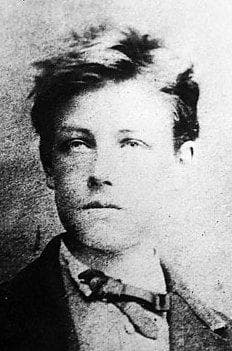
Arthur Rimbaud

Jean Nicolas Arthur Rimbaud was a French poet known for his transgressive and surreal themes and for his influence on modern literature and arts, prefiguring surrealism. Born in Charleville, he started writing at a very young age and excelled as a student, but abandoned his formal education in his teenage years to run away to Paris amidst the Franco-Prussian War. During his late adolescence and early adulthood, he produced the bulk of his literary output. Rimbaud completely stopped writing literature at age 20 after assembling his last major work, Illuminations.