“The world was not a good place. It was a place where what was beautiful was killed.”
— Elizabeth's early, disillusioning observations about life and power.

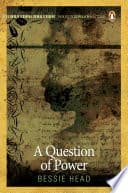
Bessie Head (2012)
Genre
Fiction
Reading Time
300 min
Key Themes
See below
Sign in to track this book
In Botswana's dry lands, a woman's search for identity turns into a descent into madness, haunted by her mixed heritage and past.
Elizabeth, a mixed-race woman from South Africa, arrives in Motabeng, Botswana, seeking escape from her past and apartheid. She comes with her young son, Serowe. The local community, especially the kind people of the agricultural cooperative, welcome them. Elizabeth works in the village's vegetable garden, a peaceful and productive place. She initially feels a sense of belonging and relief from her anxieties, finding comfort in the work and her neighbors' acceptance. Despite this calm, hints of her internal struggles are already present, foreshadowing the coming psychological turmoil.
As Elizabeth settles in Motabeng, her inner world starts to fall apart. She begins to have vivid, terrifying hallucinations, mainly involving two figures: Sello and Dan. Sello often appears as a kind but unclear figure, and Dan embodies a more sinister, aggressive presence. These figures torment her with accusations, sexual suggestions, and big questions, blurring the line between reality and delusion. The voices are constant, creating an internal struggle that isolates her despite being in a supportive community. This marks the start of her severe mental health crisis.
Elizabeth's mind becomes a cosmic battleground. Sello and Dan, along with other strange figures, fill her thoughts. Sello, in his various forms (from a monk to a king), represents a spiritual search for truth, often testing Elizabeth's morals. Dan, in contrast, embodies pure evil, lust, and destructive human traits, constantly accusing and demeaning her. Elizabeth sees herself as the chosen one for this ultimate fight, enduring psychological torture and confusion. Motabeng village, though unaware of her internal drama, becomes the setting for this deeply personal, spiritual war.
Despite her inner chaos, Elizabeth maintains a normal daily life, working in the garden and caring for Serowe. Some villagers, like the kind Tom, offer her true friendship and support, sensing her distress without fully understanding it. However, her erratic behavior, sudden withdrawals, and occasional outbursts are often met with confusion, fear, or gossip. The cultural view of mental illness, sometimes linked to witchcraft, further complicates her situation. This mix of compassion and misunderstanding reinforces Elizabeth's feeling of being an outsider, trapped in her mind while trying to connect with the world.
Initially, Sello is one of Elizabeth's main tormentors, appearing in various forms and putting her through intense spiritual tests. He is shown as an ancient, powerful figure, a 'god of the earth' or a 'Buddha,' who seems to direct the entire hallucinatory drama. Over time, his role changes. While still a source of great pressure and philosophical debate, Sello begins to represent a path to understanding and spiritual awakening. He challenges Elizabeth to face her deepest fears, her sense of self, and the nature of good and evil. His presence, though terrifying, ultimately pushes her towards self-reflection and a deeper connection with the human experience, guiding her through her own mind.
Dan is the embodiment of pure evil in Elizabeth's hallucinations. He is a grotesque, sexually depraved figure who constantly attacks her with accusations of promiscuity, worthlessness, and a lack of identity. His presence is suffocating, turning her mind into a fight for her dignity and sanity. Dan represents the societal pressures, racial prejudice, and sexual objectification Elizabeth has faced, amplifying them to a terrifying degree. His constant accusations and attempts to degrade her aim to break her spirit, forcing her to confront her deepest anxieties about her mixed-race identity and her place in the world. He is the main foe in her internal struggle.
As Elizabeth's mental state worsens, her behavior becomes increasingly erratic and alarming to others. The hallucinations intensify, making it impossible for her to tell reality from delusion. Recognizing her severe condition, the community, with the help of people like Tom, arranges for her hospitalization. She is admitted to a psychiatric facility for medical treatment, including medication. This hospitalization is a turning point, offering a temporary break from the constant internal torment and providing the necessary help for her slow recovery. It is a moment where the outside world finally acknowledges her inner crisis.
After her hospitalization, Elizabeth begins a long and difficult recovery. The medication helps quiet the most tormenting voices and visions, allowing her to slowly regain clarity. She returns to Motabeng and resumes work in the communal garden, finding comfort in the physical labor and the tangible results. This period brings a gradual understanding of her own mind and what caused her breakdown. She starts to process her experiences, realizing that the 'gods' and 'devils' were manifestations of her own internal struggles and societal pressures. Her connection to the earth and community becomes a grounding force.
A key part of Elizabeth's recovery involves facing her complex identity as a mixed-race woman in a society marked by racial divisions. Her past as an 'outsider' in South Africa, combined with internal accusations from figures like Dan, forced her to grapple with her sense of belonging and self-worth. Through her ordeal, she accepts her unique heritage, seeing it as a strength rather than a source of shame. She also begins to come to terms with her childhood trauma and her mother's abandonment, understanding how these events shaped her vulnerability. This process leads to a fragile but deep inner peace.
As Elizabeth recovers, she solidifies her place in the Motabeng community. Her dedication to the communal garden grows, and she becomes an important part of its success. She finds true connection with her neighbors, especially with people like Tom and the other women of the cooperative. The initial feeling of being an outsider slowly fades as she actively contributes to the village's well-being and finds acceptance for who she is, including her past struggles. The village, once a setting for her internal war, becomes a symbol of healing, community, and the chance to build a new life. She finds a stable foundation and a sense of belonging she had long sought.
The Protagonist
Elizabeth descends into a terrifying mental breakdown, battles overwhelming hallucinations, and slowly emerges with a deeper understanding of herself, humanity, and her place in the world.
The Hallucinatory Figure
Sello evolves from a tormenting, ambiguous figure to a catalyst for Elizabeth's spiritual awakening and self-understanding.
The Hallucinatory Figure
Dan remains a constant, unchanging force of evil and degradation throughout Elizabeth's breakdown, representing the forces she must overcome.
The Supporting
Serowe remains a consistent source of grounding for Elizabeth, his presence acting as a silent anchor through her mental health crisis.
The Supporting
Tom consistently offers support and understanding to Elizabeth, acting as a compassionate anchor in her external world.
The Mentioned
Eugene's memory remains a static, painful point of reference for Elizabeth, contributing to her internal conflict.
The Supporting
The villagers' collective response to Elizabeth shifts from initial curiosity to concern, eventually offering a foundation of acceptance for her recovery.
The novel explores various forms of power: the oppression of apartheid, the internalized power of social judgment, and the spiritual power in Elizabeth's hallucinations. Her mental breakdown is a direct result of these pressures. Sello and Dan represent opposing powers, one seeking enlightenment, the other control. Her journey is about reclaiming personal power from these overwhelming forces, real and imagined. This is clear in her fight against Dan's accusations, which reflect social structures meant to diminish her identity.
““There was no escape from the fact that she was a black woman. Not only black, but of mixed blood. A half-caste. A bastard.””
Elizabeth's mixed-race background and displacement make her a perpetual outsider, always searching for a place. Her mental illness further isolates her, blurring her identity. Sello and Dan constantly challenge her sense of self, forcing her to question who she is and her worth. Her recovery involves accepting her identity, embracing her heritage instead of seeing it as a source of shame. The communal garden in Motabeng is a metaphor for finding a rooted sense of belonging, both to the earth and to an accepting community.
““She had no identity. She was just a thing. A thing that could be used, abused, discarded.””
The novel puts the reader deep into Elizabeth's psychosis, blurring the lines between objective reality and subjective experience. Her hallucinations are not just symptoms; they are complex stories through which she processes trauma, societal pressures, and spiritual questions. The detailed descriptions of her visions and internal battles make the reader question sanity itself. Her journey shows the fragility of the human mind and its capacity to create terrifying realities and eventually heal. The contrast between her internal world and the supportive external world of Motabeng highlights the deep isolation of mental illness.
““The boundary between reality and hallucination was not a line, but a vast, swirling ocean.””
Elizabeth's mental breakdown is tied to a spiritual quest. Sello and Dan, though products of her illness, embody a cosmic battle between good and evil. Sello, in particular, acts as a spiritual guide, pushing her to confront universal truths about humanity. Her experiences lead her to a unique understanding of spirituality, one rooted in the earth, communal living, and the acceptance of all human experience, rather than traditional religion. This search for meaning contributes to her healing and a more integrated worldview.
““The soul of the world was a great river, and she had fallen into it, drowning and being reborn.””
Despite the deep isolation from her mental illness, communal life and physical labor in Motabeng help Elizabeth recover. The vegetable garden provides a tangible connection to the earth and a sense of purpose. The rhythmic work, nurturing life, and shared effort with villagers ground her in reality. The kindness and practical support from people like Tom, and the community's general acceptance, offer a stable external environment that contrasts with her inner chaos. This shows the healing potential of meaningful work and supportive human connection.
““The earth was the only thing that held her steady, the only thing that made sense.””
Narrative technique that directly mirrors Elizabeth's internal thought processes and hallucinations.
The novel extensively uses stream of consciousness to immerse the reader directly into Elizabeth's fractured mind. This technique blurs the lines between internal monologue, sensory perceptions, and her vivid hallucinations, making it difficult for the reader to distinguish reality from delusion, just as Elizabeth struggles to do. It allows for a deep, unfiltered exploration of her psychological state, her philosophical inquiries, and the relentless torment she endures. This device is crucial for conveying the disorienting and overwhelming nature of her mental illness, making her subjective experience the primary lens through which the story is told.
Characters who personify abstract concepts like good, evil, spiritual power, and societal oppression.
Sello and Dan are not literal characters but powerful allegorical figures within Elizabeth's hallucinations. Sello personifies spiritual wisdom, cosmic power, and the potential for enlightenment, often appearing as a guru or god-like entity. Dan embodies destructive evil, sexual predation, and the internalized societal judgment Elizabeth has faced, particularly regarding her mixed-race identity and sexuality. These figures serve as externalizations of Elizabeth's internal conflicts, representing a cosmic battle for her soul. Through their interactions, the novel explores profound themes of good versus evil, power, and identity on a grand, symbolic scale.
Motabeng, Botswana, serves as both a sanctuary from Elizabeth's past and a crucible for her psychological breakdown.
The village of Motabeng, Botswana, functions as a dual-purpose plot device. Initially, it is a refuge, a place where Elizabeth seeks escape from the racial oppression and personal trauma of South Africa, offering a sense of peace and community through the communal garden. However, it also becomes a catalyst for her mental breakdown. The relative quiet and isolation, combined with the lack of external distractions, force Elizabeth to confront her unresolved internal conflicts, leading to the full manifestation of her psychosis. The setting's simplicity contrasts sharply with the complexity of her internal world, highlighting her profound internal struggle against an outwardly calm backdrop.
The communal vegetable garden represents healing, growth, purpose, and connection to the earth.
The communal vegetable garden in Motabeng is a powerful symbol throughout the novel. Initially, it provides Elizabeth with a practical job and a sense of routine. As her illness progresses, it becomes a grounding force, a tangible connection to reality and life amidst her internal chaos. The act of tending the earth, nurturing plants, and witnessing growth mirrors Elizabeth's own slow process of healing and self-cultivation. It symbolizes productivity, community, and the cyclical nature of life, offering a stark contrast to the barren, destructive landscape of her mind. Ultimately, the garden represents the possibility of renewal and finding purpose through labor and connection to the natural world.
“The world was not a good place. It was a place where what was beautiful was killed.”
— Elizabeth's early, disillusioning observations about life and power.
“There was only one way out of the world and that was through suicide. The only way to live was to be insane.”
— Elizabeth's desperate thoughts during her mental breakdown.
“She had fallen into a world of myth and symbol, where the only reality was the reality of her own mind.”
— Describing Elizabeth's descent into a hallucinatory state.
“She was not herself. She was a stage on which the most terrible dramas were enacted.”
— Elizabeth feeling her mind is being manipulated by external forces.
“All knowledge was power, and all power was evil.”
— Elizabeth's distorted perception of knowledge and its corrupting influence.
“The soul could only be destroyed by itself, never by another.”
— A profound realization Elizabeth has about inner strength and resilience.
“She had to learn to live with the devils, and not against them.”
— Elizabeth's struggle to find a way to cope with her internal torments.
“The silence was so vast and profound that it seemed to contain all the secrets of the universe.”
— Elizabeth experiencing moments of peace and profound contemplation.
“Perhaps the only way to understand life was to live it as if it were a dream.”
— Elizabeth's philosophical reflection on the nature of reality.
“She had always been a solitary person, a stranger in every land, an outcast from every community.”
— Elizabeth reflecting on her lifelong sense of alienation.
“There was no such thing as normal. Everyone was mad in their own way.”
— Elizabeth's perspective on the spectrum of human mental states.
“The greatest power was the power to love, and the greatest freedom was the freedom from fear.”
— Elizabeth's ultimate realization about true power and liberation.
“She decided that if there was to be a God, he would have to be a God of the common people, a God of the earth.”
— Elizabeth's reimagining of spirituality and divinity.
“The only way to create was to destroy, to break down the old forms and build new ones.”
— Elizabeth's artistic and philosophical approach to creation and renewal.
Ready to see how well you understood this book? Take our interactive quiz with 10 questions.

Bessie Amelia Emery Head was a South African writer who, though born in South Africa, is usually considered Botswana's most influential writer. She wrote novels, short fiction and autobiographical works that are infused with spiritual questioning and reflection.

Ashley Antoinette
4.6

Mark McDonald
4.4
Luo Guanzhong
4.4

Mia McKenzie
4.3
Dorothy Parker
4.3

Joaquim Maria Machado de Assis
4.3

James Thurber
4.2

Terry Kay
4.2