“We always think there's enough time to do things with other people. Time to say things to them. And then something happens and then we stand there holding on to words like 'if'.”
— Ove reflects on regret and missed opportunities after a loss.

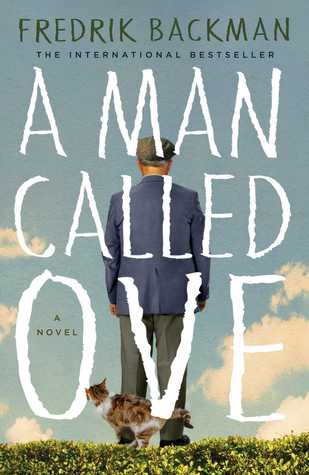
Genre
Fiction
Reading Time
7 hr 30 min
Key Themes
See below
Sign in to track this book
A stubborn widower, who lives by strict rules, finds his quiet world changed by a lively new family next door, making him face his past and find happiness in human connection.
Ove, a 59-year-old widower, plans to hang himself in his living room, after his wife, Sonja, recently died. His strict routines and rules are his only companions. Just as he is about to step off the chair, a U-Haul truck driven by his new neighbors, Parvaneh and Patrick, hits his mailbox. Annoyed by the noise and their clumsiness, Ove yells at them, delaying his suicide plan. This event starts their unexpected, and at first unwanted, entry into Ove's ordered, solitary life.
Over the next few days, Ove tries to end his life several more times, but each attempt is stopped by his new neighbors' needs. He tries to gas himself in his car, but Parvaneh knocks on his window, needing a ride to the hospital for Patrick, who fell off a ladder Ove lent him. Later, as Ove tries to jump in front of a train, he sees a man collapse on the tracks and pulls him to safety. A thin, stray cat, which he dislikes at first, also follows him, eventually entering his house and becoming a companion. These interruptions, though annoying to Ove, slowly bring him back into the world.
Through flashbacks, Ove's past is shown. His mother died when he was young, leaving him with his quiet, principled father, a mechanic who taught him the value of hard work and doing things correctly. His father later died in a train accident, leaving Ove alone to manage the family home. One day, while working as a cleaner on a train, he meets Sonja, a bright, smart, and lively woman who immediately charms him. She is spontaneous, full of life, and loves literature and color. Their meeting changes Ove's life, bringing him great joy and purpose.
Despite his complaints, Ove becomes more involved in Parvaneh and Patrick's lives. He fixes their radiator, teaches Parvaneh to drive, and babysits their two young daughters, Nasanin and Sepideh, who are not afraid of his rough manner. He also helps Rune, his former best friend and now wheelchair-bound neighbor, whose wife, Anita, fights to keep social services from taking him away. Ove's practical skills and sense of justice are often needed, and though he complains, he always helps, showing his kind heart under his rough exterior. Even the stray cat, which he names 'Cat Annoyance,' becomes a part of his home.
More flashbacks show the event that changed Ove and Sonja's lives forever. While on a bus trip, their bus crashes, killing their unborn child and leaving Sonja paralyzed. Ove, filled with grief and anger, tries to get justice from the careless bus company and the corrupt local council, but he meets indifference. This experience makes Ove distrust authority and believe in doing things 'properly' and independently, strengthening his black-and-white view of the world and his disappointment with society.
The 'men in white shirts' from the local council try to move Rune into a care home, despite Anita's strong wish to care for him at home. Ove, with help from Parvaneh, Patrick, and a local journalist, takes a stand against them. He uses his knowledge of rules and his stubbornness to show the council's overreach and their disregard for human dignity. This group effort strengthens the bond between Ove and his neighbors, showing how his principles can be used for good, especially when protecting those he cares about.
As the conflict with the 'white shirts' grows, the whole community, including former opponents and new friends, supports Anita and Rune. Ove's actions, at first driven by his loyalty to Rune, inspire a sense of community. People help in various ways, from signing petitions to offering practical aid. This group resistance against an impersonal system shows the power of human connection and the importance of helping each other, a strong contrast to Ove's initial isolation and his belief that most people are incompetent.
Ove has chest pains and collapses, leading to a hospital visit arranged by Parvaneh. Doctors tell him he has an enlarged heart, which he calls 'normal.' In the hospital, he thinks about his life with Sonja, his past, and how his life has changed since Parvaneh's family arrived. The hospital stay, another unwanted interruption, shows his vulnerability and the growing group of people who care for him, despite his protests. It reminds him of his mortality, but also of the life he has unexpectedly rejoined.
On Christmas Eve, Ove, at first unwilling, joins Parvaneh's family for dinner. During the evening, he shares more stories about Sonja and his past, especially his father's principles. He even lets the children paint his toenails, a small but important sign of his softening manner. This close gathering deepens the bond between Ove and the family, showing how his rough exterior slowly disappears under the warmth of real affection and inclusion. It is a moment of connection for a man who thought he had nothing left to live for.
One day, a young man named Adrian, a former student of Sonja's, brings his broken bicycle to Ove. Ove, using his father's carefulness and his own skill, helps Adrian fix the bike, explaining the mechanics with his usual directness. This act of teaching, like his own father teaching him, shows how Ove's legacy of practical knowledge continues. It is a small, quiet moment that shows his goodness and his ability to connect with younger generations, even if his methods are unusual.
Several years later, Parvaneh finds Ove dead in his bed, having died peacefully in his sleep. His will states that his assets be divided between the girls, and his house sold, with the money going to charity. The discovery brings sadness but also a sense of peace, as Ove lived a full life after Sonja's death, thanks to the friendships he made. His death is not a tragedy but a quiet end to a life that found new purpose and connection, leaving behind a legacy of unexpected kindness and a community that learned to love their grumpy neighbor.
The Protagonist
Ove transforms from a solitary, suicidal widower into an integral, albeit still grumpy, member of his community, finding new purpose and connection.
The Supporting
Her memory guides Ove's journey, helping him rediscover purpose after her death.
The Supporting
She consistently breaks through Ove's emotional barriers, becoming his closest confidante and a catalyst for his re-engagement with life.
The Supporting
He serves as a consistent, if often exasperating, reason for Ove to interact with his new neighbors.
The Supporting
His illness and the threat of institutionalization serve as a catalyst for Ove to reconnect with his community and fight for what's right.
The Supporting
She embodies unwavering love and resilience, inspiring Ove to fight alongside her against bureaucratic injustice.
The Supporting
Transforms from an unwanted pest into a cherished, albeit begrudged, companion for Ove.
The Supporting
Her innocent affection and curiosity help to soften Ove's hardened heart.
The Supporting
Her innocent presence contributes to Ove's re-engagement with life and his capacity for affection.
The Supporting
He transforms from a quiet, seemingly helpless neighbor into a dependable and loyal friend to Ove.
The novel starts with Ove's deep sadness after his wife, Sonja, dies, which leads to his first suicide attempts. Her absence defines his life, and memories of her appear throughout the story, explaining his actions and sadness. The book shows how people deal with great loss, showing Ove's struggle to find meaning without his wife. His journey shows that while sadness never fully goes away, life can still bring unexpected joys and connections.
“Death is a strange thing. People always live like they’re not going to die, but somehow, a man can still be surprised when it happens.”
Despite Ove's initial isolation and his belief that most people are incompetent, Parvaneh's family and his neighbors' problems slowly bring him back into the community. The book shows how unexpected friendships and shared difficulties can remove barriers and create strong bonds, changing a solitary person into an important part of a supportive group. The neighborhood's support for Rune and Anita against the 'white shirts' shows the strength and warmth found in group action and mutual help.
“He was a man of black and white. And she was all the colors, his everything.”
Ove is judged by others, often called 'the bitter neighbor from hell' because of his rough manner and strict rules. However, he also judges those he thinks are incompetent, especially the 'men in white shirts' and anyone who does not meet his standards. The novel questions these first impressions, showing the complex layers beneath people's surfaces. Characters like Parvaneh and Jimmy slowly change Ove's judgments, and the story encourages readers to look past first impressions and understand why people act the way they do.
“People said he was bitter. But must Ove be bitter just because he didn’t walk around with a smile plastered to his face all the time?”
A repeated conflict in the novel is Ove's fight against impersonal bureaucracy, shown by the 'white shirts' from the local council. This theme appears after Sonja's accident, where Ove meets indifference and corruption, and later in the fight to keep Rune from being taken to a care home. The book criticizes systems that value rules over human dignity, compassion, and individual needs. Ove, with his strong principles and practical approach, becomes a defender of humanity against the cold, unfeeling official system.
“He was a man who believed that one should always do things properly. And that one should never, under any circumstances, allow a bureaucrat to tell one what was proper.”
The novel explores how the people we love and the rules we live by have a lasting impact. Ove is shaped by his father's values of hard work and honesty, and even more by his love for Sonja, who taught him joy and softness. After Sonja's death, Ove thinks his influence is over, but through his interactions with Parvaneh's children and others, he passes on his practical skills, his sense of justice, and his strong loyalty. His life, and even his death, show the lasting power of love and the quiet influence of a principled life.
“We always think there's enough time to do things with other people. Then something happens and we suddenly realize that we don't. That there's no more time at all.”
Interspersed memories revealing Ove's past and motivations.
The narrative frequently shifts between the present day and various points in Ove's past, revealing key events that shaped him. These flashbacks detail his childhood with his father, his meeting and life with Sonja, and the tragedy that led to her paralysis and the loss of their child. This device is crucial for understanding Ove's seemingly grumpy exterior, providing context for his principles, his grief, and his profound love for Sonja. It allows the reader to gradually piece together his complex character and empathize with his current state.
Characters who highlight Ove's personality through contrast.
Several characters act as foils to Ove, emphasizing different aspects of his personality. Sonja, with her vibrant and colorful nature, highlights Ove's stoicism and his capacity for deep love. Parvaneh's warmth, directness, and competence contrast with Ove's grumpiness and his perceived incompetence of others, forcing him to engage. Even Rune, as his former best friend and rival, highlights Ove's stubbornness and loyalty. These contrasts serve to reveal the layers beneath Ove's surface and drive his character development.
The humorous contrast between Ove's intentions and outcomes.
The novel frequently employs situational irony for both comedic and poignant effect. Ove repeatedly attempts to commit suicide, only to be interrupted by his neighbors' often trivial, yet persistent, needs. Each interruption, initially a source of immense frustration for Ove, inadvertently pulls him back into life and closer to the community he claims to despise. This irony underscores the book's central message: that life, even in its most irritating forms, can unexpectedly offer connection and purpose.
Car brands symbolizing character traits and past conflicts.
The rivalry between Saab and Volvo owners, particularly between Ove (Saab) and Rune (Volvo), is a recurring motif. For Ove, Saab represents quality, reliability, and doing things 'properly,' reflecting his own values. Volvo, to him, symbolizes compromise and less-than-perfect engineering. This seemingly trivial detail highlights Ove's rigid principles, his loyalty, and his black-and-white view of the world. It also serves as a poignant reminder of his fractured friendship with Rune, as their shared passion for cars once bonded them and later became a point of contention.
A collective symbol for impersonal bureaucracy and injustice.
The 'white shirts' are not individual characters but a collective representation of the faceless, indifferent bureaucracy that Ove despises. They are local council workers and social services employees who consistently try to enforce rules and regulations without compassion or understanding of individual circumstances, particularly in their attempts to take Rune away from Anita. They symbolize everything Ove fights against: incompetence, lack of common sense, and the dehumanizing aspects of institutional power. Their presence galvanizes Ove and the community, highlighting the theme of humanity versus bureaucracy.
“We always think there's enough time to do things with other people. Time to say things to them. And then something happens and then we stand there holding on to words like 'if'.”
— Ove reflects on regret and missed opportunities after a loss.
“All people at root are time optimists. We always think there's enough time to do things with other people.”
— Narrator's observation about human nature and procrastination in relationships.
“Loving someone is like moving into a house. At first you fall in love with all the new things, amazed every morning that all this belongs to you... Then over the years the walls become weathered, the wood splinters here and there, and you start to love that house not so much because of all its perfection, but rather for its imperfections.”
— Ove's reflection on his enduring love for his late wife Sonja.
“Men are what they are because of what they do. Not what they say.”
— Ove's philosophy about character and action, often demonstrated through his deeds.
“Ove had never been asked how he lived before he met her. But if anyone had asked him, he would have answered that he didn't.”
— Describing how Ove's wife Sonja gave his life meaning and color.
“Death is a strange thing. People live their whole lives as if it does not exist, and yet it's often one of the greatest motivations for living.”
— Narrator's meditation on mortality and its paradoxical role in life.
“One of the most painful moments in a person's life probably comes with the insight that an age has been reached when there is more to look back on than ahead.”
— Reflecting on Ove's perspective as an older man facing his later years.
“People said Ove saw the world in black and white. But she was color. All the color he had.”
— Describing how Sonja brought joy and vibrancy to Ove's rigid world.
“He was a man of black and white. And she was color. All the color he had.”
— Reiteration of how Sonja fundamentally changed Ove's life and outlook.
“To love someone is like moving into a house. You start by admiring the paintwork and the view, but over time you learn where all the floorboards creak.”
— Another version of Ove's metaphor for enduring, realistic love.
“Ove had never been particularly good at talking. But he was good at doing.”
— Highlighting Ove's practical, action-oriented nature versus verbal expression.
“We fear it, yet most of us fear more than anything that it may take someone other than ourselves. For the greatest fear of death is always that it will pass us by. And leave us there alone.”
— Philosophical reflection on the paradox of fearing both death and being left behind.
“A time comes in a man's life when he stops looking for the next rung on the ladder and starts looking at the ladder itself.”
— Describing Ove's shift from ambition to reflection in later life.
“He was a man who believed in right and wrong, not in shades of gray.”
— Describing Ove's rigid moral compass and straightforward worldview.
Ready to see how well you understood this book? Take our interactive quiz with 10 questions.

Biography coming soon.

Ashley Antoinette
4.6

Mark McDonald
4.4
Luo Guanzhong
4.4

Mia McKenzie
4.3

Dorothy Parker
4.3

Joaquim Maria Machado de Assis
4.3

James Thurber
4.2

Terry Kay
4.2