“The thing about life is that you never know when it will end, and so it's best to be ready for anything.”
— Tassie's early reflections on the unpredictable nature of existence.

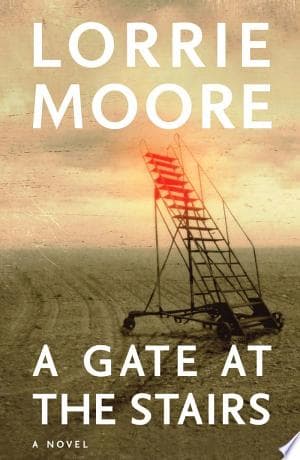
Lorrie Moore (2009)
Genre
Fiction
Reading Time
450 min
Key Themes
See below
Sign in to track this book
After 9/11, a naive college student nannying for a mysterious family learns about love, loss, and racial identity in a small American town.
Twenty-year-old Tassie Keltjin, a student in a Midwestern university town, thinks about her first year, especially the summer of 2001. She takes a part-time job as a nanny for Dr. Sarah Brink and her husband, Edward. They live in a large house with a locked gate at the stairs. Their adopted one-year-old daughter, an African American child named Mary-Emma, is Tassie's main responsibility. Tassie, new to the complexities of race and class, watches the family with curiosity and naivete, trying to understand their seemingly perfect but detached life. She notices the tension between Sarah and Edward, and Sarah's somewhat forced attempts to connect with Mary-Emma's racial heritage.
Tassie spends her days caring for Mary-Emma, whom Sarah calls 'Little' to distinguish her from her birth mother, 'Big' Mary-Emma, who is dead. Sarah often seems overwhelmed and detached, frequently worrying about Mary-Emma's development and her own mothering skills. She tries to expose Mary-Emma to African American culture, often in superficial ways, like playing specific music or buying certain books. Edward, a restaurant owner, is more distant, often absent, and seems to have a strained relationship with Sarah. Tassie starts to notice the subtle sadness and pretense in the household, which contrasts with her own simple rural upbringing. The locked gate at the stairs becomes a symbol of the family's hidden complexities.
While working, Tassie also explores her own romantic life. She has a casual relationship with Reynaldo, a fellow student and musician who offers humorous, sometimes cynical, comments on her experiences. Tassie also gets involved with Frank, an older, more serious graduate student from her poetry class. She deals with the emotional challenges of these relationships, her inexperience often leading to misunderstandings and hurt. Her interactions with Reynaldo and Frank contrast with the isolated world of the Brinks, highlighting Tassie's journey of self-discovery and her attempts to define her identity outside her family and new employer.
Sarah surprises Tassie by introducing John, a young African American man, as a 'babysitter' to help care for Mary-Emma. John is initially presented as a distant relative or acquaintance, but his role and connection to the family are unclear. Tassie finds John quiet and somewhat unsettling, but also interesting. His presence adds another layer of mystery to the Brink household, especially given Sarah's earlier worries about Mary-Emma's cultural upbringing. Tassie observes John's interactions with Mary-Emma, noticing his quiet attentiveness, but also sensing a deeper, unspoken tension around his presence in the family. His arrival further complicates Tassie's understanding of the Brinks' motives and secrets.
The story is set after 9/11. Tassie's older brother, Robert, a gentle and somewhat aimless young man, is deeply affected by the terrorist attacks. He makes the unexpected decision to join the military, a choice that deeply worries Tassie and their parents, who are rural Wisconsin farmers. Robert's enlistment introduces themes of patriotism, sacrifice, and how national events affect individual lives. Tassie struggles to reconcile her brother's decision with her image of him, and his upcoming deployment casts a shadow over her summer, mixing her personal anxieties with the broader political climate. This decision highlights the vulnerability of young people during wartime.
Tassie eventually learns the truth about John: he is Edward's biological son from an affair with Mary-Emma's birth mother, 'Big' Mary-Emma. This revelation shatters Tassie's view of the Brink family's carefully built image. It explains the strange dynamics, Sarah's anxieties, and John's unclear role. The Brinks had adopted Mary-Emma, John's half-sister, after 'Big' Mary-Emma's death. Edward's infidelity and the cover-up expose the hypocrisy and pain within the family. Tassie is horrified by the deception and the emotional burden placed on John, who is essentially a silent witness to his father's new family. This discovery marks a significant loss of innocence for Tassie.
After the truth about his parentage and the tension of his situation, John disappears from the Brink household. His sudden departure leaves a void and increases the unease. Sarah and Edward are visibly shaken, though they offer little explanation. Tassie is deeply affected by John's absence, feeling guilt and helplessness. She thinks about the unspoken burdens John carried and the injustice of his situation. His disappearance shows the fragility of the Brinks' carefully maintained image and forces Tassie to confront the darker aspects of human nature and the consequences of hidden truths. The event leaves a lasting impression on Tassie, shaping her understanding of trust and betrayal.
Robert goes to Afghanistan, leaving Tassie and her family consumed with worry. Tassie struggles to cope with the reality of her brother being in a war zone, the news reports and constant threat of danger weighing heavily on her. She feels increasingly isolated in her grief, her everyday life at the university feeling unimportant compared to her worries about Robert. The war becomes a constant presence, a stark contrast to her academic life. Tassie's thoughts reveal her attempts to process the potential loss and the irreversible change Robert's deployment brings to their family, highlighting the personal cost of war.
Robert returns home for Christmas leave, but he is visibly changed by his experiences in Afghanistan. He is withdrawn, haunted, and struggles to reconnect with his family and his former life. Tassie observes his emotional distance and the unspoken traumas he carries. The joy of his return is lessened by the realization that he is no longer the same brother who left. His interactions are strained, and he shows signs of post-traumatic stress. This visit highlights the psychological impact of war, not only on the soldier but also on their loved ones, who must confront a stranger in the place of the person they knew.
Sadly, Robert dies by suicide shortly after returning to active duty. His death shatters Tassie and her family, leaving them in deep grief and shock. Tassie struggles to understand her brother's gentle nature with his violent end, questioning the circumstances, the war's role, and her own inability to help him. His death is a devastating blow, marking a definitive loss of innocence for Tassie and forcing her to confront the ultimate consequences of trauma and war. She deals with immense sorrow, anger, and a desperate search for meaning in the face of such an incomprehensible loss, changing her perspective on life forever.
After Robert's death, Tassie revisits the Brink household, seeking some closure or understanding, though she doesn't explicitly state her intentions. She confronts Sarah, not necessarily about John or Edward's affair, but about truth, secrets, and the fragility of life. The conversation is filled with unspoken tensions and veiled accusations. Tassie, now matured by her own grief, sees through Sarah's carefully constructed image with a clearer, more cynical eye. This confrontation, while not resolving all mysteries, allows Tassie to assert her own perspective and perhaps begin to process the disillusionment she has experienced, marking a shift in her relationship with her former employer.
The novel ends with Tassie reflecting on her experiences from that summer and the years that followed. She acknowledges the deep impact of Robert's death and the Brink family's secrets on her development. She is no longer the naive twenty-year-old who arrived in the university town. Her narrative voice, though still with youthful longing, now carries the weight of hard-won knowledge and sorrow. Tassie looks towards her future, forever marked by the losses and revelations she has endured, but also with a new understanding of resilience and the lasting power of memory and love. The gate at the stairs, once a symbol of mystery, now represents the indelible boundaries and hidden depths of human experience.
The Protagonist
Tassie evolves from an innocent, somewhat detached observer into a woman deeply marked by grief, disillusionment, and a profound understanding of life's harsh realities.
The Supporting
He transforms from a gentle, somewhat lost young man into a traumatized soldier, ultimately succumbing to the invisible wounds of war.
The Supporting
Sarah's carefully constructed façade slowly cracks, revealing a woman struggling with deceit, guilt, and a profound sense of inadequacy.
The Supporting
Edward remains largely static, his character defined by his past deceit and his inability to fully confront its consequences.
The Supporting
As a baby, Mary-Emma's arc is passive; she serves as a catalyst for the adults' actions and revelations, symbolizing innocence amidst complex adult secrets.
The Supporting
John's arc is one of silent suffering and eventual disappearance, highlighting the devastating impact of being an outsider in one's own family.
The Supporting
Reynaldo serves primarily as a foil and a sounding board for Tassie, his character remaining consistent as a representation of youthful freedom.
The Supporting
Frank's arc is limited to his role in Tassie's romantic awakening, representing a step in her emotional maturity.
The novel shows Tassie's journey from a naive, observant young woman to one deeply marked by grief and a cynical understanding of human nature. Her initial innocence is chipped away by the revelations of the Brink family's secrets—Edward's affair, John's true identity, and Sarah's anxieties—and then shattered by her brother Robert's tragic death. Tassie's experiences force her to confront the harsh realities of betrayal, the hidden costs of war, and life's fragility. This theme is clear in her changing narrative voice, which becomes more reflective and melancholic as the story progresses, moving from youthful optimism to a somber wisdom.
“What had been given and what had been taken away? Everything, it seemed, was both.”
The post-9/11 setting and Robert's enlistment and death are central to the novel's exploration of war's impact. Robert, a gentle and artistic soul, is changed by his military service in Afghanistan, returning home a haunted and withdrawn figure. His eventual suicide highlights the invisible wounds of war and the psychological toll it takes on soldiers and their families. Tassie's grief and struggle to understand her brother's fate show how national conflicts affect individual lives, leaving lasting scars. The war is not just a distant event but a deeply personal tragedy that reshapes her understanding of sacrifice and loss.
“The world was a place that could change in an instant, and then nothing was ever the same.”
The Brink family's secrets are central to this theme. Their seemingly perfect, wealthy life is a facade covering Edward's infidelity, his biological son John, and the complex racial dynamics around their adopted daughter, Mary-Emma. Sarah's anxieties and forced parenting stem from her attempts to maintain this illusion. Tassie, an outsider, slowly uncovers these deceptions, revealing the moral compromises and emotional costs of living a lie. The 'gate at the stairs' itself symbolizes the hidden depths and guarded truths within the family, showing how carefully built appearances can crumble under the weight of reality.
“There was a gate at the stairs, and it was always locked. It kept things in, or it kept things out.”
The novel explores the complexities of race through Sarah and Edward's adoption of Mary-Emma, an African American child. Sarah's often awkward and forced attempts to expose Mary-Emma to her 'heritage' (playing specific music, buying certain books) raise questions about authenticity and cultural appropriation. The introduction of John, Edward's biological son with 'Big' Mary-Emma, further complicates these dynamics, highlighting unspoken racial and class divides. Tassie, from a mostly white rural background, observes these interactions with a growing awareness, grappling with her own understanding of racial identity and belonging in a multicultural society.
“I was learning that the world was not just white and black, but a kaleidoscope of colors, all blurring and shifting.”
Tassie Keltjin narrates the story from a future point, reflecting on past events.
The novel is told through Tassie Keltjin's first-person perspective, but crucially, it's retrospective. She narrates the events of her summer in 2001 and beyond from a future vantage point, allowing for a blend of youthful immediacy and mature reflection. This device enables Tassie to interject with foreshadowing, philosophical observations, and a deeper understanding of the significance of past events, particularly the impact of Robert's death and the Brink family's secrets. The retrospective lens allows the reader to witness Tassie's loss of innocence and her growth in real-time while also benefiting from her accumulated wisdom and grief.
A physical gate that represents emotional barriers, secrets, and boundaries.
The literal gate at the stairs in the Brink household serves as a potent symbol throughout the novel. Initially, it represents the physical barrier protecting the child, Mary-Emma, but quickly evolves to symbolize the emotional barriers, hidden secrets, and guarded truths within the Brink family. It signifies the boundary between their carefully constructed public image and their messy private reality. For Tassie, it represents the mysteries she is trying to unravel and the limits of her understanding. After her disillusionment, the gate comes to represent the irreversible boundaries that loss and knowledge create in human experience.
Subtle hints and allusions that hint at future tragic events.
Lorrie Moore masterfully uses foreshadowing, particularly regarding Robert's fate. Tassie's narrative voice, speaking from a future perspective, often includes subtle hints about impending tragedy, such as her anxieties about Robert joining the military, references to the dangers of war, and her reflections on the fragility of life. These allusions create a pervasive sense of dread and suspense, making Robert's eventual death by suicide feel both shocking and tragically inevitable. This device deepens the emotional impact of the plot twists and reinforces the theme of loss of innocence, as Tassie's future self already knows the pain her past self is yet to endure.
The contrast between Tassie's farming background and her new university town life.
The novel frequently juxtaposes Tassie's simple, grounded rural upbringing in Wisconsin with the more complex, sophisticated, and often morally ambiguous world of the Midwestern university town and the affluent Brink family. This contrast highlights Tassie's initial naiveté and her gradual awakening to class distinctions, racial tensions, and the hidden lives of others. Her farming family represents honesty and straightforwardness, while the academic/urban setting, particularly the Brinks' household, embodies pretense and hidden secrets. This device emphasizes Tassie's journey of self-discovery and her grappling with new, unfamiliar social codes and moral landscapes.
“The thing about life is that you never know when it will end, and so it's best to be ready for anything.”
— Tassie's early reflections on the unpredictable nature of existence.
“Most of what you hear about the world is wrong, but the wrongness isn't a lie. It's just a different kind of truth.”
— Tassie grappling with differing perspectives and the subjective nature of reality.
“There are times when you want to be someone else, and there are times when you want to be nowhere at all.”
— Tassie's internal struggles with identity and the desire for escape.
“The past is a foreign country; they do things differently there.”
— A classic literary allusion Tassie might ponder when considering her own past.
“Love is not a state, it's a process. It's a verb, not a noun.”
— Tassie reflecting on the active and evolving nature of relationships.
“Grief is like a house. You can live in it or you can leave it, but either way, it's always there.”
— Tassie's internal monologue about the enduring presence of loss.
“Sometimes you have to break things to make them right.”
— Tassie considering radical changes or difficult decisions.
“The only way to make sense of the world is to admit that it doesn't make sense.”
— Tassie's philosophical musings on the inherent absurdity of life.
“What you don't know can hurt you, but what you do know can hurt you more.”
— Tassie contemplating the burdens of knowledge and ignorance.
“Every secret is a kind of wound.”
— Tassie's thoughts on the corrosive nature of hidden truths.
“The world keeps turning, whether you're ready or not.”
— Tassie acknowledging the relentless forward motion of time and life.
“To be young is to be constantly surprised by what you thought you knew.”
— Tassie's perspective on the learning and disillusionment of youth.
“There's a thin line between remembering and inventing.”
— Tassie's reflections on the unreliability and reconstructive nature of memory.
“You can never go home again, not really. Because you've changed, and so has home.”
— Tassie's lament about the impossibility of recapturing the past.
Ready to see how well you understood this book? Take our interactive quiz with 10 questions.

Lorrie Moore is an American writer, critic, and essayist. She is best known for her short stories, some of which have won major awards. Since 1984, she has also taught creative writing.

Ashley Antoinette
4.6

Mark McDonald
4.4
Luo Guanzhong
4.4
Mia McKenzie
4.3
Dorothy Parker
4.3

Joaquim Maria Machado de Assis
4.3

James Thurber
4.2

Terry Kay
4.2