“It was dangerous to be a human being, dangerous to be a snake, dangerous to be a dog, dangerous to be a pig. There was no way to be safe.”
— Reflecting on the pervasive violence and danger in the rural South.

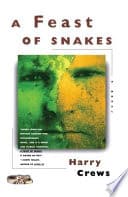
Harry Crews (1998)
Genre
Fiction
Reading Time
240 min
Key Themes
See below
Sign in to track this book
In rural Georgia, a beauty queen's desire to escape clashes with the chaos of the annual Rattlesnake Roundup, threatening her life.
Joe Lon Boney, a former high school football star now a bootlegger, returns to Mystic, Georgia, for the annual Rattlesnake Roundup. He feels like a failure and resents the town that once admired his athletic skills. His past glory overshadows him, and he struggles with the expectations of his family and community. He still longs for the simple, violent satisfaction of football, which he equates with purpose. His return is not happy; it is a reluctant trip to a place that both defines and stifles him, setting the stage for his increasingly erratic and violent behavior as the Roundup approaches.
Lottie Mae Parker, a young woman known for her skill with rattlesnakes, is important in Mystic. She lives with her grandfather, Dudley, and is deeply connected to the land and its animals. Her relationship with the snakes is complex; she respects them but also uses them for the Roundup, an event that gives her a unique kind of power and recognition. She is very independent and resists the traditional roles expected of women in Mystic. Her interest in snakes is a way to rebel against the restrictive social norms and the predatory male attention she constantly receives, especially from men like Joe Lon and Buddy Matlow.
Buddy Matlow, a cruel and unstable man, has a disturbing obsession with Lottie Mae Parker. He sees her independence as a challenge to his masculinity and believes he has a right to control her. Buddy often follows Lottie Mae, trying to scare and assault her. His actions come from deep insecurity and a desire to show his dominance in the community. He represents Mystic's darker, more violent side, where power is often shown through aggression and fear. His constant pursuit of Lottie Mae suggests increasing violence and is a constant threat to her freedom and safety.
The Matlow family, led by the strong and unforgiving Mama Matlow, is a force in Mystic. Mama Matlow is a matriarch who controls her sons, including Buddy, with a firm hand, teaching them a brutal sense of survival and a disregard for weakness. She symbolizes the town's harsh, unforgiving nature, where emotion is seen as a weakness. The family's interactions are often violent and without affection, reflecting a cycle of abuse and aggression in their lives. Their presence in the story highlights the raw, uncivilized aspects of the community and the power struggles within it.
As the annual Rattlesnake Roundup nears, Mystic changes from a quiet rural town into a chaotic center of activity. Outsiders, drawn by the spectacle and the promise of celebration, flood the town. This influx of people, with their varied intentions, creates an unstable atmosphere. The increased crowd heightens existing tensions, especially those involving Lottie Mae and Joe Lon. The town's unique customs and the outsiders' reactions to them create a clash of cultures, further showing Mystic's strangeness and underlying savagery. The crowd's energy fuels the growing sense of impending chaos and violence that will define the Roundup.
Joe Lon Boney's inability to reconcile his past successes with his current failures pushes him further into despair and self-destructive behavior. He drinks too much, engages in casual violence, and struggles to connect meaningfully with anyone, including his girlfriend, Berenice. His inner turmoil shows as outward aggression and a desperate need to regain a sense of power and purpose. He often lashes out at those around him, projecting his frustrations onto others. His decline is a tragic result of a man unable to escape his former self, and his actions become increasingly unpredictable and dangerous as the Roundup continues.
The Rattlesnake Roundup begins, a spectacle that is both a local tradition and a crude display. Men, including Joe Lon, actively catch, milk, and kill the snakes. The event is a raw demonstration of human control over nature, filled with a primal energy. For the participants, it is a chance to prove their masculinity and courage, while for spectators, it is a grim form of entertainment. The atmosphere is a mix of excitement, fear, and a strange sense of community. The Roundup is a small example of the power struggles and violent impulses that define Mystic, bringing its inhabitants' darkest desires to the surface.
Amidst the brutal festivities of the Roundup, Lottie Mae Parker performs her unique snake dance. Her movements are graceful, a sharp contrast to the men's rough handling of the snakes. She captures the crowd's attention, captivating them with her fearless interaction with the dangerous reptiles. This performance shows her unique connection to the snakes and her defiance of traditional female roles. However, her powerful display also draws the intense, predatory gaze of men like Buddy Matlow and Joe Lon, highlighting the vulnerability that comes with her strength and independence in such a male-dominated setting.
As the Roundup progresses, the festive atmosphere gives way to increasing violence. Drunken fights break out, and underlying tensions among the townspeople and with outsiders boil over. Buddy Matlow's aggression towards Lottie Mae grows, leading to several terrifying encounters. Joe Lon, fueled by alcohol and his own inner struggles, becomes more erratic and dangerous, committing impulsive acts of aggression. The lines between celebration and savagery blur, as Mystic's raw, untamed nature fully appears. The violence is not random; it is a manifestation of the characters' repressed desires and the town's inherent brutality, leading to tragic outcomes.
Pushed to the edge by his failures, jealousy, and the chaotic environment of the Roundup, Joe Lon Boney's suppressed rage finally explodes. In a drunken fury, he commits a brutal act of violence, attacking Buddy Matlow and others in his way. This moment is the peak of his psychological torment and his inability to cope with his past and present. The act is senseless and horrifying, a final, desperate attempt to assert control and significance in a world where he feels powerless. It shatters any remaining order and plunges the story into deep darkness, leaving destruction.
The Rattlesnake Roundup ends in violence and despair. The aftermath shows the full extent of the tragedy, with lives forever changed and the town scarred by the events. Joe Lon Boney faces the grim results of his actions, his life falling into an inescapable abyss. Lottie Mae Parker, though physically strong, is deeply affected by the violence she witnessed and endured. Mystic, having indulged in its annual ritual, is left to recover, but the underlying tensions and brutality remain. The ending offers no redemption, only a bleak look at human destructiveness and its environment.
The Protagonist/Anti-hero
Joe Lon's arc is a tragic descent from a disillusioned man clinging to past glory to a violent, self-destructive individual who ultimately shatters his own life and the lives around him.
The Supporting/Symbolic
Lottie Mae maintains her strong sense of self and connection to nature despite enduring intense violence and objectification, emerging as a survivor though deeply affected.
The Antagonist
Buddy's arc is one of escalating aggression and sadism, leading to his violent confrontation with Joe Lon and eventual demise.
The Supporting/Antagonist
Mama Matlow remains a consistent, unyielding force, representing the unchanging, harsh core of Mystic.
The Supporting
Berenice's arc is one of increasing disillusionment and despair as she witnesses Joe Lon's irreversible descent into violence.
The Supporting
Dudley remains a steadfast, protective presence, observing the unfolding events with quiet concern and ultimately grief.
The Supporting
Willard remains a relatively static character, observing Joe Lon's downfall with a mixture of concern and detachment.
The Symbolic
The snakes are consistently portrayed as a wild, dangerous force, ultimately succumbing to human domination but leaving an indelible mark on the environment and psyche of Mystic.
The novel shows the harsh nature of the rural South, specifically Mystic, Georgia. It is a place where violence is common, traditions are brutal, and social rules are often twisted. The Rattlesnake Roundup itself is the best example of this theme, a ritual display of dominance over nature that reflects the power struggles among the townspeople. Characters like Buddy Matlow and Mama Matlow embody the unyielding cruelty and survivalist mindset that fills the community. The landscape is not romanticized; it is a setting for human savagery, where poverty and lack of opportunity contribute to a cycle of aggression and despair, as seen in Joe Lon's aimless violence.
“Mystic was a place where people learned to hit hard and expect to be hit harder.”
Joe Lon Boney is an example of a character harmed by longing for his past athletic glory. His inability to move past his high school football successes fuels his current despair, anger, and self-destructive behavior. He constantly compares his present failures to his past heroism, leading to deep resentment and a desperate need to regain a sense of power. This theme shows how clinging to an idealized past can prevent growth and lead to a tragic inability to adapt to the present. The town's collective memory of Joe Lon as a football star also traps him in a role he can no longer fulfill.
“He lived in the memory of other men's cheers, and it was killing him.”
*A Feast of Snakes* explores the thin line between human civilization and primal savagery. The Rattlesnake Roundup is a direct example of this, a ritual that brings out the most animalistic behaviors in the townspeople. Characters like Joe Lon and Buddy Matlow often act on raw impulse, lust, and aggression, with little regard for societal rules. Lottie Mae's connection to the snakes, while unique, also uses a primal understanding of nature. The novel suggests that beneath a thin layer of civility, humans are driven by powerful, often destructive, instincts, which are magnified in Mystic's isolated and brutal environment.
“Underneath the shirts and trousers, the human heart beat with the rhythm of the jungle drum.”
Women in Mystic, especially Lottie Mae Parker and Berenice, are often treated as objects, subjected to violence, and attempts at control by male characters. Lottie Mae is constantly stalked and threatened by Buddy Matlow, and even Joe Lon sees her as something to be won or owned. Berenice endures Joe Lon's unstable moods and possessiveness. However, the novel also shows these women's resilience. Lottie Mae, in particular, maintains her independence and strength despite constant threats, embodying a quiet power that defies the male aggression around her. Her snake dancing is a powerful statement of her unique identity.
“She moved among the men, a creature of grace and danger, refusing to be tamed.”
The story shows a relentless cycle of violence and despair that seems inescapable for Mystic's inhabitants. Joe Lon's violence comes from his own inner despair and outside pressures; Buddy Matlow's aggression is a product of his upbringing and insecurities. The Matlow family, in general, continues a brutal existence. The Roundup itself is a violent ritual that reinforces this cycle, offering a temporary release that only intensifies the underlying tensions. The novel offers little hope for redemption or escape, suggesting that the characters are trapped in a predetermined pattern of aggression and suffering, passed down through generations and reinforced by their environment.
“The town had a way of chewing up its own, of spitting out the bones of those who couldn't keep up.”
A central annual event symbolizing the town's primal nature and the characters' struggles.
The Rattlesnake Roundup is the pivotal plot device in the novel. It serves as both the setting and the driving force for much of the conflict. More than just a local festival, it's a ritualistic act that brings out the raw, untamed aspects of Mystic and its inhabitants. The Roundup symbolizes man's attempt to dominate nature, but also mirrors the characters' internal struggles with their own primal instincts, violence, and fears. It acts as a pressure cooker, intensifying existing tensions between characters like Joe Lon, Buddy, and Lottie Mae, ultimately leading to the novel's tragic climax.
A pervasive flashback and symbol of Joe Lon's lost glory and current despair.
Joe Lon's past as a celebrated high school football star is a constant, haunting presence throughout the narrative. It functions as a recurring motif and a source of deep psychological torment for him. This past glory serves as a stark contrast to his present failures, fueling his resentment, self-pity, and violent outbursts. It is a symbol of what he once was and what he can no longer be, trapping him in a cycle of nostalgia and unfulfilled potential. This device effectively explains Joe Lon's motivations and his inability to adapt to a life beyond his athletic prime.
A unique skill that highlights her independence and connection to nature, while making her a target.
Lottie Mae Parker's exceptional ability to handle rattlesnakes is a crucial plot device. It defines her character, setting her apart from others and establishing her fierce independence and almost mystical connection to the natural world. This skill is a source of her power and respect, particularly during the Roundup, but it also makes her a target for the predatory male characters who seek to dominate and control her. Her interaction with the snakes symbolizes her own untamed spirit and resilience, even as it places her in constant danger, driving much of the conflict surrounding her.
A pervasive element that fuels aggression, lowers inhibitions, and deepens despair.
Alcohol is a constant presence in the novel, functioning as a catalyst for much of the violent and self-destructive behavior. Joe Lon Boney's heavy drinking exacerbates his rage, jealousy, and despair, leading him to make increasingly irrational and dangerous decisions. It lowers the inhibitions of many characters, leading to brawls, sexual aggression, and general chaos, particularly during the Roundup. Alcohol acts as a self-medication for the characters' underlying anxieties and failures, but ultimately serves to deepen their problems and drive them towards their tragic fates, highlighting the pervasive nature of escapism and self-destruction in Mystic.
“It was dangerous to be a human being, dangerous to be a snake, dangerous to be a dog, dangerous to be a pig. There was no way to be safe.”
— Reflecting on the pervasive violence and danger in the rural South.
“The world was not a place for subtlety. It was a place for blunt instruments and blunt intentions.”
— Marvin Molar's internal monologue about the harsh realities of life.
“He had always known that the only way to get anything done was to do it yourself, and if you couldn't do it yourself, you were just another piece of shit waiting to be swept away.”
— Joe Lon's self-reliant, aggressive philosophy.
“There was a certain beauty in the way a man could destroy himself, a kind of terrible grace in the complete surrender to his own worst instincts.”
— Observation on self-destruction and human nature.
“He had never understood why people wanted to be happy. It seemed like a lot of work for something that didn't last.”
— Joe Lon's bleak perspective on happiness.
“The town had a smell about it, a composite of sweat and cheap whiskey and fear and something else, something ancient and reptilian.”
— Describing the oppressive atmosphere of the town of Mystic.
“He hated the way people looked at him, as if he were a freak, as if he were something that had crawled out from under a rock.”
— Joe Lon's feeling of alienation and being judged.
“Every man had a breaking point, and some men were just looking for an excuse to find theirs.”
— A general reflection on human endurance and self-destructive tendencies.
“The only thing worse than being poor was being poor and knowing you were meant for something better.”
— Joe Lon's frustration with his circumstances and perceived potential.
“Snake handling was not about faith; it was about control, about proving you could dominate something that could kill you.”
— An insight into the underlying motivations behind snake handling.
“He understood that some things, once broken, could never be put back together, no matter how hard you tried.”
— Reflecting on irreversible damage and consequences.
“The silence in the woods was never truly silent; it was filled with the rustle of unseen things, the promise of sudden violence.”
— Describing the pervasive tension and hidden dangers of the natural environment.
“He wanted to hit something, break something, anything to get rid of the feeling that he was about to explode.”
— Joe Lon's internal struggle with his violent impulses.
“There was no honor in being a victim, only in surviving, no matter what it took.”
— A brutal philosophy of survival in a harsh world.
Ready to see how well you understood this book? Take our interactive quiz with 10 questions.

Ashley Antoinette
4.6

Mark McDonald
4.4
Luo Guanzhong
4.4
Mia McKenzie
4.3
Dorothy Parker
4.3
Joaquim Maria Machado de Assis
4.3
James Thurber
4.2
Terry Kay
4.2