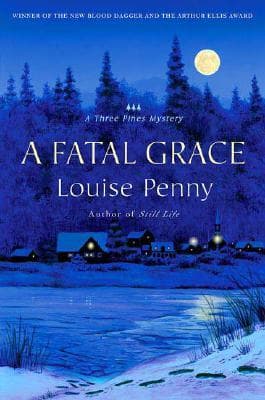
The Christmas Curling Match and a Shocking Death
The village of Three Pines celebrates its yearly Christmas curling match on the frozen lake, an event most residents attend. Among them is CC de Poitiers, a disliked lifestyle guru who recently moved to the village and has upset nearly everyone, including her husband, Charles Hay; her daughter, Lily; and her lover, Richard. As CC stands alone on the ice, watching the game, a sudden flash of light and a scream fill the air. She collapses, dead, electrocuted in front of dozens of witnesses, yet no one saw how. Chief Inspector Armand Gamache and his team from the Sûreté du Québec are called to investigate this strange public murder.
Gamache Arrives and the Initial Investigation
Chief Inspector Armand Gamache arrives in Three Pines with his second-in-command, Jean-Guy Beauvoir, and other officers. The scene on the frozen lake is confusing: CC de Poitiers was electrocuted, but there are no visible wires or clear ways for the killer to have acted without being seen. Gamache quickly learns that CC was a cruel, manipulative woman who was good at making enemies. He interviews the villagers, including Gabri Dubeau, Olivier Brulé, Clara Morrow, Peter Morrow, Myrna Landers, and Ruth Zardo, all of whom give honest, often harsh, opinions of CC. The initial thought is that almost everyone had a reason, making the killer's identity even harder to find.
Unraveling CC's Life and Schemes
As Gamache and his team investigate, they find out how truly deceitful and cruel CC de Poitiers was. Her 'lifestyle guru' business, 'Live Your Best Life,' was a pyramid scheme that took advantage of vulnerable people. She had financially ruined several people, including a former friend, and used her platform to publicly embarrass others. Her husband, Charles Hay, depended on her financially and seemed stuck in the marriage. Her lover, Richard, was also under her control, and her daughter, Lily, suffered from CC's emotional abuse and neglect. Gamache realizes that CC's death is not just about a personal grudge, but possibly about the widespread harm she caused.
The Strange Case of the Missing Wires
The method of CC's murder remains a big challenge for Gamache. The medical examiner confirms electrocution, but the question of how electricity reached her on the open ice, without anyone seeing wires or a device, is puzzling. Gamache and Beauvoir carefully examine the scene, the surrounding area, and CC's belongings. They consider various possibilities, including remote-controlled devices, hidden wiring, or a very complex setup. The lack of any clear mechanism or weapon further complicates the investigation, suggesting a killer with a strong reason and significant cleverness and planning.
The Confessions and Red Herrings
Due to CC's unpopularity, several villagers, including Clara Morrow and Ruth Zardo, jokingly (or half-jokingly) confess to the murder, expressing relief at her death. While these are quickly dismissed as not serious, they show the strong dislike for CC. More seriously, Richard, CC's lover, eventually confesses, but his story does not fully match the evidence. Gamache suspects he is either covering for someone or truly believes he committed the crime during a blackout. These false leads force Gamache to sort through layers of emotion and anger, making it hard to tell real guilt from the general hatred for the victim.
The Revelation of the Electric Fence
Through careful thought and observation, Gamache finally puts together the clever murder plot. He realizes that the killer used a portable, battery-powered electric fence, like those used for livestock, which was cleverly hidden until the moment of the murder. The current went through a wire that ran from the fence, along the ice, to a specific spot where CC was standing. A remote trigger, perhaps hidden as an everyday object, activated the current at the right moment. This explains why no one saw wires beforehand and why the electrocution seemed so sudden and unexplainable.
The Killer's Motive and Identity
The discovery of the electric fence leads Gamache to focus on those with both a reason and the technical knowledge or access to such a device. He eventually confronts Charles Hay, CC's quiet and seemingly timid husband. Charles confesses to the murder, explaining how years of emotional abuse, public humiliation, and financial manipulation pushed him to his limit. He describes how he carefully planned the murder, using his knowledge of electronics and the busy curling match to carry out his plan. His confession reveals a man destroyed by his wife, driven to a desperate act.
The Aftermath and Charles's Confession
Charles Hay tells the exact details of his plan: how he built the device, hid the wires, and chose the precise moment to activate it during the curling match. He describes the years of emotional pain he endured, leading to his decision to end CC's life. His confession is not regret for the act itself, but a deep sadness for the situation that led him to it. Gamache, while understanding the great pressure Charles was under, notes the sad results of his actions. The villagers, though shocked by Charles's guilt, are not entirely surprised given CC's character.
Gamache's Personal Struggles
Throughout the investigation, Chief Inspector Gamache deals with his own personal issues and the demands of his job. The previous case, involving a corrupt colleague and a brutal event, still troubles him, affecting his sleep and peace of mind. He struggles with the unclear morals of justice and the deep effect violence has on both victims and perpetrators. His care for humanity, even for the killer, is clear, but it also affects his emotional well-being. He confides in Beauvoir, showing the depth of his internal struggles, which are often hidden behind his calm appearance.
The Lingering Threat and a Warning
As the Three Pines case ends, Gamache receives a disturbing anonymous letter, suggesting that the threats from his previous case are not over. The letter, delivered in a way that implies a smart and dangerous enemy, warns him that he is being watched and that his life, and possibly the lives of those he cares about, are still at risk. This ominous event shifts the focus from the solved murder to a larger, ongoing fight against corruption within the Sûreté, hinting at a continuing personal struggle for Gamache that goes beyond the peaceful village of Three Pines.