“Perhaps to lose a battle is the only way to win it.”
— The Corporal reflecting on the nature of sacrifice and victory.


Sign in to track this book
During World War I, a French corporal's rebellion against the war machine forces a reckoning with faith, sacrifice, and humanity's capacity for both destruction and redemption.
In the spring of 1918, during World War I, the entire Western Front inexplicably falls silent for three days. This armistice is caused by a French corporal and his twelve followers who refuse to fight, starting a mutiny that spreads across the lines. The French high command, with their British and German counterparts, sees this as a catastrophic breach of military order and a threat to the war. The corporal, a Christ-like figure, and his twelve disciples are apprehended and imprisoned in a chateau behind the French lines. The military hierarchy is determined to make an example of them, fearing that such an act of peace could unravel the war effort and expose the futility of their command.
General Gragnon, the commander of the French division where the mutiny occurred, is overwhelmed by the disgrace and potential consequences. He attempts suicide by shooting himself, but only wounds his shoulder, adding to the chaotic atmosphere. His failure and the mutiny bring the Supreme Commander of the Allied armies, an old, seemingly omnipotent French General, to the chateau. The General, a figure of authority, arrives to personally oversee the handling of the mutiny. His presence signifies the gravity with which the high command views the corporal's actions, and he immediately takes charge of the situation, preparing to restore order and punish the offenders.
The Supreme Commander, the corporal's biological father, confronts him in his cell. The General offers the corporal a chance to recant his actions, deny his leadership of the mutiny, and accept a pardon, allowing the war to continue. He argues that the corporal's act of peace is a dangerous illusion, a threat to the established order that, despite its flaws, is necessary for human civilization. The General, a pragmatist and a figure of worldly power, tries to convince his son that his idealism is naive and destructive. The corporal, however, refuses, maintaining his belief in peace and the power of human compassion over the machinery of war, even when facing certain death.
Despite the Supreme Commander's efforts, the corporal is court-martialed. The trial is a formality, a predetermined exercise designed to uphold military law and send a clear message. The corporal and two of his disciples, a British private and a German sentry who had joined their cause, are sentenced to death. On the third day of the armistice, the corporal is executed by firing squad. His death, however, does not end the ripple effect of his actions. His body is buried in a makeshift grave, but his sacrifice transforms him into a symbol of resistance against the futility of war and a martyr for peace, echoing the story of Christ.
Following the corporal's execution, the war immediately resumes with renewed ferocity, as if to erase the memory of the three days of peace. However, the story of the corporal and his twelve men begins to spread through the trenches and beyond, taking on the quality of a fable. Soldiers on both sides are affected by it, some inspired by the corporal's defiance, others simply bewildered by the brief respite from fighting. The high command tries to suppress the narrative, but it continues to circulate, becoming an underground legend that challenges the official version of events. The brief armistice and the corporal's sacrifice become a symbol of the human desire for peace amidst the brutality of conflict.
The British private, one of the corporal's original twelve followers, is also executed. His death, alongside the corporal's, reinforces the military's determination to crush dissent. The Supreme Commander, having fulfilled his duty to maintain the war, returns to his headquarters, leaving behind the immediate aftermath of the executions. He has re-established military order, but at the cost of his own son's life and the suppression of a nascent movement for peace. The chateau, once a place of tension and potential revolution, reverts to a symbol of military authority, its purpose served in quashing the most significant challenge to the war's continuation.
The Quartermaster General, a former cavalry officer named Fougant, is tasked with overseeing the disposal of the corporal's body. He is a man caught between the demands of military protocol and a growing sense of disillusionment. He arranges for the corporal's body to be buried in a common grave, but the act itself is symbolic. Fougant, though a part of the military machine, begins to question the war's purpose and the cost of maintaining it. His journey reflects a broader unease within certain elements of the high command, who, despite their positions, are not immune to the moral implications of the war and the corporal's sacrifice.
Three women—Marthe, the corporal's sister; Marya, his mother; and a prostitute named Stella—are drawn into the aftermath of the mutiny. Marthe arrives seeking to claim her brother's body, driven by familial duty and a desire to understand his actions. Marya, a figure of silent suffering, embodies the grief of mothers who lose their sons to war. Stella, who had known the corporal before the war, represents a more worldly, yet compassionate, perspective on his idealism. Their presence highlights the human cost of the war and the personal impact of the corporal's sacrifice, moving beyond the purely military narrative to explore the emotional and spiritual dimensions of his story.
In the privacy of his headquarters, the Supreme Commander, the corporal's father, reflects on the events. He is a man burdened by the weight of his command and the moral dilemma his son's actions present. He grapples with the conflict between his duty to the war and his personal connection to the corporal's message of peace. He believes in the necessity of maintaining order, even at the cost of individual lives, viewing humanity as flawed and prone to conflict. His internal monologue reveals the complex philosophical underpinnings of his character, a man who understands the corporal's idealism but ultimately rejects it as impractical in a world defined by power and violence.
Years after the armistice, the corporal's body is exhumed and reburied in a more prominent grave, a symbol of the lasting power of his story. The reburial is orchestrated by those who recognize the symbolic significance of his sacrifice. The fable of the corporal and his followers continues to evolve, passed down through generations, embodying the hope for peace and the defiance against oppression. His story becomes a permanent fixture in the collective memory, a counter-narrative to the official history of the war, suggesting that even in the face of overwhelming power, individual acts of conscience can resonate and inspire across time.
The Protagonist
From an anonymous soldier, he becomes a leader of a spiritual rebellion, culminating in his sacrificial death and transformation into a legendary figure.
The Antagonist/Complex Figure
He maintains his resolve to uphold military order despite the personal cost, reaffirming his belief in the necessary evil of war.
The Supporting
She attempts to assert a claim over her brother's legacy, navigating the bureaucratic and emotional landscape of war's aftermath.
The Supporting
She remains a static, sorrowful figure, embodying the timeless grief of a mother who has lost her son to war.
The Supporting
She provides a grounded, compassionate perspective on the corporal's idealism and sacrifice.
The Supporting
His initial disgrace and failed suicide attempt ultimately lead to his further entanglement in the Supreme Commander's manipulative plans.
The Supporting
He moves from simply following orders to becoming an unwitting participant in preserving the corporal's legend.
The Supporting
He follows the corporal's lead, embodying shared idealism and facing the ultimate consequence.
The Supporting
He joins the corporal's cause, demonstrating the cross-national appeal of peace and suffering the same fate.
This theme is central to the confrontation between the Corporal and the Supreme Commander. The Corporal embodies an unwavering idealism, believing in the possibility of universal peace and human compassion, even at the cost of his own life. The Supreme Commander, conversely, represents a stark pragmatism, arguing that humanity is flawed and requires the brutal order of war and established institutions to prevent chaos. The novel explores the tension between these two worldviews, questioning whether idealistic acts can truly change a cynical world or if they are doomed to be crushed by the machinery of power. The Corporal's death, while a defeat for his physical presence, ensures his idealism lives on as a fable.
“You are doomed to choose. You cannot choose not to choose. You can choose to be what you are, or you can choose to be what you will be. You can choose to be what you were, or you can choose to be what you will be. You can choose to be what you are, or you can choose to be what you will be.”
Faulkner examines the mechanisms and justifications of war, portraying it as a self-perpetuating machine that consumes human lives. The three-day armistice started by the Corporal is a stark contrast, offering a glimpse of an alternative—a world without conflict. The novel scrutinizes the motivations behind continuing the war, showing how the military hierarchy prioritizes order and power over human life and peace. It suggests that war, despite its horrors, is upheld by those who benefit from its structure and the control it affords. The Corporal's actions and subsequent martyrdom highlight the human desire for peace amidst the brutality, even if that desire is ultimately suppressed by force.
“War is the ultimate expression of man's folly and his genius. It is the ultimate expression of his capacity for destruction, and his capacity for creation.”
The Corporal's story is an explicit allegory for the Passion of Christ, emphasizing sacrifice and martyrdom. His act of mutiny, his twelve followers, his trial, and his execution all echo biblical narratives. His death is not a failure but a transformative act, elevating him from a simple soldier to a symbolic figure whose legacy inspires hope and resistance. The novel explores how sacrifice, even when seemingly futile in the immediate sense, can create lasting meaning and create a 'fable' that transcends the physical realm, challenging the dominant narratives of power and violence. His body's eventual reburial further cements his status as a martyr.
“He didn't have to choose to die for man. He chose to die for man. He chose to choose.”
The novel examines the dynamics between absolute authority (represented by the Supreme Commander and the military hierarchy) and individual rebellion (embodied by the Corporal). The military's swift and brutal response to the mutiny shows the lengths to which established power will go to maintain control and suppress dissent. However, the very act of rebellion, even when crushed, plants seeds of resistance and creates a counter-narrative. The 'fable' of the Corporal becomes a form of ongoing rebellion, a challenge to official history and a symbol of the human spirit that questions and resists oppressive systems. The power of the fable lies in its ability to inspire future acts of defiance.
“Man is immortal, not because he alone among creatures has an inexhaustible voice, but because he has a soul, a spirit capable of compassion and sacrifice and endurance.”
The revelation that the Corporal is the Supreme Commander's illegitimate son adds a personal tragedy and complexity to the narrative. It transforms an ideological conflict into a personal one, exploring how familial bonds can be strained or broken by conflicting ideologies and duties. The General's struggle with his son's actions, and Marthe's efforts to claim her brother's body, highlight how individuals grapple with personal legacies within a larger historical context. The 'fable' itself becomes a form of legacy, ensuring the Corporal's memory and ideals persist beyond his physical death, influencing future generations.
“A man doesn't choose to be a father. He is a father. He chooses to be a good one.”
The narrative explicitly parallels the Passion of Christ.
Faulkner uses biblical allegory extensively throughout 'A Fable'. The Corporal is a clear Christ-figure, leading twelve followers, orchestrating a three-day cessation of conflict (echoing Christ's three days in the tomb), facing betrayal (implied by the resumption of war), and undergoing a trial and execution as a sacrifice for humanity's redemption. His mother, Marya, parallels the Virgin Mary, and the prostitute, Stella, can be seen as a Magdalene figure. This device elevates the story from a mere war narrative to a profound meditation on sacrifice, faith, and humanity's capacity for both good and evil, giving the Corporal's actions universal, timeless significance.
The story of the mutiny transforms into a legendary tale.
The 'fable' is not just the title but a key plot device. The events of the mutiny and the Corporal's sacrifice are not merely reported; they are immediately transformed into an oral tradition, a legend passed among soldiers and civilians. This device highlights the power of storytelling and collective memory to create meaning and resistance, even in the face of official suppression. The evolving 'fable' ensures the Corporal's message of peace and defiance endures beyond his death, becoming a living, subversive narrative that challenges the authoritative version of history and inspires hope for future change.
A miraculous cessation of hostilities that sets the plot in motion.
The three-day armistice is the inciting incident and a powerful symbolic device. Its inexplicable nature and the subsequent silence on the Western Front create a vacuum in which the Corporal's actions gain immense significance. It represents a brief, utopian glimpse of peace, a moment when humanity transcends its self-destructive tendencies. This temporary peace serves as a direct challenge to the entrenched military order and underscores the artificiality of war. Its abrupt end, followed by renewed violence, highlights the fragility of peace and the powerful forces determined to maintain conflict.
A confined, symbolic location for the drama of authority and rebellion.
The chateau where the Corporal and his followers are imprisoned, and where the Supreme Commander operates, serves as a crucial symbolic setting. It is a microcosm of power, authority, and the containment of dissent. Its walls hold both the prisoners of peace and the architects of war. The confinement of the chateau emphasizes the intense, claustrophobic nature of the ideological and personal clashes occurring within. It acts as a stage for the 'trial' and execution, a place where the grand philosophical debates of the novel are enacted on a very human scale, representing the nexus where abstract power meets individual lives.
“Perhaps to lose a battle is the only way to win it.”
— The Corporal reflecting on the nature of sacrifice and victory.
“The only thing you can do for a man who's going to be shot for desertion is to shoot him.”
— The General's harsh realism regarding military justice.
“Man is indomitable, but he is not immortal.”
— A reflection on human resilience and ultimate mortality.
“The war was not a war anymore; it was a condition.”
— Describing the prolonged and pervasive nature of the conflict.
“There are no good wars or bad wars, only wars.”
— A cynical view on the moral ambiguity of conflict.
“He who would be free must first be bound.”
— A paradoxical statement about the path to freedom through constraint.
“The human heart is a lonely hunter.”
— A metaphorical description of the isolated human condition (though famously associated with another author, the sentiment resonates with Faulkner's themes of individual struggle).
“Peace is not the absence of war, but the presence of justice.”
— A more profound definition of true peace.
“Courage is the base of all virtue.”
— Emphasizing the fundamental importance of bravery.
“It is not defeat that destroys you, but the fear of defeat.”
— A psychological insight into the true source of downfall.
“Every man has to find his own way to live with the world, and his own way to die out of it.”
— Reflecting on individual autonomy in life and death.
“The living, not the dead, are responsible for the past.”
— Highlighting the ongoing burden of history on current generations.
“The longest journey is the journey inward.”
— A metaphor for self-discovery and introspection.
“Hope is not a substitute for action.”
— A pragmatic view on the necessity of active engagement.
Ready to see how well you understood this book? Take our interactive quiz with 10 questions.
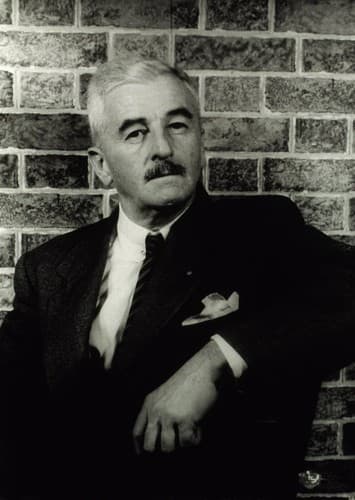
William Cuthbert Faulkner was an American writer known for his novels and short stories set in the fictional Yoknapatawpha County, based on Lafayette County, Mississippi, where Faulkner spent most of his life. A Nobel laureate, Faulkner is one of the most celebrated writers of American literature and often is considered the greatest writer of Southern literature.

Ashley Antoinette
4.6

Mark McDonald
4.4
Luo Guanzhong
4.4

Mia McKenzie
4.3

Dorothy Parker
4.3

Joaquim Maria Machado de Assis
4.3

James Thurber
4.2

Terry Kay
4.2