“A man must be able to choose his own death. Not to be chosen for him, but to choose it himself.”
— Ben du Toit's internal reflection on the injustices of the apartheid regime and the lack of autonomy granted to black individuals.

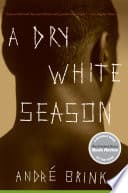
Andre Brink (2013)
Genre
Fiction
Reading Time
420 min
Key Themes
See below
Sign in to track this book
A white schoolteacher in apartheid South Africa investigates the state-sanctioned murder of a black janitor, destroying his faith in the system and exposing his family to deadly truths.
Ben Du Toit, a white Afrikaner schoolteacher in Johannesburg, lives a comfortable, unconcerned life. One day, at his school, he sees the violent arrest of Gordon Ngubene, the black janitor, and his son, Jonathan. The Special Branch police offer no explanation, only saying it's for 'interrogation.' Ben, initially trusting the authorities, is disturbed by the brutality but believes Gordon must have done something. He tries to comfort Gordon's wife, Emily, but his existing bias keeps him from fully understanding her fear. This event begins to change Ben's view of his country's justice system, as he struggles to connect the quiet, hardworking Gordon with the implied crime.
Days after his arrest, Ben learns that Gordon Ngubene died in detention, officially ruled a suicide by hanging. Ben attends the inquest, where the police give a false story of Gordon's death, claiming he used a blanket to hang himself. Despite clear inconsistencies, the magistrate accepts the police's account. Ben, increasingly troubled, speaks with Emily Ngubene, who says Gordon was tortured and that the police offered her money to stay quiet. He also learns that Gordon was investigating the death of his own son, Jonathan, who died shortly after their arrest, a detail the police left out. This increases Ben's suspicion and sense of injustice.
Driven by his conscience and a desire for truth, Ben begins his own investigation into Gordon's death. He speaks with Stanley Makhaya, a black taxi driver and an acquaintance of Gordon, who is initially afraid to talk because of the Special Branch. Stanley eventually gives Ben important information about Gordon's activities, including his involvement in a secret movement for black rights. Ben also tries to involve his lawyer friend, Theunis, but Theunis advises him to drop the matter, warning him of the dangers of challenging the state. Ben's wife, Susan, and his children, especially his daughter, Suzette, worry about his obsession, fearing the consequences of his defiance.
As Ben investigates, he encounters the widespread cruelty and intimidation of the apartheid regime. He tries to visit Emily Ngubene, but finds her house ransacked and her missing, clearly the work of the Special Branch. His phone calls are monitored, and he receives anonymous threats. Colonel Viljoen, the head of the Special Branch, directly warns Ben to stop his inquiries, subtly threatening his family. Ben also meets Melanie Bruwer, a journalist who has investigated similar cases and offers him guidance and a connection to an underground network. These encounters confirm Ben's understanding that he is against a powerful and ruthless system designed to suppress dissent and truth.
Ben's focus on Gordon's case increasingly separates him from his family. His wife, Susan, becomes openly hostile, prioritizing their safety and social standing over his moral quest. His son, Johan, a conservative young man, dislikes his father's actions, seeing them as a betrayal of their Afrikaner heritage. Only his daughter, Suzette, shows some understanding, though she too fears for his safety. Ben finds himself increasingly alone, with his once-harmonious family life falling apart under his commitment to justice. The emotional cost for Ben is huge, as he struggles with the choice between personal security and moral integrity, a choice his family refuses to support.
Ben learns that Stanley Makhaya has an affidavit detailing Gordon's torture and the true circumstances of his death. He goes on a dangerous journey to find Stanley, traveling into the black townships, areas usually forbidden to white people without permits. This experience shows him the poverty and oppression black South Africans face, further strengthening his resolve. He eventually finds Stanley, who is in hiding. Stanley, despite his fear, agrees to give Ben the affidavit, recognizing Ben's genuine commitment. This act of trust from Stanley deepens Ben's sense of responsibility and reinforces the human connection that apartheid tries to deny.
With Stanley's affidavit, Ben tries to submit it to the authorities, hoping to expose the truth. However, he is betrayed by someone he trusted, and the affidavit falls into the wrong hands. Shortly after, Stanley Makhaya is found dead, an apparent 'accident' that Ben knows is murder. The Special Branch increases its surveillance and harassment of Ben, making it clear that he is now a target. His car is tampered with, and he receives more direct death threats. This betrayal shows the pervasive reach and ruthlessness of the state, demonstrating that even those who try to help can become victims.
Melanie Bruwer, the journalist, becomes Ben's most loyal ally. She recognizes the importance of his information and the danger he is in. She helps him navigate state censorship, connecting him with international contacts who might publish his findings. Melanie risks her career and safety to support Ben, showing a shared commitment to justice. Their relationship deepens into mutual trust and respect, offering Ben a crucial source of comfort and practical help as he faces increasing isolation and danger. Melanie's expertise in investigative journalism proves valuable, but also puts her in the Special Branch's sights.
Ben finds himself cornered. His family has abandoned him, his friends have distanced themselves, and the Special Branch's threats are constant. He tries to send his evidence to an international news agency, hoping to bypass local censorship. However, his efforts are stopped at every turn. Colonel Viljoen and his men close in, making it clear there is no escape. Ben feels a deep sense of despair, realizing the overwhelming power of the state and the huge personal cost of his fight for truth. He understands that his quest, though morally right, has likely been in vain within South Africa.
In the novel's tragic end, Ben Du Toit is murdered by agents of the Special Branch. His death is made to look like a mugging or an accident, a common tactic used by the regime to eliminate opponents. The official reports leave the details of his death vague, but the implication is clear: he was silenced for exposing the truth. His body is found, and the authorities quickly close the case. Ben's death shows the dangers of challenging apartheid and how far the state would go to keep its power and secrecy. His story, however, is not entirely lost, as Melanie Bruwer continues to work to expose the truth.
Following Ben's murder, Melanie Bruwer takes up his cause. She gathers the remaining parts of his investigation, including his notes and the evidence he collected. Driven by a moral obligation and a desire to honor Ben's sacrifice, she commits herself to ensuring his story, and Gordon Ngubene's, is heard. She works tirelessly to smuggle the information out of South Africa, risking her own life and freedom. Melanie's actions mean that while individuals may be silenced, the truth, once found, can eventually come to light, even if it takes time and great personal sacrifice.
The Protagonist
Ben transforms from an oblivious, conformist citizen to a morally awakened dissident, sacrificing his family, career, and life to expose the truth of apartheid's atrocities.
The Catalyst/Victim
Gordon's struggle and death reveal the systemic oppression and brutal reality of apartheid, acting as a tragic symbol for a wider population.
The Supporting/Ally
Melanie evolves from a seasoned but cautious journalist to a dedicated activist, risking her life to fulfill Ben's mission and expose apartheid's crimes.
The Antagonist
Viljoen remains a static symbol of the state's immovable, brutal power, serving as the primary obstacle to Ben's quest for truth.
The Supporting
Susan's character arc shows a growing alienation from Ben as she prioritizes self-preservation and traditional values over his pursuit of justice.
The Supporting
Suzette's arc reflects a nuanced understanding of her father's struggle, evolving from fearful child to a quietly sympathetic observer.
The Supporting/Victim
Stanley's arc tragically demonstrates the personal cost of resistance under apartheid, moving from fearful witness to courageous informant, and ultimately, victim.
This theme is central to Ben Du Toit's journey. Initially unconcerned, Ben's conscience awakens because of the injustice of Gordon Ngubene's death. He moves from accepting apartheid to actively seeking truth. The novel shows the immense personal cost of such an awakening: Ben loses his family, career, social standing, and ultimately, his life. His change highlights that true morality often requires radical action and sacrifice, especially against systemic evil. The scene where he first sees the false suicide report is a key moment in his awakening.
“A person has to take a stand somewhere. Otherwise, you're not a person, you're a doormat.”
The novel shows how unchecked state power, through the Special Branch and Colonel Viljoen, leads to systematic oppression, torture, murder, and suppression of truth. The apartheid government uses fear, intimidation, and propaganda to maintain control, creating a society where dissent is quickly and brutally crushed. Gordon Ngubene's 'suicide' and Stanley Makhaya's 'accident' are examples of the state's willingness to eliminate anyone who challenges its authority. The pervasive surveillance and threats Ben experiences show how the state controls every aspect of life, corrupting even justice.
“Justice is a white word. For us, it means nothing.”
A main conflict in the novel is the struggle between truth, as sought by Ben Du Toit, and the lies of the apartheid state. The official story about Gordon's death is a clear fabrication, meant to hide state-sanctioned murder. Ben's entire quest is an attempt to uncover these layers of deceit and expose the grim reality. The difficulty he faces in finding and spreading the truth, along with the state's powerful censorship and propaganda, highlights how fragile truth is in an authoritarian society and the great effort needed to reveal it. Melanie Bruwer's role in trying to publish Ben's findings further emphasizes this struggle.
“The truth is a dangerous thing in this country. It can get you killed.”
The novel criticizes apartheid and its dehumanizing effects. It exposes the systemic racial injustice that affected every part of South African society, from arbitrary arrests and torture of black citizens to forced segregation and unequal application of the law. Gordon Ngubene's story reflects the suffering of the black community. Through Ben's eyes, the reader sees the contrast between the privileged lives of white Afrikaners and the brutal reality for black South Africans in the townships. The novel shows how apartheid not only oppressed its victims but also corrupted the moral fabric of its perpetrators and those who benefited from it.
“It was a dry white season, when the land was parched and the people were thirsty for justice.”
The story of Ben Du Toit is presented as a manuscript found by an unnamed narrator.
The novel employs a framing device where the story of Ben Du Toit is presented as a manuscript discovered and edited by an unnamed, sympathetic narrator after Ben's death. This device lends a sense of authenticity and retrospective tragedy to Ben's tale. It allows for the inclusion of Ben's personal notes and reflections, giving direct insight into his deteriorating mental state and growing isolation. The 'editor's notes' throughout the text highlight the difficulty of piecing together the full truth under an oppressive regime and underscore the enduring impact of Ben's sacrifice, even after his death.
The title symbolizes the moral and spiritual barrenness of apartheid-era South Africa.
The 'dry white season' is a powerful metaphor for the moral and spiritual desolation of South Africa under apartheid. 'Dry' signifies the lack of empathy, justice, and humanity, representing a society parched of compassion and truth. 'White' directly refers to the dominant white minority and their oppressive regime. The season evokes a period of hardship and barrenness, reflecting the suffocating atmosphere of fear, censorship, and racial intolerance. It symbolizes the emotional and societal drought caused by the regime's policies, where human connection and justice struggle to flourish.
Early warnings and threats hint at Ben's tragic fate.
Foreshadowing is used extensively to build tension and hint at Ben's inevitable tragic end. Early in his investigation, Ben receives subtle warnings from his lawyer friend, Theunis, and direct threats from Colonel Viljoen. The mysterious disappearances and 'accidental' deaths of other activists, like Stanley Makhaya, serve as grim precedents for Ben's own fate. These ominous hints create a sense of impending doom, making the reader aware of the extreme danger Ben is in and emphasizing the high stakes of his moral crusade against a ruthless, unforgiving state.
“A man must be able to choose his own death. Not to be chosen for him, but to choose it himself.”
— Ben du Toit's internal reflection on the injustices of the apartheid regime and the lack of autonomy granted to black individuals.
“Silence is the most effective weapon. It gives the illusion of peace. It gives the illusion that nothing is happening.”
— Ben du Toit's growing awareness of how the authorities use silence and denial to maintain control and suppress dissent.
“The truth is a dangerous thing in this country. It can get you killed.”
— A warning given to Ben du Toit as he begins his investigation into the death of Gordon Ngubene, highlighting the risks of seeking justice.
“You can't just stand by and watch. Not when you know.”
— Ben du Toit's internal struggle and realization that he can no longer remain a passive observer of the injustices around him.
“Every man has his breaking point. Every man.”
— A reflection on the psychological toll of oppression and the limits of human endurance under duress.
“It’s not enough to be good. You have to do good.”
— Ben's evolving understanding of morality, moving beyond passive virtue to active engagement in the fight against injustice.
“The past is never dead. It's not even past.”
— A poignant observation on how historical injustices and their consequences continue to haunt the present, particularly in South Africa.
“To be human is to be involved. To be human is to care.”
— Ben's realization of his fundamental human connection and obligation to others, particularly those suffering under apartheid.
“They want to make you feel alone. That's their biggest weapon.”
— Melanie Bruwer explains how the system isolates individuals to break their spirit and resistance.
“There are no easy answers, only difficult choices.”
— Ben du Toit grapples with the complexities of his situation and the moral dilemmas he faces.
“A dry white season. That's what it is. A season without rain, without growth, without hope.”
— The metaphorical title of the book, reflecting the bleak and oppressive atmosphere of apartheid South Africa.
“Sometimes you have to break the law to uphold justice.”
— Ben considers radical actions as legal avenues for justice prove futile and corrupt.
“The greatest evil is not to do evil, but to allow it to be done.”
— A powerful statement reflecting Ben's evolving ethical stance against complicity and inaction.
“They kill the body, but they can't kill the truth. Not forever.”
— A defiant thought, suggesting that while individuals can be silenced, the underlying truth will eventually emerge.
Ready to see how well you understood this book? Take our interactive quiz with 10 questions.

André Philippus Brink was a South African novelist, essayist and poet. He wrote in both Afrikaans and English and taught English at the University of Cape Town.

Ashley Antoinette
4.6

Mark McDonald
4.4
Luo Guanzhong
4.4
Mia McKenzie
4.3

Dorothy Parker
4.3

Joaquim Maria Machado de Assis
4.3

James Thurber
4.2

Terry Kay
4.2