“Humanity is to be pitied.”
— Agnes, the Daughter of Indra, says this as she observes the suffering and struggles of human beings on Earth.

August Strindberg (1901)
Genre
Fiction
Reading Time
60 min
Key Themes
See below
Sign in to track this book
In a world where identities melt and reality warps, a god's daughter comes to Earth, only to find humanity's endless suffering behind a locked door.
Indra's Daughter comes down from the heavens, observing Earth and lamenting the misery she sees. Her father, the God Indra, warns her about human sorrows. The Daughter wants to experience life firsthand to understand human complaints. She lands near a castle, which grows larger and larger, suggesting the passage of time and the weight of human efforts. She meets the Officer, who has waited seven years for his beloved Victoria, always hopeful but always disappointed by the locked door stopping their reunion. This first meeting introduces her to themes of waiting, longing, and the futility of human ambition.
The Daughter watches the Officer's endless wait outside the growing castle, a symbol of unfulfilled desires. She meets the Lawyer, who is physically changed and burdened by human complaints, which he literally takes into his body. He describes his suffering from defending people and hearing their grievances, showing how human interaction corrupts and how hard it is to find truth. The Lawyer's office is full of his clients' misery, and he wishes for a life of beauty and peace, a sharp contrast to his current reality. The Daughter begins to understand how widespread human sorrow is.
The Daughter, now named Agnes, enters a theater where she meets the Poet. The theater is a place of illusion and change, where reality and art blur. The Poet, an idealist, believes in the power of beauty and art to overcome human suffering, yet he faces the same frustrations and limits as others. Agnes watches the actors and audience, noticing the superficiality and fleeting nature of their emotions. She starts to question the truth of human expression and whether art can truly lessen pain, finding it often reflects or even increases human struggles instead of offering real escape.
Agnes marries the Lawyer, wanting to understand human love and commitment. Their home quickly becomes a place of domestic arguments and small annoyances. The Lawyer, once eloquent and burdened by larger sorrows, now focuses on everyday concerns like mending clothes and money problems. Their love, initially hopeful, soon turns into bickering and mutual resentment, stifled by daily life and their responsibilities. Agnes directly experiences the disappointment that often follows the first idealism of relationships, realizing that even love can become a source of suffering and restriction.
Agnes visits a school where she meets the Schoolmaster, who is tired from his job and the endless cycle of teaching children who seem headed for the same struggles as their elders. The children themselves are shown as both innocent and already marked by the world's imperfections. Agnes sees the slow loss of youthful idealism and the crushing weight of societal expectations. The school, meant to enlighten, instead seems to produce more individuals who will experience the same disappointments and limits, further reinforcing the repeating pattern of human suffering.
Agnes and the Lawyer visit a quarantine station, a place of isolation and cleansing, yet it also exposes hidden filth and moral corruption. They meet various characters, including the Dean, who represents spiritual authority but is also shown to be flawed and hypocritical. The quarantine station symbolizes society's attempts to control and clean up human imperfections, yet it ultimately reveals how widespread these flaws are. Agnes observes that even when trying to purify, humanity often just rearranges its problems or creates new forms of suffering, showing that human imperfection is inescapable.
Agnes and the Lawyer travel to Fair Haven, a supposedly perfect seaside resort, hoping to find peace and beauty. However, even here, they meet the same human flaws and disappointments. The Poet, who had previously expressed idealistic views, is now in despair, frustrated by the world's indifference to beauty and truth. He struggles with his art and his inability to make a real impact. 'Fair Haven' thus becomes another illusion, showing that escaping suffering is impossible even in seemingly perfect settings, as human nature itself carries the seeds of its own discontent.
The Officer's long wait at the growing castle finally ends. The castle, a recurring symbol of delayed gratification and unattainable desires, is finally opened. However, instead of his beloved Victoria, he finds only an old, withered woman. This reveals that his seven years of waiting were for an illusion, or that time cruelly changed the object of his desire. This devastating discovery emphasizes the futility of his devotion and how fleeting hope is. The locked door, once a barrier, now opens to a truth more painful than endless longing.
Agnes returns to the theater, which now appears as a stage for the entire human drama, including birth, life, and death. She observes various characters from her journey, their experiences now seeming like different acts in a grand, tragic play. The repeating nature of human suffering becomes clear, as individuals are born, strive, suffer, and eventually fade, only for the cycle to repeat. Agnes gains a deeper understanding of the universal patterns of existence, realizing that joy and sorrow are linked, and that life itself is a performance where everyone plays their part in a predetermined drama.
Having experienced the full range of human joy and sorrow, Agnes gets ready to return to the heavens. She has completed her mission of understanding human complaints. Before she leaves, she asks to see the flower that has been locked away in the castle—a symbol of beauty and mystery. When the door is finally opened, the flower is burning, symbolizing the purification of suffering and the temporary nature of earthly beauty. As she ascends, she takes with her the wisdom gathered from human experience, leaving the earthly realm with a deeper, though sorrowful, understanding.
As Agnes ascends, the Poet remains on Earth, thinking about her journey and his own. He recognizes her divine nature and the deep understanding she has gained. He expresses humanity's universal complaint—the struggle against injustice, the desire for beauty, and the inescapable cycle of suffering. He says goodbye to her, acknowledging that her departure marks the end of a unique intervention but not the end of human struggle. His words summarize the play's main themes, stressing the lasting nature of human pain and the comfort found only in a transcendent understanding.
The Protagonist
She transforms from an innocent observer to one deeply marked by human suffering, ultimately gaining profound insight into the human condition before returning to the divine realm.
The Supporting
His arc is one of sustained, unwavering hope that culminates in a devastating revelation of the futility of his wait.
The Supporting
He begins as a man burdened by grand societal ills, only to become bogged down by the mundane miseries of domestic life, further cementing his disillusionment.
The Supporting
He moves from an initial idealism about art's power to a more despairing, yet ultimately accepting, understanding of human suffering and the artist's role in reflecting it.
The Mentioned
He remains a static, omniscient figure, a guiding presence rather than one who undergoes change.
The Mentioned
Her 'arc' is revealed through the Officer's experience, transforming from an ideal to a symbol of shattered dreams.
The Supporting
He serves as a static representation of flawed spiritual authority.
The Supporting
He is a static representation of professional disillusionment.
The play explores the widespread and inescapable nature of human suffering. From the Officer's endless wait to the Lawyer's physical burden, and the small miseries of Agnes's marriage, suffering is shown as a basic part of being human. It includes not just grand tragedies but also small annoyances and unfulfilled desires. The Daughter's journey aims to understand this suffering, only to find it in every part of human life, proving it to be a universal constant. The play suggests that even trying to escape or lessen suffering often leads to new forms of pain.
“What a life! What a life! What a life!”
True to its title, the play follows a dreamlike logic where time and space are fluid, characters merge, and events happen out of order. This structure shows that reality is often subjective and illusory. The growing castle, the locked door, and the character changes all contribute to this sense of unreality. The play suggests that human perceptions and desires often create their own reality, which can be as unstable and deceptive as a dream. Finding truth is complicated by the constant shifting of appearances and meanings, making it hard to tell what is real from what is imagined.
“Everything can happen, everything is possible and probable. Time and place do not exist.”
Many characters in the play spend their lives on pursuits that ultimately fail. The Officer's seven-year wait for Victoria, the Lawyer's struggle with injustice, the Schoolmaster's attempts to teach, and even the Poet's search for beauty all lead to disappointment. The play critiques human idealism, showing how good intentions often clash with life's harsh realities, causing frustration and despair. Even love and marriage, as seen with Agnes and the Lawyer, become sources of small arguments and unmet expectations, highlighting the idea that many human efforts fall short of their high goals.
“Oh, what a life to be human!”
Despite the widespread suffering and futility, the play also explores humanity's search for meaning and transcendence. Indra's Daughter comes to Earth precisely to find meaning in human complaints. The Poet tries to express deep truths through art, and even the Lawyer, burdened by earthly problems, longs for beauty. This theme suggests that while life is full of suffering, there is also a lasting human spirit that seeks to understand, create, and rise above its limits. The Daughter's final ascent, having gained understanding, implies that true meaning might lie beyond Earth, or in the act of compassionate observation itself.
“Humanity is to be pitied!”
The play's structure mimics the fluid, illogical nature of a dream.
The entire play is structured to resemble a dream, as explicitly stated by Strindberg. This allows for rapid shifts in setting, time, and character identity without conventional logical transitions. Characters merge into one another (e.g., the Officer becomes a husband, then a schoolmaster), objects change (the castle grows), and events are not bound by chronological order. This device serves to emphasize the subjective and often chaotic nature of human experience, blurring the lines between reality and illusion, and highlighting the subconscious forces at play in human suffering and desire.
A recurring image representing unfulfilled desire, mystery, and the unattainable.
The locked door is a pervasive and powerful symbol throughout the play. Initially, it represents the Officer's inability to reach Victoria and fulfill his longing. It later reappears in various contexts, symbolizing hidden truths, societal barriers, and the elusive nature of happiness or understanding. The door becomes an obsessive image, representing both the hope of what lies beyond and the pain of exclusion. Its ultimate opening, often revealing something unexpected or disappointing, underscores the theme of disillusionment and the futility of certain human quests.
Characters change identities or roles, reflecting the fluidity of the self and universal human types.
Throughout the play, characters frequently merge into one another or transform their roles and identities. For instance, the Officer's experience of endless waiting is echoed in other characters' frustrations, and he himself seems to embody different archetypes of suffering humanity. This device suggests that individual identities are fluid and that human experiences are universal. It allows the play to explore various facets of human suffering and aspiration through a limited cast, emphasizing that individual stories are often variations on common themes. It also contributes to the dreamlike atmosphere, where identities are not fixed.
A visual metaphor for the passage of time, enduring ambition, and the weight of human history.
The castle that continually grows and expands throughout the play is a potent visual symbol. It represents the accumulation of human endeavors, the passage of time, and the enduring nature of societal structures and institutions. Its growth signifies the weight of history and tradition, but also the increasing burden of unfulfilled hopes and endless waiting. The castle, initially a place of mystery and expectation for the Officer, ultimately becomes a symbol of the futility of his longing and the crushing reality of time's effects, encapsulating the themes of aspiration, disillusionment, and the relentless march of existence.
“Humanity is to be pitied.”
— Agnes, the Daughter of Indra, says this as she observes the suffering and struggles of human beings on Earth.
“It is a pity for human beings.”
— A recurring lament from Agnes as she witnesses various forms of human unhappiness and limitation.
“The human being is so difficult to satisfy.”
— Agnes reflects on humanity's insatiable desires and the fleeting nature of their contentment.
“Why do they complain so much?”
— Agnes questions the constant grievances of humans, despite their capacity for joy.
“But they are so unhappy, these human beings!”
— Agnes's observation after experiencing the various hardships and disappointments of human life.
“One wants to be free, but one is not.”
— The Lawyer expresses the universal human paradox of desiring freedom but being bound by circumstances and duty.
“Life is hard, but it is not without its beautiful moments.”
— A more optimistic reflection amidst the play's pervasive sense of suffering, suggesting a balance.
“Everything is repeated, always repeated.”
— The Poet and other characters often lament the cyclical nature of life, suffering, and human folly.
“It is a dream, and yet it is real.”
— A meta-commentary on the play's structure and the nature of reality as perceived by the characters.
“One must suffer to become pure.”
— A thematic statement suggesting that suffering can be a path to spiritual refinement or understanding.
“The door is bolted, it can't be opened.”
— The recurring image of the bolted door symbolizes inaccessible truth, unfulfilled desires, or trapped existence.
“The human being is so pitiable.”
— Another instance of Agnes expressing profound empathy and sorrow for the human condition.
“I will take all the suffering on myself.”
— Agnes's ultimate sacrifice, embodying the divine's willingness to experience human pain to understand it.
“Everything is in vain, and yet one hopes.”
— A poignant summary of the human paradox: persistent hope despite overwhelming evidence of futility.
Ready to see how well you understood this book? Take our interactive quiz with 10 questions.
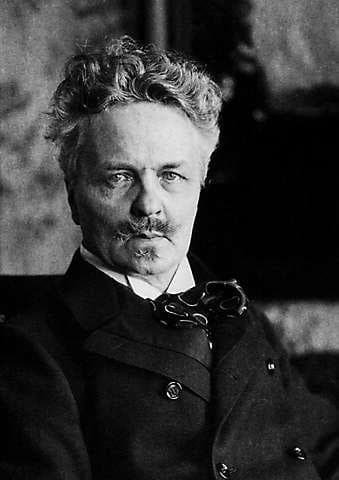
Johan August Strindberg was a Swedish playwright, novelist, poet, essayist and painter. A prolific writer who often drew directly on his personal experience, Strindberg wrote more than sixty plays and more than thirty works of fiction, autobiography, history, cultural analysis, and politics during his career, which spanned four decades. A bold experimenter and iconoclast throughout, he explored a wide range of dramatic methods and purposes, from naturalistic tragedy, monodrama, and history plays, to his anticipations of expressionist and surrealist dramatic techniques. From his earliest work, Strindberg developed innovative forms of dramatic action, language, and visual composition. He is considered the "father" of modern Swedish literature and his The Red Room (1879) has frequently been described as the first modern Swedish novel. In Sweden, Strindberg is known as an essayist, painter, poet, and especially as a novelist and playwright, but in other countries he is known mostly as a playwright.

Ashley Antoinette
4.6

Mark McDonald
4.4
Luo Guanzhong
4.4

Mia McKenzie
4.3
Dorothy Parker
4.3
Joaquim Maria Machado de Assis
4.3

James Thurber
4.2

Terry Kay
4.2