BookBrief
A Doll's House cover
Archivist's Choice

A Doll's House

Henrik Ibsen (1992)

Genre

Fiction

Reading Time

90 min

Key Themes

See below

Track Your Reading

Sign in to track this book

Nora Helmer's realization that her marriage is a 'doll's house' leads her to leave her family, challenging 19th-century expectations for women.

Synopsis

Nora Helmer, a wife in 19th-century Norway, lives a life her husband, Torvald, controls. As Christmas nears, her past returns when Nils Krogstad, from whom she secretly borrowed money years ago to save Torvald's life, threatens to reveal her forgery. Nora tries to keep the secret from Torvald, fearing his reaction and the damage to his reputation. Her friend Kristine Linde arrives, and Nora tells her everything, hoping for help. Krogstad's threats grow, and Nora faces a choice between protecting her husband and telling her secret. When Torvald learns the truth, he reacts with anger, not concern for Nora, showing the real nature of their marriage. Then, Krogstad, influenced by Kristine, returns the letter. Torvald, relieved his reputation is safe, forgives Nora, expecting things to go back to normal. But Nora sees the shallow nature of their relationship and her own lack of identity, making her decide to leave Torvald and her children to find herself.
Reading time
90 min
Difficulty
Easy
Pacing
Moderate
Mood
Thought-provoking, Dramatic, Intense, Realistic
✓ Read this if...
You enjoy classic plays that explore social commentary, gender roles, and psychological depth, or are interested in the origins of modern drama.
✗ Skip this if...
You prefer fast-paced action, clear-cut happy endings, or avoid stories with themes of marital discord and existential awakening.

Plot Summary

A Festive Christmas Eve and a Secret Burden

The play starts on Christmas Eve in the Helmer family home. Nora Helmer comes home from shopping, carrying gifts for her children and husband, Torvald. Torvald, a newly promoted bank manager, gently scolds her for spending too much, reminding her to be careful with money. Nora, though, has a big secret: years ago, she secretly borrowed a large sum of money for a trip to Italy that saved Torvald's life when he was very sick. She forged her dying father's signature to get the loan. She has been secretly working and saving to pay back this debt, without Torvald knowing, as he thinks she just spends money freely. Her childhood friend, Kristine Linde, arrives, looking for work and a new start after her husband died.

A Friend's Arrival and a Threatening Visitor

Kristine Linde, a widow with a difficult past, visits Nora. Nora tells Kristine about her secret debt, explaining how she forged her father's signature to get the loan from Nils Krogstad. Kristine, in turn, shares her own problems and asks Nora to help her get a job at Torvald's bank. Nora, feeling strong because of her secret, promises to talk to Torvald for Kristine. Soon after, Nils Krogstad, a lawyer who works at Torvald's bank, arrives. He is the man from whom Nora borrowed the money. Krogstad says that Torvald plans to fire him from the bank, and he threatens to expose Nora's forgery if she doesn't use her influence to keep his job. Nora is scared, understanding how serious her past actions are.

Krogstad's Ultimatum and Nora's Desperation

Nora tries to get Torvald to keep Krogstad working, but Torvald won't change his mind. He mentions Krogstad's questionable past and how he makes a bad impression. Torvald shows his dislike for Krogstad, especially for committing forgery in the past, unknowingly judging Nora's own actions. He fires Krogstad and offers the job to Kristine Linde instead. This makes Krogstad even angrier, and he sends a letter to Torvald detailing Nora's forgery. Nora, increasingly desperate, tries to stop Torvald from checking the mailbox, dancing the Tarantella for him with almost frantic energy, hoping to delay the moment her secret is found out.

A Glimmer of Hope and a Confession

Kristine Linde, learning about Nora's situation, recognizes Krogstad from her own past. She goes to talk with him, revealing they once had a romantic relationship that she ended for money reasons. She suggests they start their relationship again and work together for a better future. Krogstad is touched by her honesty and offers to get his letter back from Torvald's mailbox. However, Kristine, believing Torvald needs to know the truth about Nora, stops him. She argues that it is time for the secrets and lies to end. She leaves Krogstad to think about their renewed connection, but the letter stays in the mailbox, ready to ruin Nora's world.

The Truth Revealed and Torvald's Fury

After the Christmas party, where Nora performs her Tarantella, Torvald finally checks his mail. He finds and reads Krogstad's letter, immediately learning about Nora's forgery. His reaction is not understanding or concern for Nora, but angry outrage and self-preservation. He calls Nora a hypocrite, a criminal, and unfit to raise their children, fearing social ruin and damage to his reputation. He states that their marriage is a lie and that Nora will no longer be allowed to influence the children, though he insists they must keep up appearances for society. He forbids her from leaving the house.

A Miraculous Turn and Torvald's Relief

Just as Torvald is at his angriest, a second letter arrives from Krogstad. This letter contains the bond Nora forged, saying that Krogstad has changed his mind and will no longer pursue the matter, thanks to Kristine Linde's influence. Torvald's relief is immediate and huge. He quickly burns the bond and the letters, declaring that he is saved. His anger towards Nora goes away as fast as it came, replaced by a patronizing forgiveness. He tells Nora to rest, believing he has rescued her from her mistake and that their life can return to normal, with him as her protector.

Nora's Awakening and Decisive Departure

Nora, however, has had a realization. Seeing Torvald's selfish reaction to Krogstad's first letter, and his quick, shallow relief, she understands that their marriage has been a performance, a 'doll's house' where she has been his toy. She realizes Torvald loves the idea of her, not the real her, and that he cannot truly sacrifice or understand. She confronts him, saying she must leave him and their children to find her own identity and purpose. Despite Torvald's pleas and attempts to make her stay, Nora is firm. She gives him back her wedding ring and prepares to walk out, closing the door behind her, leaving her old life.


Principal Figures

Nora Helmer

The Protagonist

Nora transforms from a compliant 'doll' wife into an independent woman who seeks to understand herself and the world beyond her marriage.

Torvald Helmer

The Antagonist

Torvald remains largely static, revealing his true, self-serving nature when confronted with crisis, failing to grow or adapt.

Kristine Linde

The Supporting

Kristine finds purpose and a renewed sense of belonging by reconnecting with her past and finding a partner in Krogstad.

Nils Krogstad

The Supporting

Krogstad transitions from a desperate, vengeful blackmailer to a man seeking to restore his honor and build a stable future with Kristine.

Dr. Rank

The Supporting

Dr. Rank accepts his fate with a dignified stoicism, revealing his unrequited love for Nora before his death.

The Children (Ivar, Emmy, Bob)

The Mentioned

The children remain innocent and unaware of the marital discord, representing Nora's lost domesticity.

Anne-Marie

The Mentioned

Anne-Marie's character is static, embodying a life of service and quiet sacrifice.

Helene

The Mentioned

Helene's character is static, serving a functional role in the household.

Themes & Insights

Identity and Self-Discovery

The main theme is Nora's journey from a woman defined by her roles as wife and mother to a person seeking her true self. She realizes her whole life has been a performance, living in a 'doll's house' where she is a plaything. Her forgery, at first a desperate act of love, makes her question social expectations and her own happiness. Her decision to leave her family is an act of her need to understand herself beyond her marriage and social norms, asking 'what is right for me?' instead of 'what is right by law' or 'what Torvald wants'.

I must stand quite alone if I am to understand myself and everything about me. It is for that reason that I cannot remain with you any longer.

Nora Helmer

The Role of Women in 19th-Century Society

The play shows the strict social expectations placed on women in the late 19th century. Nora is expected to be decorative, obedient, and caring, without independent financial or legal standing. Her secret forgery, though illegal, shows the limited ways women could protect their loved ones. Torvald's condescending treatment, calling her 'my little skylark' and refusing to discuss serious matters with her, shows how women were treated like children. Nora's departure directly questions these patriarchal norms, supporting a woman's right to individual freedom and self-determination outside her home duties.

I have been your doll-wife, just as at home I was papa's doll-child; and here the children have been my dolls.

Nora Helmer

Marriage and Deception

A Doll's House reveals the shallow nature and lies in Nora and Torvald's marriage. Their relationship is built on Torvald's perfect image of Nora and Nora's desperate need to keep her secret and protect her husband. The play shows how social pressures can force people into roles that are not real. Both Nora and Torvald deceive – Nora with her forgery and secret payments, and Torvald with his self-deception about Nora's character and his own moral superiority. The 'miracle' Nora expects, where Torvald would risk his reputation for her, never happens, showing the true, self-serving nature of their bond.

Our home has been nothing but a playroom. I have been your doll-wife, just as at home I was papa's doll-child.

Nora Helmer

Reputation vs. Integrity

The conflict between keeping a perfect public reputation and acting with real honesty drives the play. Torvald is obsessed with his social standing and how his household appears, seeing Krogstad's past forgery as an unforgivable flaw. His biggest fear when he finds out Nora's secret is not her moral failing, but the possible damage to his own reputation. Nora, in contrast, acts with honesty (though illegally) to save her husband's life, and her decision to leave is an act of personal honesty, putting her self-respect over social approval and a comfortable, but false, life.

I shall not allow you to bring up the children; I dare not trust them to you.

Torvald Helmer, concerned about his reputation if Nora's secret were known

Sacrifice and Love

The play looks at different kinds of sacrifice and questions what true love is. Nora makes a big sacrifice by forging a signature to save Torvald's life, believing it is an act of deep love. She expects Torvald to make a similar sacrifice, protecting her reputation when her secret comes out. However, Torvald's reaction shows he cannot make such a sacrifice, putting his own reputation before Nora's well-being. This shows that his 'love' for Nora is possessive and conditional, not the unconditional, self-sacrificing love she had hoped for, leading to her disappointment and departure.

No man would sacrifice his honour for the one he loves.

Torvald Helmer

Plot Devices & Literary Techniques

The 'Doll's House' Metaphor

Symbolizes Nora's confined and artificial existence.

The 'doll's house' is the central metaphor of the play, representing Nora's life within her marriage and society. It signifies a beautiful, seemingly perfect home that is, in reality, a plaything for Torvald, where Nora is treated as a doll, existing solely for his amusement and to fulfill his aesthetic and domestic desires. The house is a gilded cage, preventing Nora from experiencing true autonomy or personal growth. Her final exit, closing the door behind her, is a literal and symbolic rejection of this artificial existence and a step towards genuine self-possession.

The Macaroons

Symbolize Nora's small acts of rebellion and hidden desires.

Torvald forbids Nora from eating macaroons, deeming them bad for her teeth and a sign of her frivolousness. Nora's secret consumption of macaroons throughout the play, often hiding them from Torvald, is a minor but significant symbol of her larger, more profound deceptions and her suppressed desire for independence. These small acts of defiance foreshadow her ultimate rebellion against Torvald's control and her decision to break free from the restrictive rules of her 'doll's house' life.

The Tarantella

Represents Nora's frantic desperation and performance of happiness.

Nora's performance of the Tarantella, a wild and passionate Italian dance, is a powerful dramatic device. She practices it frantically, seemingly to please Torvald, but it becomes a physical manifestation of her inner turmoil, fear, and desperation to distract Torvald from Krogstad's letter. The dance, traditionally meant to ward off madness, ironically highlights Nora's near-breakdown and her performative existence. Her wild movements symbolize her struggle against the constraints of her life, a desperate attempt to dance away her problems before the truth is revealed.

The Mailbox

A physical representation of the impending revelation and inescapable truth.

The locked mailbox, into which Krogstad places his incriminating letter, serves as a potent symbol of the inescapable truth that hangs over Nora. Torvald's control over the key, and Nora's frantic attempts to prevent him from checking it, heighten the suspense. The mailbox represents the secrets that cannot remain hidden forever and the inevitable confrontation with reality. Once the letter is read, the truth is out, and the 'doll's house' can no longer sustain its illusion, leading directly to the play's climactic unraveling.

Critical analysis

Notable Quotes

I have been your doll-wife, just as at home I was papa’s doll-child; and here the children have been my dolls. I thought it great fun when you let me play with you, just as they thought it great fun when I played with them. That is what our marriage has been, Torvald.

Nora's final realization and confrontation with Torvald.

It was I who saved Torvald's life.

Nora reveals to Mrs. Linde the secret of how she obtained the money for their trip.

A man's got to be able to forgive his wife, not judge her.

Torvald's initial reaction when Nora confesses about the loan.

No, Torvald, that is not right. You don't understand me, and I have never understood you either—until tonight.

Nora's growing disillusionment during her final conversation with Torvald.

I believe that before all else I am a reasonable human being, just as you are—or at all events, that I must try to become one.

Nora explains her need for self-discovery to Torvald.

From this moment, I have no more faith in anything. No more faith in you, Nora.

Torvald's harsh reaction upon learning the full truth about Krogstad's blackmail.

You are a child, Nora. You don't understand the world in which you live.

Torvald frequently dismisses Nora's intelligence and understanding.

When the danger was past, it was to me as though we had been living here like two children—that it was all a game.

Nora reflecting on their life after the initial threat of exposure passes.

I have learned to act prudently. I have learned to take life as it is.

Mrs. Linde explains her own hardened perspective on life to Nora.

To be able to carry a crushing burden like that without flinching—that's a man's strength.

Torvald's prideful delusion about how he would handle a crisis, contrasting with Nora's actual actions.

But it was necessary that you should know what sort of a house you live in.

Nora's final justification for leaving, emphasizing the falsity of their home life.

Helmer's a lawyer, isn't he? And if a lawyer can't look after himself, it's a poor lookout for the rest of us.

Krogstad's cynical remark about Torvald's professional integrity.

And it is just by that that you will understand how I have loved you.

Krogstad, in a moment of desperation, tries to explain his actions to Mrs. Linde.

You never loved me. You only thought it was fun to be in love with me.

Nora's poignant accusation to Torvald during their final discussion.

Quiz

Test Your Knowledge

Ready to see how well you understood this book? Take our interactive quiz with 10 questions.

10
Questions
~5
Minutes
?
Best Score

Key Questions (FAQ)

A Doll's House centers on Nora Helmer, a seemingly naive and charming housewife, who lives a comfortable life with her husband Torvald and their children. The play explores her gradual awakening to the restrictive nature of her marriage and societal expectations after a secret from her past, a forgery committed to save Torvald's life, comes back to haunt her.

About the author

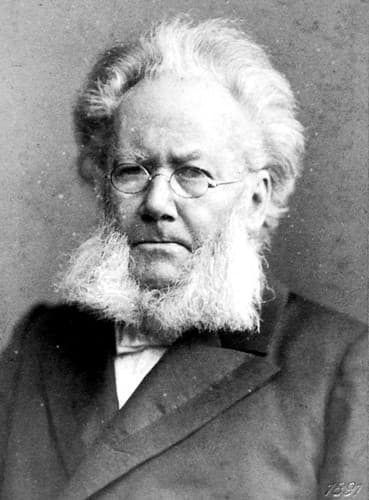
Henrik Ibsen

Henrik Johan Ibsen was a Norwegian playwright and theatre director. As one of the founders of modernism in theatre, Ibsen is often referred to as "the father of realism" and one of the most influential playwrights of his time. His major works include Brand, Peer Gynt, An Enemy of the People, Emperor and Galilean, A Doll's House, Hedda Gabler, Ghosts, The Wild Duck, When We Dead Awaken, Rosmersholm, and The Master Builder. Ibsen is the most frequently performed dramatist in the world after Shakespeare, and A Doll's House was the world's most performed play in 2006.