“Books do not offer a 'good life', but only a good time, and that is not the same thing.”
— A reflection on the value and limitations of literature.


Anthony Powell (2002)
Genre
Fiction
Reading Time
18-25 hours (based on average reading speed for 738 pages)
Key Themes
See below
Sign in to track this book
Powell's novel series explores ambition, love, and folly in 20th-century England through the lens of a vast social network.
In 'The Valley of Bones,' Nicholas Jenkins, now an officer, joins the 28th Light Division, a Welsh infantry regiment in Northern Ireland. He enters an unfamiliar world of military rank, discipline, and army camaraderie. Jenkins observes the different personalities in his company, including Captain Gwatkin, the often-frustrated Lieutenant Bithel, and the practical RSM Scobell. He deals with the routine yet often strange aspects of training, the constant threat of inspection, and the underlying tension of wartime. His first experiences are marked by feeling out of place and struggling to adapt to the army's rigid structure, a sharp contrast to his pre-war intellectual life.
Captain Gwatkin, Jenkins's company commander, is a well-meaning but incompetent officer whose mistakes cause constant problems. His inability to understand basic military procedures, his misplaced enthusiasm, and his poor judgment lead to many funny and frustrating situations. Jenkins, often an unwilling observer, watches Gwatkin struggle with drills, paperwork, and managing his men. Eventually, Gwatkin's repeated failures, including a bad inspection and his misuse of funds, lead to his removal from command. This event shows the arbitrary nature of military authority and the sometimes-harsh realities of wartime efficiency, as Gwatkin's personal flaws are exposed and he is dismissed.
Lieutenant Bithel, another officer in Jenkins's company, is driven by ambition and a sense of being wronged. He constantly feels overlooked and undervalued, believing his talents are not recognized. Bithel tries to gain favor with superior officers, especially Major Brecon, and often complains about Gwatkin's leadership. His attempts to promote himself often fail, leading to more humiliation and frustration. Jenkins observes Bithel's desperate actions and his underlying insecurity, which often appears as petty jealousy and resentment toward his peers. Bithel's story comments on the damaging effects of unfulfilled ambition within a rigid system.
As 'The Valley of Bones' ends and 'The Soldier's Art' begins, Jenkins transfers from his infantry regiment to a staff position at Divisional Headquarters. This move changes his wartime experience significantly, taking him from the direct, often chaotic, life of a line officer to the more administrative and political world of staff work. At HQ, he meets new characters and a different kind of military bureaucracy, focused on strategic planning, intelligence gathering, and rivalries between departments. This shift allows Jenkins to see the war from a broader perspective, dealing with the logistical and intellectual challenges of command rather than just tactical ones.
Kenneth Widmerpool, a character seen throughout the series, reappears and continues his rise through the military ranks. Now a staff officer, Widmerpool's ambition, ruthlessness, and ability to navigate bureaucratic systems are more apparent than ever. He is skilled at self-promotion, always siding with those in power and using any chance for advancement. Jenkins observes Widmerpool's growing influence and his cold, calculating approach to wartime service, which differs greatly from the more human failings of characters like Gwatkin. Widmerpool's success, despite his often unlikable personality, comments on the nature of power and survival in wartime.
During his time at Divisional Headquarters, Jenkins sometimes travels to London on leave or for work. These trips offer a temporary break from military routine and a chance to reconnect with parts of his pre-war life. He meets familiar faces from his past, including X. Trapnel, a struggling writer, and members of the upper class. These meetings often highlight the contrast between the civilian world, still dealing with the war's impact but keeping some sense of normalcy, and the all-consuming reality of military service. These breaks also allow Jenkins to think about the changes the war brought and the lasting nature of certain social groups.
As 'The Soldier's Art' leads into 'The Military Philosophers,' Jenkins's role at Divisional Headquarters changes, putting him more into the world of military intelligence and strategic planning. He becomes more involved in gathering information, analyzing enemy movements, and contributing to high-level operational decisions. This period shows him the intellectual challenges and moral complexities in wartime strategy. Jenkins interacts with a variety of officers, some smart, others less so, as they handle the complexities of the global conflict. He observes how personalities, politics, and data combine to shape the war effort, gaining a fuller understanding of the 'big picture.'
At Divisional Headquarters, Jenkins learns about how higher command works, especially through his observations of General Liddament. Liddament represents the more intellectual and philosophical side of military leadership, concerned not only with immediate victories but also with the broader historical and political meanings of the war. Jenkins sees the pressures and responsibilities senior officers face as they make decisions with far-reaching consequences. This exposure to the 'military philosophers' of the title offers a look into the minds that shape the war, showing their strengths, weaknesses, and often their deep isolation under the immense burden of command. Jenkins reflects on different leadership styles and how personality affects strategic outcomes.
The character of X. Trapnel, a writer Jenkins has known for some time, declines significantly during this period. Trapnel, a bohemian and somewhat reckless figure, finds his life falling apart amid the wartime chaos and his own problems. His writing ambitions are stopped, his relationships become strained, and he struggles with poverty and self-destruction. Jenkins, watching Trapnel's path, thinks about how fragile artistic life is during wartime and how hard it is to keep one's identity and creative spirit in the face of societal upheaval. Trapnel's story contrasts with the more structured military narratives, showing the different ways individuals are affected by the war.
As 'The Military Philosophers' continues, the story moves toward the end of the war in Europe. Jenkins and his colleagues at Headquarters are deeply involved in the final strategic moves and the growing awareness of the coming Allied victory. The atmosphere is filled with a mix of exhaustion, anticipation, and a growing sense of reflection on the war's immense human cost. The eventual announcement of VE Day brings a deep sense of relief, but also a quiet thought about what has been lost and what the future holds. Jenkins observes the reactions of those around him, from joy to somber acceptance, as the conflict that has defined so many years of their lives finally ends on the European front.
The Protagonist
Jenkins evolves from a somewhat naive junior officer to a more seasoned and reflective staff officer, gaining a deeper understanding of human nature and the mechanisms of power during wartime.
The Supporting
Gwatkin descends from an earnest, if inept, commander to a disgraced officer removed from his post, illustrating the harsh realities of military service.
The Supporting
Bithel's attempts at self-promotion consistently backfire, leading to continued frustration and a failure to achieve his desired advancement.
The Supporting
Widmerpool's career continues its upward trajectory, cementing his status as a formidable and seemingly unstoppable force in the military and later in society.
The Supporting
Trapnel's life spirals downwards, marked by increasing personal and professional struggles, culminating in a tragic end.
The Supporting
Liddament maintains his position of thoughtful command, serving as a stable and reflective presence amidst the war's chaos.
The Supporting
Scobell remains a steadfast and competent figure, providing a stable presence within the fluctuating fortunes of the regiment.
The Supporting
Brecon maintains his stern and demanding presence, serving as a consistent enforcer of military standards.
The novels detail the often-strange and bureaucratic nature of military life during wartime. Through Jenkins's observations, the reader sees the inefficiency, petty rivalries, and illogical decisions in the army, even during a global conflict. From Captain Gwatkin's mistakes in 'The Valley of Bones' to the complex workings of Divisional Headquarters, the story shows how human flaws and institutional slowness can complicate even the most serious efforts. This theme highlights the gap between the idealized idea of military heroism and the routine, often frustrating, reality of service.
“War, if it was to be anything more than a chaotic shambles, had to be run by the book. But the book was often written by fools.”
A main theme is how individuals seek, use, and are affected by power, especially within the military's strict hierarchy. Characters like Kenneth Widmerpool show ruthless ambition, demonstrating an ability to navigate and use the system for personal gain, regardless of warmth or ethics. In contrast, characters like Captain Gwatkin fail because they cannot command authority, while Lieutenant Bithel's frustrated ambition leads to his downfall. The novels suggest that power is often gained not by merit alone, but by a mix of cunning, timing, and a certain detachment from common morality, especially in times of crisis.
“Widmerpool, in his element, seemed to be almost generating the war himself, harnessing its chaos to his own inexorable advance.”
While mainly focused on military life, the novels also explore World War II's broader impact on English society and individual lives. Through Jenkins's occasional leaves in London and meetings with civilians, the reader sees how the war affects all aspects of existence, changing social norms, personal relationships, and artistic efforts. The decline of X. Trapnel, a struggling writer, is an example of how individuals outside the military also suffer and struggle. The war acts as a catalyst, speeding up social change and revealing underlying character traits, forcing everyone to face a new reality.
“The war, like some immense, irresistible force, was reshaping everything, even the very air we breathed.”
As with the entire 'A Dance to the Music of Time' series, memory and the passage of time are core themes. Jenkins, as the narrator, often reflects on past events and characters, connecting his wartime experiences with his earlier life. The story often moves between present observations and past memories, creating a rich picture of interconnected lives and historical moments. This reflective approach emphasizes how the past shapes the present and how individual destinies are formed by a continuous, unfolding history. The war itself becomes a huge marker in this long sweep of time.
“How many dances had already been trodden out since those early, almost innocent days? The music played on, relentless.”
The story is told from the perspective of Nicholas Jenkins, looking back on his experiences.
The entire sequence is narrated by Nicholas Jenkins in the first person, but crucially, it is a retrospective narration. Jenkins recounts events from a point in the future, allowing him to infuse his observations with the wisdom of hindsight and to draw connections between seemingly disparate events and characters over a long period. This device enables a deeper thematic exploration of memory, change, and the interconnectedness of lives. It also lends an elegiac and philosophical tone to the narrative, as Jenkins reflects on the 'dance' of life and the patterns he perceives.
Jenkins often acts as a detached, yet insightful, observer of others' lives.
Nicholas Jenkins primarily functions as an observer-narrator. While he participates in events, his role is frequently that of a witness to the actions and interactions of others, particularly more flamboyant or dynamic characters like Widmerpool or Gwatkin. This allows for a broad cast of characters to be introduced and explored through his keen, often ironic, gaze, without requiring Jenkins himself to be the central mover of the plot. This device emphasizes the idea of life as a 'dance' where individuals play their parts, and Jenkins is there to record the choreography.
Key characters reappear and evolve across the entire twelve-novel sequence.
A fundamental device is the consistent reappearance and development of a large cast of characters across the entire 'A Dance to the Music of Time' sequence. This allows for a detailed, long-term exploration of character arcs, social mobility, and the enduring nature of certain personality types. Characters like Widmerpool, who appears in various stages of his life and career, provide a sense of continuity and demonstrate the profound impact of time and circumstance on individual destinies. This device creates a rich, interconnected social tapestry against the backdrop of twentieth-century England.
The army serves as a concentrated environment reflecting broader societal structures.
The military setting of these three volumes functions as a social microcosm. The rigid hierarchy, diverse personalities, and pressures of wartime service create a concentrated environment that mirrors and exaggerates broader societal structures and human behaviors. Within the army, issues of class, ambition, competence, and leadership are thrown into sharp relief, allowing Powell to explore universal themes of power dynamics, social maneuvering, and individual struggles against institutional forces. The regiment and headquarters become stages where human nature is revealed under extreme conditions.
“Books do not offer a 'good life', but only a good time, and that is not the same thing.”
— A reflection on the value and limitations of literature.
“The past is a foreign country; they do things differently there.”
— A general observation on the nature of memory and time.
“It is not easy to make a person unhappy if they do not know it.”
— A cynical but insightful comment on perception and suffering.
“Growing old is like being increasingly penalized for a crime you haven't committed.”
— A poignant reflection on the difficulties of aging.
“What one knows is, in the end, less important than what one feels.”
— Emphasizing the primacy of emotion over pure intellect.
“One finds oneself in a new world, a new way of life, and one's past seems to belong to someone else.”
— On the experience of significant life changes and personal evolution.
“The human heart is an ocean of secrets.”
— A general statement about the complexity of human emotions and motivations.
“Life, in short, is a dance to the music of time.”
— The overarching metaphor for the entire novel sequence.
“Memory is not a document but a process.”
— Discussing the fluid and reconstructive nature of memory.
“People sometimes talk about the 'good old days.' I don't believe in them. I believe in the good new days.”
— A forward-looking and optimistic perspective on life.
“The essential nature of a human being is not to be found in what he says or does, but in what he is.”
— A philosophical observation on true character versus outward actions.
“One must remember that even the most trivial encounter can have unforeseen consequences.”
— Highlighting the interconnectedness of events and the butterfly effect.
“There are some people who can't stand the truth, and others who can't stand anything else.”
— A commentary on different human reactions to reality.
“The feeling of loneliness is the most terrible of all.”
— A powerful statement on the profound impact of isolation.
“To be adult is to be alone.”
— A stark realization about the nature of maturity and personal responsibility.
Ready to see how well you understood this book? Take our interactive quiz with 10 questions.
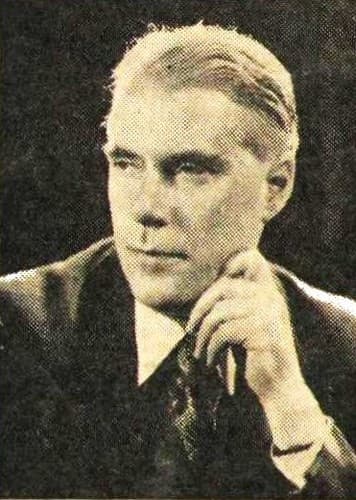
Anthony Dymoke Powell was an English novelist best known for his 12-volume work A Dance to the Music of Time, published between 1951 and 1975. It is on the list of longest novels in English.

Ashley Antoinette
4.6

Mark McDonald
4.4
Luo Guanzhong
4.4

Mia McKenzie
4.3

Dorothy Parker
4.3

Joaquim Maria Machado de Assis
4.3
James Thurber
4.2

Terry Kay
4.2