““I’m not saying I’m perfect. I’m saying I’m me. And I’m good enough.””
— Lottie reflects on her self-worth amidst her impulsive decisions.

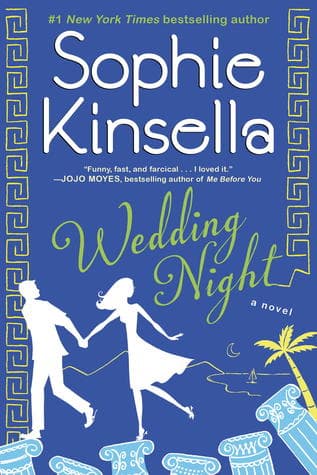
Sophie Kinsella (2014)
Genre
Romance
Reading Time
464 min
Key Themes
See below
Sign in to track this book
After a failed proposal, a heartbroken Lottie marries an old boyfriend on a whim, starting a hilarious race against her determined sister, Fliss, who tries to stop the wedding.
Lottie Swift thinks her long-term boyfriend, Richard, will propose during a romantic dinner. Instead, he suggests a year-long backpacking trip to South America. Devastated and feeling her biological clock, Lottie breaks up with him. Later, at her parents' house, she meets her ex-boyfriend, Ben, whom she dated intensely for six weeks ten years ago. Ben, also recently single and feeling pressure from his mother to settle down, suggests they get married immediately, skipping traditional dating. Lottie, impulsive and heartbroken, agrees, seeing it as a way to get married and have a family. Her older sister, Fliss, is horrified.
Fliss, Lottie's older sister, is an organized, controlling, and recently divorced mother of two. When Lottie announces her plan to marry Ben the next day, Fliss is aghast. She sees Ben as flighty and unsuitable and believes Lottie is making a catastrophic mistake driven by heartbreak and desperation. Fliss immediately contacts friends and family, including their parents, Graham and Mary, to plan how to stop the wedding. Her goal is to delay the ceremony long enough for Lottie to change her mind or for Ben to back out.
On the wedding day, Fliss begins her elaborate plan. She tries to steal Lottie's wedding dress, tampers with the car meant to take Lottie to the registry office, and even tries to bribe the registrar. Ben, equally eager to marry, partly to please his demanding mother, Mrs. Fox, also pushes forward. Lottie, despite the growing problems and her sister's frantic actions, remains determined to go through with the ceremony. The day turns into a comedic chase, with Lottie and Ben trying to outsmart Fliss at every turn, showing their different approaches to life.
Despite Fliss's best efforts, Lottie and Ben marry. To escape Fliss's continued interference and finally consummate their marriage, they fly to Ikonos, a small Greek island where Ben's family owns a villa. However, Fliss does not give up. Using her network and determination, she tracks them down and books herself onto the same flight, disguised. Her mission to prevent the marriage's consummation, and thus its legal finality in her eyes, continues, leading to more comedic encounters on the island.
Once on Ikonos, Fliss makes it her full-time job to ensure Lottie and Ben do not consummate their marriage. She uses a series of absurd tactics: she 'accidentally' books the room next to theirs, creates loud noises, sabotages romantic dinners, and even involves her children, who are unaware of her scheme. Ben, initially amused by Fliss's actions, grows frustrated, while Lottie struggles to balance her love for her sister with her desire for a normal honeymoon. The constant interruptions prevent any intimacy between the newlyweds, much to Lottie's growing disappointment.
The situation on Ikonos escalates with the unexpected arrival of Richard, Lottie's ex-boyfriend, who has followed her to the island hoping to win her back. At the same time, Ben's formidable mother, Mrs. Fox, also arrives, eager to meet her new daughter-in-law and oversee the marriage. Mrs. Fox, a demanding and critical woman, immediately clashes with Fliss, creating new conflict. Richard's presence causes confusion and jealousy for Ben, while Mrs. Fox's scrutiny adds pressure to Lottie, who is already struggling with the non-consummation of her marriage and Fliss's constant meddling.
As everyone gathers on Ikonos, hidden emotions and unspoken truths surface. Lottie starts to question her impulsive decision to marry Ben, especially as Richard's presence makes her think about her previous relationship. Ben also deals with his feelings, realizing his quick marriage might have been more about escaping his mother's pressure than true love for Lottie. Fliss, meanwhile, must confront her own control issues and the reasons for her strong opposition to Lottie's marriage, which comes partly from her own failed marriage and her wish to protect her sister from similar heartbreak.
A major confrontation happens between Lottie, Ben, Fliss, Richard, and Mrs. Fox. Lottie finally expresses her frustration with Fliss's interference and Ben's passivity. Ben admits his fears about marriage and his reasons for rushing into it. In a desperate attempt to talk, Lottie and Ben escape on a small fishing boat. This gives them their first real chance to speak frankly without interruption. They discuss their past, their current worries, and the true nature of their feelings for each other, away from the chaos that has surrounded them since their wedding day.
While Lottie and Ben are at sea, a sudden and violent storm appears, putting them in danger. Their disappearance causes panic on the island, especially for Fliss, who feels guilt and fear for her sister's safety. Richard and Mrs. Fox also express concern. A search party is organized, and after a tense period, Lottie and Ben are rescued. The near-death experience forces both of them to confront their deepest feelings and the preciousness of life, bringing a new perspective to their tumultuous marriage.
After their rescue, Lottie and Ben have a serious talk. They acknowledge that their marriage was impulsive and driven by outside pressures and rebound emotions. They realize they love each other, but perhaps not in the way they first thought. They decide to separate and seek an annulment, but with a commitment to explore a proper courtship, starting fresh, without the pressure of an existing marriage. Fliss, seeing their mature decision, finally accepts that Lottie can make her own choices, and their sisterly bond strengthens.
After the events on Ikonos, Fliss begins to examine her own life and her controlling habits. She realizes that her intense desire to protect Lottie came from her own painful divorce and her fear of Lottie making similar mistakes. She also thinks about her relationship with her ex-husband, Rob, and why they separated. This introspection leads her to a more compassionate understanding of herself and others, softening her rigid manner and allowing her to rebuild her relationship with Lottie on mutual respect rather than overbearing protection.
Lottie and Ben return to England and begin their courtship properly, dating and getting to know each other without the pressure of their impulsive marriage. They find a deeper, more genuine connection. Fliss, having learned to let go, focuses on her own well-being and a healthier relationship with her children and ex-husband. The family dynamic shifts, with Lottie gaining independence and Fliss finding peace. The story ends with the promise of a more authentic and fulfilling future for both sisters, and for Lottie and Ben, who are now building their relationship on true understanding and affection, rather than desperation.
The Protagonist
Lottie learns to trust her own judgment and pursue a relationship based on genuine connection rather than societal pressure or rebound emotions.
The Supporting/Antagonist (initially)
Fliss learns to let go of control, trust Lottie's decisions, and confronts the underlying reasons for her own cynicism and protectiveness.
The Protagonist/Love Interest
Ben learns to confront his fears of commitment and his mother's influence, pursuing a relationship with Lottie based on genuine affection rather than convenience.
The Supporting
Richard serves as a catalyst for Lottie's initial impulsive actions and a foil against whom Ben and Lottie's true feelings are tested.
The Supporting
Mrs. Fox's character primarily serves to highlight Ben's struggle for independence and the external pressures that influenced his impulsive marriage.
The Supporting
Graham remains a stable, loving figure, offering quiet support and perspective.
The Supporting
Mary's character largely remains consistent, providing comedic relief through her anxieties and dramatic reactions.
The Mentioned
Rob's character is not developed, but his past relationship with Fliss is crucial for understanding her motivations.
Both Lottie and Ben are greatly influenced by societal and family pressure to marry and settle down. Lottie, in her early thirties, feels her 'biological clock' and is devastated when Richard does not propose. Ben is constantly hounded by his mother, Mrs. Fox, to find a wife. This outside pressure leads to their impulsive, ill-fated marriage, showing how such expectations can warp true romantic connection. The book explores the difference between marrying for the right reasons and marrying out of desperation or to please others, as seen when Lottie and Ben realize their initial marriage was not born of true love but of convenience and expectation.
““I just want to be married. I want to be settled. I want to have a family.””
The novel's core relationship is the bond between Lottie and Fliss. Fliss's extreme, often comical, attempts to stop Lottie's marriage come from a deep, though misguided, love and a desire to protect her younger sister from heartbreak. Having gone through a painful divorce herself, Fliss projects her fears onto Lottie. This theme explores the line between care and control, and how even well-meaning overprotection can stifle a loved one. Ultimately, their journey leads to Fliss learning to trust Lottie's independence and Lottie appreciating Fliss's underlying love, strengthening their bond on healthier terms.
““I’m just trying to save you from yourself, Lottie! You’re making the biggest mistake of your life!””
The novel directly contrasts Lottie and Ben's impulsive decision to marry with a more measured approach to relationships. Their quick wedding and honeymoon are a series of chaotic events, largely due to a lack of genuine foundation and communication. Fliss, despite her own flaws, represents a more cautious, though overly controlling, approach. The story ultimately supports thoughtful decision-making in relationships, showing that true connection requires time, communication, and understanding, rather than immediate satisfaction or grand gestures. Lottie and Ben's decision to annul their marriage and start a proper courtship shows this change.
““We didn’t actually know each other, did we? Not properly.””
A central theme is what makes true love and a successful marriage. Initially, Lottie sees marriage as a goal, a checklist item, and a solution to her loneliness. Ben sees it as an escape from his mother. Through their chaotic experience, and the constant disruptions from Fliss and outside pressures, Lottie and Ben must confront the superficiality of their first reasons for marrying. They learn that love and marriage are built on communication, shared values, mutual respect, and genuine affection, developed over time, rather than a quick fix or an ideal. The annulment and subsequent courtship mean they now understand what a lasting partnership needs.
““Maybe it’s not about the wedding night. Maybe it’s about all the nights after.””
The entire honeymoon becomes a series of physical and emotional barriers.
This device refers to Fliss's relentless efforts to prevent Lottie and Ben from consummating their marriage and experiencing any romantic intimacy. From booking adjacent rooms and creating loud disturbances to sabotaging dinners and enlisting her children, Fliss turns their romantic getaway into a comedic battleground. This constant interruption serves to highlight the lack of genuine connection between Lottie and Ben, forcing them to confront the superficiality of their relationship, as they are never given the space to truly bond as husband and wife.
Lottie and Ben's marriage is born from recent heartbreak and desperation.
The concept of a rebound romance is central to the plot. Lottie's impulsive decision to marry Ben immediately follows her devastating breakup with Richard, driven by her hurt and perceived ticking biological clock. Ben, similarly, is recently single and feels pressured by his mother to settle down. Their quick marriage is a direct consequence of these rebound emotions and external pressures rather than deep, considered love. This device sets up the inherent instability of their union and provides the core conflict that must be resolved as they eventually realize their initial motivations were flawed.
Fliss's overbearing nature drives much of the conflict and comedy.
Fliss's character functions as a major plot device, acting as the primary antagonist and comedic force. Her extreme, meticulously planned interventions to stop Lottie's wedding and prevent its consummation are the engine of the plot's chaos and humor. Her control issues, stemming from her own past heartache, constantly challenge Lottie's autonomy and force Lottie to assert herself. This device creates a dynamic tension that propels the narrative forward, leading to both comedic situations and moments of emotional realization for both sisters.
The exotic, isolated Greek island serves as a contained environment for conflict.
The choice of the Greek island of Ikonos for the honeymoon serves as a crucial plot device. Its relative isolation and Ben's family villa create a contained environment where the characters are forced into close proximity, unable to easily escape the escalating drama. The beautiful, romantic backdrop ironically contrasts with the marital chaos unfolding, amplifying the comedic effect. The storm at sea further utilizes the setting to create a dramatic turning point, forcing Lottie and Ben to confront their mortality and their true feelings for each other.
““I’m not saying I’m perfect. I’m saying I’m me. And I’m good enough.””
— Lottie reflects on her self-worth amidst her impulsive decisions.
““Sometimes you have to do something crazy to find out who you really are.””
— Lottie's internal justification for her whirlwind wedding plan.
““Love isn't about grand gestures. It's about the small, everyday things.””
— Richard's perspective on true love, contrasting Lottie's romantic ideals.
““The best way to get over someone is to get under someone else.””
— Ben's rather cynical advice to Lottie about moving on from an ex.
““You can’t plan for love. It just happens.””
— Lottie's realization as her carefully laid plans go awry.
““Sometimes the right person is right in front of you, but you’re too busy looking for something else.””
— Richard's subtle observation about Lottie's romantic blindness.
““It’s amazing how quickly your life can change in a single day.””
— Lottie marvels at the rapid succession of events on her wedding night.
““Maybe happily ever after isn't a destination. Maybe it's a journey.””
— Lottie's evolving understanding of romance and relationships.
““You don't always get what you want, but you get what you need.””
— A philosophical reflection on the unexpected outcomes of life.
““Being grown-up just means you have to pretend to know what you’re doing.””
— Lottie's humorous take on the challenges of adulting.
““There’s a fine line between spontaneity and madness.””
— Richard's wry comment on Lottie's impulsive nature.
““You can’t force someone to love you. And you shouldn’t try.””
— A moment of clarity for Lottie regarding her past relationships.
““Sometimes the most romantic thing you can do is be completely honest.””
— Richard's belief in the power of truth in a relationship.
““Life is too short to wait for the perfect moment.””
— Lottie's philosophy that drives her to act on her impulses.
Ready to see how well you understood this book? Take our interactive quiz with 10 questions.

Biography coming soon.