“And I think about all the things we could be if we just gave ourselves permission.”
— Xiomara reflecting on potential and self-acceptance.

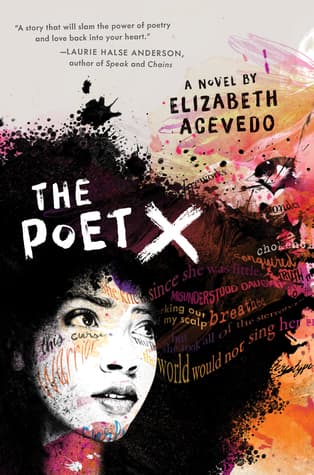
Elizabeth Acevedo (2018)
Genre
Young Adult / Romance
Reading Time
300 min
Key Themes
See below
Sign in to track this book
In Harlem, a fierce Afro-Latina teenager named Xiomara writes secret poems, using them as a microphone to fight her mother's religious rules and a world that tries to quiet her voice and forbidden love.
Xiomara Batista, a fifteen-year-old Dominican-American girl in Harlem, often disagrees with her devout Catholic mother, Mami. Mami, who almost became a nun, sets strict religious rules for Xiomara and her twin brother, Xavier (Twin). Xiomara's body draws unwanted male attention, which Mami blames on Xiomara's sin, often punishing her physically. Xiomara puts her frustrations and observations about her family, faith, and the world into a secret leather notebook of poetry. She feels unheard and misunderstood, especially by Mami, who puts the church first. Twin, who is more academic and seems to follow Mami's rules, also has secrets.
In bio class, Xiomara likes Aman, a classmate with kind eyes. They connect through talks and late-night texts, starting a secret relationship Xiomara knows Mami would not approve of. At the same time, Xiomara's English teacher, Ms. Galiano, notices Xiomara's writing and asks her to join the school's slam poetry club. Xiomara is unsure at first, afraid of Mami's anger if she found out. But the idea of speaking her truth, of saying the words she only whispered to herself, is strong. This creates a conflict between obeying and expressing herself.
Despite her fears, Xiomara starts sneaking out for poetry club meetings, often lying to Mami. She finds friends and support among the other poets, who encourage her to share her work. The club gives her a safe place to explore her voice and improve her writing. Ms. Galiano continues to be a supportive mentor, seeing Xiomara's talent. Xiomara also attends a local poetry slam, seeing the power of spoken word. Inspired, she secretly performs her first poem at a club meeting, feeling a rush of excitement and validation she rarely gets at home. Her relationship with Aman deepens, giving her another source of comfort and understanding away from her family's watch.
The balance Xiomara keeps between her secret life and home life breaks when Mami finds her poetry notebook. Mami, angry at what she sees as rebellious thoughts, especially poems questioning her faith and about Aman, confronts Xiomara. In a fit of anger, Mami throws the notebook into a bonfire, destroying months of Xiomara's private thoughts and feelings. This act devastates Xiomara; she feels her voice and identity have been silenced. The incident creates a bigger distance between mother and daughter, making Xiomara feel more alone and misunderstood.
After her notebook is destroyed, Xiomara becomes more withdrawn, heartbroken and defiant. She keeps sneaking out to see Aman, finding comfort in his steady support. Her relationship with Mami becomes more tense, marked by silence and unspoken anger. During this time, Xiomara learns a secret about her brother, Twin: he is gay and has a boyfriend named Cody. Twin tells Xiomara, sharing the pressure he feels to meet their parents' expectations, especially their father's wish for him to become a priest. This shared experience of hiding their true selves and defying parents strengthens the twins' bond, creating new understanding and support.
Despite the setback, Ms. Galiano, not knowing about the notebook's destruction, keeps encouraging Xiomara to get ready for the school's poetry slam. She gives Xiomara a flyer for a city-wide slam competition, urging her to submit her work. At first, Xiomara feels a great loss and doubt, thinking she cannot recreate what was destroyed. But Ms. Galiano's belief in her talent, along with encouragement from Aman and Twin, slowly brings back Xiomara's spirit. She starts rewriting her poems, finding that recreating them is not just about memory, but about taking back her voice and dealing with her pain, making her new work deeper and stronger.
Mami makes Xiomara attend a church retreat, hoping it will bring her back to the church. There, Xiomara struggles to match her personal beliefs and experiences with the church's strict rules. She watches other attendees, especially the girls, and thinks about the expectations placed on them. Instead of finding peace, Xiomara uses the time to think more about her mother, her faith, and her own identity. The retreat, rather than making her more pious in Mami's eyes, strengthens her decision to speak her truth and follow her own path. It confirms her commitment to poetry as her way of worship and expression.
The day of the school poetry slam arrives. Xiomara, feeling nervous and determined, decides to perform her most personal and challenging poems. Mami, unknown to Xiomara, has followed her to the school and is in the audience. Xiomara takes the stage and delivers powerful, raw verses about her mother's strictness, her struggles with faith, her body, and her desire for freedom and self-expression. Her performance is a public statement of her inner world, a defiant act of taking back her voice. Mami, hearing her daughter's heart, looks shaken and leaves the auditorium before Xiomara finishes, unable to handle the intensity of her daughter's words.
After the slam, Xiomara returns home to a tense atmosphere. Mami, still shaken by what she heard, confronts Xiomara. This time, the confrontation is different. Instead of immediate punishment, they have a difficult, honest conversation. Xiomara stands firm, explaining her feelings and her need for self-expression. Papi, who has often been quiet, steps in, telling Mami to listen to their daughter. He shares his own past desires and sacrifices, showing Mami he understands Xiomara's longing for freedom. This moment is a turning point. Mami begins to see Xiomara not just as a rebellious daughter, but as a young woman with her own valid voice and view. This leads to a fragile, yet hopeful, understanding.
After the slam and family talk, things at home slowly change. Mami, though still struggling with some of Xiomara's choices, starts to respect her daughter's passion. Papi becomes more openly supportive, and Xiomara's bond with Twin deepens as they keep sharing secrets and supporting each other. Xiomara gets an email from Ms. Galiano saying she has been accepted into the city-wide slam competition. This acceptance confirms her talent and her journey. Xiomara no longer hides her poetry. She accepts her identity as a poet, ready to keep using her voice to navigate her world and inspire others. She knows her words are her power, and she is no longer afraid to use them.
The Protagonist
Xiomara transforms from a silenced, internal poet to a brave, outspoken performer who publicly claims her identity and finds a fragile peace with her family.
The Antagonist/Supporting
Initially rigid and unyielding, Mami slowly begins to soften and understand Xiomara's need for self-expression, leading to a tentative reconciliation.
The Supporting
Papi evolves from a passive observer to an active mediator and supporter of Xiomara's individuality.
The Supporting
Twin finds the courage to confide his true identity to Xiomara, solidifying their bond and mutual support.
The Supporting
Aman remains a consistent source of emotional support and understanding for Xiomara throughout her journey.
The Supporting
Ms. Galiano serves as a consistent mentor, guiding Xiomara towards her full poetic potential.
The Mentioned
Remains a static figure representing religious authority.
The Mentioned
Remains a background figure, significant for Twin's character development.
The novel explores Xiomara's journey of discovering her true self amid family, faith, and growing sexuality. Her poetry helps her find herself, letting her say thoughts and feelings she suppresses daily. Through writing and performing, Xiomara learns who she is, what she believes, and how to stand up for her truth. This ends with her powerful slam performance where she publicly claims her identity as a poet.
“I can’t just let myself be swallowed. Not by Mami. Not by the church. Not by anyone.”
A main theme is the conflict between strict religious rules and personal freedom. Xiomara struggles with her mother's Catholic faith, which she sees as limiting and hypocritical, especially about female sexuality and self-expression. Her poetry often questions church teachings and her mother's devotion. The novel does not dismiss faith but explores finding personal spirituality and moral truth outside set religious rules. It suggests true faith can come from being authentic and expressing oneself.
“I just want to understand how the Saints can be so good and Mami can be so cruel.”
This theme is central, as Xiomara's story is about finding and using her voice. At first, her voice is only in her secret notebook, a safe place for unspoken thoughts. As she finds slam poetry, she learns to turn private words into public performance, empowering herself and challenging the silence put on her. Writing and speaking poetry becomes an act of rebellion, healing, and self-assertion, showing how language can free and connect people.
“I want to be able to speak the truth of my life with the same reverence and rhythm I hear in every good poem.”
The complicated relationship between Xiomara and Mami is a core part of the story. Their conflict comes from different values, cultural expectations, and a deep lack of understanding. Mami's desire to control Xiomara comes from her own past and strict religious beliefs. Xiomara wants independence and self-expression. The novel explores the pain and love in this dynamic, showing how generational and cultural differences can create deep divides, but also how honesty and vulnerability can lead to a fragile, yet meaningful, understanding.
“I’m learning that some poems don’t rhyme, and some stories don’t have a clear beginning, middle, and end. My mother and I are an unfinished poem.”
Xiomara's physical changes and growing sexuality cause much conflict and self-consciousness. Her body attracts unwanted attention, which Mami blames on Xiomara, leading to shame and punishment. Xiomara deals with how others and she herself see her body, and how it clashes with religious ideas of purity. Her relationship with Aman lets her explore intimacy and desire on her own terms. Her poetry lets her express feelings about her body and sexuality, taking back control of her story.
“My body is my temple, but sometimes I wish it were a fortress.”
The entire novel is written in free verse, reflecting Xiomara's internal world.
The entire novel is written in free verse poetry, directly immersing the reader into Xiomara's mind and poetic sensibility. This device is crucial as it mirrors Xiomara's own form of expression, allowing her internal thoughts, observations, and emotions to flow unconstrained by traditional narrative prose. The rhythm, line breaks, and imagery inherent in free verse not only make the reading experience unique but also emphasize the theme of voice and the power of language, demonstrating how Xiomara literally 'thinks' and 'feels' in poetry.
A physical manifestation of Xiomara's hidden thoughts and voice.
Xiomara's leather-bound notebook serves as a powerful symbol and plot device. It is her sanctuary, a private space where she can articulate her forbidden thoughts, questions about faith, and desires without fear of judgment. The notebook represents her true, authentic voice, hidden from her restrictive home environment. Its eventual discovery and destruction by Mami is a pivotal moment, symbolizing the violent suppression of her identity, but also sparking her resolve to reclaim her voice publicly through performance.
A catalyst for Xiomara's public self-expression and community.
The school's slam poetry club acts as a critical catalyst for Xiomara's transformation. It provides a structured, yet liberating, environment where she can develop her craft, receive encouragement, and find a community that values her voice. The club, and the act of performing at slams, forces Xiomara to move from private writing to public speaking, confronting her fears and ultimately empowering her to assert her identity. It offers a counter-narrative to the restrictive environment of her home and church.
Used throughout to highlight Xiomara's internal conflict and questioning of faith.
Acevedo frequently employs religious imagery and metaphors, often subverting them, to illustrate Xiomara's internal struggle with her Catholic upbringing. Xiomara questions the stories of saints, compares her own 'sins' to biblical narratives, and uses the language of faith to articulate her own spiritual and emotional experiences. This device highlights the tension between the sacred and the profane, and how Xiomara reinterprets traditional religious concepts to make sense of her own life and find her personal truth, often seeing her poetry as a new form of prayer or worship.
“And I think about all the things we could be if we just gave ourselves permission.”
— Xiomara reflecting on potential and self-acceptance.
“I can't be a house for a man. I am a house for myself.”
— Xiomara asserting her independence and individuality.
“It's like I'm a poem and I want to be read, but I'm also a secret and I want to be kept.”
— Xiomara's internal conflict about sharing her poetry and true self.
“Sometimes it feels like my body is just a place my mother gets to put her rules.”
— Xiomara's frustration with her mother's strict control over her.
“I'm learning that some poems don't rhyme, and some stories don't have a clear beginning, middle, and end.”
— Xiomara's evolving understanding of poetry and life's complexities.
“Even when I'm silent, I'm a poem.”
— Xiomara realizing her essence as a poet, even without speaking.
“A girl's mouth is a weapon. No one wants a woman with a mouth full of fire.”
— Xiomara reflecting on societal expectations for women to be quiet.
“I wonder if I will ever feel like I belong in my own skin.”
— Xiomara's internal struggle with self-acceptance and body image.
“There are things that happen to a girl that she's not supposed to talk about.”
— Xiomara alluding to unspoken experiences and trauma.
“I want to be a woman who is loud and angry and full of opinion. I want to be a woman who is not afraid to take up space.”
— Xiomara's aspiration to be a strong, outspoken woman.
“Every time I write, I get a little closer to myself.”
— Xiomara on the therapeutic and self-exploratory power of writing.
“I think about how sometimes the truth is a hard thing to swallow, but it's always worth it.”
— Xiomara contemplating the difficulty and value of honesty.
“Maybe the bravest thing I'll ever do is to tell my own story.”
— Xiomara considering the courage required to share her personal narrative.
“My words are like a fire, and if I don't let them out, they'll burn me up from the inside.”
— Xiomara's urgent need to express herself through poetry.
“There's power in having your own voice, even if it's just a whisper.”
— Xiomara recognizing the strength in individual expression, regardless of volume.
Ready to see how well you understood this book? Take our interactive quiz with 10 questions.

Biography coming soon.