“Lo, here the gentle lark, weary of rest, / From his moist cabinet mounts up on high, / And wakes the morning, from whose silver breast / The sun ariseth in his majesty.”
— Venus observes the morning after a night of unrequited pursuit.

William Shakespeare (1593)
Genre
Romance
Reading Time
16 min
Key Themes
See below
Sign in to track this book
Venus desires Adonis, who prefers hunting, leading to a tragic pursuit that leaves her with a flower and a prophecy of future sorrow.
The poem begins with Venus seeing Adonis, a very handsome mortal youth, as he prepares to hunt. Immediately drawn to his beauty, Venus leaves her divine duties and goes to Earth, determined to win his love. She confronts him, wrapping her arms around him and telling him she loves him. Adonis, however, cares more about hunting and is clearly uncomfortable with her advances. He tries to pull away, but Venus, full of passion, holds him tight, praising him and promising pleasure, despite his clear reluctance and wish to escape and hunt a boar.
As Venus continues her attempts to charm Adonis, his stallion, left alone for a moment, sees a beautiful jennet nearby. Driven by instinct, the stallion breaks free and gallops towards the mare, much to Adonis's annoyance. This event provides a brief break from Venus's pursuit. Adonis tries to get his horse, giving him an excuse to briefly escape Venus's physical embrace and constant talking. Venus, though bothered by the interruption, uses it to press her case further, seeing the horse's passion as a reflection of her own desires and a lesson for Adonis.
Venus uses many ways to persuade Adonis, using elegant language and clear images to make him love her back. She argues that his beauty should be shared and passed on through children, not kept to himself. She compares his youthful beauty to a rose that will fade if it does not bloom and bear fruit. She stresses that youth is short and that one should seize the moment for love. Despite her strong words and the appeal of a goddess, Adonis remains unmoved, his heart seemingly untouched by her charms, stubbornly preferring the thrill of the hunt over romance.
Frustrated by Adonis's coldness and rejection, Venus becomes more desperate. In a dramatic show of her pain, she faints, falling into Adonis's arms. This sudden event surprises Adonis, who, seeing her unconscious, feels a moment of worry. He thinks she might be dead and, in a rare moment of gentleness, kisses her to wake her. This act, however, comes more from pity and alarm than true affection. When she wakes up, Venus, always looking for an advantage, sees his kiss as a sign of growing love, further fueling her hopes and renewed efforts to win him over, much to Adonis's annoyance.
Adonis, after reviving Venus, makes his feelings very clear. He explains that he is too young for the kind of passionate, physical love she offers, preferring instead the simple joys of hunting and nature. He describes love as a torment, a source of pain and deceit, and contrasts it with the pure joy he finds in his activities. He tells her directly that her beauty, while real, does not affect him. His rejection is firm, leaving Venus heartbroken and confused by his lack of interest in her divine charms and passionate words. He insists he will not change his chosen path.
After Adonis's clear rejection, Venus falls into deep sadness and despair. Her divine power seems to lessen in the face of unreturned love. In her grief, she makes a prophecy, foretelling a future where love will no longer be pure and joyful, but will instead be troubled by jealousy, suspicion, and pain. She predicts that lovers will be tormented by doubt, that trust will be hard to find, and that love's sweetness will always come with a bitter sting. This statement changes the poem's mood, moving from a lighthearted pursuit to a darker, more tragic view of love.
Despite Venus's pleas and the increasingly dark mood, Adonis remains set on hunting. He says he will go after a wild boar, a dangerous creature. Venus, still upset by his rejection and now filled with growing dread, tries to stop him. She warns him about the dangers of hunting such a powerful beast, her words full of a sense of coming disaster. She begs him to stay, to choose safety over the thrill of the chase, but Adonis, driven by youthful bravery and his love for hunting, ignores her warnings and leaves, leaving Venus alone with her fears.
Soon after Adonis leaves, Venus hears the sounds of hunting dogs in distress, their cries echoing through the woods. A terrible fear grips her heart, confirming her earlier worries. Convinced that something bad has happened to Adonis, she rushes through the forest, desperate to find him. Her search is full of anxiety and growing dread as she goes through the rough land, calling his name. The sounds of the hunt, once annoying, now fill her with terror, signaling the possible loss of the youth she so strongly desired.
Venus's worst fears come true when she finds Adonis's lifeless body. He lies in a pool of blood, badly gored by the wild boar he had pursued. The scene is one of brutal destruction, a sharp contrast to his earlier vibrant beauty. Venus is overcome with terrible grief, her earlier passion turning into deep sorrow. She holds his body, mourning his early death and the cruel irony of fate. The image of Adonis, once the picture of youthful beauty, now damaged and destroyed, highlights the tragic results of his stubborn independence and her unreturned love.
Overwhelmed with despair, Venus gives a heartbreaking speech over Adonis's body. She grieves not only for his loss but also for the unfulfilled promise of their love. In her pain, she curses Love itself, declaring that from that day forward, love will always include jealousy, sorrow, and pain. She says that love will be a source of torment, a bittersweet experience forever marked by the memory of her loss. This curse makes her earlier prediction real, turning it into a definite decree that will forever shape the nature of love in the world, ensuring that joy in love will always be shadowed by the chance of grief.
As Venus continues her mournful speech, a miraculous change happens. From Adonis's blood, a beautiful purple flower, the anemone, grows. This delicate, short-lived flower becomes a symbol of Adonis's temporary beauty and tragic end. Venus takes the flower, a sad reminder of her lost love, and cherishes it. This transformation offers a small, bittersweet comfort amid her overwhelming grief, ensuring that Adonis's memory will live on, not through children as she had wished, but through the lasting beauty of nature, forever linked to his tragic story and the goddess's sorrow.
With Adonis's body turned into a flower, Venus, deeply changed by her experience of unreturned love and tragic loss, withdraws from the world. She gathers the anemone and returns to her sacred place in Paphos, Cyprus. Her departure means the end of her direct involvement in the mortal world for a time, and her retreat into a state of continuous mourning. The poem ends with Venus carrying her grief and the symbolic flower, leaving the reader with the lasting impression of the pain of lost love and the goddess's change from a figure of passionate pursuit to one of deep sorrow and acceptance, forever marked by Adonis's rejection and death.
The Protagonist
Venus transforms from a confident, assertive goddess of love to a heartbroken, grieving figure who curses love itself, forever associating it with sorrow.
The Antagonist/Love Interest
Adonis remains steadfast in his rejection of love, ultimately meeting a tragic end that confirms his preference for the wild over domesticity.
The Supporting/Symbolic
The horse's arc is limited to its spontaneous pursuit of a mare, serving as a symbolic interlude.
The Antagonist/Plot Device
The boar's arc culminates in the tragic killing of Adonis, fulfilling its destructive purpose.
The poem explores different kinds of love: Venus embodies passionate, physical, and somewhat aggressive desire, while Adonis represents a pure, almost detached resistance to such love. Venus argues that love leads to children and a lasting name, while Adonis sees it as painful and corrupt. The poem contrasts Venus's strong, instinctive passion (and that of the horses) with Adonis's youthful indifference. It suggests that love, especially when one-sided or pursued too much, can lead to sadness and destruction. Venus's final curse on love highlights its bittersweet nature.
“Love is a spirit all compact of fire, / Not gross to sink, but light, and will aspire.”
Adonis's great beauty is key to the poem, as it causes Venus's desire. However, Venus repeatedly warns him that beauty is short-lived and should be used to have children before it fades, like a rose that dies without bearing fruit. Adonis's tragic death, which disfigures his perfect form, shows how quickly physical beauty can disappear. The transformation of his blood into the delicate, short-lived anemone flower further emphasizes this idea, showing that even the most beautiful things are meant to pass away, leaving only a fragile memory.
“But having made thee, he most proud of all, / For that he made objects for thy fall.”
The poem contrasts Adonis's youthful innocence and lack of experience with Venus's ancient wisdom and worldly knowledge. Adonis rejects love because of his naivety and his preference for simple activities like hunting. He has not yet learned the complexities and pains of romantic attachment. Venus, on the other hand, understands desire's power and problems, trying to guide him towards what she believes is his natural purpose. His inability to understand her passion ultimately leads to his downfall, suggesting that innocence, while good, can also be a type of ignorance that leads to tragic outcomes when faced with life's strong forces.
“I hate not love, but your device in love, / That lends enchantment to the thing you prove.”
The poem subtly explores how fate and free will interact. Venus's predictions of sorrow and her specific warning about the boar suggest that destiny is at work. Despite her divine status and desperate pleas, she cannot stop Adonis from following his chosen path, nor can she change the tragic outcome. Adonis's stubborn insistence on hunting, despite the goddess's warnings, can be seen as an act of his free will, yet it ultimately leads him to a fate that Venus foresaw. This suggests that even powerful beings cannot fully control events, and that individual choices can align with or speed up an inevitable destiny.
“For in his looks I see it is my doom; / My heart will break, and I must yield to him.”
Attributing human qualities or actions to abstract concepts or inanimate objects.
Shakespeare extensively uses personification, especially when Venus describes Love itself. She talks about Love as a living entity with its own will, desires, and even flaws. For example, she describes 'Love' as a 'spirit all compact of fire' and later curses it, giving it agency and responsibility for future sorrows. This device helps to elevate the abstract concept of love into a tangible force that impacts the characters' lives and the world at large, making the theme more vivid and impactful. It allows Venus to externalize her feelings and attribute the pain she experiences to a greater, more universal entity.
Hints or warnings about future events in the story.
The poem uses foreshadowing to build suspense and tragedy. Venus's repeated warnings to Adonis about the dangers of hunting, particularly her specific premonition about the wild boar, directly hint at his eventual demise. Her earlier lament about love being intertwined with sorrow also foreshadows the tragic ending and her subsequent curse. These subtle clues create a sense of impending doom, making Adonis's death feel both inevitable and deeply tragic, as the audience is prepared for the unfortunate outcome long before it occurs. It highlights the futility of trying to escape one's destiny.
The use of objects, people, or ideas to represent something else.
Symbolism is prevalent throughout the poem. Adonis's horse, in its unbridled pursuit of the jennet, symbolizes instinctual, untamed passion, contrasting with Adonis's chaste nature. The wild boar symbolizes the dangerous, destructive aspects of nature and fate, as well as the potential for beauty to be marred. Most significantly, the anemone flower, which springs from Adonis's blood, symbolizes his transient beauty, his tragic death, and the fragile, short-lived nature of life and love. These symbols enrich the poem's themes, providing deeper layers of meaning without explicit explanation.
A situation in which the audience knows more about what is happening than a character in the story.
Dramatic irony is employed when Venus, a goddess, faints from despair, and Adonis, believing her dead, kisses her to revive her. The irony lies in Adonis's lack of true affection for Venus, yet his actions momentarily give her false hope that he might be awakening to love. The audience understands that Adonis's kiss is born of pity and alarm, not reciprocated passion, highlighting the tragic disconnect between Venus's desires and Adonis's reality. This device underscores the depth of Venus's delusion and the futility of her efforts, making her eventual heartbreak more poignant.
“Lo, here the gentle lark, weary of rest, / From his moist cabinet mounts up on high, / And wakes the morning, from whose silver breast / The sun ariseth in his majesty.”
— Venus observes the morning after a night of unrequited pursuit.
“For shame, he says, you send me back in vain; / Leave to pursue me, lest I fly my fill, / And, in my flight, I be o'ertook again.”
— Adonis tries to escape Venus's advances.
“But when the fox hath once his teeth all fast, / What canst thou help, or whither canst thou fly?”
— Venus uses an analogy to argue that Adonis is trapped by her love.
“Had I no eyes but ears, my ears would be / For ever deaf to all sweet melody, / Unless I heard the praises of thy worth.”
— Venus expresses her infatuation with Adonis.
“Sorrow on love hereafter shall attend: / It shall be waited on with jealousy, / Find sweet beginning but unsavoury end, / Ne'er settled equally, but high or low.”
— Venus curses love after Adonis's death.
“And having felt the sweetness of the spoil, / With blindfold fury she begins to forage.”
— Venus describes the passionate nature of love and desire.
“For he being dead, with him is beauty slain, / And beauty dead, black chaos comes again.”
— Venus laments the death of Adonis and its impact on beauty.
“Nought can we call our own but death, / And that small portion of an empty breath.”
— Adonis reflects on the brevity of life and possessions.
“Pity, she cries, some favour show to me, / A heavy burden on my soul I bear.”
— Venus pleads with Adonis to reciprocate her feelings.
“The iron bit, the spur, the curb, the rein, / When thou wouldst put me off, I'll bite and kick.”
— Venus uses equine imagery to describe her forceful pursuit of Adonis.
“O, what a war of looks was then between / Their eyes that yet did feed on his sweet looks!”
— Describing the intense visual exchange between Venus and Adonis.
“But when the heart's attorney once is mute, / The client's cause in his suit is overthrown.”
— Venus uses a legal metaphor to explain how unexpressed desire can lead to failure.
“By this, poor Adonis, that doth shun each kiss, / Was by the boar's tusk gored with a mortal wound.”
— The tragic death of Adonis.
“The rose and lily, on his pale cheek died, / And in his blood that colour died whose hue / Was sometimes Venus's, now his.”
— Describing the fading beauty of Adonis in death.
Ready to see how well you understood this book? Take our interactive quiz with 10 questions.
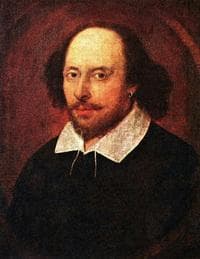
William Shakespeare was an English playwright, poet and actor. He is widely regarded as the greatest writer in the English language and the world's pre-eminent dramatist. He is often called England's national poet and the "Bard of Avon". His extant works, including collaborations, consist of some 39 plays, 154 sonnets, three long narrative poems, and a few other verses, some of uncertain authorship. His plays have been translated into every major living language and are performed more often than those of any other playwright. Shakespeare remains arguably the most influential writer in the English language, and his works continue to be studied and reinterpreted.