“You don't have to be a genius to be a star. You just have to be yourself.”
— Jennifer's early advice to Anne about the entertainment industry.

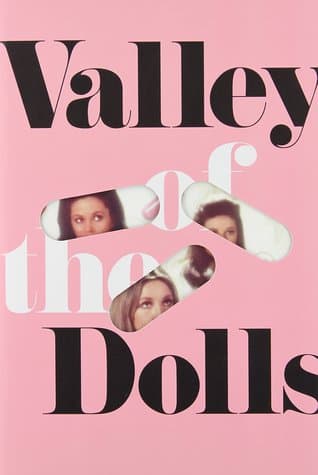
Jacqueline Susann (1966)
Genre
Romance
Reading Time
12-15 hours
Key Themes
See below
Sign in to track this book
In the cutthroat world of 1960s entertainment, three women find that fame is a gilded cage, leading them down a self-destructive path where pills are their only confidantes.
Anne Welles, a young woman from Lawrenceville, Massachusetts, arrives in New York City in 1945, looking for a new life. She gets a job as a secretary at a law firm, Sterling and Bellow, where she meets Lyon Burke, a charming junior lawyer. Anne is drawn to the world of Broadway and its promises of success. She soon befriends Helen Lawson, an aging Broadway star, Neely O'Hara, a chorus girl, and Jennifer North, a showgirl. Anne's first experiences in the city are full of hope as she starts her career and new relationships, especially her growing interest in Lyon.
Neely O'Hara, a chorus girl, gets her big break in a Broadway show. She quickly becomes a star because of her talent and drive. Her success, however, brings a demanding schedule and the pressures of fame, leading her to start using 'dolls' (pills) to cope. Meanwhile, Jennifer North, admired for her beauty but insecure about her acting, struggles to establish herself in entertainment. She is always judged for her looks and wants to be taken seriously, but her career is mostly about her appearance. Jennifer dates different men, including the rich Tony Polar, a singer. She worries about not having talent and about getting older, which makes her think about cosmetic surgery to stay appealing.
Anne Welles falls in love with Lyon Burke, and their passionate romance becomes central to her life. Lyon is ambitious and often puts his career and desires before Anne, which causes emotional distance and uncertainty. Despite this, Anne does well professionally, moving from her secretarial job to a successful advertising career. She becomes the face of a popular cosmetic campaign. While her career thrives, Anne deals with Lyon's inconsistent commitment and his decision to move to Hollywood for his own dreams, leaving Anne heartbroken. This separation makes Anne face her independence.
As Neely O'Hara's career grows in Hollywood, her use of 'dolls'—sedatives and stimulants—increases a lot. The pressures of fame, demanding film schedules, and a difficult personal life, including bad marriages and affairs, push her deeper into addiction. Her behavior becomes erratic and self-destructive, pushing away friends, colleagues, and family. Despite her talent, Neely's professional reputation suffers because of her unpredictable moods, missed appointments, and frequent breakdowns. She gains weight, loses roles, and goes through periods of sobriety and relapse. Her once-promising career is now overshadowed by her struggles.
Jennifer North marries the singer Tony Polar, hoping for stability. Their marriage has many problems. Tony is diagnosed with a brain disease, which causes him to lose his memory and thinking abilities, eventually needing to be in a hospital. Jennifer is left to care for him and pay his medical bills, which quickly use up their money. At the same time, Jennifer's career stops as she struggles to find roles that do not exploit her body. Desperate to make money and facing the realities of aging in Hollywood, she starts acting in French art films (softcore pornography). This decision, made out of need, deeply shames her and makes her feel more despair.
Anne Welles eventually moves to Hollywood to be near Lyon Burke, hoping to restart their relationship. They do get back together, and Anne continues her successful advertising career, becoming important in the industry. However, Lyon's ambition and his inability to fully commit still trouble their relationship. He struggles with his own career goals in Hollywood and has affairs, including one with a starlet, which hurts Anne more. Despite their love, their relationship has cycles of passion, conflict, and separation. Anne wants a stable home and family, but Lyon's restless nature and career distractions stop him from fully committing, leaving Anne feeling alone.
Jennifer North's life becomes full of despair. With Tony Polar in a hospital and her career limited to exploitative films, she feels trapped and shamed. She has a mastectomy for breast cancer, which further hurts her self-image, as her beauty was her main asset. Facing financial ruin, a terminal illness, and a complete loss of self-worth, Jennifer sees no way out. In a moment of deep desperation, she commits suicide by overdose. Her tragic death shows the destructive pressures and superficiality of the entertainment industry, and the bad consequences for those who cannot cope, leaving Anne and Neely shocked.
Neely O'Hara's addiction to 'dolls' reaches a bad point. Her career is ruined, her relationships are broken, and her health is very bad. She has a public breakdown and is found incoherent. Forced to face her situation, Neely is admitted to a sanitarium for rehabilitation. There, she begins the difficult process of detoxing and trying to understand her addiction. While recovery is hard, this time marks a possible turning point for Neely, offering hope that she might regain some of her former self and escape the destructive cycle that has consumed her.
After years of Lyon Burke's infidelity, his inability to commit, and the superficiality of Hollywood, Anne Welles finally gives up. She realizes that the glamorous life she wanted has brought her little happiness and much heartache. Disappointed with her relationship and the entertainment world, Anne decides to leave Hollywood and return to Lawrenceville, Massachusetts, her hometown. She seeks peace and a simpler life, hoping to get away from the constant pressures and betrayals. Her return shows a complete change, as she leaves the world she once embraced, showing deep disappointment with the American Dream and the emptiness that can come with fame.
Back in Lawrenceville, Anne Welles thinks about her life, her failed relationship with Lyon, and the tragic lives of Neely O'Hara and Jennifer North. She finds some peace in her hometown but is always affected by her time in the 'Valley of the Dolls.' Lyon Burke eventually returns to Lawrenceville, hoping to get Anne back, but she rejects him, knowing their relationship is too broken. Neely, despite her rehabilitation, struggles with sobriety and the lasting damage of her addiction; her career never fully recovers. The novel ends with Anne, a survivor, considering the high cost of fame, beauty, and ambition, and the lasting impact of the 'dolls' on the women she knew. She feels a bittersweet sense of acceptance.
The Protagonist
Anne transforms from a hopeful ingenue to a jaded survivor, ultimately retreating from the glamorous world that failed to deliver true happiness.
The Protagonist
Neely's arc is a meteoric rise followed by a catastrophic fall into addiction and a difficult, uncertain path toward recovery.
The Protagonist
Jennifer's initial hope for love and acceptance gives way to profound despair, humiliation, and ultimately, suicide.
The Supporting
Lyon remains largely static, his ambition and inability to commit leading to repeated heartbreak for Anne and ultimately, loneliness.
The Supporting
Helen maintains her formidable presence, adapting to changing times while battling younger rivals, ultimately enduring as a survivor.
The Supporting
Tony's arc is a tragic decline from a promising singer to a mentally incapacitated invalid, a victim of his genetic inheritance.
The Supporting
Kevin remains a consistent and caring presence, offering unwavering support to his friends without significant personal transformation.
The Mentioned
Miriam's arc is limited to her brief but impactful role as Lyon's mistress, causing a rift between him and Anne.
The Supporting
Ted's arc is tied to Neely's initial rise, but he is eventually discarded as her addiction takes over.
The novel shows how pursuing stardom in entertainment can corrupt and destroy people. Neely O'Hara's quick rise to fame comes with a pill addiction and erratic behavior, leading to her ruin. Jennifer North, desperate to keep her career, sacrifices her dignity and ultimately her life. Even Anne Welles, though successful in advertising, finds her personal life troubled by the superficiality of the glamorous world. The book suggests that the 'Valley of the Dolls' is a state of being where fame's pressures lead to self-destruction.
“"You don't need a man, honey. You need a hit record."”
A main theme is the use of 'dolls' (pills) to cope with the pressures, anxieties, and emptiness the characters feel. Neely O'Hara's story is the clearest example, showing a full addiction that destroys her life. The pills offer a temporary escape from reality, a way to sleep, wake up, feel, or not feel. This escape, however, leads to deeper entrapment, as the characters become dependent, isolating them more and making their problems worse. The 'dolls' symbolize the false promises of quick fixes in a demanding world.
“"Take a doll, Anne. It'll make you feel better. They always do."”
The novel shows how women in entertainment are valued mostly for their looks, often over their talent or intelligence. Jennifer North's entire career and self-worth are tied to her beauty. Her desperation to keep it leads to cosmetic surgery and her tragic end when she faces aging and illness. Anne Welles also finds success as a model because of her looks. The story criticizes a society that reduces women to objects, showing the immense pressure to meet beauty standards and the bad psychological impact when those standards are no longer met.
“"Beauty is a curse in this business. It's all they ever see."”
The 'American Dream' of success, fame, and happiness is shown as mostly false and ultimately damaging. The three main characters come to New York hoping for glory, love, and fulfillment, but instead find a world of betrayal, addiction, and despair. Anne's return to Lawrenceville, disappointed by Hollywood and her failed romance, means she rejects the dream. Neely's fall and Jennifer's suicide are strong criticisms of the emptiness that can be under the glittering surface of success. The novel suggests that pursuing this dream can lead to deep unhappiness and moral decay.
“"It's a beautiful dream, Anne. But it's just a dream."”
The friendship between Anne, Neely, and Jennifer is important to the story, at first offering support. However, as their careers and personal struggles grow, their friendships are tested and often broken by jealousy, competition, and self-destructive behavior from addiction. Neely's erratic actions push away her friends, and the pressures of their lives often stop them from truly supporting each other when needed. The theme explores how fragile human connection is in a cutthroat environment, showing how even strong friendships can break under the forces of fame and personal problems.
“"We were sisters, in a way. Sisters in the Valley."”
Symbolic representation of escapism and addiction.
The 'dolls' are a recurring motif and a central plot device. They refer to various prescription pills (sedatives, stimulants) that the characters use to cope with the pressures and anxieties of their lives. They function as a symbol of escapism, false comfort, and ultimately, addiction. The narrative uses the 'dolls' to drive plot points, such as Neely's breakdowns and subsequent hospitalizations, and to illustrate the destructive cycle of drug abuse. Their presence is constant, underscoring the pervasive nature of addiction within the entertainment industry and its devastating consequences for the characters.
Three women's stories mirroring the different facets of fame's toll.
The novel uses parallel character arcs for Anne, Neely, and Jennifer to explore different facets of the same central theme: the destructive nature of fame and ambition. While their paths diverge in terms of success and personal choices, their stories are interwoven and reflect upon each other. Anne represents the disillusionment, Neely the self-destruction through addiction, and Jennifer the tragedy of physical objectification. This device allows Susann to present a comprehensive, multi-faceted critique of the entertainment industry and its impact on women, showing the varied ways in which the 'Valley' consumes its inhabitants.
New York and Hollywood as living, breathing forces shaping the characters' destinies.
New York City and Hollywood are not merely backdrops but act as powerful, almost sentient characters in the novel. New York represents the initial promise and excitement of opportunity, while Hollywood embodies the ultimate seductive, yet corrupting, pinnacle of fame. The cities' glitter and glamour are juxtaposed with their harsh realities, driving the characters' ambitions, fueling their addictions, and ultimately contributing to their downfall. The 'Valley of the Dolls' itself is less a physical place than a metaphorical landscape of despair and addiction, deeply intertwined with the identities and fates of the protagonists.
Hints of future tragedy and the contrast between aspiration and reality.
The novel frequently employs foreshadowing, subtly hinting at the tragic fates awaiting the characters, particularly Neely and Jennifer. For instance, early descriptions of Neely's ambition or Jennifer's insecurity often carry an ominous tone. Irony is also a prominent device, especially situational irony. The very things the characters strive for—fame, beauty, love—often become the instruments of their destruction. The glamorous facade of Hollywood sharply contrasts with the inner turmoil and despair experienced by the characters, highlighting the bitter irony of their 'success'.
“You don't have to be a genius to be a star. You just have to be yourself.”
— Jennifer's early advice to Anne about the entertainment industry.
“Every woman wants to be wanted, even if it's by the wrong man.”
— A general observation about women's desires and relationships.
“The only thing worse than being talked about is not being talked about.”
— A cynical view on public perception and fame, often attributed to Helen Lawson.
“It's always better to be looked over than overlooked.”
— Another quip about seeking attention in the entertainment world.
“Happy endings are just stories that haven't finished yet.”
— A reflection on the transient nature of happiness and the ongoing struggles of life.
“You can't have everything. Where would you put it?”
— A humorous and somewhat resigned comment on the impossibility of perfect lives.
“The pills make you feel like you're floating, like nothing can touch you.”
— Anne's description of the initial effects of the 'dolls'.
“Love is a funny thing. It can make you do things you never thought you'd do.”
— A general reflection on the powerful and sometimes irrational nature of love.
“When you're famous, people only see what they want to see.”
— Neely's realization about the public's perception of celebrities.
“You can always tell a woman by her shoes.”
— An observation about personal style and character, though somewhat superficial.
“The trouble with success is that it's always followed by failure.”
— A pessimistic view on the cyclical nature of fortunes in show business.
“There are no second acts in American lives.”
— A somber reflection on the difficulty of reinvention after a fall from grace.
“I'm not going to let them break me. Not this time.”
— A moment of defiance from one of the protagonists facing adversity.
“Sometimes you have to be a bitch to get what you want.”
— Helen Lawson's pragmatic and cutthroat approach to career and life.
Ready to see how well you understood this book? Take our interactive quiz with 10 questions.
Biography coming soon.