“Living as we do in a world of sorrows, we are apt to be moved by the smallest things.”
— Kikuji reflects on the beauty and transience of life while observing nature.

Yasunari Kawabata (2013)
Genre
Romance
Reading Time
160 min
Key Themes
See below
Sign in to track this book
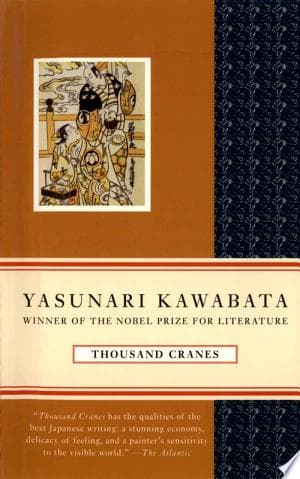
In the world of tea ceremonies, a young man's affair with his deceased father's mistress, and later her daughter, reveals a story of desire, regret, and the past's lasting hold.
Kikuji Mitani, a young man still dealing with his parents' recent deaths, attends a traditional tea ceremony. Mrs. Ota, his deceased father's former mistress, hosts the ceremony. Kikuji vaguely remembers her from childhood and finds her unsettling yet interesting. At the ceremony, Kikuji meets Yukiko Inamura, a young woman with a 'thousand cranes' furoshiki, brought by Mrs. Ota as a potential bride for Kikuji. The air is heavy with history and past relationships, especially his father's affairs, which Mrs. Ota represents. Kikuji feels an immediate, if complicated, attraction to both women, but for different reasons.
After the tea ceremony, Kikuji feels drawn to Mrs. Ota. Their shared history and his father's lingering presence create a strange closeness. One evening, Mrs. Ota visits Kikuji at his house, ostensibly to return a borrowed item. Their talk quickly becomes personal, touching on their grief and complex relationship with Kikuji's father. Overcome by desire, curiosity, and shared sorrow, Kikuji and Mrs. Ota spend the night together. This act creates a bond that is both passionate and guilty, further involving Kikuji in his father's past.
Soon after their intimate encounter, Mrs. Ota's daughter, Fumiko, approaches Kikuji. Fumiko, a severe woman, is deeply affected by her mother's past relationship with Kikuji's father and now by her mother's affair with Kikuji. She expresses disapproval and a protective feeling over her mother, hinting at the shame and pain these relationships caused. Meanwhile, Mrs. Ota's health declines quickly. The emotional distress and her past, combined with her current affair with Kikuji, seem to affect her, leading to a visible decline.
Mrs. Ota dies suddenly, leaving Kikuji with guilt and regret. He feels responsible for her death, believing their affair and its emotional stress contributed to it. The lingering scent of her perfume in his house and the memory of her touch haunt him. Her death not only ends their physical connection but also intensifies Kikuji's internal struggle, forcing him to face the results of his desires and the destructive patterns inherited from his father. He is left adrift, burdened by loss and unresolved emotional ties.
After Mrs. Ota's death, Fumiko seeks out Kikuji. She reveals a shocking truth: she, too, had a relationship with Kikuji's father, confessing he was her first lover. This changes Kikuji's view of his father and Fumiko. It creates an unexpected and dark bond between them, as they both share the intimate, complex legacy of the deceased man. This shared secret brings them closer, not out of romantic love, but from a mutual understanding of their entangled pasts and the peculiar burden they carry, connecting them through desire and regret from a common source.
Throughout these events, Chikako, another of Kikuji's father's former mistresses, remains a persistent presence in Kikuji's life. She has a large birthmark on her breast, which Kikuji remembers from childhood. Chikako is a domineering woman who openly disapproves of Kikuji's involvement with Mrs. Ota and later Fumiko. She sees herself as guarding Kikuji's family honor and tries to push him towards a more 'suitable' match, often mentioning Yukiko. Her constant interference adds tension to Kikuji's already complicated emotional life, representing societal judgment and the inescapable past.
Despite the unconventional nature of their shared past, Kikuji feels more attracted to Fumiko. Their mutual connection to his father, and now to Mrs. Ota's death, binds them uniquely. He is drawn to her severe beauty and intense emotions, seeing echoes of both his father and Mrs. Ota in her. Their interactions become more intimate, marked by a silent understanding and a mix of remorse and desire. This attraction is not simple romance but a complex entanglement rooted in shared trauma and the lingering shadows of their parents' lives, leading to further emotional complexity.
Fumiko takes a decisive step to distance herself from the past by rejecting her mother's valuable tea ceremony utensils. She offers them to Kikuji with detachment, as if wanting to erase the memories. This act symbolizes her desire to cut ties with her mother's lingering influence and her own painful history. For Fumiko, these cherished objects, once central to her mother's identity and the ceremonies that entangled their lives, now represent a burden she wants to shed, showing her struggle for independence from her family's complicated legacy.
Throughout his relationships with Mrs. Ota and Fumiko, Kikuji continues to consider Yukiko Inamura as a potential partner. Yukiko, with her 'thousand cranes' furoshiki, represents purity and a more conventional, untainted future. Chikako actively tries to arrange a match, seeing Yukiko as the ideal bride. However, Kikuji's actions and deep involvement with Mrs. Ota and Fumiko make a genuine connection with Yukiko difficult. She remains an idealized figure, a symbol of a life Kikuji might have had, but which his current circumstances seem to deny him.
Just as Kikuji's relationship with Fumiko deepens and becomes more charged with unspoken desires and shared burdens, Fumiko suddenly disappears. She leaves no note or explanation, simply vanishing. Her abrupt departure leaves Kikuji confused and abandoned. He is left alone to deal with his unresolved feelings for her, the lingering guilt from Mrs. Ota's death, and the inescapable legacy of his father's affairs. Fumiko's disappearance marks a turning point, leaving Kikuji isolated and thinking about the destructive patterns that define his romantic life, forever bound by the past.
The Protagonist
Kikuji begins as a somewhat naive young man seeking love, but his journey descends into a complex entanglement of inherited desires and guilt, leaving him isolated and burdened by the past.
The Supporting
Initially a figure of complicated desire for Kikuji, she succumbs to the emotional strain of their affair and her past, leading to her death.
The Supporting
Fumiko struggles to escape the shadow of her mother's and her own past with Kikuji's father, only to become entangled with Kikuji, eventually disappearing to break the cycle.
The Supporting
Yukiko remains an idealized, pure figure, representing an alternative path for Kikuji that he ultimately cannot take.
The Supporting
Chikako remains a static character, a constant, meddling presence who tries to steer Kikuji towards her vision of an appropriate future, ultimately failing.
The Mentioned
His influence, though posthumous, sets the entire plot in motion and continues to shape the lives of the characters, even in death.
The novel is filled with the weight of past relationships and decisions, especially those of Kikuji's deceased father. Kikuji cannot escape his father's legacy, becoming involved with his father's former mistresses, Mrs. Ota and Chikako, and even Mrs. Ota's daughter, Fumiko, who also had a relationship with his father. This theme is clear in Kikuji's guilt after Mrs. Ota's death, and Fumiko's struggle to discard her mother's tea utensils, symbolizing her wish to break free from inherited burdens. The past is not just remembered; it actively shapes the present, creating a cycle of desire and regret.
“The past had not died; it was still alive, still twisting and turning in the present.”
Desire in 'Thousand Cranes' often involves complications, guilt, and a subtle sense of incest. Kikuji's attraction to Mrs. Ota, his father's former mistress, and later to Fumiko, who was also his father's lover, creates a disturbing pattern. This is not overt incest but an emotional mirroring that blurs familial and romantic lines. The relationships are driven by a yearning for connection, but also by a subconscious desire to re-enact or understand the father's past. This is clear in Kikuji's affair with Mrs. Ota and the later revelation of Fumiko's past with his father, creating a tangled web of forbidden attractions that lead to tragic outcomes.
“He felt a dark, sweet tremor, a sense of having stepped into a forbidden garden.”
The novel contrasts the beauty and purity of the tea ceremony with the corrupting influence of human desire and the tarnished nature of the characters' relationships. The delicate 'thousand cranes' furoshiki and the revered tea utensils represent aesthetic perfection and tradition. However, this beauty is constantly set against the messy realities of the characters' lives – Chikako's birthmark, the illicit affairs, and the lingering shame. Yukiko, with her 'thousand cranes' motif, embodies purity, but Kikuji's inability to connect with her shows how his world has been corrupted by the past, making true purity unattainable for him.
“The tea ceremony was a fragile vessel, holding both beauty and the shadows of human weakness.”
Grief is a constant theme throughout the novel, stemming from the literal deaths of Kikuji's parents and Mrs. Ota, and also from the loss of innocence and the inability to escape past traumas. Kikuji's initial grief over his parents' deaths sets the stage for his later entanglements, as he seeks solace and connection in problematic ways. Mrs. Ota's death leaves Kikuji with deep guilt and a sense of irreplaceable loss. The characters are always mourning something – a lost love, a lost past, or a lost chance for a simpler life – contributing to the novel's melancholic tone.
“A sadness that was not only for her, but for all the things that could never be.”
A recurring setting and symbol of tradition, beauty, and ritual.
The tea ceremony serves as a central plot device, providing the initial setting where Kikuji meets Mrs. Ota and Yukiko. It is a highly ritualized event that embodies Japanese aesthetic principles of purity, simplicity, and harmony. Ironically, these ceremonies become the backdrop for illicit desires, complicated relationships, and the exposure of human flaws. The tea utensils themselves, passed down through generations, symbolize the weight of tradition and the inescapable past, even as characters like Fumiko try to discard them to break free. It highlights the tension between ideal beauty and human imperfection.
A symbolic motif representing purity, hope, and an unattainable ideal.
The 'thousand cranes' furoshiki, carried by Yukiko Inamura, is a powerful symbol. Cranes in Japanese culture represent longevity, good fortune, and purity. The motif on Yukiko's scarf immediately sets her apart as an embodiment of innocence and a potential, untainted future for Kikuji. It contrasts sharply with the sordid and complicated relationships he finds himself in. The furoshiki represents a vision of a harmonious, traditional life that Kikuji seems unable to grasp, serving as a constant reminder of what he might have, but ultimately cannot attain, due to his entanglement in the past.
A physical detail symbolizing imperfection, the past, and Chikako's unpleasant nature.
Chikako's prominent birthmark on her breast serves as a physical manifestation of imperfection and the unpleasant aspects of the past. For Kikuji, it's a childhood memory that resurfaces, linking Chikako directly to his father's affairs and the less refined side of his family's history. It contrasts sharply with the delicate beauty associated with the tea ceremony and the pure image of Yukiko. The birthmark symbolizes the indelible marks left by past actions and relationships, suggesting a kind of inherited or persistent flaw that cannot be hidden or erased, much like the lingering influence of his father's philandering.
Objects that embody tradition, inherited legacy, and emotional baggage.
The tea utensils, particularly those belonging to Mrs. Ota, are more than mere objects; they are vessels of history and emotion. They represent a tangible link to the past, embodying the aesthetic traditions of the tea ceremony but also the personal histories of those who used them. Fumiko's desire to discard her mother's utensils symbolizes her attempt to shed the emotional baggage and the tainted legacy of her mother's and her own past. These objects become powerful symbols of inherited burdens and the struggle to either embrace or reject the weight of tradition and family history.
“Living as we do in a world of sorrows, we are apt to be moved by the smallest things.”
— Kikuji reflects on the beauty and transience of life while observing nature.
“The feeling of a woman's skin, the smell of her hair, the sound of her voice—these things are not to be forgotten easily.”
— Kikuji is haunted by memories of Mrs. Ota and her daughter, Fumiko.
“There are some things in life that are not meant to be spoken, only felt.”
— Characters often communicate unspoken emotions and desires through subtle gestures and shared silences.
“A beautiful thing, if it is to be remembered, must be destroyed.”
— This reflects the Japanese aesthetic of wabi-sabi and the impermanence of beauty, particularly in the context of the tea ceremony.
“The tea ceremony is a ritual of purification, but it is also a ritual of remembrance.”
— Kikuji contemplates the deeper meaning of the tea ceremony, particularly its connection to his father's past and his own present entanglements.
“He felt as if he were being drawn into a dark, bottomless well, and he did not resist.”
— Kikuji's growing entanglement with the women in his life, particularly Fumiko, feels inevitable and consuming.
“Perhaps the most beautiful things in life are those that are broken.”
— This alludes to the aesthetic of kintsugi, where broken pottery is repaired with gold, highlighting its history and making it more beautiful.
“The past is like a dream, but it is a dream from which we can never truly awaken.”
— Kikuji is constantly haunted by the past relationships of his father and their repercussions on his own life.
“The sight of her hands, so delicate and yet so strong, filled him with a strange mixture of desire and fear.”
— Kikuji's complex feelings towards Fumiko, who is both alluring and represents a troubling connection to his father's past.
“Love, he thought, was a kind of sickness, a fever that consumed one's very being.”
— Kikuji's internal reflection on the intense and often destructive nature of the romantic relationships he observes and experiences.
“Even in the darkest of times, there is always a glimmer of hope, a faint light that guides us forward.”
— Despite the melancholic tone, there are moments where characters seek or find small comforts or possibilities for the future.
“The smell of fresh tea leaves reminded him of his father, and of all the things that had been lost.”
— Sensory details frequently trigger Kikuji's memories and feelings of nostalgia and loss.
“Silence, sometimes, was more eloquent than any words.”
— The characters often communicate profound emotions and understandings through shared silences, particularly during the tea ceremony.
“He felt as though he were merely a spectator in his own life, watching events unfold without truly participating.”
— Kikuji's passive nature and his tendency to be drawn into situations rather than actively choosing them.
Ready to see how well you understood this book? Take our interactive quiz with 10 questions.
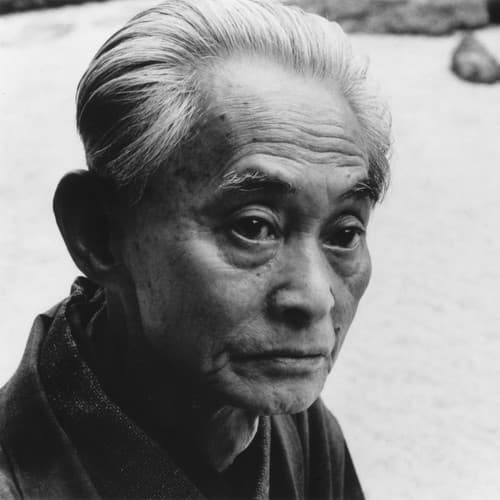
Yasunari Kawabata was a Japanese novelist and short story writer whose spare, lyrical, subtly shaded prose works won him the Nobel Prize in Literature in 1968, the first Japanese author to receive the award. His works have enjoyed broad international appeal and are still widely read.