“It’s not enough to have talent. You have to have a certain amount of ruthlessness. You have to be able to step on people.”
— Julia reflecting on the cutthroat nature of her profession.

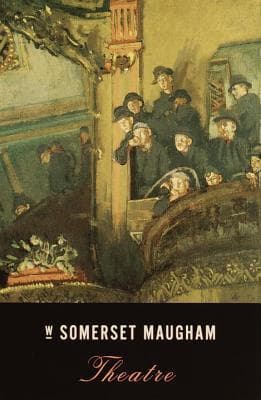
Sign in to track this book
A famous stage actress, whose life is a masterclass in performance, faces a quiet stranger who forces her to confront the raw reality beneath her dazzling facade.
Julia Lambert, a famous stage actress in London, is at the height of her career but feels bored. Despite her fame, wealth, and a seemingly perfect marriage to Michael Gosselyn, her manager and fellow actor, her life feels repetitive and unfulfilling. She is tired of her husband, her plays, and even her own performances. Her son, Roger, is away at Cambridge, and their relationship is distant. During this period of emotional stagnation, she meets Tom Fennell, a charming young man who wrote her an ardent fan letter. Julia is interested by his youthful enthusiasm and genuine admiration, so she agrees to meet him, which changes her carefully built world.
Julia's first meeting with Tom quickly grows into a passionate affair. Tom, much younger and inexperienced, is completely captivated by Julia's glamour, wit, and theatricality. For Julia, Tom represents a return to youth, a confirmation of her lasting desirability, and an escape from her boring marriage. She puts all her dramatic energy and emotional intensity into their secret relationship, enjoying the thrill and danger of it. She feels genuinely happy and invigorated, experiencing a passion she thought was long gone. The affair gives her a new audience for her acting, blurring the lines between her stage performances and her personal life.
Michael Gosselyn, Julia's shrewd and observant husband, learns of her affair with Tom. Instead of confronting her directly, he handles the situation with his usual politeness and a detached understanding, seeing it as a natural, if temporary, phase for a woman like Julia. He even subtly helps their meetings, showing his own complex, almost theatrical, approach to their marriage. Meanwhile, Julia's son, Roger, returns from Cambridge and strongly dislikes the theatrical world and his mother's profession. He finds it all artificial and insincere, creating a rift between them and making Julia question her identity outside the stage.
As the affair continues, Tom's strong adoration for Julia begins to fade slightly. He starts to make his own friends, pursue his own interests, and even shows casual interest in other young women, especially a socialite named Avice Crichton. Julia, used to being the only object of desire and attention, becomes increasingly jealous and insecure. She struggles to stay composed, feeling rejection for the first time in years. Her theatrical skills, which usually let her control any situation, are less effective in managing Tom's wandering affections, leading to moments of vulnerability and emotional trouble.
Julia invites Tom to a dinner party she is hosting, where she also includes Avice Crichton, a pretty but untalented young actress Tom had mentioned. During the evening, Julia observes Tom and Avice interacting with a familiarity that suggests more than friendship. Her suspicions are confirmed when she overhears a private conversation, realizing that Tom has been having an affair with Avice and has been using Julia for her connections. This revelation shatters Julia's ego and her image of herself as an irresistible muse. She feels deeply betrayed and humiliated, recognizing the cold reality of her situation.
Wanting revenge, Julia carefully plans her retaliation. She casts Avice Crichton in a small, yet important, role in her new play, 'The Golden Fleece.' During rehearsals, Julia subtly guides Avice, giving her advice that she knows will lead to a disastrous performance on opening night. She manipulates the costumes and lighting to highlight Avice's flaws. On opening night, Julia gives a performance of great brilliance, outshining everyone else on stage. She uses her theatrical genius to destroy Avice's credibility and public image, turning her rival's ambition into a humiliating spectacle.
On opening night, Julia carries out her plan perfectly. As Avice Crichton delivers her lines, Julia subtly yet powerfully undermines her performance, taking focus and making Avice appear amateurish and ridiculous. The audience, captivated by Julia's magnetism and skill, barely notices Avice, or notices her only to pity her. Critics praise Julia's performance, calling it one of her finest. Julia feels immense satisfaction and vindication. She proves to herself, and to the world, that her art is supreme, and that no personal slight can lessen her professional brilliance. She triumphs not just over Avice, but over her own recent vulnerabilities.
After her triumph, Julia has an honest conversation with her son, Roger. He admits that he admires her talent, despite his dislike for the theatrical world. This moment of connection is important for Julia, as she rarely lets herself be vulnerable with anyone, especially her family. She realizes that while her personal life may be a performance, her art is real and deeply satisfying. She accepts that her true self is linked to her identity as an actress, and that the stage is where she feels most alive and authentic. The affair with Tom, and its painful end, ultimately confirms her commitment to her craft.
Julia Lambert fully embraces her identity as an actress, understanding that her entire life, both on and off stage, is a grand, elaborate performance. She realizes that her true self is not separate from her theatrical persona, but rather, her theatrical persona is her true self. She finds deep satisfaction in this realization, acknowledging that she is most authentic when she is acting, even in her daily interactions. The affair with Tom and its resolution confirm her belief that human emotions, relationships, and experiences are all material for her art. She looks forward to her future, knowing she will continue to captivate audiences and live a life where the lines between reality and performance are gloriously blurred.
The Protagonist
Julia begins bored and seeking external validation, then finds temporary passion, endures betrayal, and ultimately embraces her identity as an actress for whom life itself is the grandest stage.
The Supporting
Michael remains largely static, a constant and understanding presence who observes Julia's dramatics with a resigned amusement.
The Supporting
Tom transforms from an adoring fan and lover into a manipulative opportunist, ultimately exposed and discarded by Julia.
The Supporting
Roger begins by rejecting his mother's world, but eventually comes to a nuanced understanding and appreciation of her unique genius.
The Supporting
Avice rises briefly as Tom's new interest, only to be spectacularly humiliated and professionally ruined by Julia's calculated revenge.
The Supporting
Lord Charles remains a constant, dignified suitor, always present as an alternative life path for Julia, but ultimately unsuccessful in winning her away from the stage.
The Supporting
Dolly remains a steadfast and loyal figure, providing practical support and emotional stability to Julia throughout her trials.
The Supporting
Jimmie remains a consistent and professional presence within Julia's theatrical ensemble.
The novel explores the blurring lines between Julia Lambert's true self and her performed self. Julia constantly acts, not just on stage, but in her personal life, crafting her emotions and reactions for an imagined audience. The affair with Tom initially makes her feel 'real,' but ultimately, she realizes that her most authentic identity is the actress. The book suggests that for some, life itself is the ultimate stage, and authenticity is found in the mastery of one's performance. Her interactions with Roger, who dislikes artificiality, highlight this central conflict.
“She was not a woman in love; she was an actress in love. The part was a joy to play and she played it with all her might.”
Maugham examines the tension between the heightened emotions and controlled stories of the stage versus the messy, unpredictable nature of real life. Julia's affair with Tom, while initially feeling authentic, eventually becomes another script she is performing. Her ultimate revenge is a masterful blend of art and reality, where her theatrical genius is used to manipulate and destroy a real-life rival. The novel suggests that for an artist like Julia, art often provides a more satisfying and controllable reality than life itself, letting her impose order and meaning where none might naturally exist.
“The stage was the only reality, life was just a rehearsal.”
Julia's affair with Tom is driven by her fear of aging and a desire to reaffirm her desirability. At forty-six, she is aware of time passing and seeks validation through a younger man's adoration. The affair temporarily rejuvenates her, but Tom's eventual wandering eye forces her to confront the limits of physical attraction and the short nature of youth. Her triumph over Avice Crichton is not just about revenge, but also about proving that her talent and experience, rather than just youth and beauty, are her most potent and lasting assets.
“She was forty-six, and it was a comfort to her to know that she could still make a young man lose his head.”
Julia's carefully planned revenge against Tom and Avice is a central theme, showing her manipulative skill and her ability to turn personal hurt into artistic triumph. Her revenge is not a spontaneous outburst but a carefully planned theatrical event, using her professional skills to devastating effect. This act highlights her calculating nature and her belief that the stage is the ultimate arena for settling scores. It also shows how Julia can turn personal suffering into a powerful performance, reaffirming her control and superiority.
“She would make Avice Crichton's debut a spectacular failure, and she would do it with all the grace and elegance of a queen.”
The novel critiques traditional notions of marriage through Julia and Michael's unconventional relationship. Their marriage is a partnership of convenience, mutual respect, and professional collaboration, without passionate romance but rich in understanding. Michael's tolerance of Julia's affairs challenges conventional morality, suggesting that for some, a marriage can last and even thrive without strict fidelity, as long as there is a deeper, unstated agreement. Their relationship is a stable backdrop against Julia's personal dramas, highlighting the practicalities and compromises in long-term partnerships.
“Their marriage was a perfect working arrangement, and neither had ever made the mistake of allowing passion to complicate it.”
Life itself is presented as a grand stage, and characters are constantly performing roles.
The entire novel is built upon the extended metaphor of life as a play. Julia constantly views her personal interactions, emotions, and relationships as scenes she is acting in. Her internal monologues are often framed as rehearsals, and her reactions are carefully choreographed. This device blurs the lines between her professional and personal existence, reinforcing the idea that for Julia, her true identity is inseparable from her theatrical persona. The climax of the novel, Julia's revenge, is literally a performance within a performance, perfectly encapsulating this device.
The audience is aware of Julia's true intentions and manipulations, while other characters remain oblivious.
Maugham frequently employs dramatic irony, particularly in Julia's interactions with Tom and Avice. The reader is privy to Julia's internal thoughts and meticulous planning, especially regarding her revenge. For instance, when Julia offers Avice seemingly helpful advice during rehearsals, the reader understands her malicious intent, while Avice naively accepts it. This device creates tension and allows the reader to appreciate Julia's cunning and theatrical genius, making her eventual triumph all the more satisfying and darkly humorous.
Julia's internal monologues and self-awareness often feel like breaking the fourth wall, addressing the reader directly.
While not literally breaking the fourth wall, Julia's highly introspective and analytical narration often gives the impression that she is performing for the reader, much as she performs for an audience. She constantly dissects her own emotions, motivations, and the reactions of others, framing her life as a narrative she is both experiencing and directing. This deep dive into her consciousness allows the reader to understand her complex psychology and the intricate blend of artifice and genuine feeling that defines her.
Mirrors symbolize Julia's self-obsession, vanity, and the constant scrutiny of her own image.
Mirrors appear frequently throughout the novel, often as Julia gazes into them to assess her appearance, practice expressions, or reflect on her aging. They symbolize her vanity, her self-awareness as a performer, and her constant need to control her external image. The mirror serves as a tool for her craft, but also a cruel reminder of time's passage. It highlights her dual existence: the private self examining the public persona, and the tension between how she truly feels and how she wishes to appear.
“It’s not enough to have talent. You have to have a certain amount of ruthlessness. You have to be able to step on people.”
— Julia reflecting on the cutthroat nature of her profession.
“The great thing about the stage is that you can be so many different people. You can live so many different lives.”
— Julia discussing the allure and freedom she finds in acting.
“Love is a very tiresome emotion when it’s not reciprocated.”
— Julia's cynical observation about unrequited love.
“The public doesn’t want the truth. It wants to be entertained.”
— Julia's professional assessment of audience expectations.
“It’s a peculiar thing, but the more you pretend to be someone else, the more you discover about yourself.”
— Julia musing on the paradoxical self-discovery through acting.
“One can be an actress without being a woman, but one cannot be a woman without being an actress.”
— A particularly telling insight from Julia about her intertwined roles.
“The only way to be happy is to like what you do, and the only way to do that is to do what you like.”
— Julia's philosophy on happiness, particularly in her career.
“Men are so simple. They always believe what they want to believe.”
— Julia's observation on the gullibility of men in her life.
“The greatest tragedy in life is not that men are mad, but that they are not mad enough.”
— A more philosophical reflection from Julia on human nature.
“Youth is a wonderful thing, what a crime to waste it on children.”
— Julia's humorous and slightly bitter take on the privilege of youth.
“The world is a stage, and all the men and women merely players.”
— A classic Shakespearean quote, used by Julia to frame her own life.
“It’s not an affair if you don’t get caught.”
— Julia's pragmatic and amoral view on infidelity.
“To be truly successful, one must be prepared to sacrifice everything.”
— Julia's firm belief about the cost of true success in her profession.
“One does not fall in love with a person, but with an idea of a person.”
— Julia's cynical take on the nature of romantic love.
Ready to see how well you understood this book? Take our interactive quiz with 10 questions.

William Somerset Maugham was an English writer, known for his plays, novels and short stories. Born in Paris, where he spent his first ten years, Maugham was schooled in England and went to a German university. He became a medical student in London and qualified as a physician in 1897. He never practised medicine, and became a full-time writer. His first novel, Liza of Lambeth (1897), a study of life in the slums, attracted attention, but it was as a playwright that he first achieved national celebrity. By 1908 he had four plays running at once in the West End of London. He wrote his 32nd and last play in 1933, after which he abandoned the theatre and concentrated on novels and short stories.