“My darling, I'm writing this letter because I don't know how else to tell you what's in my heart.”
— The opening line of one of the Wednesday letters, setting the tone for the revelations to come.

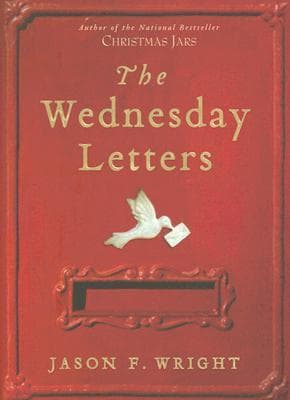
Jason F. Wright (2007)
Genre
Romance
Reading Time
360 min
Key Themes
See below
Sign in to track this book
Decades of weekly love letters, discovered after a couple's shared death, unravel a hidden family secret that forces their children to confront a life-altering truth.
The story opens with the tragic, yet romantic, death of Jack and Laurel Cooper. They are found in each other's arms in their bed and breakfast, The Wednesday Inn, in Vermont. Their three adult children, Matthew, Samantha, and Malcolm, return to the inn to arrange the funeral and handle their parents' estate. While sifting through their parents' belongings, Matthew discovers a hidden box containing thousands of handwritten letters. These letters, dated and organized, show that Jack had written one to Laurel every Wednesday since their wedding night, a tradition spanning thirty-nine years. This discovery piques the children's curiosity and sets them on a path to understanding their parents' marriage in a new way.
The Cooper siblings, initially hesitant, decide to read the letters together. The early letters show young love, shared dreams, and the establishment of The Wednesday Inn. They reveal Jack's deep devotion to Laurel and his commitment to documenting their life together. As they read deeper, the letters chronicle the joys of raising their children, the struggles of running a business, and the everyday intimacies that form a long marriage. The children are struck by the honesty and vulnerability in their parents' words, realizing there was much about their parents' inner lives they never truly understood, despite living under the same roof.
As the siblings continue reading, the tone of some letters changes. They find references to a period of sadness and a significant, unexplained absence in their parents' lives. There are mentions of 'the silence,' 'the hardest year,' and 'the decision that changed everything.' The children recall a vague memory of their mother being away for an extended period when they were very young, but the details were always a mystery and rarely discussed. These cryptic passages create a growing sense of unease and intrigue, suggesting a secret lies buried within their family's past that even they, as their children, were unaware of.
Amidst Jack's Wednesday letters, Matthew finds a separate, smaller bundle of letters, written by Laurel, addressed to a man named Michael. These letters are dated from the period of Laurel's mysterious absence mentioned in Jack's earlier letters. The discovery sends shockwaves through the siblings, as they grapple with the idea that their mother may have had an affair. The letters to Michael are filled with longing, regret, and a sense of internal conflict, describing a love that was intense but ultimately forbidden. This revelation forces the children to question everything they thought they knew about their parents' seemingly perfect marriage.
The letters from Laurel to Michael detail her emotional connection with him during a difficult period in her marriage to Jack. They met while Laurel was seeking solace and understanding away from home, feeling isolated and misunderstood after a family tragedy. Michael, a kind and empathetic man, offered her the companionship and emotional support she craved. Laurel's letters express her guilt and confusion, torn between her love for her husband and children, and the powerful, unexpected bond she formed with Michael. She grapples with the morality of her feelings and the potential consequences of her actions, revealing a vulnerability the children had never seen in their strong, composed mother.
As the siblings read further into Jack's letters from that same period, they discover that he was aware of Laurel's emotional entanglement with Michael. Instead of anger or resentment, Jack's letters express pain, fear of losing Laurel, but also an extraordinary depth of understanding and unconditional love. He writes about his struggle to cope with her absence and his determination to fight for their marriage, even if it meant giving her the space she needed. His words reveal his quiet suffering and his unwavering belief in their vows, showing a level of forgiveness and selflessness that deeply moves his children and redefines their perception of their father.
Laurel's final letter to Michael signifies her decision to return to Jack and her children, acknowledging that while her feelings for Michael were real, her commitment and love for her family were stronger. She expresses her heartache at leaving Michael but her certainty that her place was with Jack. Subsequent letters from Jack detail Laurel's return to the inn and the slow, difficult process of healing and rebuilding their marriage. They reveal the quiet strength of their bond and their mutual determination to overcome the pain and move forward. This period marks a turning point, where their love, though tested, emerged stronger and more resilient.
The full weight of the 'silence' and Laurel's breakdown is finally revealed through a series of letters: Jack and Laurel had an infant son, Thomas, who died shortly after birth. This devastating loss, kept secret from their other children, was the cause of Laurel's grief and emotional withdrawal, which led to her seeking solace away from home and her connection with Michael. The revelation of their lost brother adds another layer of sorrow and understanding for Matthew, Samantha, and Malcolm, explaining their mother's vulnerability and their parents' emotional scars that were always subtly present beneath the surface of their happy family life.
Armed with the complete story, Matthew, Samantha, and Malcolm grapple with the complex truths of their parents' lives. They realize that their parents, like all people, were flawed and faced challenges, but their love and commitment ultimately triumphed. The children come to understand that the perfect facade their parents presented showed their strength and dedication to their family, rather than a deception. They find a newfound respect for their parents' resilience, forgiveness, and the depth of their love, which endured through pain and temptation. This journey of discovery transforms their perception of their family legacy.
As the siblings finish reading the last of the letters, they are left with a sense of peace and understanding. The initial shock and hurt give way to admiration for the powerful love story that unfolded before them. The letters are not only a record of their parents' lives but also a guide for their own relationships and challenges. They leave the inn with a deeper appreciation for the complexities of marriage, the importance of forgiveness, and the enduring power of love. The Wednesday Letters become a treasured family heirloom, a love that was imperfect, yet unbreakable, and a source of inspiration for generations to come.
The Protagonist
Jack's arc shows his evolution from a hopeful newlywed to a man who endures profound heartbreak and demonstrates extraordinary forgiveness, ultimately solidifying his role as a pillar of unwavering love.
The Protagonist
Laurel's arc depicts her journey through intense grief and emotional turmoil, facing temptation, and ultimately choosing to return to and recommit to her family, showcasing her resilience and enduring love.
The Supporting
Matthew's arc involves moving from a superficial understanding of his parents to a profound appreciation of their complex love and sacrifices.
The Supporting
Samantha's arc shows her processing difficult truths with emotional honesty, leading to a deeper understanding and acceptance of her family's history.
The Supporting
Malcolm's arc moves from initial skepticism about his parents' hidden life to a profound emotional engagement and acceptance of their complex story.
The Supporting
Michael's arc is limited as he is a catalyst, but he serves to highlight Laurel's emotional journey and the profound choices she had to make.
The Mentioned
Thomas's arc is not personal, but his story reveals the profound, hidden grief that shaped his parents' lives and choices.
This theme is central to 'The Wednesday Letters,' shown by Jack and Laurel's 39-year marriage. Despite facing challenges, including the loss of their infant son Thomas and Laurel's emotional affair, their commitment to each other and their family ultimately prevails. Jack's weekly letters show his unwavering love and dedication, while Laurel's difficult decision to return to her family highlights her enduring bond with Jack. The story emphasizes that true love is not without flaws or pain, but it is resilient and capable of forgiveness, ultimately strengthening the relationship.
““I’ll write you every Wednesday, for as long as we both shall live.””
Forgiveness is a theme, particularly evident in Jack's response to Laurel's emotional affair. Instead of anger or resentment, his letters reveal a man grappling with pain but ultimately choosing understanding and the preservation of his marriage. Laurel, in turn, must forgive herself for her actions and accept Jack's forgiveness to fully reconcile. The siblings also learn to forgive their parents for their perceived imperfections and the secrets they kept, realizing that forgiveness is essential for healing and moving forward, both individually and as a family.
““Love isn’t something you fall into, it’s something you build, letter by letter, day by day.””
The novel explores how family secrets, particularly the death of baby Thomas and Laurel's affair, can shape a family's dynamics for decades. The children's discovery of these hidden truths forces them to re-evaluate their entire understanding of their parents and their upbringing. The theme highlights that while secrets might be kept to protect loved ones from pain, they can also create emotional distance and leave unresolved issues. Ultimately, the unveiling of these secrets, though initially painful, leads to a deeper, more authentic connection and understanding within the family.
““Sometimes the greatest love stories are not the ones we tell, but the ones we live, in all their messy, beautiful truth.””
The grief experienced by Jack and Laurel after the death of their infant son, Thomas, is a central, though hidden, theme. The story illustrates the impact of such a loss and how individuals cope differently—Laurel withdrawing and seeking solace elsewhere, while Jack internalizes his pain but remains steadfast. The letters reveal the long journey of healing, both individually and as a couple, showing that grief is a process that can alter a person and a relationship, yet also lead to greater resilience and empathy over time. The children also experience a secondary grief for the brother they never knew.
““There’s a silence in our home, a space where a little cry should have been. It echoes louder than any sound.””
The entire narrative depends on the power of the written word. Jack's weekly letters are a detailed record of his family's life, emotions, and hidden truths, making an otherwise private history accessible. The letters provide a unique and intimate window into the characters' inner worlds, allowing for a depth of understanding that verbal communication might not have achieved. They highlight how writing can preserve memories, express unspoken feelings, and ultimately facilitate healing and understanding across generations, making the past tangible and allowing the dead to speak to the living.
““These letters… they’re not just words. They’re a life, lived and loved and lost and found again.””
The story is primarily told through a collection of letters.
The central plot device is the use of letters written by Jack to Laurel and, later, Laurel to Michael. This epistolary format allows for an intimate, first-person perspective into the characters' thoughts, feelings, and experiences over nearly four decades. It creates a sense of discovery for both the characters (the children reading them) and the reader, slowly revealing secrets and building suspense. The letters serve as a direct, unfiltered record of the past, making the emotional journey more profound and immediate, and highlighting the theme of communication and memory.
The story unfolds through Jack's letters, then Laurel's, revealing different sides of the same events.
Initially, the story is largely from Jack's perspective through his letters, presenting a seemingly idyllic, though sometimes challenging, marriage. However, the discovery of Laurel's letters to Michael introduces a crucial second perspective, revealing her secret emotional life and challenging the children's (and the reader's) initial understanding of events. This dual narration creates suspense, adds complexity to the characters, and ultimately provides a more complete and nuanced picture of the marriage, demonstrating that truth can be multifaceted and subjective.
The plot is revealed through past events documented in the letters.
The entire plot relies on a form of retroactive storytelling, as the Cooper children uncover their parents' history through documents from the past. The present-day discovery of the letters acts as a framing device, while the letters themselves serve as extended flashbacks, detailing events that occurred decades earlier. This allows the author to build suspense and reveal information gradually, mirroring the children's own journey of discovery and enabling a slow burn of emotional impact as the full story of Jack and Laurel's life unfolds.
The family B&B symbolizes the enduring home and their shared history.
The Wednesday Inn, the bed and breakfast run by Jack and Laurel, functions as more than just a setting; it is a powerful symbol of their shared life, dreams, and commitment. It is the physical manifestation of their love and hard work, a place where their family grew and where their story unfolded. The inn's name itself subtly reinforces the theme of the 'Wednesday letters.' Its continued existence, even after their death, symbolizes the enduring legacy of their love and the home they built, which now holds the keys to their deepest secrets and triumphs for their children.
“My darling, I'm writing this letter because I don't know how else to tell you what's in my heart.”
— The opening line of one of the Wednesday letters, setting the tone for the revelations to come.
“Every Wednesday, for nearly forty years, I wrote your mother a letter. And every Wednesday, I mailed it.”
— Jack explaining the ritual of the letters to his son, Mark, after his wife's passing.
“Love isn't about perfection, Mark. It's about honesty, even when the truth hurts.”
— Jack imparting wisdom to Mark about the complexities of a lasting relationship.
“Some secrets are meant to be kept, not to protect ourselves, but to protect the ones we love.”
— A reflection from one of the letters, hinting at the difficult choices made in the past.
“I never knew a love like ours could exist, a love that could withstand time, distance, and even silence.”
— A poignant line from one of the letters, expressing the depth and resilience of their bond.
“Life has a way of leading us down paths we never intended, but sometimes, those are the most beautiful journeys.”
— A reflective thought from a letter, looking back at the unexpected turns in their lives.
“Forgiveness isn't about forgetting; it's about remembering with less pain.”
— A profound statement from a letter, discussing the process of healing and moving forward.
“The greatest gifts we receive are often disguised as the greatest challenges.”
— A philosophical observation from a letter, reflecting on the trials and triumphs of their life together.
“You taught me that love isn't just a feeling; it's a choice, made every single day.”
— A husband's realization expressed in a letter about the active nature of love in a marriage.
“Sometimes, the hardest thing to do is to simply let go of what you thought your life would be.”
— A moment of introspection in a letter about accepting the realities of life's unpredictable course.
“The past isn't a burden to carry, Mark. It's a foundation to build upon.”
— Jack offering guidance to Mark as he grapples with the revelations from the letters.
“Our story wasn't perfect, but it was ours, and that made it beautiful.”
— A tender reflection in a letter, embracing the imperfections of their shared history.
“True love isn't found; it's built, brick by painstaking brick, over a lifetime.”
— A powerful metaphor from a letter, emphasizing the effort and dedication required for lasting love.
“There are some things you can only understand when you've lived through them.”
— A wise observation from an older character, reflecting on the lessons learned through experience.
Ready to see how well you understood this book? Take our interactive quiz with 10 questions.

Biography coming soon.