“I thought I would be brave, but I was just a coward, a coward who was afraid of a little blood.”
— Pablo Ibbieta reflects on his fear of execution.

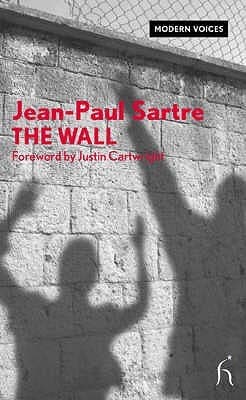
Jean-Paul Sartre (2005)
Genre
Historical Fiction
Reading Time
180 min
Key Themes
See below
Sign in to track this book
Three political prisoners face execution, their minds breaking down long before the firing squad arrives.
Pablo Ibbieta, a Republican fighter, is in a cell with two other men, Tom Steinbock and Juan Mirbal, during the Spanish Civil War. The Fascists have condemned them all to death. Tom is an International Brigade volunteer, and Juan is a young, innocent-looking boy. As the night goes on, a Belgian doctor, Dr. Gras, visits their cell. He seems to offer comfort and watch their mental states. Pablo stays defiant and calm, trying to keep his composure despite the grim reality. Tom is more openly afraid, while Juan is full of terror, crying and hoping for a reprieve. The doctor's presence is unsettling. He carefully notes their reactions, making them feel like specimens being watched, not men facing execution.
The hours pass slowly, filled with the painful wait for dawn, which they know will bring their execution. Juan's fear is clear. He sobs, thinking of his girlfriend and his past life, unable to accept his fate. Tom tries to calm him but is also struggling with terror, imagining the firing squad. Pablo, in contrast, tries to detach himself. He watches his own reactions and those of his cellmates with a cold, almost scientific interest. He thinks about his life, his love for his girlfriend Concha, and how meaningless it all is when facing death. The doctor continues his rounds, making notes. His detached professionalism highlights the prisoners' isolation and despair.
Dr. Gras, the Belgian doctor, spends time with each prisoner alone. He takes their pulse and asks about their physical and mental state. He notes Juan's extreme panic, Tom's growing worry, and Pablo's attempts at being calm. His questions are probing. They are meant to understand their mental responses to death, not to give real comfort. Pablo finds the doctor's presence annoying and intrusive. He feels like he is being studied like an animal. The doctor's calm, rational manner contrasts sharply with the prisoners' inner turmoil, showing the gap between life and coming death. He is an external, uncaring observer of their suffering.
Despite his intellectual defiance, Pablo finds his body failing him. He feels cold, his mouth is dry, and he has a strange feeling in his stomach. This is a physical sign of fear he cannot control. He observes these reactions with disgust and fascination. He realizes that his intellectual belief does not mean he is immune to physical terror. He thinks about how his body, which he once controlled, is now a separate thing that will soon be dead. This realization deepens his feeling of being separated from himself and from the living world. He feels the 'wall' between life and death becoming more real inside him.
Juan's despair becomes too much. He cries out for his girlfriend and his brother. He cannot understand or accept that his life is ending. He is young and not ready for such a brutal reality. His pleas and sobs fill the cell, making the grim atmosphere even worse for Pablo and Tom. He repeatedly asks if there is any hope, any chance of a pardon, clinging to the smallest possibility. His raw, clear fear reflects the horror of their situation to the other prisoners, making their own attempts at composure even more fragile. The doctor observes Juan's breakdown with clinical interest, noting the body's responses to extreme terror.
Tom Steinbock, at first calmer than Juan, eventually gives in to his fear. He tells Pablo he is terrified and regrets his past actions. He questions the value of his political beliefs when facing death. He wants one last cigarette and struggles with the thought of his body being left lifeless. His confession shows how universal fear is when facing death, no matter one's beliefs or background. He talks about how strange it is to die for a cause that now seems far away and unimportant compared to the immediate, terrifying reality of his own end.
As dawn breaks, shown by faint light in the cell, the guards arrive. Juan and Tom are called out first. Juan's cries grow louder as he is dragged away, his pleas echoing down the hall. Tom, though shaking, walks out with some resignation. Pablo remains alone in the cell, listening to the sounds of their departure. He is very aware of the finality of their fate. The silence after they are gone is heavy, making Pablo's sense of isolation stronger and chilling him with the reality that he is next. He tries to imagine their last moments, the sound of the shots, and the change from life to nothingness.
Pablo is then led out for questioning by the officers. They offer him a chance to save his life: if he reveals the hiding place of Ramon Gris, a key Republican leader, his execution will be stopped. Pablo, despite his inner struggle with fear and the desire to live, refuses to betray Gris. However, in a moment of cynical defiance and a desire to mock his captors, he decides to give them a false lead. He tells them Gris is hiding in the cemetery, believing it to be a silly and safe lie. It is a final act of rebellion against their authority and the strangeness of his situation.
Pablo, feeling a strange sense of freedom from coming death, makes up the lie about Ramon Gris hiding in the cemetery. He chooses the cemetery for its dark humor and because he is sure Gris would never be found there. He expects his captors to be fooled for a while, giving him a small, final win. He feels a momentary triumph in his ability to trick them, even as he knows his own death is still coming. This act is a desperate claim of control in a situation where he has none, a final, dark joke against the universe and his oppressors.
After some time, Pablo is brought back to the interrogation room, not for execution, but to be told his sentence has been stopped. To his utter shock and horror, he learns that Ramon Gris, whom he thought was far away, had moved to the cemetery to hide. He was found and killed by the Fascists precisely because of Pablo's made-up tip. The news breaks Pablo's calm and cynical humor. His 'harmless' lie had unforeseen and deadly results, showing the deep strangeness and chance of existence. He is left alive, but burdened by the knowledge that his defiance led to his friend's death.
Pablo, now free but deeply troubled, deals with the irony of his situation. He had mentally crossed the 'wall' into death, only to be pulled back into life by a cruel twist of fate. The world now seems strange and meaningless to him. His survival feels like a betrayal of his friends and a hollow victory, stained by Gris's death. He realizes how unpredictable life is and how useless it is to try to control one's fate or even the outcome of one's actions. He is left with a crushing sense of the absurd. His most defiant act resulted in the opposite of what he intended, leaving him alive but deeply changed and isolated.
The Protagonist
Pablo begins as a defiant stoic, psychologically crosses the 'wall' between life and death, and ends up profoundly alienated and disillusioned by the absurd irony of his survival.
The Supporting
Tom descends from a semblance of composure into overt fear and regret before his execution.
The Supporting
Juan is consumed by terror from the beginning until his execution, unable to cope with his fate.
The Supporting
Dr. Gras remains a constant, detached observer, his character unchanged by the suffering he witnesses.
The Mentioned
Ramon Gris is a static character, his fate decided off-page by Pablo's actions.
This is the main theme, shown in the characters facing death and the ultimate meaninglessness they feel. Pablo's journey shows this. His calm and defiance are made useless by fate's arbitrary nature, as his 'harmless' lie leads to Ramon Gris's death and his own unexpected survival. The lack of control over one's fate, life and death's unpredictable nature, and the breakdown of rational meaning when facing the unknown all contribute to this theme. The unexpected twist where Pablo's cynical joke becomes a tragic reality perfectly captures the absurd.
“I had gone through the wall and come back. I was still alive, but I had died. And I had died for nothing. It was a joke.”
The story details the mental effect of coming death on the three prisoners. Juan's pure terror, Tom's growing worry, and even Pablo's internal struggle with his body's betrayal show the basic nature of fear. The story explores how men react differently when facing their own end, from hysterical crying to attempts at intellectual detachment. Dr. Gras's clinical observations further emphasize the body's and mind's processes of facing death, making the men case studies of extreme human pain. The 'wall' itself stands for the mental barrier between life and death that the men cross before their actual execution.
“My body, I told myself, was a little heap of living flesh, and it would soon be dead. I hated it.”
Pablo's character shows the struggle to keep dignity and defiance against a powerful force. He tries to control his fear, to watch his reactions, and to make a final act of rebellion through his cynical lie. This theme explores the human need to assert control and meaning, even when all hope is gone. However, the story ultimately reverses this, showing how even defiance can lead to unintended, strange results. The characters deal with whether their political beliefs or personal values can withstand death's finality.
“I was going to die. I was going to die and I didn't care. I didn't care about anything, not even my life.”
The story shows a universe that does not care about human suffering and struggle. Dr. Gras, who watches the prisoners' agony with scientific curiosity rather than empathy, represents this indifference. The arbitrary nature of Pablo's survival and Gris's death further shows that there is no inherent justice or meaning in the events that happen. The cold, impersonal nature of the prison and the Fascist regime also reflect this theme, showing the individual's unimportance when facing larger, uncaring forces.
“Nothing mattered. Not my life, not their lives, nothing. It was all the same.”
Symbolizes the psychological barrier between life and death.
The 'wall' is a central metaphor, representing the psychological and emotional barrier that the condemned men cross as they grapple with their impending death. It's not a physical wall but an internal one, a shift in perception and being where life loses its meaning and the individual detaches from the world of the living. Pablo explicitly feels himself crossing this wall, entering a state of 'deadness' before his actual execution. The story suggests that for those condemned, death is a mental state achieved long before the physical act, isolating them from the world that continues to live.
Pablo's cynical lie leads to a tragic, unforeseen outcome.
The primary plot device is the ironic twist at the end: Pablo's casual, defiant lie about Ramon Gris's hiding place inadvertently leads to Gris's capture and death, while simultaneously saving Pablo's own life. This twist serves to highlight the story's central themes of absurdity, the unpredictability of fate, and the futility of human control. It shatters Pablo's carefully constructed stoicism and leaves him in a state of profound disillusionment, demonstrating that even acts of defiance can have unintended and cruel consequences, stripping away any perceived meaning from his survival.
A character whose clinical gaze highlights the prisoners' dehumanization and the story's existential themes.
Dr. Gras functions as a detached, clinical observer. His presence is not for comfort but for scientific study of human reactions to death. He asks probing questions, measures pulses, and notes physiological responses, effectively dehumanizing the prisoners by reducing their agony to data. This device serves to underscore the theme of the universe's indifference to human suffering and emphasizes the existential isolation of the condemned men. His cold professionalism contrasts sharply with the raw emotion in the cell, making the prisoners' plight feel even more stark and hopeless.
Provides deep insight into Pablo's psychological state and philosophical reflections.
The story relies heavily on Pablo Ibbieta's internal monologue to convey his thoughts, fears, and philosophical musings about death, meaning, and existence. This device allows the reader to experience his psychological journey in intimate detail, from his initial defiance to his growing sense of detachment and eventual alienation. It's through his internal reflections that the story explores its profound existential themes, showing the breakdown of his identity and his struggle to comprehend the absurd nature of his situation, making his intellectual and emotional 'crossing' of the wall palpable.
“I thought I would be brave, but I was just a coward, a coward who was afraid of a little blood.”
— Pablo Ibbieta reflects on his fear of execution.
“There are no innocent victims, only people who are more or less stupid.”
— A doctor's cynical view on life and suffering.
“We were condemned to live, and that was our punishment.”
— Pablo's despair after his unexpected reprieve.
“I had to choose between being a man or being a dog. I chose to be a dog.”
— A character's decision to betray for survival.
“Death is a wall, but it is not the end.”
— A philosophical musing on mortality.
“What's the good of living if you have to die?”
— A character's rhetorical question about the meaning of life.
“I felt myself a stranger, an intruder. I had no place in their world.”
— Pablo's sense of alienation from his jailers.
“The greatest freedom is to choose one's own death.”
— A character's belief in the ultimate act of self-determination.
“We are all condemned to be free.”
— An underlying existential theme throughout the collection.
“There was nothing left for me but to wait.”
— Pablo's resignation to his fate in the cell.
“The past was a dream, the present a nightmare, and the future a void.”
— A character's bleak perception of time and existence.
“They want to make us talk, but we have nothing to say.”
— Political prisoners resisting interrogation.
“Life is absurd, and we are all actors in a play without a script.”
— A character's reflection on the meaninglessness of existence.
Ready to see how well you understood this book? Take our interactive quiz with 10 questions.
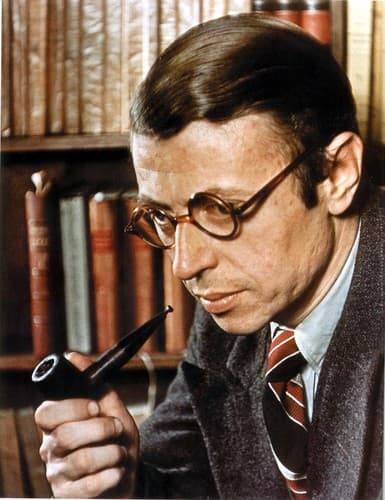
Jean-Paul Charles Aymard Sartre was a French philosopher, playwright, novelist, screenwriter, political activist, biographer, and literary critic, considered a leading figure in 20th-century French philosophy and Marxism. Sartre was one of the key figures in the philosophy of existentialism. His work has influenced sociology, critical theory, post-colonial theory, and literary studies, and continues to do so. He was awarded the 1964 Nobel Prize in Literature despite attempting to refuse it, saying that he always declined official honors and that "a writer should not allow himself to be turned into an institution."







