“There are some things you cannot change, and there are some things you must change. And the two are not always the same.”
— Reuven pondering the complexities of life and his calling.


Chaim Potok (1969)
Genre
Historical Fiction / Romance
Reading Time
368 min
Key Themes
See below
Sign in to track this book
In 1950s Brooklyn, a rabbinical student, Reuven Malter, questions his path and faith's traditions while helping his friend Danny Saunders free a brilliant, troubled boy from his genius and community expectations.
Reuven Malter, a rabbinical student at the Samson Raphael Hirsch Seminary, is immersed in intense Talmudic study. He is a gifted scholar, but his approach to texts often differs from his teachers' traditional methods, especially Professor Appleman. Reuven receives a letter from Danny Saunders, who is pursuing a doctorate in psychology at Columbia University and has left his Hasidic upbringing. Danny's letter expresses concern for a troubled young boy, Michael, whom he met through his work, and asks Reuven to help him. This request starts Reuven's involvement with Michael and sets the stage for a new phase in his life, balancing his studies with a growing sense of responsibility.
Reuven first meets Michael at a public library, as Danny arranged. Michael is a brilliant but disturbed boy, prone to rages and withdrawal. He is a mathematical prodigy but struggles with social interaction and emotional expression, often communicating through cryptic number sequences. Reuven immediately senses Michael's pain and the complexity of his inner world. He observes Michael's isolation and how his genius seems to trap him. This first meeting shows the challenge Reuven faces in connecting with Michael, who seems to live in his own world, protected by his intellect and trauma.
Through talks with Danny and Michael's aunt, Mrs. Gordon, Reuven learns about Michael's tragic early life. Michael's parents were Holocaust survivors who, after suffering horrors, could not give him the emotional stability and love he needed. His father, a brilliant but broken man, tried to teach Michael advanced mathematics as therapy, creating an intense environment. Michael saw his father's mental decline and suicide, which traumatized him and left him with guilt and anger. This helps Reuven understand Michael's withdrawn behavior, mathematical obsessions, and violent outbursts, realizing his genius is linked to his psychological wounds.
Reuven, using his academic background and gentle nature, tries to connect with Michael through shared interests, especially mathematics and Gemara. However, Michael's responses are often erratic, marked by aggressive displays of brilliance or complete withdrawal. Reuven finds it hard to get through Michael's defenses, as the boy often speaks in riddles or retreats into his numerical world. These early attempts mostly fail to break Michael's emotional barriers, showing the limits of a purely intellectual approach to a child with deep emotional trauma. Reuven begins to understand that a different strategy is needed to help Michael.
Professor Appleman, Reuven's demanding Talmud teacher, learns of Reuven's involvement with Michael. Appleman, known for his sharp intellect and harsh critiques, initially sees Michael's case academically, questioning Reuven's efforts. However, as Reuven shares more about Michael's mathematical mind and suffering, Appleman shows respect for the boy's genius and empathy for his situation. Appleman's involvement, though indirect, pushes Reuven to explain his understanding of Michael more clearly, refining his approach and deepening his commitment to helping the boy, even as he handles his complex relationship with his mentor.
Danny Saunders, now a trained psychologist, gives Reuven valuable advice on how to approach Michael. Danny emphasizes that Michael's issues are psychological, from trauma and a distorted understanding of love and guilt. He advises Reuven against trying to 'fix' Michael with logic or study alone, stressing the need for patience, acceptance, and a safe, non-judgmental space. Danny's insights, from his training and experience, help Reuven change his view. Reuven begins to understand that emotional healing, not just intellectual stimulation, is most important for Michael's recovery, marking a turning point in his approach.
Through persistent, gentle efforts and Danny's advice, Reuven slowly breaks down Michael's defenses. He spends hours with Michael, not always discussing academics, but simply being present, listening, and observing. A breakthrough occurs when Reuven, instead of trying to talk to Michael directly, starts responding to Michael's numerical 'messages' with simple, empathetic words and actions. He creates a sense of safety and predictability Michael needs. This shift from intellectual to emotional connection allows Michael to tentatively lower his guard, showing glimpses of the vulnerable boy beneath the brilliant, troubled exterior. This moment marks the start of genuine trust between them.
Reuven's father, David Malter, a respected scholar and compassionate man, plays a role in Reuven's journey. He listens patiently to Reuven's frustrations and successes with Michael, offering not just academic advice but insights into human suffering and compassion. David Malter encourages Reuven to see beyond Michael's genius and outbursts, to recognize the hurt child within. His father's support and emphasis on the ethical and humanistic sides of scholarship strengthen Reuven's commitment to Michael. Mr. Malter's wisdom helps Reuven understand that intellectual brilliance must be balanced with empathy and responsibility towards others, especially those who suffer.
Over time, with Reuven's consistent presence and patient understanding, Michael begins to heal. His violent outbursts become less frequent, and his periods of withdrawal shorten. He starts to have more conventional conversations, expressing his thoughts and feelings, though still haltingly. Reuven introduces him to less abstract learning, like history and literature, helping him connect with human experience beyond the logic of mathematics. Michael even develops a sense of humor and curiosity about the world outside his mind. This slow process shows the power of human connection and love in mending a broken spirit, proving that healing takes time and dedication.
As Michael improves, questions about his future arise. While his emotional state is more stable, his social skills still lag, and his intense focus on mathematics, though tempered, remains. Danny and Reuven discuss the challenges of helping Michael integrate into a normal life, beyond their protective bubble. They recognize that while Michael's genius is clear, his emotional and social development needs continued care. The novel explores the balance between fostering his unique gifts and ensuring he can function as a well-adjusted individual, highlighting the ongoing commitment needed for his full recovery and independent life.
Through his work with Michael, Reuven grows personally. He learns the importance of patience, empathy, and the limits of purely intellectual approaches to human problems. His experiences broaden his understanding of human suffering and the complexities of the mind. Reuven realizes his calling goes beyond traditional rabbinical scholarship; he feels drawn to a more compassionate, humanistic approach to his faith and his role in the world. This journey helps him reconcile his unconventional scholarly inclinations with a newfound purpose, moving him closer to the internal peace and clarity he sought, solidifying his identity as both a scholar and a helper.
Towards the end, Michael, significantly changed, is able to leave his aunt's home and pursue further education. While he will always carry the scars of his past, he now has the emotional tools to navigate the world with greater confidence and self-awareness. He enrolls in a university, presumably to continue his studies in mathematics, but with a more balanced perspective. His journey from an isolated, rage-filled prodigy to a young man capable of connection and growth shows the dedication of Reuven and Danny. Michael’s future, while still uncertain, holds the possibility of a life with greater integration and emotional well-being, a victory for all involved.
The Protagonist
Reuven evolves from a self-conscious scholar seeking academic recognition to a compassionate human being who finds purpose in helping others, ultimately achieving a deeper understanding of himself and his role in the world.
The Central Figure/Mentee
Michael transforms from a deeply disturbed and isolated child into a more emotionally stable and integrated young man, learning to connect with others and express his feelings.
The Supporting Character
Danny continues his path of self-discovery and professional development, finding fulfillment in helping others and solidifying his identity as a healer.
The Supporting Character
Mr. Malter remains a steadfast source of wisdom and support, embodying the ideal of a compassionate scholar.
The Supporting Character
Professor Appleman, while remaining true to his rigorous academic principles, develops a subtle appreciation for Reuven's compassionate approach to learning and life.
The Supporting Character
Mrs. Gordon navigates the challenges of caring for Michael with patience and hope, ultimately finding relief and joy in his gradual recovery.
The novel explores healing, showing that intellect alone cannot fix deep emotional wounds. Reuven's time with Michael highlights the need for love, patience, and empathy over logic or academic methods. Danny's psychological insights support this, guiding Reuven to understand Michael needs emotional connection and acceptance, not just intellectual stimulation. Scenes where Reuven simply sits with Michael, or responds to his numerical 'messages' with quiet understanding, show that true healing often comes through quiet, persistent human presence and compassion, rather than grand gestures or intellectual solutions.
“A human being is not a logic machine. A human being is a heart and a soul.”
A main theme is the tension between intellect and emotion. Michael's genius, though extraordinary, becomes a prison, a defense against his trauma. His inability to process emotions causes rage and withdrawal. Reuven, initially using intellectual approaches, learns that emotional understanding is key. Reuven himself, a brilliant scholar, must learn to combine his intellectual pursuits with a deeper emotional and humanistic understanding. The novel suggests that a fulfilled life requires a balance between mind and heart, with compassion often connecting them.
“Sometimes a mind can be too brilliant, too sharp, and it cuts itself off from the heart.”
The title, 'The Promise,' speaks to the potential for redemption for both Michael and Reuven. Michael, through Reuven's care and Danny's guidance, slowly reclaims his life from trauma, suggesting a future of integration and emotional well-being. Reuven, in turn, finds his own promise by discovering a deeper purpose beyond traditional scholarship, realizing his ability to heal and connect. The story offers hope that even deeply wounded spirits can find recovery, and individuals can grow beyond their initial self-perceptions to embrace new roles and understandings.
“There are people who can open the gates of your soul, Reuven. And there are people who can help you close them.”
The lasting effects of the Holocaust on later generations are a significant theme. Michael's parents' experiences as survivors directly lead to his severe trauma and his father's mental collapse and suicide. This theme shows how historical events can cast a long shadow, shaping the lives of those who were not direct victims but inherit the pain and psychological scars. The novel implicitly calls for understanding and healing for these 'second-generation' survivors, showing the profound ways historical trauma affects individuals and families, making Michael's healing a form of intergenerational redemption.
“He was a child of the ashes, Reuven. He carried the fire inside him.”
The intertwined personal and intellectual growth of Reuven and Michael.
The novel uses parallel journeys to highlight the interconnectedness of Reuven's and Michael's development. As Reuven endeavors to heal Michael, he simultaneously undergoes his own profound self-discovery and re-evaluation of his scholarly path. Michael's slow emergence from his shell mirrors Reuven's growing confidence in his compassionate approach to life and learning. This device emphasizes that the act of helping others often leads to one's own growth and that understanding another's pain can illuminate one's own purpose.
Numbers as both a prison and a means of communication, contrasting with verbal language.
Numbers serve as a powerful symbol in the novel. For Michael, they are both a refuge and a cage, a language through which he expresses his genius and his trauma, yet also a barrier to conventional human connection. Reuven's challenge is to transcend this numerical world and connect with Michael through empathy and verbal communication, ultimately helping Michael to find a voice beyond pure mathematics. This device illustrates the limitations of pure intellect when divorced from emotional expression and the importance of finding a common, human language for connection.
The transformative dynamic between Reuven and Michael, and Reuven and his father/Danny.
The mentor-mentee relationship is a core plot device, operating on multiple levels. Reuven acts as a mentor to Michael, guiding him towards emotional healing. Simultaneously, Reuven himself is mentored by his wise father, David Malter, and by his insightful friend, Danny Saunders, who provides crucial psychological perspectives. These interconnected mentorships demonstrate how knowledge, wisdom, and compassion are transmitted and how individuals grow through guidance and support, emphasizing the cyclical nature of learning and teaching.
“There are some things you cannot change, and there are some things you must change. And the two are not always the same.”
— Reuven pondering the complexities of life and his calling.
“A man must be a Jew in his heart, not just in his head.”
— David Malter discussing the spiritual essence of Judaism with Reuven.
“Sometimes a person has to go away to come back home.”
— Reuven reflecting on his journey and the distance he's traveled from his initial understanding.
“The world is full of questions, and we must never stop asking them.”
— David Malter encouraging intellectual curiosity and inquiry.
“Silence can be a terrible thing, a weapon to hurt and to punish.”
— Reuven observing the silence between Danny and his father, and its effects.
“To be a Jew is to be a question mark, to be an answer, to be both at the same time.”
— A reflection on the dynamic nature of Jewish identity.
“We are all wounded, but some of us heal in different ways.”
— Reuven's contemplation of the various forms of suffering and recovery.
“The greatest battles are fought within the soul.”
— Reuven grappling with his own internal conflicts and beliefs.
“Love is not always a gentle thing. Sometimes it is fierce, and sometimes it is silent.”
— Reuven observing the complex and often unexpressed love within families.
“There is a time to speak and a time to be silent, and wisdom lies in knowing the difference.”
— A theme often explored in the interactions between characters, particularly regarding difficult truths.
“A promise can be a burden, but it can also be a path.”
— The central metaphor of the book, reflecting the weight and direction of commitments.
“Sometimes the greatest truths are found in the most unexpected places.”
— Reuven's journey of discovery and the new perspectives he gains.
“The world is not always as simple as we wish it to be.”
— Reuven confronting the complexities of life, faith, and human relationships.
“To be truly alive is to feel both joy and sorrow, to embrace the full spectrum of human experience.”
— Reuven's evolving understanding of life's richness.
Ready to see how well you understood this book? Take our interactive quiz with 10 questions.
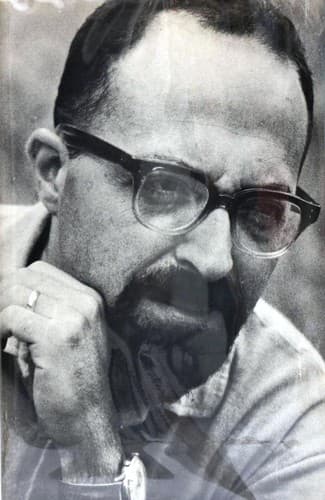
Chaim Potok was an American Jewish novelist and essayist, celebrated for his deeply resonant explorations of faith, tradition, and identity within the Hasidic and Orthodox Jewish communities. His most famous works, including 'The Chosen' and 'The Gift of Asher Lev,' delve into the complex relationships between religious observance and the modern world, often featuring protagonists grappling with artistic ambition and familial expectations. Potok's writing is characterized by its intellectual depth and empathetic portrayal of internal conflict.