“I am not made for happiness. I am not made for peace. I am made for something else entirely.”
— Renée's internal reflection on her nature and future.

Sign in to track this book
A newly independent music-hall artist, Renée Néré, weighs the comfort of a wealthy suitor's love against her hard-won freedom and artistic self-sufficiency.
Renée Nérรé, age thirty-three, has been divorced from her husband, Adolphe Taillandy, for three years. She lives alone in a small Paris apartment, supporting herself as a music-hall artist. She performs a pantomime act under the stage name Renée Nérรé. She finds freedom and dignity in her independence, enjoying her fellow performers and her bohemian life. Her past marriage, marked by her husband's infidelity and her own artistic stagnation, made her cautious about romance. She guards her solitude and her professional life, which gives her purpose.
Maxime Dufferein-Chautel, a wealthy, idle, and charming bachelor, starts coming to the music hall where Renée performs. At first, Renée views him with suspicion, used to men's superficial advances. However, Maxime's persistence and a gentle sincerity in his admiration begin to break down her guard. He sends her flowers, waits for her after shows, and slowly enters her life. Renée, despite her worries and a deep fear of losing her independence, feels drawn to his attention and the comfort he offers. This is a contrast to her solitary life and demanding work.
As Maxime becomes a bigger part of her life, Renée faces an internal conflict. She has moments of affection and tenderness with him, enjoying his company and the relief he provides from her constant vigilance. Still, she remains cautious, remembering the suffocation of her previous marriage and how her identity was lost. She sees Maxime's privileged, aimless life and wonders if she could ever fit into such a world without giving up her independence and artistic identity. Her diary entries and thoughts show this intense struggle between her desire for companionship and her need for self-preservation.
Maxime, no longer content with just dating Renée, tells her he loves her and proposes marriage. He offers her a life of comfort, security, and devoted companionship, promising to cherish and support her. This proposal puts Renée into deeper turmoil. She sees the sincerity of his feelings and the appeal of such an offer, especially after years of financial struggle and emotional solitude. However, the thought of giving up her freedom, her stage life, and her identity to become 'Madame Dufferein-Chautel' fills her with dread. She knows accepting would mean returning to a life of dependence, something she fought hard to escape.
To get away from the immediate pressure of Maxime's proposal and to think clearly, Renée decides to go on a planned provincial tour with her theater troupe. This tour takes her away from Paris and Maxime. The new scenery, the demanding performance schedule in different towns, and the company of her fellow artists, especially her friend and stage partner, Brague, give her a needed distraction and a sense of belonging in her professional world. She sees the tour as a test of her resolve and a chance to evaluate her feelings and priorities without Maxime's direct influence.
During the provincial tour, Renée and Maxime write many letters. These letters become an important way for them to express their feelings and thoughts more openly than they might in person. Maxime's letters are full of love, longing, and promises of a shared future. Renée's replies are more guarded, thoughtful, and often sad. While she admits her growing affection for him and the pain of their separation, she also uses these letters to explain her fears about marriage, her need for independence, and the value of her artistic life. The letters show the difference between their worlds and desires.
Life on the road is both tiring and exciting for Renée. She experiences the realities of provincial theaters, constant travel, and brief connections in each new town. Yet, she also finds satisfaction in her performances and the camaraderie with her troupe, especially Brague, who understands their profession's unique demands. She feels a deep sense of belonging among these 'vagabonds,' finding authenticity and purpose in their shared struggles and successes. This immersion in her artistic life reinforces her identity as a performer and strengthens her belief that this is where she belongs, despite the difficulties.
As the tour ends, the weight of her decision about Maxime grows heavier for Renée. She alternates between longing for his affection and deep worry about the sacrifices marriage would mean. She thinks about her past, her failed marriage, and the lessons of independence. The idea of giving up her stage name, her freedom to travel, and her artistic expression for a domestic life, however comfortable, feels like a betrayal of herself. She understands that Maxime, despite his kindness, cannot truly understand her world or her deep need for autonomy.
After much thought, Renée makes her final decision. She writes a long, heartfelt, but firm letter to Maxime. In it, she explains that while she cares for him and is touched by his love, she cannot marry him. She states her inability to give up her freedom, her art, and her identity as an independent woman. She recognizes that their worlds are incompatible and that accepting his proposal would lead to her unhappiness and the loss of her true self. It is a painful but firm rejection, based on self-awareness and a commitment to her own path.
With her decision made and the letter sent, Renée feels a deep sense of relief, though tinged with sadness. She returns to Paris briefly, finishes things, and then fully commits to her life as a 'vagabond.' She finds renewed energy and purpose in her performances, her friendships with her fellow artists, and the open road. Choosing to remain independent, though sometimes lonely, strengthens her sense of self and her commitment to her art. She looks forward to her future, knowing she has chosen a path that, while challenging, lets her remain true to herself, a free spirit on her own terms.
The Protagonist
Renée moves from a cautious embrace of independence to a profound internal struggle with the allure of love, ultimately reaffirming her commitment to her autonomous life and artistic identity.
The Supporting
Maxime's arc is less about personal change and more about his unwavering pursuit of Renée, which forces her to confront her own desires and fears.
The Supporting
Brague remains a consistent, supportive figure, representing the artistic community Renée chooses to remain a part of.
The Supporting
Marguerite's role is primarily to provide a sense of community and shared experience for Renée.
The Mentioned
His past actions serve as a static, foundational reason for Renée's fierce independence.
The Supporting
Jadin remains a consistent, professional figure, embodying the practicalities of the touring life.
The main theme is Renรée's struggle to balance her need for independence and self-sufficiency with the appeal of romantic love and societal marriage expectations. Her past divorce from Adolphe Taillandy made her fear losing her identity in a relationship. Maxime's affection and proposal force her to face this choice. She constantly weighs the comfort and companionship of marriage against the freedom, purpose, and self-respect she finds in her solitary, artistic life, ultimately choosing to protect her autonomy.
“What a strange thing is a man, that he should imagine that to love me is to possess me, and that to possess me is to enclose me within four walls!”
Renรée's journey is about finding herself and building her identity outside traditional female roles. Her stage name, Renรée Nรéré, represents her new beginning after divorce, letting her create an identity as an artist. Her internal thoughts and letters are a continuous process of introspection, as she defines who she is and what she needs. The provincial tour strengthens her sense of self as an artist, leading her to choose a life that matches her true self, rather than conforming to outside pressures.
“I will not give myself up again. I will not be anyone's wife, anyone's property, anyone's shadow.”
The novel explores the demanding, often unglamorous, but fulfilling life of a performing artist. Renรée finds her calling and a sense of belonging in the music-hall world, despite its difficulties. The camaraderie with fellow performers like Brague and Marguerite, the discipline of her craft, and her connection with the audience give her a deep sense of purpose that she fears marriage would destroy. Her art is not just a job; it is part of her identity and a source of strength that helps her resist the temptations of a more conventional life.
“The stage is my refuge, my battleground, my mirror. It is where I am most myself.”
The contrast between Renรée's bohemian, working-class life as a music-hall artist and Maxime's privileged, idle life shows themes of social class and gender expectations. Maxime offers Renรée a life of comfort and leisure, which for many women of the era would be a desired escape from work. However, Renรée sees this as a trap, knowing that such a life often means expectations of domesticity and the suppression of personal ambition. The novel critiques societal pressures on women to marry for security, rather than pursue their own paths and careers, especially for those who have experienced restrictive traditional marriage.
“He wants to marry me, he wants to take me away from my life, from my work... He wants to save me, perhaps, from myself.”
The novel looks into the complex and often conflicting nature of love. Renรée feels genuine affection and longing for Maxime, acknowledging the comfort and joy he brings. Yet, she also understands that love, for her, cannot come at the cost of her selfhood. She questions if a love that demands sacrificing one's core identity is truly love. The book suggests that for some, authentic love must allow for, rather than lessen, individual freedom and purpose, challenging common ideas of romantic devotion.
“To love is not to surrender, it is to choose freely, even if the choice is to remain alone.”
Renée's letters and Maxime's replies serve as a crucial means of communication and introspection.
The exchange of letters between Renée and Maxime during her provincial tour is a significant plot device. It allows the characters to express their deepest thoughts and feelings, often more candidly than they might in person. For Renée, these letters become a space for intense self-reflection, where she articulates her fears, desires, and ultimately her decision. Maxime's letters, in turn, demonstrate his unwavering affection and his inability to fully grasp Renée's need for independence, highlighting the fundamental incompatibility between their worlds. The letters chart the emotional trajectory of their relationship while physically separating them.
Renée's extensive internal thoughts and written reflections provide deep insight into her psychological state.
A substantial portion of the novel is presented through Renée's first-person internal monologues and what reads like her diary entries. This device provides an intimate and unfiltered look into her complex emotional landscape, her fears, her memories of her past marriage, and her constant self-analysis. It is through these reflective passages that the reader gains a full understanding of her struggle between independence and love, her artistic identity, and her ultimate decision. This allows for a deep character study, making her internal conflict the primary driver of the narrative.
A physical and emotional journey that provides distance and clarity for Renée's decision.
The provincial tour serves as a pivotal plot device, creating both physical and emotional distance between Renée and Maxime. This geographical separation allows Renée to escape the immediate pressure of his presence and proposal, giving her space to think clearly. More importantly, it immerses her fully in her professional world, reinforcing her identity as an artist and her connection to her fellow 'vagabonds.' The demanding routine and the camaraderie of the tour solidify her conviction that her independent, artistic life is where she truly belongs, ultimately leading to her definitive choice.
A symbol of Renée's new, independent identity after her divorce.
The adoption of the stage name 'Renée Néré' is a powerful symbolic device. It signifies Renée's deliberate break from her past as 'Madame Taillandy' and her creation of a new, autonomous identity. The name represents her professional life, her artistic persona, and her hard-won independence. Throughout the novel, the thought of relinquishing this name to become 'Madame Dufferein-Chautel' is a major source of anxiety for her, as it symbolizes the potential loss of her selfhood. It underscores her commitment to her art and her refusal to be defined solely by her marital status.
“I am not made for happiness. I am not made for peace. I am made for something else entirely.”
— Renée's internal reflection on her nature and future.
“The greatest cowardice is to let the other person believe that you love them when you do not.”
— Renée's thoughts on honesty in relationships, particularly regarding Max.
“To love is to give up one's solitude, one's freedom, one's self.”
— Renée's meditation on the sacrifices inherent in love.
“I carry my house on my back, like a snail. It is small, it is dark, but it is mine.”
— Renée's analogy for her independent, self-contained life as a music hall artist.
“One does not remake one's life. One continues it, differently, perhaps, but always with the same self.”
— Renée's realization about the continuity of identity despite life changes.
“The stage is a mirror that reflects the world, but it is also a window into one's own soul.”
— Renée's reflection on the dual nature of her profession.
“He loved me for what I was, but he wanted me to be what he wanted me to be.”
— Renée's astute observation about the conditional nature of Max's affection.
“There are silences that say more than all the words in the world.”
— Renée's perception of unspoken communication and emotional depth.
“My freedom is a burden, but it is a burden I cannot lay down.”
— Renée's internal struggle with the weight and necessity of her independence.
“The past is a phantom limb that aches with the memory of what was there.”
— Renée's poignant reflection on her previous marriage and lost youth.
“One can only truly know oneself in solitude, when the noise of others is silenced.”
— Renée's belief in the importance of solitude for introspection.
“Happiness is a brief pause between two sorrows.”
— Renée's cynical yet realistic view on the fleeting nature of joy.
“I belong to no one, and that is my strength and my weakness.”
— Renée's conclusive thought on her fiercely independent nature.
“The greatest danger for a woman is to confuse the desire for love with the desire for security.”
— Renée's warning against compromising one's true desires for practical reasons.
“The stage is my only true home, for there I am always myself, even when I am playing another.”
— Renée's ultimate declaration of her connection to her profession.
Ready to see how well you understood this book? Take our interactive quiz with 10 questions.
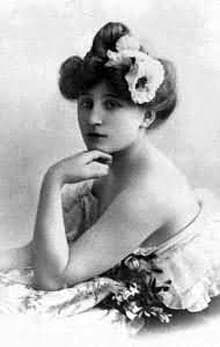
Sidonie-Gabrielle Colette, known monomously as Colette, was a French author and woman of letters. She was also a mime, actress, and journalist. Colette is best known in the English-speaking world for her 1944 novella Gigi, which was the basis for the 1958 film and the 1973 stage production of the same name. Her short story collection The Tendrils of the Vine is also famous in France.