“It was not a heroic journey, but it was a human one.”
— Harold reflects on his pilgrimage's meaning.

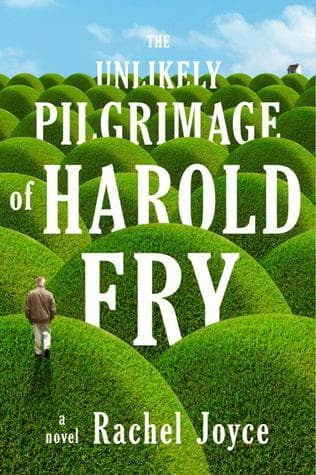
Rachel Joyce (2012)
Genre
Literary Fiction / Lifestyle
Reading Time
360 min
Key Themes
See below
Sign in to track this book
A newly retired man's ordinary life changes when he walks 600 miles across England to save an old friend, finding new purpose and facing old regrets.
Harold Fry, a newly retired man living a quiet life in Kingsbridge with his estranged wife, Maureen, receives a letter that changes his routine. It is from Queenie Hennessy, a former coworker he has not seen in twenty years. She writes that she is dying in a hospice in Berwick-upon-Tweed. Feeling a sudden sense of guilt and a need to reply, Harold writes a short, simple answer and walks to the post box. On his way, he meets a young woman at a garage who tells him a story about faith and healing, suggesting that if he believes, anything is possible. This meeting, along with his deep regret about Queenie, leads to a sudden decision: he will walk the entire 600 miles to Berwick to deliver his message in person, believing that as long as he walks, Queenie will live.
Still wearing his yachting shoes, a light coat, and carrying only his wallet and the letter, Harold starts his walk from Kingsbridge. He first plans to walk only to the next town, then the next, but the need to keep going takes over. His journey immediately faces problems; his feet blister, he gets hungry and thirsty, and the physical effort is huge. Back home, Maureen is first annoyed by his absence, then increasingly confused and worried as his short errand turns into days. Harold, meanwhile, is driven by an unspoken need to make up for past mistakes and a growing belief that his walk is needed for Queenie to live. He begins to let go of his old life, accepting the uncertainty of the road.
As Harold walks through the English countryside, he meets different strangers who offer him food, shelter, and company. These meetings often make him think about his past. He remembers his earlier, happier times with Maureen, their courtship, and their son, David. But he also faces the growing distance in his marriage and the sad, unresolved problems about David, who became estranged and later died by suicide. Each meeting, from the kind shopkeeper to the group of young men, helps Harold deal with his grief and regret, and understand his relationships, especially with Maureen and David. He starts to put together parts of his life, realizing how much he has kept hidden.
Harold's unusual walk eventually gets media attention. His story appears in local and then national newspapers, changing him from a lone walker into a public figure he did not want to be. Other people, inspired by his journey, start to join him, forming a small group. While some offer real support, others seem to be looking for their own kind of healing or attention. Harold finds the growing crowd and media attention bothersome and too much. He feels the weight of their hopes, fearing that if he fails, he will not only fail Queenie but also let down all those who have put hope in his journey. This new attention threatens to overshadow the personal nature of his quest.
Back in Kingsbridge, Maureen is first angry and embarrassed by Harold's sudden disappearance and his strange mission. She tries to keep her routine, but his absence leaves a deep emptiness. As days turn into weeks, her anger turns into deep loneliness and growing worry for his safety. She starts to think about their marriage, remembering happier times but also facing her own part in their distance and the unspoken grief over David's death. Maureen finds herself looking at old photos and remembering shared moments, realizing how much she has missed Harold and how connected their lives still are, despite years of emotional distance. She begins to follow his journey through the news, her concern stronger than her first resentment.
As Harold continues his walk, the physical and emotional toll increases. He is troubled by memories, especially the unresolved guilt about Queenie Hennessy. He remembers a time at work when he let Queenie take the blame for a mistake he made, leading to her dismissal and his own promotion—a secret he has kept for decades. This, along with his lasting grief and guilt over David's suicide and his feeling of being a bad father, pushes him to his breaking point. He experiences a deep emotional and physical collapse, finding himself alone and completely without hope in a field, questioning the whole reason for his journey and feeling the full weight of his past mistakes and losses.
After his breakdown, Harold realizes he cannot finish his journey with the expectations and company of his followers. He needs to walk alone, to deal with his grief and find his own way to healing. He deliberately takes a different path, slipping away from the crowd that has gathered around him. This act of leaving is hard but needed, letting him reclaim the solitary, personal nature of his walk. He finds comfort in the quiet places, the regular act of walking, and the space it gives him to think. This solitude lets him fully face his past, his regrets, and his love for Maureen and David, without the distraction of public notice.
Maureen, having followed Harold's journey in the news and overcome by worry, love, and a wish for reconciliation, makes a big decision. She packs a bag and, despite her own worries and their long separation, sets out to find him. She takes a train and then a taxi, traveling across the country to her husband's last known location. Her own journey, though by normal means, reflects Harold's in its emotional strength and its goal: to close the large gap that has grown between them, both physically and emotionally. Her search shows her own change and a strong hope for their future.
Maureen eventually finds Harold, very tired and alone, near the end of his journey. Their meeting is not dramatic or very emotional but deeply important. There are no big statements, but a quiet, shared understanding and a renewed connection. They sit together, holding hands, finally able to acknowledge the unspoken grief over David and the long silence that has hurt their marriage. This meeting marks a turning point for both of them, showing the start of their reconciliation and a chance to rebuild their relationship based on honesty and shared feelings. Maureen's presence gives Harold the strength to finish the last part of his journey.
Harold, with Maureen for the final part, finally arrives in Berwick-upon-Tweed and goes to the hospice. He is led to Queenie's room, where he finds her weak and barely awake. He delivers his message, telling her he is sorry, that he understands, and that he has walked all this way for her. In a moment of deep connection, Queenie briefly opens her eyes and smiles, acknowledging his presence and his apology. This quiet exchange brings Harold a sense of closure and peace. His journey, though not literally saving Queenie's life, has saved him, letting him face his past, find forgiveness, and reconnect with his wife. He leaves the hospice, not with triumph, but with a quiet sense of completion and an acceptance of life's complex nature.
The Protagonist
Harold transforms from a passive, guilt-ridden man into an active participant in his own life, confronting his past and reconciling with his wife.
The Supporting
Maureen moves from bitter resentment to deep worry and self-reflection, ultimately undertaking her own journey to reunite with Harold and begin healing their marriage.
The Supporting
Though physically dying, Queenie's spirit and the impact of her past actions on Harold serve as a catalyst for his transformation and eventual atonement.
The Mentioned
His tragic life and death, though in the past, serve as a constant source of grief and guilt that Harold must confront and ultimately accept.
The Supporting
Her brief, inspiring encounter with Harold serves as the unexpected catalyst for his entire journey, demonstrating the power of simple belief.
The Supporting
She provides temporary comfort and practical aid to Harold, embodying the kindness of strangers on his path.
The Supporting
He joins Harold's journey seeking purpose, but ultimately represents the superficiality of public attention that Harold must shed.
The Supporting
She joins Harold's group, mirroring Rex in her search for meaning through his pilgrimage, before Harold continues alone.
The novel explores Harold's deep guilt about past actions, especially his part in Queenie's dismissal and his feelings of being a bad father to David. His walk is an act of making amends and a strong search for forgiveness, from Queenie and for himself. Through his journey, he deals with the weight of his regrets, learning that real forgiveness must come from within and from honestly admitting his mistakes. The eventual meeting with Maureen also shows a mutual journey towards forgiving each other for years of silence and shared grief.
“He understood that he was not walking to save Queenie, but to save himself.”
A main theme is how silence and unspoken emotions hurt relationships. Harold and Maureen's marriage has been damaged by years of unaddressed grief over David's death and a general inability to talk. Harold's whole journey starts because of an unspoken apology to Queenie. The novel shows how these silences grow, creating distance and resentment, and how, in the end, healing can only begin through direct, even if quiet, communication, as seen in Harold and Maureen's eventual reunion.
“Silence was a thing of weight, of pressure. It was a thing that could break the heart.”
Harold's walk is a search for healing and self-discovery. Without his routine and possessions, he is forced to face who he truly is, apart from being a husband or former employee. Each step and each meeting show parts of his character, his past, and his ability to endure and be kind. He comes to understand his own reasons, his strengths, and his faults, finding a more real version of himself through suffering and effort. His journey is less about a physical place and more about an inner change.
“He had started a journey and he had to finish it. He had to know what was on the other side.”
Despite the long separation between Harold and Maureen, their lasting love is a quiet but strong force. Harold's journey, while seemingly for Queenie, is also an unconscious effort to bridge the gap with Maureen, shown by his constant thoughts of her. Maureen's own journey to find him shows her renewed love and desire for reconciliation. The novel suggests that love, even when hidden under layers of grief and resentment, can reappear and offer a way to heal and reconnect, not as a perfect answer, but as a start for rebuilding.
“He had walked to Queenie, but he had walked back to Maureen.”
Throughout his hard journey, Harold meets many strangers who offer him food, shelter, comfort, and encouragement without expecting anything back. These acts of unexpected kindness, from a simple cup of tea to a night's stay, highlight the good nature and connection of people. These meetings help Harold both physically and emotionally, giving him hope and strengthening his belief in the world, a sharp contrast to his earlier isolated life. They show how small acts of kindness can have a big effect.
“It was the kindness of strangers that kept him going, more than any food or drink.”
A literal and metaphorical journey of self-discovery and atonement.
The entire narrative is structured around Harold's physical pilgrimage across England. This journey serves as both a literal plot device, moving Harold from one location and encounter to the next, and a powerful metaphor for his internal journey of self-discovery, grief processing, and quest for redemption. The physical hardships mirror his emotional struggles, and the linear progression of his walk allows for a gradual unfolding of his past and character development. The length and difficulty emphasize the depth of his internal conflict and commitment.
Memories triggered by the journey reveal Harold's past and motivations.
As Harold walks, his mind frequently drifts into flashbacks and vivid recollections of his past. These are not always linear but are often triggered by specific sights, sounds, or encounters on his journey. This device is crucial for revealing Harold's backstory, his relationship with Maureen, the tragic story of David, and the details of his past with Queenie. It allows the reader to understand the layers of guilt and regret that drive his pilgrimage, providing context and emotional depth to his present actions.
The catalyst for Harold's journey and a symbol of unresolved past.
Queenie's letter is the inciting incident of the entire novel. It is a tangible symbol of Harold's unresolved past and the deep-seated guilt he carries. The act of writing a reply, then deciding to deliver it in person, sets the entire plot in motion. The letter represents the call to action, forcing Harold out of his complacency and into an active confrontation with his history. Its contents, and Harold's reaction to them, highlight the theme of unspoken truths and the need for closure.
A symbol of Harold's unpreparedness and eventual transformation.
Harold begins his 600-mile walk in his yachting shoes, a seemingly trivial detail that becomes a powerful symbol. They represent his utter unpreparedness for the arduous journey ahead, his comfortable but ultimately unfulfilling former life, and his impulsive decision. As the shoes wear out and are eventually replaced by more practical footwear, they symbolize Harold's physical and emotional transformation, his shedding of old habits, and his embrace of a more authentic, rugged existence. They mark the literal and metaphorical distance he travels.
“It was not a heroic journey, but it was a human one.”
— Harold reflects on his pilgrimage's meaning.
“He had learned that it was the smallness of people that filled him with wonder and tenderness, and the loneliness of that too.”
— Harold's realization about human nature during his walk.
“The world was made up of people putting one foot in front of the other; and a life might appear ordinary simply because the person living it had been doing so for a long time.”
— Harold contemplates the nature of ordinary life.
“Beginnings could happen more than once, or in different ways.”
— Harold thinks about new starts in life.
“You could be ordinary and attempt something extraordinary, without being a hero.”
— Harold's insight into his own pilgrimage.
“He saw that when a person became estranged from themselves, they were also estranged from others.”
— Harold reflects on his past relationships and self.
“It was as if he had been asleep for twenty years and had woken up.”
— Harold describes the awakening effect of his journey.
“The past was the past; there was no escaping your beginnings, but you could go onwards and outwards from them.”
— Harold considers the impact of his childhood.
“Sometimes it was harder to speak than to walk.”
— Harold struggles with communication during his pilgrimage.
“He had allowed himself to be small, but he was not.”
— Harold gains self-awareness about his worth.
“The journey was not about the miles, but about the moments.”
— Harold realizes the true value of his pilgrimage.
“He had spent so long trying to put things right, but some things could never be put right; they could only be carried.”
— Harold reflects on guilt and acceptance.
“It was the people he met who gave him the courage to keep going.”
— Harold acknowledges the support from strangers.
“He had thought the walk would be about arriving, but it was about becoming.”
— Harold's epiphany about the purpose of his journey.
Ready to see how well you understood this book? Take our interactive quiz with 10 questions.

Biography coming soon.