“I don’t know what it is about you that makes me feel like I am home.”
— Expressing a deep sense of belonging with a loved one.

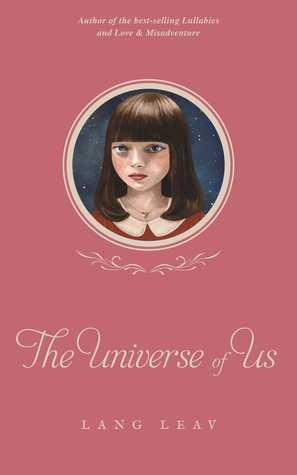
Lang Leav (2016)
Genre
Romance
Reading Time
90 min
Key Themes
See below
Sign in to track this book
Lang Leav's "The Universe of Us" explores human emotion, mapping love, loss, and the search for self against a celestial background.
The early poems in 'The Universe of Us' set up a theme of cosmic alignment in love. Leav uses images of stars, constellations, and space to describe how two people meet by chance. These pieces often suggest fate, as if the universe brought the lovers together. There is a focus on life 'before' and 'after' finding this person, implying a life previously incomplete, now lit up by their presence. The language is hopeful and full of wonder, setting the mood for a journey through a romantic relationship.
As the collection continues, Leav explores being in love, comparing it to planets orbiting in harmony. These poems describe the comfort, understanding, and shared life that grows over time. They focus on the small, daily moments that strengthen a bond, and the deep emotional security from unconditional love. The images change from colliding stars to the steady dance of celestial bodies, showing stability and mutual reliance. The speaker often thinks about how this love changes their world and sense of self.
In the middle of the collection, the tone changes as Leav introduces the challenges and heartbreaks that can affect even strong connections. This section touches on subtle signs of distance between people and the painful realization that a bond might weaken. Celestial metaphors describe this disruption—a dimming star, an erratic orbit, or a drifting planet. These poems often convey unease and a sense of impending separation. The speaker struggles with the confusion and sadness of a love that felt certain, now threatened.
The emotional center of 'The Universe of Us' explores heartbreak. Leav dedicates several poems to the raw pain of separation, comparing it to an eclipse where light is suddenly gone. These pieces explore feelings of emptiness, betrayal, and deep grief after a relationship ends. The speaker often thinks about broken dreams and the void left by the loved one. Images of dark nights, cold spaces, and broken stars show the desolation. There is a deep longing for what was lost and a struggle to understand how something so bright could disappear.
After the intense pain of heartbreak, this section focuses on the difficult journey of life after loss. The speaker feels lost in an empty space, like an astronaut adrift. These poems describe disorientation, the struggle to find meaning, and the constant ache of memory. There is a search for answers, trying to understand what went wrong, and grappling with who the self is without the other. The imagery often includes metaphors of being without direction, highlighting the deep feeling of being lost.
As the speaker slowly starts to process the loss, this section shows the first signs of healing and self-recovery. These poems have a fragile sense of hope, like distant stars appearing after a storm. They focus on looking inward, understanding one's own worth, and finding inner strength. The speaker starts to find comfort in being alone and begins to rebuild their own world, separate from the lost love. While pain is still present, it no longer controls everything, and there is a growing awareness of a future beyond heartbreak.
This part of the collection focuses on self-love and rediscovering one's inner world. Leav uses metaphors of rebuilding shattered constellations or finding one's own guiding star to show the process of putting oneself back together. The speaker learns to value their own company and finds strength in independence. There is a celebration of resilience and the realization that one does not need another person to be whole. This section marks a turning point, moving from relying on external validation to a strong sense of self-acceptance and inner peace.
Leav dedicates poems to the idea that each person is a universe, full of experiences, emotions, and potential. This section reflects on wisdom gained from both love and loss, acknowledging that heartbreak helps one grow. The speaker accepts their own complexity and the vastness of their inner self. There is quiet strength and a deep understanding that true fulfillment comes from within. The celestial metaphors now apply to the self, suggesting that one's inner world is as boundless as the cosmos.
Even with healing and self-discovery, echoes of past love remain, but they no longer bring crushing pain. This section explores how memories persist, like faint starlight from a distant galaxy, showing parts of who the speaker has become. There is an acceptance that the past is part of the present, but it does not control the future. The poems show a mature understanding that every relationship leaves a mark, shaping the person into someone more complex and resilient. It is about honoring the past while living firmly in the present.
The final poems in 'The Universe of Us' express hope for the future. While not predicting a new love, they show a readiness to embrace what comes next, with new wisdom and strength. The speaker is open to new experiences, connections, and continued self-discovery. The celestial imagery returns, but now it means endless possibilities and the wonder of existence, not just romantic love. It is a message of resilience, growth, and the human capacity for hope, even after deep loss.
The very last poems explore the idea of the self as always changing, like the expanding universe. Love, loss, and healing have changed the speaker, making them richer and more complex. There is a deep understanding that identity changes and is shaped by every interaction and emotion. The collection ends with peace and acceptance, embracing life's journey with all its uncertainties and wonders. It is an affirmation of personal growth and the enduring strength of the human spirit.
Beyond individual romantic love, some poems touch on the broader theme of universal connection—how every person, experience, and star is part of a larger whole. This expands 'The Universe of Us' beyond a personal love story to a more philosophical look at existence. It suggests that even when alone, we are part of something magnificent. This perspective offers comfort and belonging, placing the individual within the grand scheme of the cosmos, showing that love, in its many forms, is a basic force.
The Protagonist
The Speaker evolves from someone defined by their romantic relationship to an individual who finds strength and completeness within themselves, embracing self-love and resilience.
The Supporting/Mentioned
The Beloved's arc is external to the narrative, serving primarily as the source of the Speaker's transformative experiences.
The Supporting/Abstract
The Self transforms from a diminished, lost entity to a powerful, self-sufficient, and wise individual.
The Supporting/Abstract
Memory's arc shifts from a painful haunting to a more neutral, integrated part of the Speaker's past.
The Supporting/Abstract
Hope's arc moves from being lost to being a renewed and steadfast companion.
Leav uses celestial metaphors to make romantic experiences feel universal. Love is a cosmic alignment, a meeting of stars, or a shared orbit, suggesting destiny and deep connection. Heartbreak is an eclipse, a dimming star, or a planet drifting into darkness, showing the impact of separation. This theme suggests human emotions, especially love and loss, are as vast as the universe, making personal experiences feel grand and relatable. For example, early poems describe lovers as 'two stars colliding,' while later ones speak of 'a universe of us, now just dust.'
“You were the sun, and I was the moon. We orbited each other, in a cosmic dance of love.”
A main theme is that deep loss can lead to self-discovery and growth. While painful, heartbreak makes the speaker look inward, rethink their identity, and find strength without a partner. The journey from being defined by a relationship to becoming a whole person is a strong story. This theme appears in poems where the speaker reclaims their 'own universe' or learns to 'shine their own light,' suggesting that the emptiness from a lost love creates space for personal growth and self-love. It is about finding completeness within, rather than seeking it from others.
“I used to think my universe revolved around you. Now I know I am a universe unto myself.”
Despite the deep pain, the collection conveys hope and human resilience. Even after the 'darkest night,' the speaker finds glimmers of light, showing the ability to heal and move forward. This theme appears in the gradual shift from despair to acceptance and a readiness for new beginnings. It highlights the human spirit's strength to endure suffering, learn from it, and continue to believe in joy and connection, even if it is a different kind of connection, or just with oneself. The final poems show quiet optimism.
“Even the darkest night will end and the sun will rise. And with it, a new hope.”
Leav's simple, moving language and universal themes make 'The Universe of Us' easy to relate to. By focusing on core human experiences like falling in love, the pain of separation, and healing, the poems connect with many readers. The cosmic imagery further emphasizes that these emotions are not isolated but part of the broader human experience, shared across time and space. This theme creates a shared experience for the reader, where their personal heartbreaks and joys echo the speaker's journey, building understanding and empathy.
“Perhaps we are all just stars, lost in the vastness, searching for our own constellations.”
The consistent use of stars, planets, and cosmic phenomena to describe love and loss.
Leav employs an extended metaphor of the universe throughout the entire collection. Love is depicted as a cosmic alignment, two souls orbiting each other, or a constellation forming. Heartbreak becomes an eclipse, a star falling, or a planet drifting into darkness. This device not only provides a rich, evocative backdrop for the emotional journey but also elevates personal experiences to a universal, almost destined, scale. It allows for a consistent visual language that binds the diverse poems together and reinforces the central themes of profound connection and devastating separation.
The Speaker often directly addresses the 'you' (the Beloved), creating intimacy and immediacy.
Many poems are written in the second person, directly addressing 'you,' the Beloved. This creates an intense sense of intimacy and immediacy, drawing the reader directly into the Speaker's emotional world. It makes the 'you' feel present, even when they are absent, amplifying the sense of longing, pain, or remembrance. This device also allows the reader to project their own experiences onto the 'you,' making the poems highly relatable and personal, as if the Speaker is articulating the reader's own unspoken feelings towards a past or present love.
The contrasting of opposing ideas or images, particularly love and loss, light and darkness.
Leav frequently uses juxtaposition to highlight the stark differences between the states of being in love and experiencing heartbreak. For example, the warmth and light associated with connection are starkly contrasted with the coldness and darkness of separation. This device emphasizes the profound impact of love's absence and the emotional chasm it creates. It strengthens the emotional resonance of the poems by placing opposing feelings side-by-side, making the highs feel higher and the lows feel deeper, and illustrating the transformative power of both joy and sorrow.
The repetition of a word or phrase at the beginning of successive clauses or lines.
Anaphora is used to create rhythm, emphasis, and emotional intensity. By repeating certain phrases or opening lines, Leav draws attention to key ideas or feelings, making them resonate more strongly with the reader. This device can build a sense of urgency, reinforce a particular sentiment, or create a hypnotic, meditative quality in the poems. For example, repeated phrases about 'what we were' or 'what we lost' can underscore the lingering pain of memory or the difficulty of moving on, effectively enhancing the poem's emotional impact.
“I don’t know what it is about you that makes me feel like I am home.”
— Expressing a deep sense of belonging with a loved one.
“The most beautiful things are not perfect, they are unique.”
— Reflecting on the nature of beauty and individuality.
“You were a stranger, then you were my world.”
— Describing the rapid and profound shift in a relationship.
“I want to be the one you can’t live without, even if you try.”
— A yearning for an indispensable role in a lover's life.
“We are all a little broken. But the last time I checked, broken crayons still color the same.”
— A metaphor for resilience and inherent worth despite flaws.
“He was the ocean and I was the moon. We were always drawn to each other, but never quite together.”
— Illustrating an intense, yet unfulfilled, connection.
“Some days I am more wolf than woman and I am still learning to stop apologizing for my wild.”
— Embracing one's untamed nature and rejecting societal expectations.
“I still remember the way you looked at me, like I was the only star in your sky.”
— Recalling a cherished memory of being adored.
“You can't be everything to everyone. But you can be everything to someone.”
— Focusing on the depth of love within a specific relationship.
“The problem with forever is that it is not always guaranteed.”
— A poignant reflection on the transient nature of love and life.
“I built my walls up so high, but you found a way to climb over them.”
— Describing the vulnerability and breakthrough in a new relationship.
“If you have to beg someone to stay, they are already gone.”
— A stark realization about the end of a relationship.
“My heart is a compass, and it always points to you.”
— Expressing an unwavering and intrinsic pull towards a loved one.
“It was in the darkest hours of my life that I found the light in you.”
— Highlighting a partner's role as a source of hope during difficult times.
Ready to see how well you understood this book? Take our interactive quiz with 10 questions.

Biography coming soon.