BookBrief
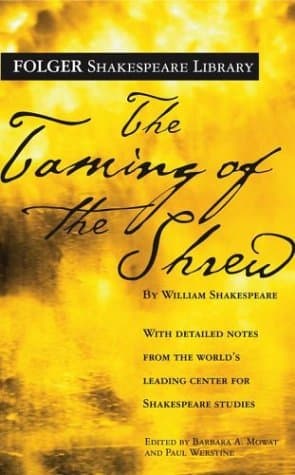
The Taming of the Shrew cover
Archivist's Choice

The Taming of the Shrew

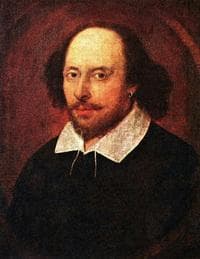
William Shakespeare (1631)

Genre

Romance

Reading Time

12 Minutes

Key Themes

See below

Track Your Reading

Sign in to track this book

A loud suitor tries to 'tame' a strong-willed woman for her money, so her quieter sister can marry.

Synopsis

In Padua, the wealthy Baptista Minola declares his beautiful and mild-mannered younger daughter, Bianca, cannot marry until her notoriously ill-tempered elder sister, Katherine, is wed. This decree presents a challenge for Bianca's many suitors, including the newly arrived Lucentio, who falls instantly in love with her. Into this situation steps Petruchio, a boisterous gentleman from Verona, who, motivated solely by Katherine's substantial dowry, declares his intention to marry and "tame" her. What follows is a comedic battle of wits and wills as Petruchio employs unconventional and often humiliating tactics to break Katherine's spirit and conform her to his idea of a dutiful wife, all while Lucentio, with the help of his servants, devises an elaborate scheme to win Bianca's hand.
Difficulty
Medium
Pacing
Fast
Mood
Comedic, Boisterous, Witty, Controversial, Farcial

Plot Summary

The Induction: A Lord's Jest

The play starts with Christopher Sly, a drunken tinker, being kicked out of an alehouse. A wealthy Lord, returning from hunting, finds Sly passed out and decides to trick him. He tells his servants to dress Sly in fine clothes, put him in his own bed, and treat him like a nobleman who has just woken from a long period of madness. When Sly wakes up, confused, the servants convince him he is a Lord, and a 'wife' (a page boy in disguise) is brought to him. To entertain the 'Lord,' a group of actors performs 'The Taming of the Shrew.'

Padua: The Sisters Minola

The main play begins in Padua. Lucentio, a young scholar from Pisa, arrives with his servants Tranio and Biondello, planning to study. He quickly falls for Bianca, the beautiful younger daughter of the wealthy Baptista Minola. However, Baptista has said Bianca cannot marry until her sharp-tongued older sister, Katherine, is wed. This is a problem, as Katherine's bad temper scares away all potential husbands. Lucentio, determined to win Bianca, plans to disguise himself as a tutor to get close to her.

Petruchio's Arrival and Intent

Meanwhile, Petruchio, a loud gentleman from Verona, arrives in Padua with his servant Grumio. He has come to 'marry well in Padua, if well, then happily.' His friend Hortensio tells him about Katherine and her large dowry, but also warns him about her bad temper. Petruchio, unafraid and focused on the money, says he will marry Katherine, believing he can tame any woman. Hortensio, who also wants Bianca, sees this as a chance to remove Katherine as an obstacle.

The Suitors' Schemes

Lucentio, to get near Bianca, swaps clothes and identities with his servant Tranio. Lucentio, disguised as a Latin tutor named Cambio, enters Baptista's house. Tranio, now pretending to be Lucentio, presents himself as a rich suitor for Bianca to Baptista. Hortensio, another suitor for Bianca, also disguises himself as a music tutor named Litio. These deceptions lead to comedic misunderstandings and rivalries as both disguised suitors try to win Bianca's affection without Baptista knowing.

Petruchio Meets Katherine

Petruchio, with help from Hortensio and the disguised Tranio (as Lucentio), asks Baptista for Katherine's hand in marriage. Baptista is unsure, but Petruchio insists. Their first meeting is a verbal fight. Katherine's sharp insults are met by Petruchio's equally bold and often silly declarations of love and his intent to marry her. He turns her insults into compliments and asserts his control, saying he will marry her despite her protests. He even falsely tells Baptista that Katherine has agreed to marry him, getting the father's permission.

The Wedding Day

The wedding day arrives, and Petruchio is noticeably late, embarrassing Baptista and Katherine. When he finally appears, he is dressed in a strange and wild costume, riding an old, weak horse. He acts outrageously during the ceremony, swearing loudly, hitting the priest, and throwing wine in the clerk's face. Right after the vows, he refuses to stay for the wedding feast, insisting he must take Katherine home with him at once, despite her protests and the guests' shock. He claims his rights as her husband, saying she is his property.

Katherine's 'Taming' Begins

At Petruchio's country house, the 'taming' process truly begins. He denies Katherine food, saying it is not good enough for her, and denies her sleep, citing various made-up flaws in their bed and surroundings. He scolds his servants for small mistakes, causing chaos and stress, all while pretending it is for Katherine's benefit. He also destroys her new clothes, calling them unsuitable, making sure she has nothing to wear that she likes. His method is to copy and exaggerate her own bad temper, making her experience how unpleasant it is.

Bianca's Choice and Hortensio's Resignation

Back in Padua, while Katherine is being 'tamed,' Bianca continues her lessons with her disguised tutors. Lucentio (as Cambio) and Hortensio (as Litio) compete for her affection during their lessons. Bianca clearly prefers Lucentio, giving him more attention. Hortensio, seeing their flirting, realizes he has lost Bianca's heart. Disappointed, he decides to stop pursuing Bianca and instead marry a rich widow, revealing his true identity and plans to Lucentio and Tranio before leaving to find his new bride.

The Journey Back to Padua

Petruchio and Katherine travel to Padua to attend Bianca's wedding feast. Along the way, Petruchio continues his 'taming' strategy, demanding that Katherine agree with his absurd statements, no matter how untrue. He insists the sun is the moon and an old man is a young maiden. At first, Katherine resists, but after being threatened with turning back, she eventually gives in, agreeing to whatever Petruchio says. This public show of her obedience marks a key moment in her change, showing her new willingness to follow his will.

The Real Lucentio is Revealed

Lucentio and Bianca elope and marry in secret. Meanwhile, Tranio (still disguised as Lucentio) has convinced a Pedant (a schoolmaster) to pretend to be Lucentio's father, Vincentio, to get Baptista's permission and dowry for Bianca. The real Vincentio arrives in Padua and is shocked to find Tranio dressed as his son and a Pedant claiming to be him. A chaotic scene follows, with accusations of madness and impersonation, until Biondello and the newly married Lucentio and Bianca arrive, revealing the whole deception to Baptista and the true Vincentio.

The Wedding Feast and the Wager

At the joint wedding feast for Lucentio and Bianca, Hortensio and the Widow, and Petruchio and Katherine, the men discuss their wives' obedience. Petruchio, confident, proposes a bet to Lucentio and Hortensio: which of their wives will be most obedient when called? Lucentio and Hortensio's wives refuse to come, but Katherine immediately obeys Petruchio's call. She then gives a long speech on the duty wives owe their husbands, surprising and impressing the other characters. This solidifies Petruchio's victory and the apparent completion of her 'taming.'

Principal Figures

Katherine Minola

The Protagonist

Katherine transforms from a defiant, aggressive 'shrew' into an apparently obedient and submissive wife, though the sincerity of this transformation remains a subject of debate. She learns to outwardly conform to societal expectations imposed by her husband.

Petruchio

The Protagonist

Petruchio successfully 'tames' Katherine, transforming her public demeanor from a shrew to an obedient wife, thereby achieving his goal of wealth and social standing. He remains largely unchanged in his boisterous and manipulative nature.

Bianca Minola

The Supporting

Bianca's arc reveals her true nature as less submissive than initially portrayed, choosing her own husband through deception. She shifts from a seemingly ideal maiden to a wife who, post-marriage, shows signs of her own will, refusing to obey her husband's call at the feast.

Lucentio

The Supporting

Lucentio successfully wins Bianca's hand through elaborate deception and elopement, but his initial romantic idealism is challenged by the realities of marriage, as seen in Bianca's later disobedience.

Tranio

The Supporting

Tranio successfully orchestrates Lucentio's courtship and marriage through his clever disguises and manipulations, proving his loyalty and intelligence. He remains a steadfast and cunning servant throughout the play.

Baptista Minola

The Supporting

Baptista navigates the challenges of marrying off his difficult elder daughter and his popular younger daughter, eventually securing matches for both, albeit through significant deception for Bianca.

Hortensio

The Supporting

Hortensio fails to win Bianca's affection but pragmatically finds a new match with a wealthy widow, showing his adaptability and focus on securing a comfortable marriage.

Grumio

The Supporting

Grumio remains a loyal and comedic servant, observing and participating in Petruchio's 'taming' efforts without significant personal development beyond his role.

Christopher Sly

The Supporting

Sly's arc is limited to the Induction; he is transformed from a drunken tinker to a 'lord' and back again, serving as a meta-theatrical device to introduce the main play.

Themes & Insights

The Nature of Marriage and Gender Roles

The play explores societal expectations for marriage in the Elizabethan era, especially for women. It shows marriage as a business deal involving dowries and social standing, but also as a power struggle. Petruchio's 'taming' of Katherine brutally enforces the patriarchal idea of a wife's submission to her husband. Katherine's final speech embodies the ideal of wifely obedience, raising questions about whether her submission is real, forced, or a calculated act, thus either challenging or supporting traditional gender roles.

Thy husband is thy lord, thy life, thy keeper, / Thy head, thy sovereign; one that cares for thee, / And for thy maintenance commits his body / To painful labour both by sea and land.

Katherine

Appearance Versus Reality

Deception, disguise, and mistaken identity are central to the play. Lucentio and Hortensio disguise themselves as tutors, Tranio pretends to be Lucentio, and a Pedant stands in for Vincentio. Bianca, at first appearing meek, shows a more stubborn side. Katherine, the 'shrew,' eventually presents an image of perfect submission. This theme shows how identity can shift and how characters use appearances to get what they want. It suggests that how someone acts on the outside may not show their true self or intentions. The Induction with Christopher Sly also relates to this theme.

I come to wive it wealthily in Padua; / If wealthily, then happily in Padua.

Petruchio

Social Hierarchy and Class

The play subtly examines social structures, especially through master-servant relationships. Tranio and Biondello, though servants, are intelligent and often outsmart their masters. The Induction with Christopher Sly, a tinker temporarily made a lord, directly questions the arbitrary nature of social status. The focus on dowries and wealth in marriages also highlights the importance of class in Elizabethan society, where moving up socially through marriage was a big factor.

For 'tis the mind that makes the body rich; / And as the sun breaks through the darkest clouds, / So honour peereth in the meanest habit.

Petruchio

Love and Money

The reasons for marriage are a recurring theme, with characters driven by both genuine affection and money. Lucentio is motivated by romantic love for Bianca, while Petruchio clearly states his main goal is wealth, seeing Katherine's dowry as his main reason. However, even Lucentio's pursuit of Bianca involves significant financial arrangements and social maneuvering. The play contrasts these motivations, suggesting that while love may be a factor, economic security and social advancement are often equally, if not more, powerful reasons for marital choices.

Say that she rail, why then I'll tell her plain / She sings as sweetly as a nightingale. / Say that she frown, I'll say she looks as clear / As morning roses newly washed with dew.

Petruchio

Verbal Combat and Wit

The play is full of witty dialogue, puns, and verbal sparring, especially between Katherine and Petruchio during their first meetings. Their exchanges are a battle of wits and emotions, where quick thinking is a weapon to assert control and express defiance. Petruchio often twists Katherine's words and insults into compliments or absurdities, disarming her through language. The comedic energy comes largely from these fast-paced verbal exchanges, showing the power of language.

I am a gentleman, you know, and of a noble house. / To make a stale of me amongst these mates? / Thou hast tamed a curst shrew.

Katherine (to Petruchio, before her final speech)

Plot Devices & Literary Techniques

Disguise and Mistaken Identity

Characters assume false identities to achieve their goals.

This is a pervasive device, used primarily by Lucentio, Tranio, and Hortensio to gain access to Bianca. Lucentio becomes a tutor, Tranio his master, and Hortensio a music teacher. This creates comedic confusion and allows characters to bypass social barriers. It also highlights the theme of appearance versus reality, as characters' true intentions and personalities are hidden behind their adopted personas, leading to dramatic irony and plot complications, especially when the real Vincentio arrives.

Frame Story (Induction)

A play within a play, setting the stage for the main narrative.

The Induction, featuring Christopher Sly, acts as a frame for 'The Taming of the Shrew.' It establishes a meta-theatrical context, reminding the audience they are watching a performance. It also introduces themes of social hierarchy, deception, and the blurred lines between reality and illusion, which resonate throughout the main play. The Induction sets a comedic tone and allows for a broader commentary on the nature of storytelling and audience engagement, though Sly's ultimate fate is left ambiguous.

Verbal Sparring / Wit Battles

Characters engage in rapid, witty exchanges as a form of conflict.

This device is most prominent in the initial encounters between Katherine and Petruchio. Their dialogue is characterized by insults, puns, and quick retorts, serving as a primary means of demonstrating their personalities and the power dynamics between them. Petruchio's strategy involves matching and exaggerating Katherine's wit, twisting her words to his advantage, and ultimately overwhelming her with his verbal assertiveness. This verbal combat is a central element of the play's comedy and character development, showcasing their intellects.

Dramatic Irony

The audience knows more than some characters.

Dramatic irony is prevalent due to the numerous disguises. The audience is aware that Lucentio is a tutor and Tranio is his master, while Baptista and other characters are not. This creates humor as characters misinterpret situations or make decisions based on false information. For example, Baptista accepts Tranio (as Lucentio) as a suitor for Bianca while the real Lucentio is wooing her under his nose. This device heightens the comedic effect and allows the audience to appreciate the cleverness of the deceptions.

Critical analysis

Notable Quotes

Quiz

Test Your Knowledge

Ready to see how well you understood this book? Take our interactive quiz with 10 questions.

10
Questions
~5
Minutes
?
Best Score

Key Questions (FAQ)

The Taming of the Shrew follows Petruchio's pursuit of Katherine, the elder and ill-tempered sister of the beautiful Bianca. Petruchio agrees to marry Katherine, primarily for her dowry, and embarks on a mission to "tame" her into a more agreeable wife.

About the author

William Shakespeare

William Shakespeare was an English playwright, poet and actor. He is widely regarded as the greatest writer in the English language and the world's pre-eminent dramatist. He is often called England's national poet and the "Bard of Avon". His extant works, including collaborations, consist of some 39 plays, 154 sonnets, three long narrative poems, and a few other verses, some of uncertain authorship. His plays have been translated into every major living language and are performed more often than those of any other playwright. Shakespeare remains arguably the most influential writer in the English language, and his works continue to be studied and reinterpreted.