“The past is a stubborn thing. It holds on to you, even when you try to let go.”
— Reflecting on the enduring impact of past events and secrets.

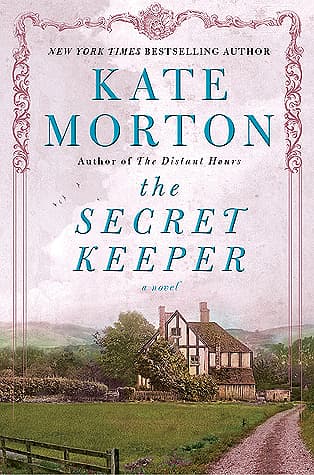
Kate Morton (2012)
Genre
Romance
Reading Time
12-15 hours
Key Themes
See below
Sign in to track this book
A daughter's summer afternoon is interrupted by a crime, leading her fifty years later to uncover her mother's hidden wartime past and the lives bound by a secret.
In the summer of 1961, sixteen-year-old Laurel Nicolson is at her family's farm in rural England. From her treehouse, she sees a man, a casual acquaintance of her father's, approach the house. Her mother, Dorothy, speaks to him briefly before he enters. Moments later, Laurel sees her mother emerge, distressed, and then stab the man with a kitchen knife, killing him. Dorothy's husband, Gerald, quickly takes control, telling Laurel and her siblings to be silent and saying the man's death was an accident, a fall from a ladder. The police investigation supports this story, leaving Laurel with trauma and unease about her mother.
Fifty years later, in 2011, Laurel Nicolson is a successful actress in London. Her mother, Dorothy, is about to turn ninety, and the family gathers at the farm for the celebration. The memory of the murder and cover-up has haunted Laurel her entire life, creating distance between her and her mother. With Dorothy's age, Laurel realizes this might be her last chance to understand what happened that day and why her mother acted violently. Driven by a need for closure and to reconcile her image of her loving mother with the killer she saw, Laurel begins her own investigation into Dorothy's past.
Laurel's investigation goes back to Dorothy's youth in pre-World War II London, specifically to 1939. Dorothy, then Dorothy Smith, is an ambitious young woman working as a maid for the wealthy Endicott family. She is resourceful and intelligent, secretly reading books from the family library. Despite her humble background, Dorothy dreams of a more glamorous life, far from domestic service. She is captivated by literature and art, often feeling out of place in her working-class environment and among the upper classes she serves. Her desire for self-improvement is a key trait.
While with the Endicotts, Dorothy meets Vivien, a beautiful and mysterious young woman, a distant relative and aspiring fashion designer. Vivien, with her sophisticated air and artistic goals, represents what Dorothy secretly wants. Their friendship grows, and through Vivien, Dorothy meets Jimmy Metcalfe, a charming aspiring writer and poet. Jimmy is also involved in a clandestine, anti-fascist political movement. The three form an intense bond, drawn together by shared interests, wartime anxieties, and a desire to escape their predetermined paths. This meeting sets the stage for a complex web of relationships, loyalties, and betrayals that will span decades.
As World War II escalates and the Blitz devastates London, the lives of Dorothy, Vivien, and Jimmy become more intertwined. They navigate air raids, rationing, and the constant threat of death, forming deep connections amidst the chaos. Dorothy falls in love with Jimmy, drawn to his idealism and passion. However, Vivien also has feelings for Jimmy, creating an unspoken rivalry. The war forces them to confront their ideals and make difficult choices. Jimmy's political activities become more dangerous, and the friends are caught in a world where secrets are essential for survival and personal desires often clash with broader struggles. The intensity of wartime experiences shapes their characters and fate.
A moment occurs when Jimmy, involved in a dangerous political plot, entrusts Dorothy with a secret and incriminating documents. Torn between loyalty to Jimmy and fear for her future, Dorothy makes a choice that leads to Jimmy's arrest by British intelligence. Believing Jimmy to be a traitor, and fearing for her own safety, she provides information that implicates him. This act of betrayal, driven by self-preservation, misunderstanding, and perhaps jealousy, shatters the bond between the three friends and sets their lives on different courses. The consequences of this decision ripple through the decades, leading to the events of 1961.
Following Jimmy's arrest and the fallout, Dorothy, consumed by guilt and fear, decides to disappear from her former life. She leaves London, abandoning her original identity as Dorothy Smith, and creates a new one, becoming 'Dorothy Nicolson.' She moves to the countryside, determined to erase her past and build a respectable, stable life away from the dangers and betrayals of wartime London. This reinvention is a desperate attempt to outrun her conscience. She marries Gerald, a kind farmer, and they establish the farm, raising a family and creating the idyllic facade Laurel grew up believing was real. This new identity is a constructed shield.
Through her investigation, Laurel uncovers Vivien's tragic story. She learns that Vivien, deeply affected by Jimmy's arrest and believing Dorothy responsible, found Jimmy after his release from prison. They had a child, Daniel. The man murdered in 1961 was Vivien's brother, Leonard, who had discovered Vivien and Jimmy's secret and was trying to extort money from Dorothy. He knew Dorothy's true identity and past, threatening to expose her carefully constructed new life. Laurel realizes the murder was not random violence, but a desperate measure to protect her family and keep her true identity and past secrets buried.
Laurel finally understands her mother's actions in 1961. Leonard, Vivien's brother, had tracked Dorothy down at the farm, knowing her past as Dorothy Smith, her connection to Jimmy Metcalfe, and his arrest. He was blackmailing her, threatening to expose everything and shatter her life and her children's lives. The murder was a desperate, impulsive act of self-preservation and protection – not just of her secret, but of the peaceful life she had built for her family. Dorothy believed that by silencing Leonard, she was safeguarding her children from the shame her past would bring. It was an act born of love, fear, and a lifetime of hidden guilt.
With the complete truth, Laurel confronts her elderly mother. Instead of anger, there is understanding and empathy. Dorothy, frail but lucid, confesses the full story, expressing the immense burden of guilt she carried for decades. Laurel realizes the complexity of her mother's past, the difficult choices she made during a brutal war, and the sacrifices she believed she was making for her family. The crime from her childhood is finally understood, allowing Laurel to see her mother not as perfect or a monster, but as a flawed human who made a terrible decision out of desperation. This understanding leads to a fragile but significant reconciliation, offering Laurel the closure she sought for fifty years.
Laurel also uncovers Jimmy Metcalfe's full story. Despite Dorothy's betrayal, Jimmy never stopped loving her. After his release from prison, he continued to write, often dedicating hidden messages within his published works that only Dorothy would understand. Laurel discovers that Jimmy, before his death, ensured a collection of his personal writings and letters, including those revealing his affection for Dorothy and his understanding of her wartime choices, would eventually reach her. This adds another layer of complexity to the narrative, showing the power of love and forgiveness, even across decades of separation. It gives Dorothy a final, poignant connection to the man she loved and betrayed.
The novel ends with Laurel having understood her mother's past. She realizes that the idyllic life at the farm was built on deep secrets and difficult choices made during a time of global upheaval. The story shows how these secrets, even when buried, influence generations, shaping identities, relationships, and family structure. Laurel gains a deeper appreciation for her mother's resilience and complexity, and a renewed sense of her own identity, now informed by her lineage's true history. The narrative highlights the lasting impact of personal choices and historical events on individual lives.
The Protagonist
Laurel transforms from a woman haunted by an inexplicable past to one who achieves understanding and a nuanced forgiveness, reconciling her image of her mother.
The Central Figure/Protagonist (in her youth)
Dorothy transitions from a hopeful young woman to a woman burdened by a profound secret, eventually revealing her true self and finding a measure of peace through confession.
The Supporting/Catalyst
Vivien's arc is tragic, moving from a hopeful artist to a heartbroken woman whose life is derailed by betrayal and the consequences of wartime choices.
The Supporting/Love Interest
Jimmy's arc moves from an idealistic young man to a political prisoner, whose enduring love and artistic legacy ultimately provide closure to Dorothy and Laurel.
The Supporting
Gerald remains a steadfast, protective figure, whose primary role is to maintain the façade of normalcy for his family, despite the dark secret he shares with his wife.
The Antagonist/Mentioned
Leonard's role is primarily as a plot device; his actions and death propel the main narrative forward.
The Supporting/Mentioned
Daniel's existence as a secret child serves to underscore the profound and lasting impact of the past on the present.
The novel explores how secrets, especially those from trauma and difficult choices, shape lives and affect generations. Dorothy's decision to hide her past and Leonard's murder creates tension in the Nicolson household, affecting Laurel's view of her mother and her own identity. The secret acts as a constant undercurrent, influencing relationships and preventing true intimacy. Laurel's quest for truth is an attempt to lift this burden, showing how the unresolved past haunts the present until confronted. For example, the idyllic facade of the farm is built on Dorothy's new identity, a secret that leads to violence.
“Secrets are like rivers, Laurel. They carve their own paths, no matter how much you try to dam them up. And eventually, they find their way to the sea.”
Identity is a central theme, particularly through Dorothy's transformation from Dorothy Smith to Dorothy Nicolson. Faced with the traumatic consequences of her wartime choices and betrayal, she crafts a new identity, shedding her past to become someone else. This reinvention is a survival mechanism, an attempt to escape guilt and build a safe, respectable life. However, the novel shows that true identity cannot be fully suppressed; parts of 'Dorothy Smith' continue to influence 'Dorothy Nicolson,' especially in crises. Laurel also grapples with her identity as the daughter of a woman who committed murder, trying to reconcile the two versions of her mother.
“She had built her life, stone by careful stone, upon a lie. And it was a good life, a solid life, but always, underneath, there was the hollow space where the truth should have been.”
The interplay of love, betrayal, and forgiveness forms the emotional core of the narrative. The love triangle between Dorothy, Vivien, and Jimmy is shattered by Dorothy's betrayal, leading to Jimmy's arrest and Vivien's heartbreak. This betrayal, born of fear and self-preservation, has lasting consequences for all three. Later, Laurel seeks to understand, and ultimately, to forgive her mother for the murder and the decades of secrecy. The enduring, though hidden, love between Dorothy and Jimmy, and Jimmy's eventual understanding of Dorothy's wartime choices, suggests that forgiveness, even after betrayal, is possible and can bring peace.
“Sometimes, the greatest acts of love are born of the greatest fear.”
World War II is a backdrop that shapes the lives and choices of Dorothy, Vivien, and Jimmy. The fear, uncertainty, and moral compromises of wartime push characters to make decisions they might not otherwise. Jimmy's involvement in anti-fascist activities, Dorothy's fear for her future, and the atmosphere of danger directly lead to the central betrayal and subsequent secrets. The war alters their moral compasses and the trajectory of their personal lives, showing how historical events have intimate, lasting consequences that ripple through decades. The Blitz intensifies their bonds and forces them into close quarters.
“War changes everything, Laurel. It strips you bare, shows you what you're truly made of. And sometimes, you don't like what you see.”
Alternating timelines between 1961/2011 and pre-WWII/wartime London.
The novel employs a dual narrative structure, alternating between Laurel's present-day investigation (2011, with flashbacks to 1961) and Dorothy's past experiences (from 1939 through the war years). This device allows Morton to slowly reveal information, building suspense and gradually unveiling the layers of Dorothy's secret. It creates a sense of discovery for both Laurel and the reader, as the context for the 1961 murder is meticulously pieced together from the historical narrative. The past informs the present, and the present's questions drive the exploration of the past, creating a rich, interconnected story.
Laurel's limited childhood perspective of the murder creates initial ambiguity and mystery.
Initially, Laurel serves as a somewhat unreliable narrator regarding the 1961 murder. As a sixteen-year-old, she witnesses a traumatic event, but her understanding of its context and motives is incomplete. This limited perspective creates the central mystery of the novel, as the reader experiences the event through her horrified, uncomprehending eyes. The 'unreliability' isn't intentional deception, but rather the natural limitation of a child's understanding of complex adult motives. This device compels the reader to join Laurel in her quest for the full, adult truth, gradually filling in the gaps of her childhood memory with the larger historical narrative.
The mystery surrounding the 1961 murder and Dorothy's past drives the entire plot.
The central 'secret' – the true circumstances and motive behind Dorothy's murder of Leonard in 1961 – functions as a MacGuffin, a plot device that drives the entire narrative forward. While the secret itself is crucial and eventually revealed, its primary function in the early stages of the novel is to provide motivation for Laurel's investigation and to create suspense. The pursuit of this hidden truth propels Laurel across decades and into her mother's past, uncovering a much larger and more complex story than just the single act of violence. The secret is the engine of the plot, gradually revealing the characters' deeper motivations.
The family farm represents an idyllic facade built upon hidden truths.
Greenacres, the family farm, functions as a powerful symbol throughout the novel. Initially presented as an idyllic, safe haven of childhood memories for Laurel, it gradually becomes clear that this pastoral setting is a meticulously constructed facade. It represents the new, respectable life Dorothy built to escape her past and bury her secrets. The beauty and tranquility of the farm starkly contrast with the violence and hidden truths it conceals. The murder itself shatters Laurel's perception of Greenacres, transforming it from a symbol of innocence into a place stained by a dark, unresolved history, mirroring the duality of Dorothy's own life.
“The past is a stubborn thing. It holds on to you, even when you try to let go.”
— Reflecting on the enduring impact of past events and secrets.
“Some secrets are like stones; you carry them with you, and they weigh you down.”
— Exploring the burden of keeping significant secrets over many years.
“It's funny how you can live your whole life believing one thing, and then in an instant, everything changes.”
— A character experiencing a sudden revelation that shatters long-held assumptions.
“Love, true love, wasn't something you found. It was something you built, brick by brick, moment by moment.”
— Mulling over the nature of enduring romantic love.
“Sometimes the greatest kindness you can show someone is to let them believe the lie.”
— Considering the ethics of withholding truth for the sake of another's peace.
“A house holds more than just people; it holds memories, whispers, echoes of lives lived.”
— Describing the atmosphere and historical resonance of a significant family home.
“We all have our secret gardens, places we retreat to where no one else can follow.”
— Metaphorically speaking about the private inner world of individuals.
“The most dangerous lies are the ones we tell ourselves.”
— A character confronting their own self-deception.
“You can't erase the past, but you can choose how you remember it.”
— Reflecting on the power of perspective and narrative in shaping one's history.
“There are some things that, once seen, can never be unseen.”
— A character witnessing something profoundly disturbing or revealing.
“Hope is a fragile thing, easily broken, but without it, we have nothing.”
— Contemplating the importance of hope amidst despair.
“Every family has its stories, its myths, the versions of events that get passed down.”
— Discussing the oral history and sometimes embellished narratives within families.
“It was remarkable, she thought, how even the most ordinary lives could hold such extraordinary secrets.”
— An observer realizing the hidden depths and complexities beneath seemingly mundane existences.
Ready to see how well you understood this book? Take our interactive quiz with 10 questions.

Biography coming soon.