“America is a land of opportunity, a land where a man can make something of himself, if he has the will and the brains.”
— David's early impressions and aspirations upon arriving in America.

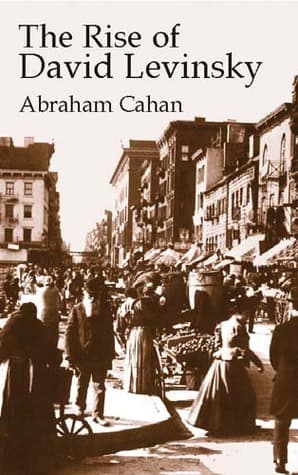
Abraham Cahan (1960)
Genre
Historical Fiction / Spirituality
Reading Time
640 min
Key Themes
See below
Sign in to track this book
From the fervent study of the Talmud to the cutthroat world of New York's garment industry, a young Hasidic Jew discovers that the glittering promise of American assimilation may cost him his very soul.
Born David Levinsky in Antomir, Russia, our character recounts his poor childhood and his mother's great sacrifices to ensure his religious education. He studies the Talmud in the local yeshiva, becoming a respected scholar despite his family's poverty. His mother, a strong and protective figure, drives his spiritual pursuits. David is deeply influenced by the yeshiva's intellectual rigor and community life, believing he will become a great rabbi. His world is confined by religious tradition and community expectations, but a longing for something more begins to grow within him.
A devastating attack shatters the peace of Antomir. During the chaos, David's beloved mother is brutally murdered while trying to protect him. This traumatic event deeply affects him, cutting his last ties to his old life and traditional path. Grieving and disillusioned, David loses his passion for religious study. With help from relatives and the community, he gets passage to America, seeing it as a land of opportunity and escape from persecution and sorrow. This journey marks a radical break from his past, symbolizing a separation from his spiritual heritage and the start of a quest for material success.
David arrives in New York City, overwhelmed by the busy, unfamiliar environment of the Lower East Side. He immediately faces the harsh realities of immigrant life: poverty, exploitation, and the struggle to adapt to a new language and culture. His traditional Hasidic clothes and manner make him an object of curiosity and sometimes ridicule. He feels great loneliness and confusion, a sharp contrast to the close-knit community he left behind. His first attempts to find work fail, and he faces the indignity of charity, a stark difference from his former scholarly status. The sheer scale and speed of American life are a constant shock.
After much difficulty, David gets a job in a garment factory, a stark change from his scholarly goals. The grueling work and unsanitary conditions are a harsh introduction to industrial labor. He begins to give up his traditional religious practices, driven by necessity and the desire to assimilate. He meets various people, both supportive and exploitative, who shape his understanding of American life. His encounters with more 'Americanized' immigrants, like the cynical Gitelson, expose him to new ideas and a more secular view. He also starts to learn English, seeing it as a key tool for advancement, further separating him from his Yiddish-speaking past.
David becomes infatuated with Matilda, a sophisticated and educated young woman who represents the appeal of American culture and intellect. She introduces him to literature, music, and socialist ideas, further expanding his horizons beyond his religious upbringing. Matilda, however, sees David as a project, a 'diamond in the rough,' rather than an equal. His attempts to win her affection are clumsy and unsuccessful, showing his social awkwardness and lack of experience in secular relationships. This unrequited love becomes a recurring theme, symbolizing his longing for a cultural and emotional fulfillment that money alone cannot provide.
Driven by an innate ambition and a sharp eye for opportunity, David realizes his potential in the garment industry. He notices inefficiencies and finds a niche for himself. He saves carefully and, with a small loan, starts his own tailoring business. This marks a key shift from employee to employer, from scholar to entrepreneur. He shows shrewd business sense, working tirelessly and taking calculated risks. His success, though modest at first, fuels his ambition and strengthens his commitment to pursuing wealth. He begins to shed his old identity, fully embracing the role of a capitalist.
David's business grows quickly through hard work, strategic alliances, and ruthless competition. He becomes known for his sharp mind and tireless dedication. He learns to navigate the complex world of finance, manufacturing, and labor relations, often at the expense of his personal life and ethical concerns. His wealth grows fast, and he moves out of the Lower East Side, symbolizing his upward mobility and further assimilation into American society. This period is marked by an intense focus on accumulating wealth, with little time for reflection or personal connection, as his success increasingly isolates him.
Despite his great wealth, David struggles to find happiness or a suitable partner. He tries to court various women, often seeking those who embody the social status he desires, but his attempts are always awkward and unfulfilling. His past infatuations with women like Matilda and Dora remain vivid, showing his inability to form genuine emotional connections. He longs for a family and a sense of belonging, but his single-minded pursuit of money has left him emotionally stunted and socially isolated. He realizes that wealth cannot buy him the love or cultural acceptance he truly craves, leading to a deep sense of loneliness.
Now a multi-millionaire, David Levinsky reflects on his journey. He lives in a luxurious Fifth Avenue apartment, far from his humble beginnings. However, he feels a deep emptiness and spiritual void. He regrets losing his religious faith, his Yiddish culture, and the simple, communal life of Antomir. He recognizes that in gaining material wealth, he sacrificed his soul and his true self. He feels like a stranger in both worlds – not fully American, yet completely disconnected from his Jewish roots. This introspection reveals the great cost of his assimilation and the irreversible changes caused by his pursuit of the American Dream.
In his later years, David Levinsky is a successful but lonely man. He is respected in business circles but lacks true companionship or emotional fulfillment. He revisits his past, especially his unrequited love for women like Matilda and Dora, and the memory of his mother. He acknowledges that while he achieved great material success, he failed to achieve happiness or inner peace. He shows the American Dream's ability to transform an individual, but also its potential to strip away identity and meaning. His story ends with a sad sense of regret, showing the lasting conflict between material gain and spiritual contentment.
The Protagonist
David transitions from a spiritually focused, communal life to a materially driven, isolated existence, ultimately realizing the hollowness of his success. He loses his faith and cultural identity in pursuit of the American Dream.
The Supporting
Her death marks the end of David's innocent, religious life and serves as the catalyst for his immigration and subsequent transformation.
The Supporting
She remains an idealized, often unattainable, figure in David's memory, representing the cultural assimilation and emotional connection he never fully achieves.
The Supporting
He serves as an early, albeit minor, guide for David, embodying the initial steps of assimilation and the shift from religious to secular concerns.
The Supporting
She contributes to David's recurring theme of unrequited love and the emotional emptiness that accompanies his material success.
The Mentioned
Represents an early benchmark for business success that David aims to surpass.
The Mentioned
Represents the spiritual world David leaves behind, serving as a reminder of his lost identity.
The novel explores the appeal and ultimate emptiness of the American Dream for immigrants. David Levinsky achieves great material wealth and social standing, rising from a poor yeshiva boy to a millionaire garment manufacturer. However, this success costs him his spiritual identity, his religious faith, and genuine emotional connections. The narrative shows that while America offers great opportunities for financial advancement, it can also demand a deep sacrifice of one's cultural heritage and inner peace. Levinsky's ultimate loneliness and regret, despite his riches, show that a 'rise' in fortune can lead to a 'fall' in spirit.
“I was a greenhorn, a green one, a timid, fear-ridden, awe-struck creature, but I was a man with a soul, with a heart, with a God. And now I am a millionaire, but I am a stranger to myself.”
A central theme is the conflict between assimilating into American society and keeping one's cultural and religious identity. David Levinsky's journey is a gradual but complete shedding of his Hasidic Jewish identity, driven by both necessity and a desire for social acceptance and success. He gives up his religious practices, learns English, and adopts American customs, believing it is essential for his advancement. However, this assimilation leaves him feeling rootless and alienated, neither fully American nor truly connected to his Jewish heritage. The novel suggests that while assimilation can open doors, it can also lead to a deep loss of self and a pervasive sense of belonging nowhere.
“I had lost my old world, and had not yet found my new one.”
The conflict between pursuing material wealth and preserving spiritual values is a key theme. David's early life is marked by intense spiritual devotion and scholarly pursuit, where the Talmud guides him. In America, this spiritual focus slowly gets replaced by an insatiable drive for financial gain. His business success directly correlates with his abandonment of religious observance and ethical considerations. The novel critiques the capitalist ethos that values profit over piety, showing how accumulating wealth can lead to a spiritual void and a deep sense of unfulfillment, making David a 'stranger to himself' despite his millions.
“My spiritual wealth was gone, and no material wealth could replace it.”
Levinsky's story is told as a retrospective, allowing for constant reflection on his past and a deep sense of nostalgia for his lost innocence and the world he left behind. He often compares his current opulent but lonely existence with the communal warmth and spiritual richness of his childhood in Antomir. Memories of his mother, his yeshiva studies, and even his early struggles in the Lower East Side are filled with a bittersweet longing. This theme emphasizes the irreversible nature of his transformation and the lasting power of the past to shape one's sense of self, even when consciously rejected.
“Often, in the midst of my greatest triumphs, a wave of homesickness would sweep over me, a yearning for the old, simple life.”
Despite his financial success, David Levinsky experiences deep loneliness and an inability to form lasting, meaningful emotional connections. His romantic pursuits, particularly with Matilda and Dora, are marked by unrequited love or awkward failures. His single-minded dedication to business leaves little room for emotional development or true intimacy. The novel portrays love as another elusive aspect of the 'American Dream' that wealth cannot buy, showing how his transformation into a ruthless businessman has left him emotionally stunted. His isolation shows that material success does not equal personal happiness or fulfillment.
“I was a millionaire, but I was a lonely man, a stranger to love.”
The story is told by an older, successful, but regretful David Levinsky looking back on his life.
This device allows for deep introspection and a critical examination of the protagonist's journey. By having the older Levinsky narrate, the reader gains insight into his emotional state and the profound sense of regret and loneliness that accompanies his material success. It enables him to comment on his past actions, the choices he made, and the person he became, providing a powerful sense of dramatic irony as he recounts his 'rise' with a melancholic awareness of its true cost. This perspective highlights the theme of the American Dream's emptiness.
The narrative details the cultural shock and learning curve of a new immigrant.
This device immerses the reader in the bewildering experience of an immigrant encountering a vastly different culture. David's initial confusion, his struggles with language and customs, and his gradual adaptation provide a vivid portrayal of the immigrant experience in early 20th-century New York. It allows the author to highlight the contrast between the Old World and the New, emphasizing the sacrifices and transformations required for assimilation. This perspective helps to humanize the immigrant struggle and makes David's journey relatable despite his later moral compromises.
Changes in David's clothing reflect his internal and external transformations.
David's attire serves as a powerful symbol throughout the novel. His traditional Hasidic garb in Antomir signifies his spiritual devotion and cultural identity. Upon arriving in America, his worn-out religious clothes make him stand out, and the act of shedding them for more 'American' attire represents his gradual assimilation and abandonment of his past. Later, his expensive, fashionable suits reflect his immense wealth and social status, yet they also highlight the superficiality of his success and his emotional emptiness. Clothing becomes a visual shorthand for his evolving identity and the compromises he makes.
David's repeated experiences with unfulfilled romantic relationships.
The recurring motif of unrequited love, particularly with Matilda and Dora, serves to underscore David's emotional isolation and the ultimate emptiness of his material achievements. These women represent aspects of life—cultural sophistication, genuine connection, emotional fulfillment—that David desperately craves but cannot attain, despite his wealth. His inability to form lasting romantic bonds highlights how his single-minded pursuit of business has stunted his emotional growth, leaving him wealthy but profoundly lonely. It reinforces the idea that money cannot buy happiness or love.
“America is a land of opportunity, a land where a man can make something of himself, if he has the will and the brains.”
— David's early impressions and aspirations upon arriving in America.
“My soul was like a log, water-logged and heavy, and it would not burn.”
— David reflecting on his spiritual emptiness despite his material success.
“I was an American in my head, but a Jew in my heart.”
— David grappling with his dual identity as a successful American businessman and a Jew from the Old World.
“Money is a good thing, a very good thing, but it is not everything.”
— A recurring realization for David, often after achieving a new level of wealth.
“The past is a foreign country; they do things differently there.”
— David's feeling of disconnect from his European past as he becomes more Americanized.
“I was always reaching for something, something I could never quite grasp.”
— David's persistent sense of unfulfillment, even at the height of his achievements.
“To be truly free, one must be free from oneself.”
— An internal struggle David faces as he tries to shed his old self and embrace a new identity.
“The greatest tragedy is not to die, but to live without ever having truly lived.”
— David's philosophical musings on the meaning of life and his own experiences.
“Every man is a universe unto himself, and every universe has its own laws.”
— David's observation about the individuality and internal worlds of people he encounters.
“I had gained the world, but lost my soul.”
— A direct and poignant summary of David's spiritual cost of his material success.
“The old ways were dying, and the new ways were not yet born.”
— David's perception of the cultural transition occurring in the immigrant community.
“Love is a luxury I could never afford.”
— David reflecting on his inability to form deep emotional connections, often prioritized by his pursuit of wealth.
“I was a stranger in my own house, a guest in my own life.”
— David's feeling of detachment from his own success and surroundings, even after achieving his goals.
“The future is a mirror, reflecting what we are now.”
— David's introspective thoughts on how present actions and character shape one's destiny.
Ready to see how well you understood this book? Take our interactive quiz with 10 questions.
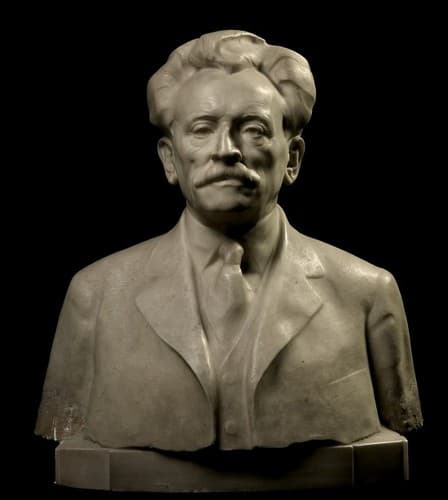
Abraham Cahan was a prominent American Jewish author, journalist, and activist. He is best known for his novel "The Rise of David Levinsky" (1917), a seminal work of American Jewish literature that chronicles the assimilation and struggles of an immigrant in New York City. Cahan also founded and edited the "Jewish Daily Forward," a highly influential Yiddish-language newspaper.







