“The course of true love never did run smooth.”
— Tracy Lord's observation on relationships, echoing Shakespeare.


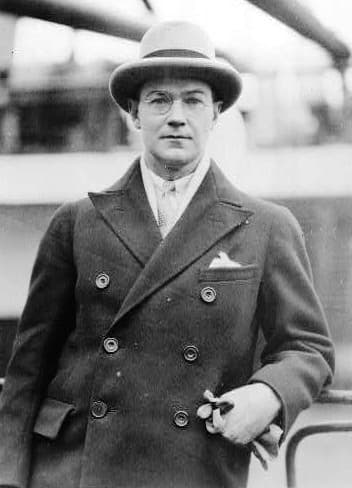
Philip Barry (1940)
Genre
Romance
Reading Time
140 min
Key Themes
See below
Sign in to track this book
A headstrong Philadelphia socialite, on the eve of her second wedding, finds her world upended by the arrival of her ex-husband and two journalists.
The play starts at the Lord estate in Philadelphia. Tracy Lord, a socialite, is getting ready for her second marriage to George Kittredge, a self-made man. Her ex-husband, C.K. Dexter Haven, arrives unexpectedly. He claims to deliver a wedding gift to her younger sister, Dinah. But he still has feelings for Tracy and does not approve of her upcoming marriage. His presence creates tension, especially with Tracy, who sees his return as an intrusion and a reminder of their failed marriage. She blames his drinking and her own perceived coldness for their divorce.
Tracy's father, Seth Lord, is having an affair with a showgirl. Her brother, Alexander 'Sandy' Lord, wants to keep this out of the news. To protect the family's name, Sandy makes a deal with Sidney Kidd, the editor of 'Spy' magazine: in exchange for exclusive access to Tracy's society wedding, Kidd will not publish the story about Seth. Reporter Macaulay 'Mike' Connor and photographer Elizabeth 'Liz' Imbrie arrive at the Lord estate pretending to be Sandy's friends. Tracy, angry about the invasion of privacy, must tolerate their presence to protect her father.
Tracy's fiancé, George Kittredge, is a successful but somewhat proud man who admires Tracy's beauty and social standing. However, he often does not understand her deeper feelings, seeing her as a 'goddess' rather than a person. Tracy, despite her calm appearance, starts to feel limited by George's expectations and his inability to see past her 'ice princess' image. Dexter, who understands her better, and Mike Connor's observations begin to make her doubt her marriage to George.
Tracy confronts her father, Seth Lord, about his affair and past actions. She blames him for her mother's unhappiness and her own perceived coldness. Seth, however, criticizes Tracy's character. He calls her 'magnificent' but also 'incapable of human understanding,' accusing her of being too perfect and lacking 'charity' for human weakness. This talk deeply affects Tracy, making her consider if her strict standards might be a flaw.
Macaulay 'Mike' Connor, initially critical of the wealthy Lord family, becomes interested in Tracy. He sees past her distant manner to a woman struggling with her identity. Their conversations, often sharp, show a surprising connection. Mike, a writer, is drawn to Tracy's intelligence, even as he challenges her privileged views. Liz Imbrie, Mike's photography partner and secret admirer, watches this growing attraction with amusement and quiet acceptance, recognizing Mike's changing focus.
The night before the wedding, a party at the Lord estate gets loud, with lots of champagne. Tracy, feeling confused, drinks a lot. She confides in Mike, and they share a kiss. Dexter, watching, feels jealous. George mostly ignores the emotional turmoil, focused on the wedding's superficial aspects. The lines between reporter and subject, and between past and present relationships, start to blur.
Tracy wakes up the next morning with a hangover and only vague memories of the night. She is embarrassed to realize her sister, Dinah, saw her swimming naked with Mike. George was also present, though he did not see the swimming. George has seen Tracy and Mike in a compromising situation and is angry. He confronts Tracy, demanding an explanation, but his strict moral code prevents him from understanding her actions. The wedding is now in danger.
With the wedding hours away, Tracy faces George, who, despite his anger, still wants to marry her, but on his terms. Mike, regretting his part in the scandal, tells Tracy he loves her and offers a different future. Dexter, always there, gently guides Tracy towards self-realization, reminding her of their past and hinting at a possible future together. Tracy is caught in many emotions and expectations, forced to choose not just between men, but between different versions of herself.
In a moment of self-discovery, Tracy realizes she cannot marry George. She understands that George loves an idealized version of her, a 'goddess' without flaws, and she cannot live up to that. She breaks off the engagement, surprising George and relieving Dexter and Mike. This decision is a turning point for Tracy, showing her acceptance of her own imperfections and a more authentic self. Her 'magnificent' exterior starts to soften, revealing a more understanding woman.
With the wedding to George called off, the guests are confused. Mike offers to marry Tracy, truly in love with her, but Tracy realizes her feelings for him are not the same. She chooses Dexter, who has always understood her, flaws and all. Their shared history, affection, and understanding, though once broken, are the strongest foundation. The wedding proceeds, with Dexter as the groom, to the delight of Dinah and a surprised but accepting family.
The Protagonist
From a seemingly perfect but emotionally rigid socialite, Tracy evolves into a more understanding and self-aware woman who accepts her own flaws.
The Supporting/Love Interest
Having overcome his personal demons, Dexter patiently and subtly guides Tracy back to him, proving his enduring love and understanding.
The Supporting/Love Interest
Initially a cynical outsider, Mike falls in love with Tracy, forcing him to re-evaluate his preconceptions about the wealthy and his own aspirations.
The Antagonist/Supporting
George's rigid expectations lead to his rejection by Tracy, highlighting his inability to accept her imperfections.
The Supporting
Liz remains a constant, observant presence, offering a realistic perspective on the romantic chaos, though her own romantic hopes remain unfulfilled.
The Supporting
Dinah acts as a catalyst and commentator, her youthful perspective often highlighting the absurdities of the adult world.
The Supporting
Seth's confrontation with Tracy, though painful, provides the crucial catalyst for her self-reflection and change.
The Supporting
Margaret maintains a dignified presence, enduring family drama with grace and offering a quiet example of resilience.
The Supporting/Mentioned
Sandy's actions, though offstage, are the catalyst for the entire plot, demonstrating the family's concern with reputation.
The main idea is Tracy Lord's change from a self-righteous 'goddess' to a more compassionate and self-aware person. She first defines herself by her strict moral code and social standing. But through her talks with Dexter, Mike, and her father, she faces her own flaws. Seth's comment about her lacking 'charity' makes her rethink her 'magnificent' but cold exterior. This leads her to accept her imperfections and become more authentic, as shown when she breaks off her engagement to George.
“You're magnificent, Tracy. Absolutely magnificent. But I don't think you're a very understanding human being.”
The play looks at different kinds of love and the difference between real affection and idealizing a partner. George Kittredge loves an idealized, flawless Tracy, unable to accept her as human. Mike Connor first idealizes her as a symbol of wealth, then as a romantic interest, but comes to love her more truly. Dexter Haven, however, loves Tracy for who she is, flaws and all, understanding her deeply. Tracy's choice to remarry Dexter shows she no longer wants to be an unreachable ideal and accepts a love that includes imperfection.
“The prettiest sight in this fine pretty world is the privileged class enjoying its privileges.”
Philip Barry subtly critiques the upper class while also showing its complexities. Mike Connor, the reporter, first sees the Lord family with disdain, thinking them frivolous. But as he gets to know them, especially Tracy, his view softens, showing the humanity beneath the privilege. The difference between George Kittredge's 'new money' ambition and the 'old money' ease of the Lords and Havens highlights different values. The play suggests that character and understanding matter more than social status, even as it makes fun of high society's superficiality.
“I'm not a goddess, George. I'm just a human being.”
A key idea is the importance of forgiveness, both of others and of oneself, and accepting human imperfection. Tracy first struggles to forgive her father for his affair and Dexter for his past drinking, holding them to very high standards. Her father's revelation about her lack of 'charity' makes her confront her own judgmental nature. Her decision to marry Dexter again shows her ability to forgive and accept his past, and more importantly, to forgive herself for her own mistakes and accept her imperfect humanity, moving past her rigid self-image.
“The lord of the manor. And a lord of a manor he is, in all the best senses of the word. He's a man of tremendous integrity, and tremendous character, and tremendous courage.”
A plot device to introduce outside perspectives and catalyze change.
The arrival of Macaulay 'Mike' Connor and Elizabeth 'Liz' Imbrie from 'Spy' magazine is a crucial plot device. Their presence, initially forced upon Tracy, introduces an 'outsider' perspective into the insulated world of the Lord family. Mike, in particular, acts as a catalyst, challenging Tracy's preconceived notions about herself and her world. Their journalistic mission forces Tracy to confront her public image versus her private self, and Mike's growing attraction to her complicates the narrative, pushing her further into self-reflection and ultimately, a different romantic choice.
A moment of intoxicated freedom that reveals hidden desires and causes chaos.
The pre-wedding party, where Tracy and Mike drink heavily, serves as a classic plot device to lower inhibitions and reveal suppressed emotions. Tracy's inebriated state allows her to shed her 'goddess' facade and connect with Mike on a more human, passionate level, culminating in a swim and a kiss. This event not only propels the plot forward by creating a scandal that forces George's hand but also highlights Tracy's inner turmoil and her subconscious desire to break free from her rigid self-control. It's a moment of truth, however messy, that clears the path for her ultimate decision.
A recurring symbol representing Tracy's unattainable perfection and emotional distance.
Throughout the play, Tracy is repeatedly referred to as a 'goddess' by characters like George and even Dexter, though with different connotations. This metaphor symbolizes her perceived perfection, her aloofness, and her emotional inaccessibility. It represents the impossible standard she tries to uphold and the way others idealize her, rather than seeing her as a human being. Tracy's journey is about shedding this 'goddess' image, accepting her own humanity and flaws, and finding a love that embraces her true self, rather than worshipping an unattainable ideal.
A symbolic setting and a reminder of Tracy and Dexter's past.
Dexter Haven's yacht, 'True Love,' though not a primary setting, serves as a powerful symbol. It is a place of freedom and shared history for Tracy and Dexter, representing a time when their love was unburdened. Dexter's continued work on the yacht, even after their divorce, subtly hints at his enduring hope for their reconciliation. It stands in contrast to the rigid, formal setting of the Lord estate and the impending, conventional marriage to George, symbolizing a more adventurous and authentic love that Tracy eventually returns to. It's a tangible link to their past and a promise of their future.
“The course of true love never did run smooth.”
— Tracy Lord's observation on relationships, echoing Shakespeare.
“I'm going to be a very great lady.”
— Tracy Lord's youthful ambition and determination.
“The prettiest sight in the world is a woman in love.”
— Mike Connor's romantic view of Tracy.
“You can't be a human being and a goddess at the same time.”
— Dexter Haven's critical assessment of Tracy's idealized self-image.
“I suppose I'm a bit of a snob, but I can't help it.”
— Tracy Lord acknowledging her own social prejudices.
“To be able to make a man laugh is a gift.”
— Liz Imbrie's pragmatic view of attraction and relationships.
“Sometimes, the things you think you want most are the things you're better off without.”
— Dexter Haven's cynical wisdom regarding life's desires.
“There's a grandeur in being able to admit you're wrong.”
— Seth Lord's advice to his daughter about humility.
“The rich are different from you and me.”
— Mike Connor's observation on the wealthy, a famous literary allusion.
“I thought I was an ice goddess. I was just a human being in love.”
— Tracy Lord's realization about her true feelings and vulnerability.
“Marriage is a very serious thing, and one should take it seriously.”
— Margaret Lord's traditional view on matrimony.
“I like to be looked at. I like to be admired.”
— Tracy Lord's candid admission about her desire for attention.
“It's a mistake to think that just because you're rich, you're immune to unhappiness.”
— Liz Imbrie's realistic perspective on wealth and emotion.
“You have a touch of common clay about you, and that's good.”
— Dexter Haven's compliment to Tracy, acknowledging her humanity.
Ready to see how well you understood this book? Take our interactive quiz with 10 questions.
Biography coming soon.