“I used the same language to communicate that I was done with him, that our relationship was over, and that he should forget about me forever.”
— Victoria uses flowers to end a relationship, reflecting her reliance on their symbolic meanings.

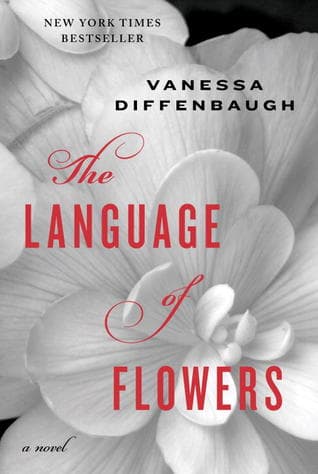
Vanessa Diffenbaugh (2011)
Genre
Romance
Reading Time
6-7 hours
Key Themes
See below
Sign in to track this book
An orphaned woman, fluent in the Victorian language of flowers to express her guarded heart, must risk revealing her deepest secrets when a mysterious stranger and a painful past threaten her fragile independence.
Victoria Jones, eighteen, becomes independent from the foster care system, which has been her only constant since she was a baby. With no family or stable home, she is homeless, sleeping in a park and looking for food. Her knowledge of the Victorian language of flowers, from a book given by a foster mother, is her only comfort and way to understand the world. She uses flowers to communicate, often showing her deep mistrust and loneliness. She avoids people, marked by a childhood of abandonment and temporary homes, which has left her unable to form lasting bonds or trust. Her first days of freedom are a desperate struggle for survival and extreme loneliness.
While sleeping in a park, Victoria is found by Renata, who owns a small flower shop. Renata sees a desperate soul and offers Victoria a job and a place to stay in the back of her shop. Victoria, at first hesitant and suspicious, slowly accepts. Her extensive knowledge of flowers and their meanings, along with an understanding of people's unspoken feelings, lets her create very meaningful arrangements for customers. Renata is impressed by Victoria's talent, which seems almost magical in its ability to connect with people, despite Victoria's social awkwardness and reluctance to talk directly.
One day, while getting flowers at a wholesale market, Victoria meets Grant, who sells unusual and rare flower types from his truck. They feel an immediate, unspoken connection and a sense of familiarity that deeply bothers Victoria. Grant seems to know more about her than he lets on. The flowers he offers, especially rare ones like 'Crown Imperial' (meaning majesty, but also 'hatred'), suggest a shared, painful past. Victoria is both drawn to and scared of Grant, as he might connect her to a past she has tried to forget. She learns he works with his aunt, a lavender farmer.
The story includes flashbacks to Victoria's time with Elizabeth, a kind and unusual foster mother who lived in a remote vineyard. Elizabeth was the first person to truly connect with Victoria, patiently teaching her the language of flowers and helping her connect with nature. Elizabeth's garden became Victoria's safe place, and flowers a way for Victoria to express herself when she couldn't use words. These flashbacks show a time of real love and belonging, a sharp contrast to Victoria's other foster homes. Elizabeth tried to adopt Victoria, but the legal system and Victoria's own ingrained distrust were big obstacles.
Despite her fear, Victoria feels increasingly drawn to Grant. Their shared love for flowers and their quiet understanding of floriography create a unique bond. They spend time together, and Grant's gentle persistence starts to break down Victoria's strong defenses. However, Victoria's deep issues with trust and intimacy, from her traumatic childhood, constantly threaten to ruin their growing romance. She struggles to show her true feelings and pushes Grant away, fearing abandonment and the pain of attachment. The secret of their shared past creates an unspoken tension between them.
The truth about Grant is finally revealed: he is Elizabeth's nephew. He was a young boy living with Elizabeth when Victoria was fostered there. Victoria remembers him as a source of both comfort and confusion, a boy who was kind but then seemed to abandon her. The full weight of their shared history hits Victoria. She realizes that Grant's presence is not a coincidence; he has been looking for her, trying to fix a past hurt. However, Victoria sees his reappearance as a reminder of betrayal, believing he helped remove her from Elizabeth's care.
Victoria confronts Grant, her anger and hurt overflowing. She accuses him of abandoning her, of being part of the system that took her from Elizabeth. Grant, in turn, tells his side and the painful truth: Elizabeth had tried to adopt Victoria, but the social worker, because of Victoria's behavior and Elizabeth's age, decided it was not a good placement. He also says that Elizabeth had sent Victoria letters, filled with flowers and their meanings, which Victoria never received. This revelation shatters Victoria's long-held belief that Elizabeth had given up on her, shifting her anger to the system that separated them.
Overwhelmed by the painful revelations and her inability to make up with Grant, Victoria pushes him away for good. She leaves Renata's shop, once again alone and without direction. She tries to build a life for herself, using her flower knowledge to make small, meaningful arrangements for people, but her heart remains broken. During this time of loneliness and emotional trouble, Victoria discovers she is pregnant with Grant's child. This news causes a new crisis, as she deals with the idea of motherhood, fearing she will repeat the cycle of abandonment and emotional neglect she experienced.
Victoria deals with the implications of her pregnancy. Her own childhood, marked by many foster homes and a lack of consistent love, makes her question her ability to be a good mother. She fears continuing the cycle of trauma and abandonment. She considers putting the baby up for adoption, believing it would be a more responsible choice than exposing her child to her own emotional instability. This internal conflict is difficult, showing her deep insecurities and her struggle to break free from her past patterns.
During her pregnancy, Victoria returns to Elizabeth's old property, seeking closure and a connection to her past. There, she finds hidden letters Elizabeth had written to her, filled with flowers and their meanings, which the social worker never delivered. The last letter, written shortly before Elizabeth's death, contains a message of unconditional love, forgiveness, and encouragement for Victoria to find happiness and connection. Elizabeth's words, through the language of flowers, finally reach Victoria, bringing a deep sense of peace and a path towards healing. This discovery is a turning point, allowing Victoria to start forgiving herself and others.
With Elizabeth's last message and new hope, Victoria seeks out Grant. She finally opens up to him, expressing her fears and her love. Grant, who has always loved her, is very happy. Together, they face their past and agree to build a future. Victoria, having processed her trauma and found a way to forgive, decides to keep her baby. The novel ends with Victoria, Grant, and their newborn daughter, Iris (meaning 'message'), starting their new life together. They have found a way to communicate their love and trust through the language of flowers, breaking the cycle of abandonment and building a loving family.
The Protagonist
From a deeply isolated and mistrustful young woman, Victoria learns to forgive her past, trust others, and embrace love and motherhood.
The Supporting
Elizabeth's character arc is largely revealed through flashbacks, showing her unwavering love and attempts to provide a stable home for Victoria.
The Love Interest
Grant seeks to reconnect with Victoria and reconcile their past, ultimately proving his enduring love and commitment to her.
The Supporting
Renata provides a crucial safe space and opportunity for Victoria to develop her talent and begin to heal, acting as a catalyst for her eventual growth.
The Supporting
Catherine's actions, though not malicious, contribute to Victoria's trauma and the central conflict of her past, remaining largely static in her role.
The Mentioned
As a newborn, Iris's arc is symbolic; her arrival solidifies Victoria's healing and commitment to a loving future.
The Mentioned
The Judge's decisions, while not part of a personal arc, drive significant plot points in Victoria's past.
The Supporting
Beth serves as a mirror to Victoria's own past and her attempts to connect, showing the pervasive effects of the foster system.
Victoria's journey is about finding her identity beyond the foster system. She first defines herself by her trauma and her unique flower communication, using them as a shield. As the story goes on, she learns to accept her past, use her talent, and define herself not by what she lost, but by her ability to love and her potential as a mother. The novel explores how one's past shapes, but does not fully control, who they become, as Victoria works to create a new self.
“I used to think that the flowers had the power to change anything. But they don't. They only have the power to help you understand.”
The Victorian language of flowers is central to the novel, acting as both a refuge and a barrier for Victoria. It lets her express complex emotions she cannot say verbally because of her trauma, and connect with others on a deeper, non-verbal level. However, relying on it also isolates her, as real intimacy needs direct, vulnerable communication. The theme explores the limits and strengths of different forms of language, showing that Victoria eventually needs to speak her truth and bridge the gap between symbolic and verbal expression to achieve true connection.
“I had always used flowers to express myself, but I had never thought about what they were saying to me.”
Victoria's life is deeply affected by the trauma of abandonment and the instability of the foster care system, leading to deep trust issues. Her inability to form lasting bonds and her fear of intimacy come directly from her past. The novel shows her struggle to overcome these problems, first by learning to trust Renata and then, more deeply, Grant. Forgiveness, especially of herself and the system that failed her, is a step in her healing, allowing her to break her past patterns and embrace a future with love.
“For years I had let my past define me, let it dictate how I behaved and who I was. But I didn't have to anymore.”
The theme of motherhood is explored through Victoria's complex relationship with her absent mother, her foster mothers (especially Elizabeth), and her decision to become a mother herself. Her fears of repeating the cycle of abandonment are central to her internal conflict. The novel looks at what it means to be a 'good' mother beyond biology, focusing on love, stability, and presence. Victoria's journey ends with her becoming a mother, choosing to create a loving family for her daughter, and redefining what family means for her.
“I knew what it felt like to be abandoned, and I vowed that my child would never feel that way.”
A symbolic communication system used by Victoria to express emotions.
This is the central plot device and a major thematic element. Victoria uses the Victorian language of flowers to communicate her deepest feelings, fears, and hopes, as she struggles with verbal expression due to her traumatic past. Each flower mentioned in the book carries specific symbolic weight, often foreshadowing events, revealing character emotions, or providing insight into Victoria's internal state. It acts as both a shield and a bridge, allowing her to connect with the world on her own terms, but also highlighting her isolation from conventional interaction. It is the foundation of her talent and her connection with Grant and Elizabeth.
Alternating narratives between Victoria's present and her past in the foster system.
The novel employs a dual timeline structure, alternating between Victoria's present-day life (emancipated, working at Renata's shop, meeting Grant) and flashbacks to her childhood in the foster care system, particularly her time with Elizabeth. This device slowly reveals the origins of Victoria's trauma, her unique connection to flowers, and the circumstances that led to her deep-seated mistrust. The past narrative provides crucial context for her present actions and emotional struggles, building suspense around the 'secret' of her past and the true nature of her relationship with Grant.
Individual flowers carrying specific meanings that mirror plot points or character emotions.
Beyond the general concept of floriography, specific flowers are used as powerful symbols throughout the narrative. For example, 'Thistle' (misanthropy) often represents Victoria's initial guarded nature, 'Lavender' (distrust) hints at Grant's connection to his aunt's farm and the historical betrayal, and 'Iris' (message) is chosen for her daughter's name, symbolizing hope and communication. These individual flower meanings are not just decorative; they are integral to understanding character motivations, foreshadowing events, and subtly conveying emotional truths that Victoria herself cannot articulate.
An undisclosed event from Victoria's childhood that impacts her present relationships.
A significant 'secret' from Victoria's past, particularly concerning her time with Elizabeth and the reasons for her removal from Elizabeth's care, drives much of the narrative tension. Victoria's fragmented memories and her interpretation of events lead to her deep mistrust and her initial rejection of Grant. The slow revelation of this past, including the truth about Elizabeth's adoption attempts and the social worker's actions, serves as a major plot engine, forcing Victoria to confront her preconceived notions and ultimately find forgiveness and understanding.
“I used the same language to communicate that I was done with him, that our relationship was over, and that he should forget about me forever.”
— Victoria uses flowers to end a relationship, reflecting her reliance on their symbolic meanings.
“For eight years, I dreamed of fire. Trees ignited as I passed them; oceans burned. The sugary smell of caramelizing apples, the scent of my unconscious childhood, mingled with the smoke of the blaze.”
— Victoria's recurring nightmare about her traumatic past.
“I had spent my life learning to care for plants, but I had never learned to care for people.”
— Victoria reflects on her emotional isolation despite her botanical expertise.
“The marigold, for grief; the red rose, for love; the rosemary, for remembrance; the daffodil, for new beginnings.”
— A list of flower meanings central to the novel's themes.
“I was a weed, unwanted and unloved, growing in the cracks of the sidewalk.”
— Victoria's self-perception as a foster child.
“It was easier to let people believe what they wanted to believe. It was easier, and it was safer.”
— Victoria's defensive approach to relationships.
“The language of flowers was the only language I could trust. It never lied.”
— Victoria's belief in the honesty of floral symbolism.
“I had been given a second chance, and I was determined not to waste it.”
— Victoria's resolve after leaving the foster system.
“Love, I had learned, was something you built, like a garden, with patience and care.”
— Victoria's realization about nurturing relationships.
“The flowers told a story that words never could.”
— Reflecting on the depth of floral communication.
“I had spent so long building walls that I forgot how to let someone in.”
— Victoria's struggle with vulnerability.
“In the garden, I found a place where I could be myself, without fear or judgment.”
— The sanctuary Victoria finds in gardening.
“Sometimes the most beautiful flowers grow from the darkest soil.”
— A metaphor for resilience and beauty emerging from hardship.
“I had to learn that not all endings are tragedies; some are just new beginnings in disguise.”
— Victoria's perspective on change and growth.
Ready to see how well you understood this book? Take our interactive quiz with 10 questions.

Biography coming soon.