BookBrief
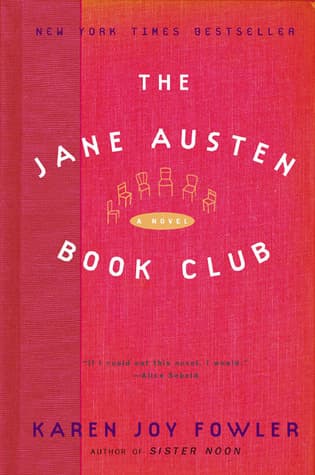
The Jane Austen Book Club cover
Archivist's Choice

The Jane Austen Book Club

Karen Joy Fowler (2004)

Genre

Romance

Reading Time

360 min

Key Themes

See below

Track Your Reading

Sign in to track this book

Six modern people in sunny California discuss Jane Austen novels, finding their own lives reflect the books' romantic and social challenges.

Synopsis

In California's Central Valley, six people—five women and one man—start a book club to read all six of Jane Austen's novels. Over six months, as they read Emma, Mansfield Park, Northanger Abbey, Pride and Prejudice, Sense and Sensibility, and Persuasion, their modern lives begin to mirror Austen's characters' romantic problems and social situations. Sylvia, recently separated, starts a new chapter. Jocelyn, who began the club, struggles with her feelings for Grigg, the only man. Prudie, a young high school teacher, faces a marriage crisis and temptation. Allegra seeks connection after a breakup. Bernadette, the oldest member, observes and guides. As they discuss each novel, their lives intertwine, leading to tested marriages, new relationships, and unexpected love. Each member finds some resolution or a new beginning.
Reading time
360 min
Difficulty
Easy
Pacing
Moderate
Mood
Heartwarming, Reflective, Witty, Romantic
✓ Read this if...
You enjoy character-driven stories about relationships, appreciate literary allusions, or are a fan of Jane Austen's works.
✗ Skip this if...
You prefer fast-paced plots, high-stakes drama, or do not enjoy contemporary fiction with a focus on personal lives.

Plot Summary

The First Meeting: Emma

The novel begins with the formation of the Jane Austen Book Club in Sacramento, California. Bernadette, a free-spirited woman in her sixties, starts the club to help Sylvia, her lifelong friend, cope with her divorce from Daniel. Sylvia's daughter Allegra, a lesbian artist, joins them, as does Jocelyn, Sylvia's other best friend and a dog breeder who seems to have a reason for inviting Grigg, a science fiction fan. Prudie, a young, unhappily married French teacher, completes the group. Their first book is 'Emma,' and the discussion immediately shows their different personalities and life situations. Prudie, in particular, sees similarities between Emma's meddling and Jocelyn's attempts to set her up with Grigg.

Mansfield Park and Developing Connections

As the club reads 'Mansfield Park,' the members' lives become more intertwined. Sylvia struggles with Daniel's new relationship and her own loneliness. Allegra, having recently broken up with her girlfriend, grows closer to Corinne, a new acquaintance. Jocelyn, still playing matchmaker, subtly pushes Grigg and Sylvia together, to Grigg's amusement and Sylvia's unawareness. Prudie's unhappiness with her husband, Dean, increases, and she finds herself attracted to a charming student, Trey, blurring professional and personal lines. The themes of duty and social expectations in 'Mansfield Park' connect with their individual struggles.

Northanger Abbey and Emerging Doubts

The discussion of 'Northanger Abbey' brings up ideas of perception versus reality. Prudie's crush on Trey intensifies, leading to a near-kiss and growing guilt and confusion. She projects her worries onto the novel's gothic elements. Allegra's relationship with Corinne develops, but she doubts Corinne's sincerity, mirroring Catherine Morland's initial misjudgments. Sylvia, still recovering from her divorce, starts to notice Grigg's quiet attention, though she remains focused on her emotional healing. Jocelyn, meanwhile, continues to observe Grigg and Sylvia, convinced they are right for each other despite their apparent differences.

Pride and Prejudice and Unspoken Feelings

When the club discusses 'Pride and Prejudice,' the connections to the members' lives become even clearer. Jocelyn's long-standing, unspoken feelings for Grigg become apparent to the reader, though not yet to Grigg himself. She sees him as her Darcy, even while trying to set him up with Sylvia. Sylvia, still processing her divorce, slowly recognizes Grigg's gentle nature and shared interests, overcoming her initial 'pride' and 'prejudice' against him. Prudie's internal conflict over Trey peaks, forcing her to face the reality of her marriage and her desires. Allegra, meanwhile, faces a crisis in her new relationship with Corinne, testing her own judgment.

Sense and Sensibility and Emotional Reckonings

Reading 'Sense and Sensibility' causes several emotional realizations. Sylvia finally begins to acknowledge her growing affection for Grigg, moving past her initial resistance. Jocelyn, seeing this, feels a pang of jealousy and regret, realizing she might have missed her own chance. Prudie makes a difficult decision about Trey, choosing to prioritize her marriage, however imperfect, over a brief attraction. Allegra confronts Corinne about her inconsistencies, leading to a resolution, though a painful one. The themes of reason versus passion resonate as the characters navigate their complex feelings and make difficult choices.

Persuasion and Second Chances

The final book, 'Persuasion,' brings the club's journey to a close, focusing on second chances and lasting love. Sylvia and Grigg's relationship grows strong; they acknowledge their mutual affection and decide to pursue a future together, like Anne Elliot and Captain Wentworth's reunion. Jocelyn, though initially sad, finds some peace and new purpose. Prudie recommits to her husband, Dean, and they begin to work on their marriage. Allegra finds clarity in her relationships, understanding the importance of genuine connection. Bernadette, the club's creator, observes with satisfaction as her friends find their own happiness.

Sylvia's Journey

Sylvia, initially heartbroken after her husband Daniel leaves her for another woman, goes through the painful process of divorce and rediscovery. She struggles with loneliness and the loss of her identity as a married woman. Through the book club, especially her interactions with Grigg, she slowly heals and opens herself to new possibilities. She first dismisses Grigg as unsuitable, but eventually appreciates his quiet strength, kindness, and shared interests, leading to a new romance.

Jocelyn's Unrequited Love

Jocelyn, a dog breeder and Sylvia's best friend, organizes the book club. Her main reason for inviting Grigg is to set him up with Sylvia, believing them to be a perfect match. However, beneath her matchmaking efforts lies a deep, unspoken affection for Grigg herself. She has admired him for years but never acted on her feelings, instead trying to foster a relationship between her two friends. Her journey includes the bittersweet realization that her plan worked, but at the cost of her own potential happiness with Grigg.

Prudie's Marital Crisis

Prudie, a young French teacher, is in an unfulfilling marriage to Dean. She feels misunderstood and unappreciated, leading to growing despair. Her vulnerability makes her susceptible to a student's charm, Trey, creating an intense internal conflict. She struggles between the temptation of an affair and her commitment to her marriage. The book club discussions, particularly about social expectations and personal duty, influence her difficult decision to resist Trey's advances and work on mending her relationship with Dean, hoping for a second chance.

Allegra's Search for Connection

Allegra, Sylvia's daughter, is a free-spirited artist navigating her own romantic life. She joins the book club after a breakup and soon gets involved with Corinne. Her journey is one of self-discovery and learning to trust her instincts in relationships. She deals with Corinne's unpredictable behavior and eventually confronts her, seeking genuine connection and honesty. Allegra's experiences reflect the challenges of modern romance and the search for authentic love, often mirroring the misjudgments and eventual clarity found in Austen's heroines.

Grigg's Quiet Affection

Grigg, the only male member of the club, is a quiet, thoughtful science fiction fan. He joins the club mainly to connect with Jocelyn, for whom he has long cared. However, as the club progresses, he finds himself increasingly drawn to Sylvia. He is initially puzzled by Jocelyn's attempts to set him up with Sylvia, but he gradually recognizes Sylvia's intelligence, kindness, and shared interests. Grigg's journey is one of quiet persistence and the unexpected discovery of a deep, compatible love with Sylvia, moving past his initial intentions.

Bernadette's Wisdom

Bernadette, an experienced woman married three times, starts the book club. She understands human nature well and acts as a wise, almost maternal, figure for the group. She observes the unfolding dramas with a knowing eye, offering subtle guidance and perspective. Her insights often help frame the Austen novels in a way that illuminates the characters' personal struggles. She ultimately delights in seeing her friends find happiness and connection, fulfilling her initial desire to help Sylvia heal.

The Book Club's Enduring Impact

As the book club finishes its six-month journey through Austen's works, each member has changed significantly. Sylvia and Grigg begin a new relationship, finding unexpected love. Jocelyn, though wistful, accepts her role in their happiness. Prudie and Dean recommit to their marriage, facing their challenges together. Allegra finds clarity and strength in her relationships. Bernadette watches over them all, content that her idea has brought positive change. The experience strengthens their friendships and shows that Austen's timeless themes still matter in modern lives.

Principal Figures

Sylvia Avila

The Protagonist

Sylvia moves from heartbroken despair to renewed hope and finds unexpected love, rediscovering her self-worth.

Jocelyn Quince

The Protagonist

Jocelyn confronts the bittersweet reality of her matchmaking success, accepting that her own desires may remain unfulfilled.

Prudie Ashton

The Protagonist

Prudie navigates a marital crisis and temptation, ultimately choosing to commit to working on her existing marriage.

Allegra Avila

The Protagonist

Allegra learns to discern genuine connection from superficial attraction, growing in self-awareness.

Grigg Harris

The Protagonist

Grigg finds love in an unexpected place, shifting his affections from Jocelyn to Sylvia.

Bernadette

The Supporting

Bernadette successfully orchestrates a space for healing and connection for her friends, finding contentment in their happiness.

Dean Ashton

The Supporting

Dean begins to acknowledge his wife's unhappiness and makes an effort to reconnect with her.

Trey

The Supporting

Trey serves as a catalyst for Prudie's marital introspection and eventual commitment to Dean.

Corinne

The Supporting

Corinne's enigmatic behavior forces Allegra to seek clarity and honesty in relationships.

Themes & Insights

The Enduring Relevance of Jane Austen

The novel shows how Jane Austen's themes of love, marriage, social class, and personal growth remain relevant today. Each book the club discusses reflects the characters' personal struggles, helping them understand their own lives. For instance, Sylvia's journey through divorce and new love mirrors the challenges of finding partners, while Prudie's marital unhappiness and temptation reflect dilemmas of duty and desire that Austen's heroines often face. The book suggests that human nature and the search for happiness are timeless.

“Jane Austen's books are about people and their problems. And people are always going to have problems.”

Bernadette

Second Chances and Reinvention

A main theme is that it is never too late for second chances, whether in love, career, or personal satisfaction. Sylvia, after a difficult divorce, finds unexpected love with Grigg, completely changing her romantic life. Prudie, despite her marriage problems, chooses to work on her relationship with Dean, hoping for a renewed connection. Even Jocelyn, who misses her chance with Grigg, finds peace and a different kind of fulfillment. The characters learn that life continues to offer opportunities for growth and happiness, even after setbacks.

“It was a second chance, a real, honest-to-god second chance.”

Narrator, regarding Sylvia and Grigg

The Nature of Love and Compatibility

The book explores various kinds of love—romantic, platonic, familial, and unrequited—and what makes true compatibility. Jocelyn's attempt to match Sylvia and Grigg, despite her own feelings for him, shows the complex interplay of friendship and desire. Sylvia and Grigg, initially seeming mismatched, discover a deep intellectual and emotional connection. Prudie's attraction to Trey versus her commitment to Dean explores the difference between brief passion and lasting partnership. The novel suggests that compatibility is not always obvious and can be found in unexpected places, often requiring honesty and vulnerability.

“Sometimes the right person is the person you didn’t expect.”

Bernadette

Friendship and Community

The book club itself is a strong symbol of friendship and community. The shared experience of reading and discussing Austen's novels creates a safe space for the characters to connect, confide, and support each other through their individual crises. Bernadette's initial goal to help Sylvia heal through friendship is met as the group becomes a lifeline for everyone. The bonds formed within the club allow the characters to navigate their personal challenges with understanding and empathy, showing the important role of a supportive community in personal growth and happiness.

“The book club was a place where they could be themselves, where they could talk about things that mattered.”

Narrator

Self-Deception and Self-Discovery

Many characters initially deceive themselves about their true feelings or desires. Jocelyn believes she only wants Sylvia and Grigg to be together, hiding her own love for Grigg. Prudie initially convinces herself that her marriage is beyond repair and that Trey offers a real escape. Sylvia struggles to admit her loneliness and her growing attraction to Grigg. By discussing Austen's characters and their own lives, they gradually stop these self-deceptions, leading to self-discovery and honest thought about their needs and wants.

“It was amazing, Sylvia thought, how much you could fool yourself.”

Sylvia

Plot Devices & Literary Techniques

Framing Device: The Book Club Structure

Each chapter is structured around the discussion of a different Jane Austen novel.

The entire novel is framed by the structure of the Jane Austen Book Club. Each chapter focuses on the discussion of one of Austen's six major novels ('Emma,' 'Mansfield Park,' 'Northanger Abbey,' 'Pride and Prejudice,' 'Sense and Sensibility,' 'Persuasion'). This device allows Fowler to draw direct parallels between Austen's characters and themes and the contemporary lives of her own characters, deepening the analysis and adding layers of irony and insight. It also provides a natural progression for the characters' personal arcs, as their discussions often prompt self-reflection and revelation.

Intertextuality

Direct references and parallels to Jane Austen's novels.

Intertextuality is a primary device, as the narrative constantly references and draws parallels to Jane Austen's works. The characters' discussions of Austen's plots, characters, and themes directly inform their understanding of their own situations. For example, Prudie's marital dissatisfaction is viewed through the lens of characters like Fanny Price or Elinor Dashwood, and Jocelyn's matchmaking mirrors Emma Woodhouse's attempts. This device enriches the narrative by offering a dual commentary: on Austen's enduring genius and on the timelessness of human experience.

Shifting Perspectives

The narrative frequently shifts focus between different characters.

The novel employs shifting perspectives, moving between the internal thoughts and experiences of each of the main characters (Sylvia, Jocelyn, Prudie, Allegra, Grigg, and Bernadette). This allows the reader to gain a comprehensive understanding of their individual struggles, motivations, and evolving relationships. For instance, we see Jocelyn's unrequited love for Grigg from her perspective, while also seeing Grigg's growing affection for Sylvia. This omniscient, yet focused, narration creates a rich tapestry of interconnected lives and emotional complexities.

Dramatic Irony (Austen-esque)

The reader is aware of character motivations and outcomes before the characters themselves.

Karen Joy Fowler frequently uses dramatic irony, reminiscent of Austen herself. The reader often perceives the true nature of relationships or the motivations behind characters' actions before the characters themselves do. For example, Jocelyn's hidden feelings for Grigg are apparent to the reader long before Grigg or Sylvia fully grasp them. This device creates tension, adds humor, and allows for a deeper appreciation of the characters' journeys as they slowly come to their own realizations, echoing the slow burn of understanding often found in Austen's narratives.

Critical analysis

Notable Quotes

The thing about Austen, the thing that makes her so hard to adapt, is that her books are all about the interior lives of her characters. It's all about what they're thinking and feeling, and how they're processing the world around them.

Sylvia discussing the challenges of adapting Austen's novels for film.

There are some books that we read, and they're just... good. And then there are other books, and they're like a conversation with a friend you didn't know you had.

Jocelyn reflecting on the emotional connection readers form with certain books.

Every time you read a book, it's a new book. You're a different person, and the world is a different place.

Bernadette sharing her philosophy on rereading and the evolving nature of interpretation.

Austen's heroines are always trying to figure things out, to make sense of their lives, and they often make mistakes along the way. That's what makes them so real.

Prudie defending the relatability of Austen's characters despite their historical setting.

The whole point of a book club is to talk about the books, not to just read them and then move on.

Allegra expressing frustration when a discussion veers off-topic.

Sometimes, the best way to deal with your own problems is to immerse yourself in someone else's.

Sylvia finding solace and distraction in the narratives of Austen's novels during a difficult period.

Love is not a lightning bolt, it's a slow burn. It's a conversation, a shared laugh, a quiet understanding.

Jocelyn's internal thoughts on the nature of enduring love, contrasting with romanticized ideals.

We all want a happy ending, don't we? Even when we know it's not always possible.

Bernadette reflecting on the human desire for resolution and happiness in stories and life.

It's not about finding the perfect person, it's about finding the person who makes you feel perfect.

Prudie's romantic ideal, influenced by her reading of Austen.

Books are like friends. You can always go back to them, and they'll always be there for you.

Allegra finding comfort and stability in her collection of books.

The past isn't dead. It's not even past. It's all around us, in the stories we tell, in the books we read.

Bernadette discussing the enduring relevance of classic literature and history.

Maybe the real romance isn't in finding someone else, but in finding yourself.

Sylvia's evolving perspective on personal growth and self-discovery.

Sometimes you have to let go of the story you thought you were living to find the one you're meant to live.

Jocelyn realizing she needs to re-evaluate her life choices and expectations.

Austen understood that people are complicated, and that even the best intentions can lead to disaster.

Prudie discussing the nuanced portrayal of human nature in Austen's novels.

Quiz

Test Your Knowledge

Ready to see how well you understood this book? Take our interactive quiz with 10 questions.

10
Questions
~5
Minutes
?
Best Score

Key Questions (FAQ)

The novel follows six individuals – five women and one man – in California's central valley who form a book club dedicated to discussing Jane Austen's six major novels over a six-month period. As they delve into Austen's works, their own lives begin to mirror the themes and romantic entanglements found within the classic texts, leading to personal revelations and new relationships.

About the author