“Georgia was still smiling, looking from her daughter to the sweater, and Grace felt a familiar rush of love for her mother, and a pang of guilt.”
— Grace reflects on her mother's reaction to a knitted gift.

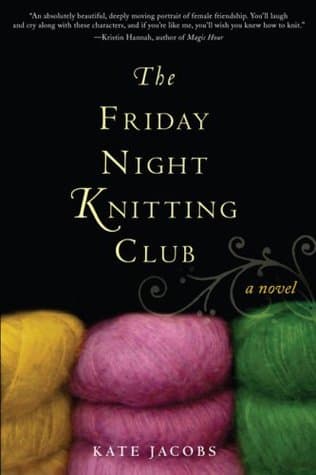
Kate Jacobs (2006)
Genre
Romance
Reading Time
7 hours 30 min
Key Themes
See below
Sign in to track this book
In a cozy New York City yarn shop, a group of women finds friendship, support, and shared secrets, confronting life's challenges and past heartbreaks with needles and a bond stronger than any yarn.
Georgia Walker, a single mother, opens 'Walker and Daughter,' a yarn shop in Manhattan's Upper West Side. Her teenage daughter, Dakota, initially dislikes the shop, feeling it takes away from her mother's attention. Georgia, however, dedicates herself to the business, finding purpose and community. Early on, she befriends Anita, a spirited woman who becomes a regular customer and a close friend. The shop quickly becomes a center for local knitters, and Georgia, despite her busy schedule, plans a weekly knitting group to connect with others and share her love for yarn. This period shows Georgia's independent spirit and her deep love for Dakota, while also hinting at her desire for a supportive community beyond her immediate family.
The Friday Night Knitting Club officially begins, bringing together a diverse group of women at Walker and Daughter. Along with Anita, there is Peri, a successful but lonely businesswoman; Darwin, a young, aspiring fashion designer; Lucie, a quiet and traditional woman; and K.C., a free-spirited artist. Each woman brings her unique personality and life experiences, sharing not only knitting tips but also parts of their personal lives. The club quickly becomes a safe place where they can relax, share problems, and find friendship. Georgia feels a strong sense of belonging and joy seeing these connections grow in her shop, confirming the club's role as a source of support and friendship for everyone.
Georgia's world changes with the sudden return of James, Dakota's biological father, after years away. James, a charming but unreliable man, wants to reconnect with Dakota and be part of her life. Georgia is torn; she still feels hurt from James abandoning them years ago, and she is very protective of Dakota. Dakota, first curious and then drawn to her father, starts spending time with him, causing tension between her and Georgia. This makes Georgia face unresolved feelings and deal with the complexities of co-parenting with a man who previously caused her great pain, all while trying to protect Dakota from potential heartbreak.
As the club continues, the women share more about their personal struggles. Peri reveals her loneliness and her desire for a meaningful relationship, despite her professional success. Darwin struggles with self-doubt and the pressure of succeeding in the competitive fashion world. Lucie shares her quiet worries about her marriage and her role as a mother, often feeling ignored. K.C. talks about her past heartbreaks and her ongoing search for artistic fulfillment and love. These talks strengthen the bonds within the club, as the women offer each other advice, understanding, and strong support, showing the power of shared experiences and friendship.
Georgia feels many emotions about James's return. While she tries to appear strong for Dakota, old feelings of hurt, betrayal, and even a lingering affection for James come back. She struggles with how much access to allow him in Dakota's life, fearing he will disappoint their daughter again. The tension between Georgia and Dakota grows as Dakota becomes more attached to her father, and Georgia feels her role as sole parent challenged. The club members help Georgia process her emotions by listening to her frustrations and offering different ideas.
Dakota, caught between her mother's concerns and her father's charm, starts to assert her independence. She spends more time with James, enjoying his spontaneity and feeling a connection she has not known before. This new relationship, while exciting for Dakota, also causes friction with Georgia, who worries about James's influence. Dakota begins exploring her own interests, including photography, and starts to create her own path separate from her mother's expectations. Her journey shows the complexities of adolescence, as she seeks to understand her family history and define her own identity, even if it means questioning her mother's authority and past decisions.
A crisis affects one of the club members, perhaps a health scare or a major personal problem, which deeply impacts the entire group. This event makes the women support each other, showing the deepness of their friendship. They offer practical help, emotional comfort, and constant presence, proving that their bond goes beyond shared knitting projects. This event highlights the true meaning of their friendship, showing that they are there for each other not just for lighthearted talk, but also during life's hardest moments, solidifying their commitment to one another.
James's unreliable nature eventually reappears, confirming Georgia's initial fears. He disappoints Dakota through broken promises or a sudden disappearance, causing her significant heartbreak. This painful experience, while difficult, ultimately brings Georgia and Dakota closer. Dakota realizes her mother's concerns were valid and appreciates Georgia's steady love and protection. Georgia, though hurt, finds a sense of closure regarding James and confirms her commitment to being the stable presence in Dakota's life. This allows both Georgia and Dakota to move forward, stronger and more united, with a clearer understanding of their family and their own strength.
Inspired by the support and honesty within the club, several members make important life changes. Peri finds the courage to pursue a new relationship or a different career. Darwin gains confidence in her design goals, possibly showing her work. Lucie finds her voice within her marriage or pursues a personal interest. K.C. starts a new artistic project or finds a deeper sense of peace. These changes show the empowering effect of the club, where women feel safe to explore their desires and take risks, knowing they have a strong network of friends to support them through their journeys of self-discovery and growth.
The novel reaches a very emotional turning point with an unexpected and sad event, likely involving Georgia. This devastating blow deeply affects all the members of the Friday Night Knitting Club, making them face grief and loss. The details of this event are initially unclear, emphasizing its sudden and shocking nature. This moment tests the friendship they have built, showing how fragile life is and how valuable their connections are. The club members must now navigate this deep sadness together, relying on the strength of their bond to support one another through a difficult challenge.
After the tragic event, Dakota, though heartbroken, shows remarkable strength and maturity. She has to take on a new role, taking on responsibilities she never expected. This period marks a major turning point in her character, as she uses her grief to act, possibly taking over parts of the shop or making decisions for her future. The knitting club members support her, offering guidance, comfort, and practical help, reinforcing their commitment to her as part of their extended family. Dakota's strength in difficulty shows her growth from a sometimes-rebellious teenager to a capable and caring young woman.
After the tragedy, the Friday Night Knitting Club continues to meet at Walker and Daughter. While filled with sad memories, the shop and the club become a living tribute to Georgia's vision and spirit. Dakota, with the steady support of the club members, finds a way to carry on her mother's legacy, embracing her role within the shop and the community it supports. The club changes, perhaps with new members joining, but the core bond of friendship remains strong. The story ends by showing that what Georgia created was more than just a knitting club; it was a place of friendship, love, and resilience that continues to thrive, proving that true connections last beyond loss.
The Protagonist
Georgia learns to trust again, confronts her past, and ultimately leaves a legacy of love and connection.
The Supporting
Dakota transforms from a self-absorbed teenager into a resilient, compassionate young woman who carries on her mother's legacy.
The Supporting
Anita remains a constant, supportive friend, embodying the enduring power of loyalty and sisterhood.
The Supporting
Peri learns to embrace vulnerability and prioritize personal connection over professional success.
The Supporting
Darwin grows in confidence, pursuing her artistic dreams with the support of her newfound community.
The Supporting
Lucie finds her voice and courage to pursue personal fulfillment and assert her individuality.
The Supporting
K.C. continues her search for love and artistic expression, finding stability and belonging within the club's sisterhood.
The Antagonist/Mentioned
James's brief re-entry into their lives serves as a catalyst for Georgia and Dakota's growth, ultimately proving his unreliability.
The main theme of the novel is the strong and changing power of female friendship. The Friday Night Knitting Club gives women from different backgrounds a safe place to share their problems, offer strong support, and celebrate each other's successes. From Anita's loyalty to Peri's growing openness, the club shows how shared experiences, empathy, and a safe space can create deep, family-like bonds. This friendship becomes a lifeline, especially for Georgia during James's return and during the final tragedy, proving these connections are essential for facing life's challenges.
“What they'd created wasn't just a knitting club; it was a sisterhood.”
The novel explores how characters heal from past hurts and show strength in difficult times. Georgia must confront the pain of James's past abandonment and learn to trust her instincts while protecting Dakota. Each club member, in turn, deals with her own personal struggles – loneliness, self-doubt, marital issues – and finds strength and healing through the group's support. The final tragedy in the story powerfully shows the characters' ability to grieve, adapt, and move forward, proving that strength is found not in avoiding pain, but in enduring it with support.
“Life wasn't about avoiding the knots, but learning how to untangle them, stitch by stitch.”
The complex and changing relationship between Georgia and Dakota is a main theme. It shows the challenges of single motherhood, the push and pull of teenage independence, and the deep, lasting love that connects them. Dakota's initial dislike of the shop and her curiosity about James create tension, but these experiences ultimately strengthen her understanding and appreciation for her mother. The novel beautifully portrays the sacrifices mothers make and the journey daughters take to form their own identities, ending in deep mutual respect and understanding, especially in times of crisis.
“Sometimes, the hardest thing about loving someone was letting them make their own mistakes.”
The creation and success of 'Walker and Daughter' and the knitting club itself highlight the theme of finding purpose and building community. For Georgia, the shop is more than a business; it is an extension of herself and a place where she can share her passion. For the club members, it is a haven from their daily lives, a place where they feel seen, heard, and valued. The act of knitting, a shared and creative activity, symbolizes the weaving together of their individual lives into a stronger, more beautiful whole. The shop becomes a symbol of connection, creativity, and belonging.
“It was more than just yarn and needles; it was the thread that connected them all.”
The club serves as a small, representative world reflecting broader societal issues and personal struggles.
The Friday Night Knitting Club functions as a microcosm of women's lives, bringing together diverse ages, backgrounds, and experiences. Each member represents a different facet of womanhood – the single mother, the career woman, the aspiring artist, the traditional wife – allowing the author to explore a wide range of personal and societal issues within a confined, intimate setting. The club's interactions and shared stories reflect universal themes of love, loss, ambition, and the search for belonging, making the specific experiences of these few women resonate with a broader audience.
The act of knitting symbolizes connection, creation, mending, and the weaving of lives.
The act of knitting itself is a pervasive metaphor throughout the novel. The threads and stitches symbolize the intricate connections between the women, the way their individual lives are woven together to form a stronger fabric. The process of creation, of mending mistakes (dropping stitches), and patiently building something beautiful reflects the characters' journeys of healing, self-discovery, and building new lives. It also represents the comfort and therapeutic nature of a shared, creative activity that fosters intimacy and allows for quiet contemplation while sharing deeper thoughts.
Walker and Daughter provides a safe, nurturing space for emotional sharing and growth.
Walker and Daughter, Georgia's yarn shop, is not merely a setting but a crucial plot device. It acts as a sanctuary, a safe and welcoming space where the women of the knitting club can let down their guards, share their deepest secrets, and find solace. Away from the demands and judgments of the outside world, the shop facilitates genuine connection and emotional vulnerability. Its cozy, creative atmosphere fosters a sense of community and belonging, making it an essential hub for the development of the characters' relationships and their personal growth throughout the story.
James's reappearance acts as a catalyst for Georgia and Dakota's emotional development.
The unexpected return of James, Dakota's biological father, is a significant plot device that propels much of the narrative's conflict and character development. His reappearance forces Georgia to confront unresolved pain and fear, challenging her sense of self and her role as a mother. For Dakota, James's return offers a chance to connect with a missing part of her identity but ultimately serves as a painful lesson in trust and disappointment. This device creates emotional tension, highlights the complexities of family, and ultimately strengthens the mother-daughter bond.
“Georgia was still smiling, looking from her daughter to the sweater, and Grace felt a familiar rush of love for her mother, and a pang of guilt.”
— Grace reflects on her mother's reaction to a knitted gift.
“The knitting club was her anchor, the one thing that had remained constant in a life that seemed to be constantly shifting beneath her feet.”
— Georgia considers the importance of the knitting club in her life.
“Every stitch was a memory, every row a conversation, every finished piece a testament to the power of women coming together.”
— Georgia muses on the meaning behind the act of knitting with her friends.
“Life, she was learning, had a way of unraveling when you least expected it, and sometimes, the only way to put it back together was one careful stitch at a time.”
— Grace reflects on the challenges and resilience needed in life.
“It wasn't just about the yarn and the needles; it was about the stories, the laughter, the silent understanding that passed between them.”
— A character describes the true essence of the knitting club.
“She realized then that love wasn't a perfect, flawless garment, but a patchwork quilt, made up of many different pieces, some worn, some new, all stitched together with care.”
— Georgia reflects on the nature of love and relationships.
“Sometimes, the best way to mend a broken heart was to keep your hands busy, to create something beautiful out of the tangled threads of sorrow.”
— A character finds solace in knitting after a difficult experience.
“The shop wasn't just a place to buy yarn; it was a sanctuary, a place where she could be herself, surrounded by the comforting hum of needles and the quiet camaraderie of women.”
— Georgia describes her feelings about her yarn shop.
“Grace had never understood the appeal of knitting until she saw the way her mother's hands moved, creating something intricate and beautiful from nothing but a ball of string.”
— Grace observes her mother knitting, gaining a new perspective.
“Friendship, she thought, was like a well-loved sweater: warm, comforting, and always there when you needed it most.”
— Georgia's internal reflection on the value of her friendships.
“There was a quiet strength in the rhythmic click of the needles, a promise that even in the face of uncertainty, life would continue, stitch by careful stitch.”
— A character finds reassurance in the act of knitting during a turbulent time.
“She learned that true beauty wasn't in perfection, but in the unique imperfections, the little dropped stitches and uneven rows that told a story.”
— Grace gains a new understanding of beauty and authenticity.
“The knitting club was more than just a hobby; it was a lifeline, a place where they could share their joys and sorrows, their triumphs and their heartbreaks, without judgment.”
— A character summarizes the profound importance of the club to its members.
“Sometimes, the most important conversations weren't spoken aloud, but woven into the fabric of shared silence and the steady rhythm of busy hands.”
— Georgia reflects on the unspoken communication within the group.
Ready to see how well you understood this book? Take our interactive quiz with 10 questions.