“I had a feeling that I was going to be thinking about him for a very long time, and not in a good way.”
— Early impression of the male lead.

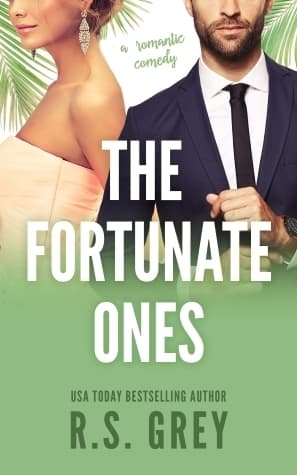
R.S. Grey (2017)
Genre
Romance
Reading Time
6-7 hours
Key Themes
See below
Sign in to track this book
A cabana girl's summer romance with a tech mogul at an exclusive country club turns into a journey of luxury, temptation, and the unexpected demands of commitment, making her choose between two very different lives.
Holly, a twenty-four-year-old aspiring writer, works as a cabana girl at Twin Oaks Country Club in Austin, Texas. She feels a divide between herself and the rich members, often watching their lives. Her main goal is to save money to move to New York City and write. Among the elite, James Ashwood, a handsome tech mogul and club member, stands out. Holly is drawn to him, often seeing him around the club and feeling a quiet attraction. She believes their worlds are separate, making a relationship impossible.
One quiet evening after her shift, Holly finds James Ashwood alone at the club bar. He calls her over and invites her to sit with him. Holly accepts, feeling both excited and nervous. They talk easily, despite their different social standings. This meeting marks a change, as James shows real interest in Holly, challenging her ideas about the 'fortunate ones' and their interactions with staff.
After their bar conversation, James asks Holly on a formal date. He picks her up in his luxury car, and they spend the evening at a high-end restaurant, followed by a private concert. Holly is overwhelmed by the luxury, a stark contrast to her daily life, but James makes her feel comfortable and valued. Their talks deepen, and Holly feels more and more drawn to his intelligence, wit, and kindness. This date confirms their connection, making it clear their relationship is becoming serious.
As their relationship grows, James introduces Holly to his extravagant world. She travels with him on private jets, stays in luxury penthouses, and attends exclusive events. While exciting at first, Holly also feels out of place, aware of their vast financial difference. She struggles to connect her working-class background and modest dreams with James's wealth. Despite the glamour, Holly stays grounded, often thinking about her own writing dreams and her desire to be self-sufficient.
James makes it clear he wants a serious, committed relationship with Holly. He says he loves her and wants her to be part of his life, suggesting they move in together. This proposal, while flattering, makes Holly anxious. She fears losing her independence and identity in James's overwhelming world. Her dream of moving to New York and writing feels distant and threatened by the idea of becoming 'Mrs. Ashwood.' Holly starts to slow things down, causing tension between them.
James plans a romantic weekend trip to a secluded villa, hoping to convince Holly to commit. The setting is beautiful, but the tension about their future simmers. Holly tries to explain her need for personal space and her commitment to her writing. She talks about her fear of being lost in his life and losing her own path. James, used to getting his way, struggles to understand her hesitation, leading to arguments and a growing emotional distance, despite their physical closeness.
During their trip, James surprises Holly with a marriage proposal, giving her a stunning ring. Though she loves him deeply, Holly realizes she cannot accept. She explains that she needs to achieve her dreams independently before she can fully commit to a life with him. This decision is painful for both. James feels hurt and confused, feeling rejected despite his love. Holly, though heartbroken, holds firm to her belief that she must pursue her own path first, even if it means sacrificing their relationship for now.
After her refusal, Holly decides to end her relationship with James. The breakup is painful, but she believes it is necessary for her personal growth and to fulfill her dream. She leaves her job at Twin Oaks and moves to New York City, determined to become a writer. The move is challenging, but Holly finds satisfaction in pursuing her passion, even as she deals with the heartbreak of leaving James and his lavish world.
In New York, Holly faces the tough reality of being a struggling writer. She takes odd jobs to pay her bills while working on her novel. There are moments of doubt and loneliness, but she stays dedicated to her craft. Over time, her hard work pays off. She gets a publishing deal for her novel, which becomes successful. This achievement confirms her decision to prioritize her career and gives her the financial and personal independence she wanted.
Years later, Holly attends a book signing for her successful novel. James Ashwood appears in the audience. Their eyes meet, and the years fade, showing the lingering feelings they both have. They talk privately, catching up. James expresses his admiration for her success and understands her need for independence. Holly, now confident and accomplished, realizes that while she achieved her dreams, a part of her still wants the connection she shared with James.
After their meeting, James and Holly carefully reconnect. This time, their dynamic is different. Holly is no longer the insecure cabana girl but a successful author. James, having learned from their past, better understands her need for autonomy and space. They talk openly about their fears and desires, finding a way to build a relationship that respects Holly's independence and career while embracing their deep love. They find a way forward that brings both their worlds together.
The Protagonist
Holly transforms from a watchful outsider to a successful, independent author who learns to balance love with her personal and professional fulfillment.
The Love Interest
James learns to value and respect Holly's independence and ambition, evolving from a man who expects commitment to one who understands the nuances of a balanced relationship.
The Mentioned
They serve as a static backdrop, representing the societal structure Holly must transcend rather than individual characters with arcs.
The novel clearly contrasts the lives of the wealthy members of Twin Oaks Country Club with the working-class staff like Holly. This divide creates initial barriers for Holly and James, as Holly feels inadequate and fears losing her identity in James's rich world. This theme shows how wealth and social standing affect perceptions, opportunities, and personal goals, especially when Holly feels out of place during lavish dates or thinks about her own modest background.
“At Twin Oaks Country Club, there are the fortunate ones, and then there are the rest of us: the waiters, the caddies, the valets, and in my case, the cabana girls.”
A main conflict for Holly is choosing between her love for James and her dream of becoming a writer. She fears that committing to James's world would mean giving up her independence and artistic goals. This theme is clearest when James proposes, forcing Holly to make a painful choice to prioritize her career and personal growth, even if it means leaving the man she loves. It suggests that true love might sometimes need a temporary separation for individual fulfillment.
“Every kiss comes with strings. Every erotic encounter is a promise I’m not ready to keep.”
Holly's journey is about building her own identity separate from a man or his wealth. She refuses to be defined by her relationship with James or her job as a cabana girl. Her move to New York and her struggles as a new writer show her determination to succeed on her own terms. This theme highlights the importance of self-sufficiency and personal achievement as a base for a healthy, balanced relationship, rather than relying on someone else's status or fortune.
“I needed to make my own way. To prove to myself, more than anyone else, that I could do it.”
The novel explores how personal growth and time can lead to reconciliation. After Holly achieves her dreams, she and James reconnect, both having matured and gained new perspectives. James learns to respect Holly's independence, and Holly gains confidence in her own worth. Their second chance at love suggests that a true connection can last and even grow stronger when both people are secure in their identities and paths, showing that sometimes, a temporary separation is needed for a lasting bond.
“He didn’t want to go slow—he wanted a commitment. And the thing about the fortunate ones? They’re used to getting what they want.”
The story is told entirely from Holly's perspective.
This device allows readers intimate access to Holly's thoughts, feelings, and internal struggles. We experience her observations of the 'fortunate ones,' her insecurities about her social standing, and her unwavering determination to pursue her writing dreams. This perspective fosters empathy and makes her difficult choices more understandable, as we are privy to her deepest motivations and fears, particularly her fear of losing herself in James's world.
The club represents the stark division between social classes.
Twin Oaks Country Club is more than just a setting; it symbolizes the chasm between the wealthy elite and the working class. For Holly, it's a place of both employment and observation, a constant reminder of the world she's not fully part of. Its luxurious amenities and exclusive membership highlight the stark contrast with her own life, serving as a physical manifestation of the social barriers and the 'fortunate ones' concept that initially defines the story's conflict.
An unexpected encounter challenges typical romantic tropes of class difference.
While Holly and James's initial meeting at the bar has elements of a classic 'meet-cute,' it subverts the typical trope by immediately highlighting the inherent power imbalance and social class difference. Instead of a whimsical, equal footing, their first conversation is laden with Holly's awareness of their distinct worlds. This subversion sets the stage for the deeper thematic exploration of how social divides and personal aspirations complicate a seemingly straightforward romance, rather than simply overcoming them with a single moment of charm.
“I had a feeling that I was going to be thinking about him for a very long time, and not in a good way.”
— Early impression of the male lead.
“Sometimes you just knew, didn't you? Knew that someone was going to ruin you.”
— Reflecting on the dangerous allure of a new acquaintance.
“He was the kind of handsome that made you want to curse and pray at the same time.”
— Describing the male lead's striking appearance.
“I wasn't looking for a fairytale. I was just looking for a little bit of magic in an otherwise mundane life.”
— The protagonist's modest hopes for romance.
“He was a beautiful disaster, and I was about to become collateral damage.”
— Realizing the potential heartbreak involved with the male lead.
“Love wasn't supposed to feel like this. It was supposed to be easy, light, and full of laughter. Not a constant battle.”
— Struggling with the complexities of a difficult relationship.
“Sometimes the people who hurt you the most are the ones who love you the deepest.”
— Contemplating the paradox of love and pain.
“I never knew my heart could ache and soar at the exact same time.”
— Experiencing conflicting emotions in a passionate relationship.
“He was my favorite kind of trouble, the kind that promised to break my heart and put it back together again, just to break it one more time.”
— Acknowledging the addictive cycle of a tumultuous love.
“Some people come into your life and leave footprints on your heart, and you’re never, ever the same.”
— Reflecting on the lasting impact of a significant person.
“I fell for him like a cliché, head over heels and completely unprepared for the fall.”
— Describing the sudden and overwhelming nature of falling in love.
“He was the calm to my storm, the quiet to my chaos, and the only person who truly understood the hurricane inside me.”
— Recognizing the profound connection and balance with her partner.
“Sometimes you have to break a little to truly appreciate how whole you can be.”
— Finding strength and self-discovery after a period of struggle.
“I didn't just love him. I loved the way he made me feel, the way he saw me, and the way he taught me to see myself.”
— Articulating the transformative power of a loving relationship.
Ready to see how well you understood this book? Take our interactive quiz with 10 questions.