“Perhaps love wasn't about grand gestures or dramatic declarations, but the quiet, everyday choices you made to put someone else first.”
— Character reflecting on the nature of enduring love after a long relationship.

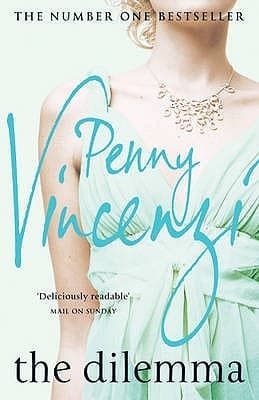
Penny Vincenzi (1996)
Genre
Romance
Reading Time
1200 min
Key Themes
See below
Sign in to track this book
Francesca's perfect life as the adored third wife of a powerful magnate unravels when a single lie, meant to protect her family, exposes treachery and forces her to confront the cost of her gilded cage.
Francesca Channing, a young and initially naive woman, meets the charismatic and wealthy Bard Channing, a much older man with a complex past and two previous marriages. Despite the age difference and immediate immersion into Bard's sprawling, influential family and business, Francesca is charmed by his intensity. They marry, and Francesca quickly finds herself navigating the opulent but demanding world of the Channing family, including Bard's adult children from previous marriages, who view her with suspicion. Her early years with Bard blend genuine affection and a growing awareness of his manipulative tendencies.
As Francesca settles into her role as Mrs. Channing, she becomes more deeply involved in the family's relationships. Bard's children — the ambitious Rupert, the troubled Jemima, and the more sympathetic but still wary Vanessa — present constant challenges. Francesca tries to connect, especially with Jemima, who battles personal demons. At the same time, Bard's vast business, the Channing Group, is a constant backdrop, hinting at power struggles and hidden agendas Francesca only vaguely perceives. Bard's ambition and control affect every part of their lives, making it hard for Francesca to assert her own identity or desires.
The story takes a dark turn when Bard begins receiving anonymous letters threatening to expose a past secret. The blackmailer, seemingly well-informed, hints at an event from Bard's business history that could ruin his reputation and career. Bard, always a strategist, tries to handle the situation discreetly, but the pressure grows. He confides in Francesca, framing the situation as a minor indiscretion from his past, but his concern suggests something more serious. Francesca is drawn into his confidence, and Bard subtly begins to prepare her for the possibility that she might need to corroborate a fabricated story to protect him.
While Bard is busy with the blackmail, Francesca experiences a personal crisis. She grapples with isolation, the constant pressure of Bard's expectations, and the emotional toll of his manipulative behavior. This introspection forces her to reassess her love for Bard and the true nature of their marriage. She starts to question if her devotion is enough to justify potentially sacrificing her own integrity. This internal struggle coincides with a growing suspicion that Bard is not being entirely truthful about the blackmail, making her dilemma even greater.
The blackmail intensifies, and Bard, cornered, finally reveals the full extent of the lie he needs Francesca to tell. It involves a critical business decision from years ago, an alleged unethical or illegal maneuver, which, if exposed, would dismantle his empire and destroy his public image. He presents it to Francesca as a test of her loyalty and love, emphasizing the catastrophic consequences for their family and children if she refuses. Francesca now faces the stark choice: protect her husband and their life, or uphold her moral compass, potentially destroying everything she has built with him.
Unwilling to blindly commit to a lie, Francesca begins her own subtle investigation into Bard's past. She pieces together fragments of information from conversations with Bard's children, especially Vanessa, and old associates. This amateur sleuthing reveals inconsistencies in Bard's story and suggests that the alleged 'indiscretion' might be far more serious and calculated than he let on. Her doubts about Bard's character and the true nature of his past actions grow, making the prospect of lying for him increasingly difficult. She feels trapped between loyalty and a burgeoning sense of betrayal.
Armed with her growing suspicions, Francesca confronts Bard. The confrontation is tense and emotional, with Bard initially trying to charm and manipulate her, then growing defensive and angry. In the heat of the argument, more details about the past incident emerge, painting a clearer, and far darker, picture of Bard's ruthlessness and willingness to cut corners for profit and power. Francesca realizes the depth of his deception and the moral abyss she would be stepping into by lying for him. This revelation shatters her remaining illusions about her husband and their marriage.
Francesca makes her definitive choice regarding the lie. The immediate aftermath is tumultuous. Bard reacts with fury and manipulation, attempting to regain control. The Channing family, already fractured, becomes even more divided as the truth, or at least Francesca's refusal to participate in the lie, begins to ripple through their lives. The children react in various ways: some resent Francesca's perceived betrayal, while others, particularly Jemima and Vanessa, begin to see their father in a new, harsher light. Francesca finds herself increasingly isolated but also, for the first time, truly empowered by her moral stand.
As the story progresses, the blackmailer's identity is finally revealed. Their motivations are deeply rooted in the past incident Bard sought to hide, often involving a victim of his ambition or a former associate he wronged. The blackmailer's actions fully expose the extent of Bard's unethical or illegal business practices, confirming Francesca's worst fears and validating her decision not to lie. This revelation often brings about a public scandal or a significant challenge to Bard's empire, forcing him to face the consequences of his actions without Francesca's protection.
In the wake of the scandal and the disintegration of her marriage, Francesca faces the challenge of rebuilding her life. This involves securing a future for herself and her children, often with significantly fewer resources than she was accustomed to. She finds unexpected allies within the Channing family, particularly among those who were also wronged by Bard or who admired her integrity. Francesca begins to discover her own strength and independence, moving away from Bard's shadow and forging a new identity. The ending focuses on her journey towards self-discovery and finding genuine happiness and peace outside the confines of her complicated past.
The Protagonist
Francesca evolves from a young, impressionable wife into a woman of strong moral character, ultimately choosing integrity over a life of luxury and deceit.
The Antagonist
Bard's arc is one of unmasking; his carefully constructed facade of power and respectability crumbles as his past misdeeds are exposed.
The Supporting
Rupert's arc typically involves a realization of his father's true nature and a re-evaluation of his own ambitions and methods.
The Supporting
Jemima's arc often involves finding some form of stability or escape, potentially aided by Francesca's compassion.
The Supporting
Vanessa's arc involves her growing disillusionment with her father and a potential alignment with Francesca against the family's deceptive practices.
The Antagonist
The blackmailer's arc is revealed as their identity and past connection to Bard are uncovered, bringing the long-dormant truth to light.
This is the central theme of 'The Dilemma,' seen in Francesca's agonizing choice. She is torn between her love and loyalty to Bard and her own moral principles. The novel explores the pressure to compromise one's values for family, stability, and love, especially when stakes are high. Francesca's internal struggle, as she investigates Bard's past and confronts his manipulations, highlights the difficulty and necessity of upholding one's integrity, even when it means sacrificing everything. Her decision to refuse to lie, despite the personal cost, is the core of this theme, showing that true strength is in moral conviction.
“All Francesca Channing had to do in order to keep her marriage alive, her children safe, her life intact, was to tell a lie. One simple, straightforward lie. But it wasn't that simple or straightforward at all.”
The novel shows how immense power and wealth can corrupt, insulate individuals from consequences, and distort relationships. Bard Channing's empire is built on ruthlessness and manipulation, allowing him to operate above moral scrutiny for years. The Channing family's dynamics are heavily influenced by their wealth, leading to a sense of entitlement, internal rivalries, and a detachment from ordinary life. The story examines the allure of this lifestyle and its hidden costs, especially for those, like Francesca, who are drawn into its orbit but lack the same moral flexibility. It shows how wealth can be both a shield and a gilded cage.
“He was charismatic, powerful and rich - and he adored her. He was also manipulative and scheming, with a family as large and complex as his business.”
Deception is throughout 'The Dilemma,' operating on multiple levels. Bard Channing's entire life and business are built on lies and manipulation, both professionally and personally. He betrays trust, from business associates and his own family, to maintain his power. Francesca experiences betrayal as she uncovers the true extent of Bard's past misdeeds and his willingness to use her. The blackmail itself exposes past deceptions, and the novel explores the corrosive effects of living a life built on falsehoods, highlighting how betrayal, once revealed, can shatter even the strongest bonds.
“Her life, as Bard Channing's third wife, was very far from easy. He was charismatic, powerful and rich - and he adored her. He was also manipulative and scheming...”
Francesca's journey is one of self-discovery. Initially, her identity is largely defined by her role as Bard Channing's wife, subsumed by his powerful personality and the demands of his world. As she confronts the moral dilemma, she is forced to look inward and determine who she truly is, separate from Bard's influence. Her decision to stand by her principles, even at great personal cost, marks a turning point in her understanding of herself. The narrative follows her transformation from a woman living in her husband's shadow to an independent individual capable of making her own way and defining her own happiness, illustrating the process of finding one's true self amidst adversity.
“But it was an emotional crisis of her own which finally put Francesca's dilemma into perspective, and made her wonder if she loved Bard enough to lie for him...”
A series of mysterious threats that drive the central conflict.
These letters serve as the primary inciting incident, introducing the 'dilemma' and forcing Bard's past misdeeds to the surface. Their anonymous nature creates suspense and allows the mystery of Bard's past to unfold gradually. They also act as a ticking clock, increasing the pressure on Bard and, by extension, Francesca. The content of the letters provides cryptic clues, fueling Francesca's own investigation and deepening her suspicions about her husband, ultimately forcing the confrontation.
A sprawling, influential family structure that provides a rich backdrop for intrigue.
The Channing family, with its multiple marriages, step-children, and interconnected business interests, functions as a complex social microcosm. It provides a constant source of tension, rivalry, and hidden alliances, reflecting the broader themes of power and deception. The various family members, each with their own agendas and relationships with Bard, offer Francesca different perspectives on her husband and his past, aiding her in piecing together the truth. The family unit itself is a key element of the 'world' the dilemma takes place in, emphasizing the high stakes of Francesca's decision.
A critical, undisclosed event from Bard's past that is the subject of the blackmail.
This device is central to the mystery and the core dilemma. The details of the past event are gradually revealed through the blackmail letters, Bard's evasions, and Francesca's inquiries. Its exact nature — whether it's a financial crime, a personal betrayal, or something else entirely — is kept ambiguous for a significant portion of the novel, building suspense. The slow unveiling of this event allows the reader to understand the gravity of Francesca's choice and the true character of Bard, as the consequences of his actions from years ago finally come to light.
“Perhaps love wasn't about grand gestures or dramatic declarations, but the quiet, everyday choices you made to put someone else first.”
— Character reflecting on the nature of enduring love after a long relationship.
“The hardest part of any decision wasn't making it, but living with the road not taken.”
— Protagonist grappling with the consequences of a major life choice.
“Sometimes, the person you were meant to be with was the one who saw you, truly saw you, even when you were at your most broken.”
— A character realizing the depth of their partner's understanding and acceptance.
“Life had a way of throwing you curveballs just when you thought you had everything figured out.”
— Narrator commenting on unexpected turns of events.
“Forgiveness wasn't about condoning the past, but freeing yourself from its grip.”
— A character struggling to forgive a past betrayal.
“The greatest luxury wasn't material wealth, but the freedom to choose your own path.”
— A character reflecting on their personal values versus societal expectations.
“You could build walls around your heart, but eventually, someone would find a way to climb over them.”
— A guarded character slowly opening up to love.
“True happiness often lay in the simple moments, overlooked in the pursuit of something grander.”
— A character finding contentment in everyday life after a period of striving.
“Love didn't conquer all; it just made the struggle worthwhile.”
— A couple facing significant challenges together.
“The past wasn't a burden to be carried, but a foundation upon which to build a stronger future.”
— A character coming to terms with their personal history.
“Sometimes, goodbye was the most loving thing you could say.”
— A painful but necessary parting between two characters.
“It was amazing how much strength you could find when you had no other choice.”
— A character facing an overwhelming personal crisis.
“The heart had its own logic, often defying reason and expectation.”
— A character making an impulsive decision driven by emotion.
“A secret could bind people together, or tear them irrevocably apart.”
— The central theme of a hidden truth impacting relationships.
Ready to see how well you understood this book? Take our interactive quiz with 10 questions.