“Everybody wants this. Everybody wants to work at Runway. It's the most prestigious fashion magazine in the world.”
— Emily explains to Andrea the allure and importance of working at Runway magazine.

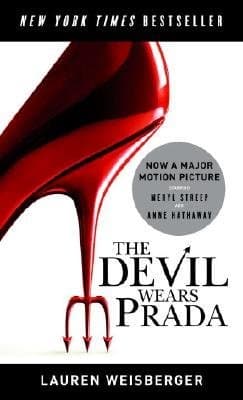
Lauren Weisberger (2003)
Genre
Romance
Reading Time
9-10 hours
Key Themes
See below
Sign in to track this book
A small-town girl's job as assistant to a fashion magazine editor becomes a stylish nightmare, making her choose between her values and a career in high fashion.
Andrea Sachs, a college graduate who dreams of serious journalism, gets a job as the junior assistant to Miranda Priestly, the demanding editor-in-chief of the fashion magazine, Runway. Andrea has no interest in fashion and wears simple clothes, but she takes the job, believing it will lead to her desired career, with Miranda's recommendation after a year. She quickly finds the cutthroat world of Elias-Clark publications and the fear Miranda creates, including in her senior assistant, Emily Charlton, who dislikes Andrea. Andrea's first weeks are a blur of impossible demands, constant humiliation, and learning the world of haute couture.
Andrea's job quickly becomes endless personal errands and impossible tasks for Miranda. She has to be available all the time, fetching coffee at specific temperatures, finding rare items, and managing Miranda's personal life, including her twin daughters, Caroline and Cassidy. Her social life with her boyfriend, Alex, and best friend, Lily, suffers because of her unpredictable schedule and constant stress. Emily, the senior assistant, offers little help, being equally scared of Miranda and protective of her own job. Andrea feels isolated and overwhelmed, often crying, but she wants to last a year for her career.
Nigel, Runway's creative director, sees Andrea's struggle and potential and takes her under his wing. He tells her to embrace fashion, explaining that her current look hurts her success in this world. With Nigel's help and access to the magazine's fashion closet, Andrea changes her appearance, wearing designer clothes, better makeup, and a more polished look. This change gives her new confidence and earns her some respect from colleagues, and even a small nod of approval from Miranda, making her job a little more bearable.
As Andrea gets better at guessing Miranda's needs and doing her impossible requests, she becomes more essential and more exploited. She misses important events, including Alex's birthday and Lily's art show, straining her relationships. Miranda's demands grow to absurd levels, like finding an unreleased Harry Potter manuscript for her daughters or arranging private jet travel quickly. Andrea's strong moral compass starts to waver as she puts Miranda's wishes over her own values and relationships, leading to growing resentment from her loved ones.
The most anticipated event for the Runway staff is Paris Fashion Week, which Miranda attends with her senior assistant. Emily, who has dreamed of going for years, is very excited. However, shortly before they leave, Emily has a car accident and breaks her collarbone, meaning she cannot travel. Miranda tells Andrea that she will take Emily's place, to Andrea's dismay and Emily's devastation. This 'promotion' means even more demanding work and a deeper immersion into Miranda's world, further separating Andrea from her old life.
In Paris, Andrea sees the full extent of Miranda's power and ruthlessness. She watches Miranda manipulate the careers of her colleagues, especially Nigel, who is promised a promotion to editor-in-chief of a new magazine, only to have it given to Miranda's friend, Jacqueline Follet. This betrayal, along with Miranda's coldness to the impact of her actions, deeply bothers Andrea. Miranda, in a rare moment, tells Andrea that she reminds her of herself, implying Andrea has the same ambition and willingness to make sacrifices. This comment makes Andrea examine her own values and the person she is becoming.
During a stressful moment in Paris, while Miranda is on the phone discussing a betrayal that affects Nigel's career, Andrea reaches her breaking point. She looks at Miranda and sees her own potential future—a life without real connection and full of ruthless ambition. In a moment of clarity and defiance, Andrea throws her cell phone into the fountain, cutting her connection to Miranda and the job's constant demands. She tells Miranda, "I'm done," and walks away, leaving Miranda stunned and angry. This act shows Andrea's rejection of the fashion world and the person she was becoming in it.
Back in New York, Andrea faces the consequences of her dramatic exit. She struggles to find work at first, as Miranda's influence is wide. However, she eventually gets a job at a small, independent newspaper, writing human interest stories, which fits her original journalistic goals. She repairs her relationships with Alex and Lily, who are happy to have the old Andrea back. While she does not get the recommendation from Miranda, she realizes that her experience, though hard, taught her lessons about resilience and self-worth. She occasionally sees Miranda in the media, but the fear and obsession have gone, replaced by a quiet sense of triumph.
Months later, Andrea sees Miranda Priestly on the street. Miranda, in a rare moment, acknowledges Andrea, offering a faint smile. She then says she gave Andrea a positive recommendation to the editor of a new publication, stating that Andrea was her 'biggest disappointment' but also her 'favorite.' This unexpected gesture confirms that despite their past, Miranda recognized Andrea's unique qualities and perhaps respected her decision to leave. Andrea smiles back, feeling a sense of closure and validation, having moved on to a path that brings her fulfillment and happiness outside Runway.
The Protagonist
Andrea transforms from an innocent, overwhelmed assistant into a confident woman who stands up for herself and prioritizes her values over career advancement.
The Antagonist
Miranda remains largely unchanged, a force of nature, but her interactions with Andrea subtly highlight her isolation and the price of her power.
The Supporting
Alex's patience is tested to its limits, leading to a temporary separation from Andrea, but their relationship ultimately endures once Andrea re-evaluates her life.
The Supporting
Lily struggles with Andrea's new lifestyle and the distance it creates, but their friendship is ultimately restored when Andrea returns to her true self.
The Supporting
Emily's character arc is one of unfulfilled ambition and a harsh realization of the sacrifices required in the fashion world, leaving her somewhat bitter but still driven.
The Supporting
Nigel's unwavering dedication to Miranda is rewarded with a devastating betrayal, highlighting the ruthless nature of the industry and the cost of ambition.
The Supporting
Christian serves as a catalyst for Andrea to question her loyalty to Alex and her original values, but ultimately, she chooses her authentic self.
The Mentioned
Jacqueline's role in the narrative primarily serves to highlight Miranda's manipulative power and the cutthroat nature of the industry.
The novel explores the personal cost of pursuing high-level career success, especially in a demanding industry. Andrea sacrifices her personal life, relationships, and nearly her sense of self for Miranda's recommendation. Miranda, at the top of her career, is isolated and emotionally cold, suggesting her ambition has come at a great personal price. Nigel's betrayal shows how ambition can lead to ruthless actions and broken trust, questioning if the rewards are worth the sacrifices.
“"Everyone wants this. Everyone wants to work at Runway. And if you don't, you're nobody."”
Andrea's journey is one of self-discovery. She starts as a naive outsider with a clear sense of who she is, but the constant pressure of her job forces her to adapt, changing her appearance, priorities, and values. The novel asks if she can stay true to herself while in a world that demands conformity. Her decision to leave Miranda is an act of reclaiming her identity and choosing a life aligned with her true self, rather than the person the fashion world was making her into.
“"The thing is, I'm just not that kind of girl. I'm not that kind of person."”
The book contrasts the glamorous image of the fashion industry with its brutal, often mundane, and dehumanizing reality. From the outside, Runway magazine looks like the height of style and success, but Andrea quickly learns that behind the designer clothes and exclusive parties is a world of impossible demands, constant stress, and insecurity. The 'dream job' is a nightmare of personal errands, emotional abuse, and pressure, showing the truth behind the glossy facade.
“"You have no idea how much work goes into this. You have no idea how many people would kill for what you have."”
A central theme is the exploration of extreme power and the forms of abuse in a hierarchical workplace. Miranda Priestly has absolute power over her employees, using fear, intimidation, and manipulation to control them. Andrea's experience shows how a powerful figure can exploit subordinates, blurring the lines between professional demands and personal service. The novel also examines the complicity of those below Miranda, who continue the abuse by fearing her and seeking her approval, rather than challenging her.
“"I'm not asking, I'm telling."”
The novel explores the strain on personal relationships when one's life is taken over by a demanding job. Andrea's friendships with Lily and Alex are tested as she becomes unavailable, self-absorbed, and changed by her work. Their reactions, from concern to anger, show the importance of loyalty and the difficulty of maintaining real connections when priorities are skewed. Ultimately, the strength of these relationships is shown when Andrea returns to her true self, and her friends welcome her back.
“"You've changed, Andy. You're not the person I know anymore."”
Provides an intimate, subjective view of Andrea's experience.
The story is told entirely from Andrea Sachs's perspective, allowing readers to directly experience her shock, frustration, and eventual transformation. This subjective viewpoint is crucial for conveying the emotional toll of working for Miranda and for understanding Andrea's internal conflict as she grapples with her changing identity. It also heightens the comedic and dramatic elements, as readers are privy to Andrea's unfiltered thoughts and reactions to the absurd demands of the fashion world.
A heightened setting to explore universal themes of ambition and sacrifice.
The high-stakes, image-obsessed world of Runway magazine serves as a magnified, almost caricatured setting that allows the author to explore universal themes of workplace toxicity, power dynamics, and the pursuit of success. By placing an 'everywoman' like Andrea in this extreme environment, the novel exaggerates the pressures and temptations of modern corporate life, making the underlying messages about integrity and self-worth resonate more strongly with a broad audience, regardless of their interest in fashion.
Miranda Priestly as a symbolic figure of temptation and corruption.
Miranda Priestly functions as a modern 'devil' figure, offering Andrea a Faustian bargain: extraordinary career opportunities in exchange for her soul (her personal life, integrity, and happiness). She embodies the seductive, yet destructive, power of the fashion industry. Miranda tempts Andrea with designer clothes, exclusive access, and the promise of a glittering future, while simultaneously demanding immense sacrifices and pushing Andrea to compromise her values. Her character is a symbolic representation of the corrupting influence of unchecked power and ambition.
A visual and thematic representation of Andrea's transformation.
While not a literal montage, Andrea's gradual physical transformation, guided by Nigel, serves as a significant plot device. Her changing wardrobe and appearance symbolize her assimilation into the fashion world and her initial embrace of its values. This external change reflects her internal struggle and the blurring of her original identity. It visually represents her 'selling out' to a degree, before she ultimately rejects the superficiality and toxicity of that world.
“Everybody wants this. Everybody wants to work at Runway. It's the most prestigious fashion magazine in the world.”
— Emily explains to Andrea the allure and importance of working at Runway magazine.
“A million girls would kill for this job, you know that right?”
— Miranda Priestly's assistant, Emily, often reminds Andrea of the competitive nature of her position.
“Florals for spring? Groundbreaking.”
— Miranda Priestly's sarcastic dismissal of a common fashion trend.
“In a blink of an eye, I went from being a normal, if slightly underdressed, girl to a 'fashion person.'”
— Andrea reflects on her transformation as she delves deeper into the world of Runway.
“The devil works hard, but Miranda Priestly works harder.”
— A common sentiment among Runway employees about Miranda's relentless work ethic.
“Details of your incompetence do not interest me.”
— Miranda's sharp retort to Andrea after a mistake.
“I'm not saying it's easy, I'm saying it's worth it.”
— Emily tries to motivate Andrea to endure the hardships of working for Miranda.
“When your life falls apart, you get a new handbag.”
— A darkly humorous observation about coping mechanisms in the fashion world.
“You sell your soul to the devil the moment you start working for her.”
— Lily, Andrea's friend, expresses concern about the negative influence of Miranda.
“I had become one of them, a drone in Miranda's army.”
— Andrea's internal monologue about her loss of individuality while working at Runway.
“It's just clothes, isn't it? Just fashion.”
— Andrea's initial naive view of the fashion industry, before realizing its depth.
“The greatest trick the devil ever pulled was convincing the world she didn't exist. The greatest trick Miranda ever pulled was convincing the world she was human.”
— Andrea's cynical comparison of Miranda to the devil.
“I was living the life that millions of girls dreamed of, but I was miserable.”
— Andrea's realization that external success doesn't equate to personal happiness.
Ready to see how well you understood this book? Take our interactive quiz with 10 questions.

Biography coming soon.