“What makes a man a man, a woman a woman, or a student a student? We're all human beings. And we all make mistakes.”
— Professor George Keller's philosophy on humanity and error.

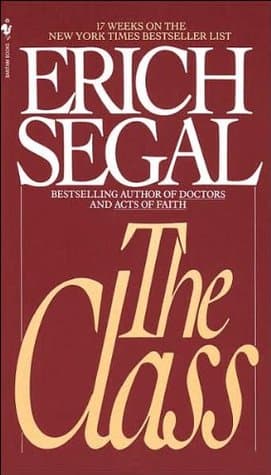
Sign in to track this book
Five Harvard graduates and the women they love navigate 25 years of triumphs, betrayals, and self-discovery, culminating in a reunion where they confront their past.
The story begins in September 1954 with the Harvard Class of 1958. Daniel Rossi, a bright but insecure scholarship student from a working-class Italian-American family in Brooklyn, feels overwhelmed by the prestigious environment. Andrew Eliot, from an old, wealthy Boston family, carries the weight of his lineage and expectations. Jason Gilbert, a charismatic and ambitious Jewish student from a less privileged background, is determined to succeed. George Keller, a quiet, intellectual German immigrant, struggles with his family's past and an uncertain future. Theodore 'Ted' Lambros, a charming Greek-American from a middle-class family, balances academics with a desire for social acceptance. These five young men, though strangers, are united by their entry into Harvard, a place that will shape their lives.
During their early years at Harvard, the five men begin to form their identities and friendships. Daniel Rossi, initially feeling inferior, finds his place through academic success and a growing romance with Carol, a Radcliffe student. Andrew Eliot, dealing with his family's expectations, especially from his grandmother, falls in love with Emily, an independent woman. Jason Gilbert, driven by ambition, excels in law and politics, forming strategic friendships. George Keller, haunted by his father's Nazi past, focuses on philosophy and finds comfort in his studies. Ted Lambros, aiming for popularity, balances his studies with social events, often feeling pressure to fit in.
After four intense years, the Class of 1958 graduates, and the five men start their separate lives. Daniel Rossi, despite his academic talent, struggles between his working-class background and the appeal of a prestigious academic career. He continues his relationship with Carol. Andrew Eliot, after some self-reflection and military service, tries to balance his family's legacy with his personal desires, especially concerning Emily. Jason Gilbert, always an opportunist, goes to law school, determined to gain power. George Keller follows his intellectual interests, seeking truth and understanding after his family's history. Ted Lambros, initially aiming for a typical career, finds himself drawn to entertainment and media.
The turbulent 1960s, especially the Vietnam War, affect the lives of the Harvard graduates. Andrew Eliot, driven by duty and a wish to escape his family's influence, volunteers for service, which leads to significant personal changes. Jason Gilbert skillfully navigates the political world, using the war to advance his career, often at the cost of his principles. Daniel Rossi, focused on his academic work, considers the moral implications of the conflict and his role as a scholar. George Keller, the philosopher, observes the societal upheaval critically, his past experiences shaping his view. Ted Lambros, increasingly involved in media, uses his platform to comment on the war, reflecting public opinion.
As years pass, the characters experience a range of human relationships. Daniel Rossi's marriage to Carol faces problems as his academic career grows, creating distance and different priorities. Andrew Eliot's relationship with Emily endures challenges, including his military service and her independent spirit, leading to periods of separation and reconciliation. Jason Gilbert's strong ambition often strains his personal relationships, as he values power over closeness. George Keller, through his philosophical journey, seeks deeper connections, often dealing with the complexities of love and commitment. Ted Lambros, pursuing a career in Hollywood, experiences the superficiality and temporary nature of fame and romantic relationships, leading to heartbreak.
Jason Gilbert becomes a key figure in the pursuit of power. His charisma and sharp mind move him through law school and into politics. He forms strategic alliances, often compromising his personal values for professional gain. His career takes him from a promising young lawyer to a powerful political figure, and then to the national stage. His ambition is both his greatest strength and his biggest flaw, leading him to make choices that affect his life and the lives of his Harvard classmates. His story shows the moral compromises often involved in seeking ultimate power.
Daniel Rossi becomes a respected academic, dedicating his life to literature and teaching. His intellectual rigor and passion for knowledge earn him respect, but his singular focus sometimes isolates him from personal connections. He deals with the detachment of academia from the real world. Ted Lambros, on the other hand, finds his place in the competitive world of Hollywood. He starts as a struggling writer and eventually becomes a successful screenwriter and producer. His journey includes creative struggles, the unpredictable nature of fame, and a constant search for truth in a world of illusion. Both men, in their fields, strive for excellence and meaning.
George Keller's life is shaped by his German heritage and the shadow of his father's past during World War II. He deals with guilt, identity, and the weight of history. His intellectual pursuits are often a way to understand the human condition and the origins of evil. He studies philosophy and psychology, seeking answers and trying to make sense of the world. His personal relationships are often complicated by his internal struggles, as he tries to create his own path separate from his family's legacy. His story explores the lasting effects of historical trauma and the search for redemption.
Leading up to the Harvard Class of 1958's 25th reunion, each character evaluates their life. Daniel Rossi, a distinguished professor, questions the sacrifices he made for his career. Andrew Eliot, having navigated personal and professional challenges, reflects on his unconventional path and his lasting love for Emily. Jason Gilbert, now a powerful figure, considers the cost of his ambition. George Keller, a respected scholar, continues to deal with his past but finds some peace. Ted Lambros, a successful Hollywood producer, confronts the superficiality of his world and his search for genuine connection. The upcoming reunion makes them reflect on their successes, failures, and the paths they did not take.
The 25th reunion of the Harvard Class of 1958 brings all the characters back to their alma mater. It is a time for accounting and discovery. Old friendships are renewed, rivalries reappear, and long-held secrets come to light. Daniel Rossi reconnects with Carol, facing unresolved issues in their relationship. Andrew Eliot and Emily affirm their deep connection, despite their challenges. Jason Gilbert, in the middle of his political rise, faces scrutiny from his classmates and the consequences of his choices. George Keller finds a sense of belonging and acceptance. Ted Lambros, having achieved outward success, searches for deeper meaning. The reunion forces them to confront their lives and the men they have become since their hopeful freshman days.
The reunion's celebratory mood is broken by moments of truth. Secrets kept for decades begin to emerge, especially concerning the relationships and professional dealings among the classmates. Betrayals, both personal and professional, are revealed. Daniel Rossi and Carol confront the lingering pain of their past and the choices that separated them. Jason Gilbert's ruthless political tactics are subtly challenged by former friends, forcing him to briefly face the ethical compromises he has made. These revelations create tension and make the characters re-evaluate their views of themselves and each other, adding layers to their shared history.
As the reunion ends, some characters find reconciliation. Daniel Rossi and Carol, after honest conversations, begin to mend their fractured relationship, hinting at a potential future together. Andrew Eliot and Emily, having endured many difficulties, become stronger and more committed. George Keller finds a quiet peace, accepting his past and present. Ted Lambros, despite his professional achievements, realizes the importance of real human connection over superficial success and begins to re-evaluate his priorities. Jason Gilbert, still ambitious, is left to consider the true cost of his relentless pursuit of power, perhaps with some self-reflection. The reunion is a turning point, offering a chance for new beginnings or a reaffirmation of lasting bonds.
The Protagonist
From an insecure freshman, Daniel evolves into a respected academic, grappling with the trade-offs between professional success and personal fulfillment, ultimately seeking reconciliation in his relationships.
The Protagonist
Andrew moves from conforming to family expectations to forging his own path, ultimately finding strength and authenticity in his identity and relationships.
The Protagonist/Antagonist
Jason relentlessly pursues power and success, achieving his ambitions but potentially at the cost of his personal integrity and genuine connections.
The Protagonist
George grapples with his family's dark past, seeking understanding and ultimately finding a measure of peace through intellectual and moral reflection.
The Protagonist
Ted transitions from seeking social acceptance to finding success in entertainment, eventually realizing the importance of genuine connection over superficial fame.
The Supporting
Carol navigates the complexities of her relationship with Daniel, asserting her independence while holding onto their shared history.
The Supporting
Emily remains a steadfast and independent force in Andrew's life, influencing his growth and grounding him in their shared love.
The Supporting/Mentioned
Her unwavering expectations serve as a constant pressure point for Andrew, fueling his desire for independence.
This theme explores how the characters deal with expectations from family, society, and their Harvard education, which often conflict with their desire for individual identity. Andrew Eliot, from a Boston Brahmin family, struggles to escape the path set by his grandmother, leading him to volunteer for Vietnam against family wishes. Daniel Rossi, a scholarship student, constantly works to prove himself worthy of Harvard, balancing his working-class background with academic elitism. Jason Gilbert's ambition is driven by a desire to overcome his modest background and achieve status. Each character's journey involves this internal and external conflict to define who they are.
“Harvard made you, but it didn't own you. Or did it?”
The novel examines ambition, especially through Jason Gilbert's character. His pursuit of power and success in law and politics leads him to make ethical compromises and strain personal relationships. The book shows how ambition can drive achievement but also corrupt, leading to a loss of integrity and genuine human connection. Daniel Rossi's academic ambition, while noble, also creates distance in his marriage to Carol. The theme questions if the rewards of ambition are worth the sacrifices, exploring the moral balance of a life dedicated to climbing the ladder.
“He wanted to win, and he was willing to pay any price. But the price wasn't always measured in money.”
Despite individual journeys and challenges, the novel highlights the lasting impact of love and friendship formed during college. The bonds made at Harvard, though tested by distance, ambition, and betrayal, often provide comfort and meaning. Andrew Eliot's lasting love for Emily gives him authenticity and strength in his difficult life. Daniel Rossi's complex relationship with Carol, though strained, shows a deep, underlying connection that seeks reconciliation. The reunion itself shows the enduring nature of these relationships, reminding the characters of their shared history and the people who truly understand them.
“Some ties, once woven, could never truly be broken, no matter how many years passed or how far apart they drifted.”
The novel explores how personal and national history shapes individual lives. George Keller's character is central to this theme, as he deals with the burden of his German father's Nazi past, seeking to understand and reconcile with this dark legacy. Andrew Eliot's struggle with his Boston Brahmin lineage also fits this theme, as he tries to create an identity separate from his family's long history and expectations. The Vietnam War's impact on all the characters, forcing moral choices and changing life paths, shows how historical events leave a lasting mark on individuals and generations, shaping their values and decisions.
“The past was not merely prologue; it was a ghost in the machine of his very being.”
A narrative framework that brings characters together for reflection and resolution.
The 25th reunion serves as a crucial framing device, allowing the narrative to jump between the present (1983) and the past (1954-1983). This structure enables the author to reveal the characters' life trajectories, contrast their youthful aspirations with their adult realities, and bring their individual stories to a climactic convergence. It acts as a catalyst for introspection, confrontation, and resolution, forcing each character to evaluate their successes and failures and confront the choices that shaped their lives. The reunion provides a dramatic backdrop for the unveiling of long-held secrets and the rekindling of old relationships.
The story is told through the alternating viewpoints of the five main protagonists.
The narrative employs multiple third-person perspectives, focusing on Daniel Rossi, Andrew Eliot, Jason Gilbert, George Keller, and Ted Lambros. This allows the reader to gain deep insight into each character's internal struggles, motivations, and unique experiences. By shifting perspectives, the novel provides a comprehensive and multifaceted view of their shared journey through Harvard and beyond, highlighting their individual challenges and triumphs while also showing how their lives intertwine and influence one another. This device creates a rich tapestry of interwoven destinies.
Non-linear storytelling to reveal past events and foreshadow future developments.
While the reunion provides a primary framework, the narrative frequently utilizes flashbacks to illuminate pivotal moments from the characters' college years and subsequent lives, showcasing their growth, choices, and the origins of their current situations. Conversely, brief flashforwards or hints about future events might be subtly woven in to build anticipation or highlight the long-term consequences of present actions. This non-linear approach enriches the storytelling, allowing for a deeper exploration of cause and effect, and providing context for the characters' present-day complexities.
The institution represents ambition, privilege, and a crucible for identity.
Harvard itself functions as a powerful symbol throughout the novel. For some, like Daniel Rossi, it represents an opportunity for upward mobility and intellectual achievement. For Andrew Eliot, it's a symbol of inherited privilege and the burden of expectation. For Jason Gilbert, it's a launchpad for power and influence. Beyond being a setting, Harvard embodies the ideals of excellence, the pressures of an elite institution, and the formative experiences that shape the characters' identities. It serves as a constant touchstone, representing both the beginning of their shared journey and a recurring point of reference for their individual successes and failures.
“What makes a man a man, a woman a woman, or a student a student? We're all human beings. And we all make mistakes.”
— Professor George Keller's philosophy on humanity and error.
“The past is a foreign country; they do things differently there.”
— A general observation on the passage of time and change.
“Love means never having to say you're sorry. Friendship means never having to say anything.”
— A reflection on the nature of deep relationships.
“They were all, in their different ways, trying to find their place in a world that seemed to demand so much, yet offer so little in the way of clear directions.”
— Describing the struggles of the Harvard graduates post-college.
“Harvard was not just a place, but a state of mind, a shared experience that bonded them irrevocably.”
— Reflecting on the lasting impact of their Harvard years.
“Life, he decided, was not about avoiding the falls, but about learning how to get up again.”
— Jason Gilbert's realization after a personal setback.
“The greatest tragedy in life is not that men die, but that they cease to love.”
— A poignant thought on the importance of love.
“Success, he was learning, was often a matter of showing up, even when you didn't feel like it.”
— Daniel Rossi's journey through his career.
“There were moments when the weight of expectation felt heavier than any textbook.”
— Describing the pressure felt by the students at Harvard.
“Friendship, true friendship, was a rare and precious commodity, not to be squandered.”
— Jennifer Cavilleri's appreciation for her closest friends.
“They had all arrived at Harvard with dreams, some grand, some modest, but all burning with the fire of youth.”
— The initial aspirations of the incoming class.
“Sometimes, the hardest thing to do was to forgive yourself.”
— A character's internal struggle with past mistakes.
“The world outside the hallowed halls of Harvard was a far more complicated and unforgiving place.”
— The students' realization upon graduating and entering the real world.
“He understood then that true courage wasn't about being fearless, but about facing your fears, even when your knees were knocking.”
— Marty Cantwell's experience overcoming personal anxieties.
“Life had a way of surprising you, even when you thought you had it all figured out.”
— A general observation on the unpredictable nature of life.
Ready to see how well you understood this book? Take our interactive quiz with 10 questions.

Biography coming soon.