“I want to be loved so hard, so true, so completely, that I don't know where I end and you begin.”
— The narrator's yearning for passionate, all-consuming love.

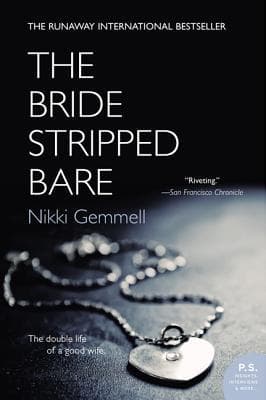
Nikki Gemmell (2011)
Genre
Romance
Reading Time
12-15 hours
Key Themes
See below
Sign in to track this book
A wife disappears, leaving a diary that shows her shift from a content spouse to a woman exploring her desires through an old manuscript, all while living a dangerous double life.
The story begins with the discovery that Catherine, a woman in her late twenties, has disappeared from her seemingly perfect life in Sydney. Her husband, Michael, a successful architect, reports her missing, confused by her sudden absence. Authorities find Catherine's diary, which she kept in detail, showing her inner life and a secret journey of sexual and personal exploration that Michael and their friends knew nothing about. The diary entries start to tell her story from before her marriage and into the first months of her new life as Mrs. Michael. This discovery sets up the entire novel, as Catherine's words become the only way to understand her true experiences and reasons.
Catherine's early diary entries show her trying to be the 'good wife' for Michael. She describes their beautiful home, comfortable life, and her efforts to please him and fit into his social circle. However, under this calm surface, she feels a growing sense of unfulfillment and a feeling that she is losing herself. She feels pressure to meet Michael's expectations and the social image of a happy, devoted wife, which conflicts with her inner desires and a sense of an unlived life. This inner conflict is a repeated theme in her early entries, showing the difference between her outward appearance and her private thoughts.
During a visit to a second-hand bookstore, Catherine finds an old, forgotten Elizabethan manuscript. This rare text, written in old script, is said to be about female desire and sexuality, challenging the common views of women's roles and pleasures of its time. The manuscript's direct and revolutionary ideas strongly affect Catherine, who has been quietly questioning her own desires and the limits placed on women. This discovery acts as a strong catalyst, giving her a way to understand and confirm her own unspoken longings, and marking a turning point in her journey of self-discovery and sexual awakening.
Inspired by the Elizabethan manuscript's revelations, Catherine begins to carefully explore her own sexuality and desires. At first, these explorations are internal and solitary, involving self-reflection and a new look at her experiences with Michael. She starts to see her body and her sensuality in a new way, separate from her husband's view. Her diary entries detail her growing curiosity and a new sense of empowerment. She starts to notice other men, not necessarily romantically, but as a way to understand attraction and her own reactions, marking the first steps in her dangerous double life.
Catherine starts visiting a specific cafe, where she watches people and has private fantasies. These cafe visits become a safe place for her, somewhere she can drop the 'good wife' persona and indulge in her secret thoughts. She describes specific people she sees, creating detailed internal stories about their lives and her own possible interactions with them. This time is marked by intense observation and imaginative play, as she tests the limits of her desire safely in her mind. The cafe becomes a symbol of her growing independence and a place for her hidden desires to appear.
The fantasies and observations eventually lead Catherine to take a real step outside her marriage. While the details are at first vague in her diary, she describes an encounter, not necessarily romantic, but intensely physical and freeing. This act marks a significant increase in her secret life, moving from internal exploration to external experience. The diary entries around this event are filled with excitement, guilt, and a deep sense of self-discovery. She thinks about the sharp contrast between this experience and her marital intimacy, deepening her understanding of her own needs.
After her first transgression, Catherine's journey speeds up. Her diary records a series of encounters with different men, each offering a different part of sexual and emotional experience. She becomes better at separating her life, keeping up the image of the devoted wife for Michael while secretly seeking encounters that fulfill her changing desires. She carefully details the feelings, sensations, and insights gained from these interactions, showing her growing confidence and self-awareness. Her double life becomes more complex and dangerous, as she balances the thrill of discovery with the constant fear of being found out.
As Catherine goes deeper into her secret life, Michael, at first unaware, starts to notice small changes in her behavior. He senses a new energy about her, a different look in her eyes, or a subtle distance. He explains these changes with various innocent reasons, but a quiet unease begins to settle on him. Catherine, in her diary, notes his observations, sometimes with a touch of guilt, but often with a sense of victory at her ability to keep her secret. This growing suspicion from Michael increases the tension, showing that Catherine's double life is becoming unsustainable.
Throughout her journey, Catherine's diary is her most trusted confidante. In its pages, she truly reveals herself, confessing her most forbidden acts, her deepest desires, and her moments of weakness. She struggles with the morality of her actions, the effect on Michael, and her own changing identity. The diary is not just a record of events, but a place for intense self-reflection, where she states her views on female desire and challenges traditional norms. Through these confessions, the reader truly understands the complexity of her reasons and her inner struggle.
Catherine's journey ends in a deep sense of self-discovery and liberation. She feels she has finally understood and accepted her true self, shedding the limits of social expectations and marital roles. However, this freedom comes at a cost. Her diary entries show a growing sense of isolation, as her secret life creates a huge gap between her and Michael. She acknowledges the dangerous nature of her existence and the unavoidable results of her choices. This period represents both the peak of her personal awakening and the realization that her double life cannot last forever.
In a twist, Catherine's diary subtly hints at or clearly reveals her discovery of Michael's own hidden life or secrets. This revelation significantly complicates her moral situation. It suggests that Michael, too, has been less than honest, or has acted in ways that challenge the perfect image she had of him or their marriage. This discovery does not excuse her actions, but it offers a new perspective on their relationship and the complexities of human desire and secrecy within a marriage, making her own 'transgressions' feel less isolated.
The diary ends suddenly, with Catherine's final entries expressing a sense of resolution, a clear break from her past life, and a decision to fully embrace her newly found self. She reflects on the impossibility of returning to who she was and the need to create a new path, free from the limits of her marriage and social expectations. Her disappearance is not an escape from consequences, but an intentional act of self-preservation and reinvention. The diary ends without revealing her exact fate, leaving the reader to think about the results of her radical choices and the true meaning of her liberation.
The Protagonist
Catherine transforms from a compliant wife into an empowered woman who redefines her own sexuality and identity, ultimately choosing personal liberation over societal expectations.
The Supporting
Michael remains largely static in his understanding of Catherine, only slowly becoming aware of a shift in her, culminating in bewildered confusion at her disappearance.
The Mentioned
Not applicable as a character, but their influence on Catherine is transformative.
The main theme explores a woman's journey of discovering and accepting her own sexuality, separate from male expectations. Catherine's initial marital intimacy is shown as unfulfilling, leading her to seek experiences that match her growing desires. The Elizabethan manuscript helps her, confirming her instincts and encouraging her to explore the 'forbidden' parts of her sensuality. Her diary details her physical and emotional reactions to various encounters, showing the power of knowing what she wants and how to get it, as seen in her increasingly bold anonymous encounters.
“I was a good wife, a dutiful wife. But who was I for myself?”
The novel carefully shows the psychological and emotional cost of living a secret life. Catherine creates an elaborate image of the 'good wife' while also pursuing a hidden world of sexual exploration. This double life creates constant tension, as she balances the excitement of her secret encounters with the fear of being exposed and the guilt of deceiving Michael. The secrecy is both empowering, giving her freedom, and isolating, creating a huge barrier between her true self and her public image. Her detailed diary becomes the only place where these two selves can exist together, as seen in her careful planning of meetings and her internal justifications.
“To be truly free, I had to be truly hidden.”
This theme examines the conflict between the roles society gives to women, especially in marriage, and a person's true desires. Catherine feels pressured to fit the image of the 'happy, devoted, content' wife, but this role stifles her true self. Her journey is a rebellion against these expectations, a quest to define her own identity and happiness outside of set norms. Her disappearance symbolizes her ultimate rejection of a life that no longer matches her true self, showing the extreme steps one might take to live truthfully, even if it means leaving everything behind.
“They saw the wife, the hostess, the pleasant companion. They never saw the woman who was truly me.”
Catherine's diary is not just a plot device but a central theme. It serves as her confession, her place for self-discovery, and her only true confidante. Through writing, Catherine processes her experiences, expresses her desires, and builds her changing understanding of herself and the world. The diary allows her to reflect on her actions, question social norms, and create a clear story of her awakening, showing how journaling can be a strong tool for personal growth and empowerment, even when facing big changes.
“These pages are the only place where I am truly naked.”
A narrative technique where the story is told through the protagonist's personal journal.
The entire novel is presented as Catherine's diary, discovered after her disappearance. This device offers an intimate, first-person perspective, allowing direct access to Catherine's thoughts, feelings, and secret actions. It creates a sense of voyeurism for the reader, enhancing the themes of secrecy and authenticity. The diary format also allows for retrospective reflection and a gradual unveiling of Catherine's transformation, making her motivations and internal struggles deeply personal and compelling. It is the sole window into her truth, leaving her ultimate fate ambiguous.
An ancient text that serves as a catalyst and philosophical guide for the protagonist.
This forgotten manuscript, discovered by Catherine, is more than just a book; it's a symbolic and literal guide. Its radical ideas about female desire and sexuality provide Catherine with the intellectual framework and validation she needs to embark on her journey of self-discovery. It acts as an external voice that echoes her internal, unspoken longings, giving her permission to challenge societal norms. The manuscript's historical context also highlights the timeless nature of women's desires and the enduring suppression of female sexuality across centuries.
The protagonist's fate is left unresolved, prompting reader interpretation.
Catherine's disappearance and the abrupt end of her diary leave her ultimate fate unknown. This ambiguity is a powerful device, forcing the reader to contemplate the implications of her choices. It reinforces the theme of radical self-reinvention and liberation, suggesting that her journey is not about finding a new partner or life, but about becoming truly free. The lack of a definitive resolution emphasizes that her transformation is internal and ongoing, rather than leading to a conventional happy or tragic ending, allowing the reader to ponder the true meaning of her escape.
“I want to be loved so hard, so true, so completely, that I don't know where I end and you begin.”
— The narrator's yearning for passionate, all-consuming love.
“There are no rules in love, only consequences.”
— A reflection on the unpredictable nature and impact of romantic choices.
“He didn't just see me; he felt me. He saw the cracks, the flaws, the things I tried to hide, and he loved them.”
— Describing a profound level of acceptance and intimacy from a lover.
“The greatest freedom is to be yourself, utterly and shamelessly.”
— A realization about self-acceptance and authenticity in the context of a relationship.
“Sometimes the most beautiful things are found in the mess, in the chaos, in the stripping bare.”
— Reflecting on the transformative power of vulnerability and raw experience.
“We were two broken pieces, fitting together in a way that made us whole.”
— Describing the symbiotic relationship between two imperfect individuals.
“Love isn't always gentle. Sometimes it's a storm, a hurricane, tearing everything down to build it back stronger.”
— A metaphor for the destructive and reconstructive nature of intense love.
“I learned to speak the language of my own skin, to listen to its whispers, its demands.”
— The narrator's journey of self-discovery and embracing her sensuality.
“He taught me that desire isn't something to be ashamed of, but a force to be embraced.”
— The influence of a lover in helping the narrator accept her own desires.
“The past is a ghost, but sometimes it's a ghost that still has a hold on your heart.”
— Reflecting on the lingering influence of past relationships and experiences.
“To truly love someone is to give them the freedom to be utterly, magnificently themselves, even if that self is messy.”
— A deeper understanding of unconditional love and acceptance.
“The greatest adventure isn't finding someone to live with, but finding someone you can't live without.”
— A romantic perspective on the ultimate quest in love.
“I stripped myself bare, not for him, but for me. To see what was left when everything else was gone.”
— The narrator's personal journey of self-reflection and rediscovery.
“The heart, when broken, doesn't just mend. It reshapes, creating new spaces for love to grow.”
— A hopeful outlook on healing after heartbreak.
Ready to see how well you understood this book? Take our interactive quiz with 10 questions.