“The great thing about the English is their originality. They have no taste, but they have originality.”
— A character reflecting on national characteristics.


Nancy Mitford (1951)
Genre
Romance
Reading Time
270 min
Key Themes
See below
Sign in to track this book
A naive English bride's impulsive marriage to a charming French aristocrat descends into a hilarious culture clash, only to be upstaged by their Machiavellian son, 'the Blessing,' whose cunning schemes outwit them all.
Grace Allingham, a young, somewhat naive Englishwoman, travels to France to visit friends. While there, she meets the incredibly charming and handsome French count, Charles-Edouard de Valhubert. Their courtship is swift and passionate, a whirlwind of romantic gestures and declarations that sweep Grace off her feet. Despite her family's initial reservations about the speed and nature of the match, Grace, deeply in love and enchanted by Charles-Edouard's aristocratic world, agrees to marry him. She envisions a life of idyllic romance in the French countryside, unaware of the complexities and cultural differences that lie ahead.
After their marriage, Grace moves into Charles-Edouard's family chateau, which, while grand, is also somewhat dilapidated and run with a peculiar French flair. She quickly discovers that her romanticized view of French aristocratic life clashes significantly with reality. Charles-Edouard's family and friends, particularly his mother, the formidable Comtesse de Valhubert, are a tight-knit and often bewildering group. Grace finds herself an outsider, struggling to understand the nuances of French conversation, social etiquette, and the daily routines, which are far removed from her English upbringing. Her initial joy begins to be tinged with feelings of isolation and inadequacy.
Grace soon becomes pregnant and gives birth to a son, Sigismund. She dotes on him, finding immense joy and purpose in motherhood, which somewhat alleviates her feelings of loneliness and cultural displacement. Sigismund, who is referred to as 'The Blessing,' quickly becomes the focal point of her life. He is a beautiful and precocious child, and Grace pours all her affection and attention into raising him. Charles-Edouard, while fond of his son, maintains a more detached, traditional aristocratic view of fatherhood, leaving most of the child-rearing to Grace and the household staff.
As Sigismund grows, Grace's initial romantic illusions about Charles-Edouard begin to crumble. She gradually becomes aware of his casual infidelities, which are treated with an almost nonchalant acceptance by his French family and friends. Charles-Edouard, in their view, is simply behaving as a French nobleman does. Grace, however, is deeply hurt and bewildered by his lack of discretion and his expectation that she should simply tolerate his affairs. This cultural clash regarding fidelity creates a growing rift between them, making Grace feel even more isolated and betrayed within her marriage.
Distraught by Charles-Edouard's infidelity and her increasing unhappiness, Grace decides to take Sigismund to England for an extended visit. She hopes that time away from France and her husband's family will give her clarity and a chance to reconsider her marriage. In England, she finds comfort in her familiar surroundings and the company of her English friends and family, who offer sympathy and support. Sigismund, meanwhile, adapts easily to the English environment, though his inherent French charm and cunning are already evident, even at a young age.
Charles-Edouard, while initially indifferent to Grace's departure, begins to miss Sigismund deeply. He also finds his social life less satisfying without Grace's presence. He devises a manipulative plan to win her back, believing that the best way to do so is to make her jealous. He writes her letters describing a fictitious affair with a beautiful and alluring woman named Suzanne. His intention is to stir Grace's competitive spirit and make her realize how much she values him, thus prompting her return to France.
Unbeknownst to his parents, Sigismund, now a highly intelligent and observant child, understands the underlying tensions in their marriage and his father's manipulative tactics. Concerned about the prolonged separation and desiring a stable family unit, Sigismund decides to intervene. With remarkable cunning for his age, he writes letters to both his mother and father, subtly twisting facts and exaggerating situations to achieve his desired outcome. He wants his parents together, and he's not above a little deception to make it happen, demonstrating a nascent Machiavellian streak.
Driven by a complex mix of jealousy, a desire to protect her son, and perhaps a lingering affection for Charles-Edouard, Grace decides to return to France. She believes Charles-Edouard is genuinely in love with 'Suzanne' and feels compelled to confront the situation. Her return is fueled by a desire to understand what has happened and possibly reclaim her husband, or at least ensure Sigismund's well-being. Charles-Edouard, meanwhile, is pleased by her return, misinterpreting it as a sign that his jealousy ploy has worked perfectly, unaware of Sigismund's subtle manipulations.
Upon her return, Grace quickly discovers that 'Suzanne' is largely a figment of Charles-Edouard's imagination, a tool in his elaborate scheme to win her back. While relieved that there isn't a serious rival, Grace is also deeply frustrated by Charles-Edouard's manipulative nature and his inability to understand her feelings. They reconcile, but the underlying issues of his infidelity and their cultural differences remain. Grace accepts that Charles-Edouard is unlikely to change, and she must find a way to navigate their marriage with this understanding.
Even after their reconciliation, Sigismund continues to exert a subtle but significant influence over his parents' relationship. He skillfully plays them off against each other, always ensuring that he benefits from their interactions and remains at the center of their attention. He manipulates situations to get what he wants, whether it's a particular toy, an outing, or simply to keep his parents focused on him. Grace and Charles-Edouard, both deeply fond of him, remain largely oblivious to the extent of his cunning, seeing him as simply a charming and intelligent child.
Grace gradually comes to terms with the realities of her marriage to Charles-Edouard. She accepts his charming but unfaithful nature and the unique customs of French aristocratic life. She finds a precarious balance, focusing on her love for Sigismund and carving out her own space within the marriage. While the passionate romance she initially envisioned may not have materialized, she finds a different kind of contentment, rooted in her son and her growing understanding of her husband. She learns to manage Charles-Edouard, often with Sigismund's unwitting help, and develops a more cynical yet resilient perspective on love and relationships.
The narrative concludes with Grace and Charles-Edouard settled into a peculiar but functional marriage, largely orchestrated by their son, Sigismund. He is the true 'blessing' of the title, not in the sense of bringing unadulterated joy, but in his ability to manipulate and manage the complex dynamics of his parents' relationship. Sigismund, with his blend of French cunning and English practicality, is firmly established as the central figure, subtly dictating the terms of their family life. Grace has matured, accepting her lot with a dry wit, while Charles-Edouard remains charmingly oblivious to his son's deeper machinations, leaving Sigismund poised to continue his clever management of their lives.
The Protagonist
Grace transforms from an idealistic young woman into a more cynical, resilient, and worldly individual who accepts the complexities and imperfections of her marriage and husband.
The Supporting/Antagonist (at times)
Charles-Edouard remains largely unchanged, consistent in his charming but unfaithful nature, learning only to be slightly more discreet in his manipulations.
The Supporting/Central Figure
Sigismund's arc is one of increasing mastery over his parents' lives, solidifying his role as the family's subtle puppet master.
The Supporting
The Comtesse remains a static character, a bastion of traditional French aristocratic values, embodying the cultural differences Grace must navigate.
The Mentioned
Suzanne exists only as a plot device and has no character arc.
The Supporting
Lady Mary remains a consistent, supportive friend, providing a stable point of reference for Grace.
The Supporting
The Duchess remains a static character, illustrating the social norms of French high society.
The novel explores the clash between English and French aristocratic cultures, particularly regarding marriage, fidelity, and child-rearing. Grace's English sense of propriety, loyalty, and straightforwardness constantly bumps up against the more liberal, charmingly cynical, and manipulative French customs. Scenes like Grace's bewilderment at the casual acceptance of Charles-Edouard's mistresses or her struggle to understand French social etiquette highlight this central theme, showing how deeply ingrained national identities shape personal relationships and expectations.
“The French, Grace thought, had a way of making everything seem logical, even the most outrageous behaviour.”
Mitford examines different perceptions of love and marriage. Grace initially seeks a romantic, exclusive partnership, while Charles-Edouard views marriage as a societal institution that allows for external romantic dalliances. The novel questions whether true love can exist amidst such differing expectations and if acceptance, rather than passionate devotion, can form the basis of a lasting union. Grace's journey involves coming to terms with a version of marriage far removed from her initial dreams, demonstrating that love can take unexpected and imperfect forms.
“Love, it seemed, was not always a grand passion, but sometimes a series of small adjustments.”
Manipulation is a pervasive element, most notably embodied by Sigismund and Charles-Edouard. Charles-Edouard manipulates Grace through jealousy, while Sigismund subtly orchestrates his parents' interactions for his own benefit. The novel explores how power dynamics play out within relationships, with characters using charm, wit, and deceit to achieve their desires. Sigismund's actions, in particular, highlight how even the seemingly powerless can exert significant control through cleverness and observation, blurring the lines between innocence and cunning.
“He understood, with the terrifying clarity of childhood, that the world was a thing to be managed.”
Grace's journey is one of maturation and the loss of her youthful innocence. She begins as a romantic idealist but is gradually disabused of her illusions about love, marriage, and aristocratic life. Her experiences with Charles-Edouard's infidelity and the cultural differences force her to become more cynical, resilient, and realistic. This theme is evident in her growing ability to cope with her husband's nature and her acceptance of an imperfect reality, transforming her from a naive girl into a more self-aware and pragmatic woman.
“She had learned that happiness, like life, was often a compromise, not a perfect state.”
Grace's initial innocence sets up the culture clash and her journey of disillusionment.
Grace's initial naivety about French culture and Charles-Edouard's character serves as a crucial plot device. Her romantic idealism and English sensibilities create a stark contrast with the realities of her new life, fueling the novel's comedic and dramatic tension. This allows Mitford to highlight the culture clash and makes Grace's eventual disillusionment and maturation more impactful, as she learns hard lessons about love and human nature. Her innocence is the starting point from which all her struggles and growth emerge.
Sigismund's cunning and manipulation drive key plot points and resolve conflicts.
Sigismund, 'The Blessing,' is the ultimate plot device. His precocious intelligence and manipulative nature are instrumental in driving the narrative, particularly during his parents' separation. His forged letters and strategic communications directly influence Grace's decision to return to France and ensure his parents' eventual reconciliation. He acts as a deus ex machina of sorts, but one driven by his own self-interest and desire for stability, rather than divine intervention. His actions provide both humor and a sense of underlying control.
A fictitious character used to provoke jealousy and advance the plot.
The invention of Suzanne, Charles-Edouard's 'mistress,' is a classic plot device used to create conflict and motivate Grace's actions. She serves as a catalyst for Grace's return to France, fueled by jealousy and a desire to confront the perceived threat. The fact that Suzanne is not real underscores Charles-Edouard's manipulative nature and the games he plays, while also providing a moment of both relief and frustration for Grace when the truth is revealed. It's a clever way to move the plot forward without introducing a truly disruptive character.
Letters are used to convey information, mislead characters, and advance the plot.
Letters play a significant role in advancing the plot, particularly during Grace and Charles-Edouard's separation. Charles-Edouard uses letters to invent Suzanne and provoke Grace's jealousy, while Sigismund masterfully writes his own letters to both parents, subtly manipulating their perceptions and actions. These epistolary elements allow for miscommunication, dramatic irony, and the direct revelation of characters' cunning, making them crucial tools for driving the narrative and highlighting the theme of manipulation.
“The great thing about the English is their originality. They have no taste, but they have originality.”
— A character reflecting on national characteristics.
“Love is a very pleasant disease, but like all diseases, it is best got over quickly.”
— Grace, the protagonist, considering the nature of romance.
“It’s not that the French are immoral, it’s that they have no sense of sin.”
— An observation made about French societal norms.
“One marries to be loved, not to be understood.”
— Grace's aunt offering marital advice.
“Children are a great blessing, but they are also a great bore.”
— Grace musing on the realities of motherhood and her daughter, Sigi.
“The English are never rude intentionally; they are merely unaware of other people's feelings.”
— A character explaining a perceived English trait.
“Happiness is not a destination, it is a method of life.”
— A philosophical remark made by a character.
“There are two sorts of women: those who are in love with love, and those who are in love with a man.”
— A discussion about different approaches to romance.
“It is always a mistake to marry a man who is too much in love with you. He is sure to be tiresome.”
— Grace's internal thoughts on her marriage.
“One must choose between being happy and being English.”
— A humorous, somewhat cynical observation on national character.
“The young are always so earnest. It is their most endearing and most irritating quality.”
— An older character reflecting on youth.
“The French always prefer the mistress to the wife. It’s a question of excitement.”
— A comment on French social customs regarding relationships.
“One can always tell a lot about a man by the way he treats his dog, or his wife.”
— A character's simple metric for judging character.
“To be well-dressed is a form of politeness.”
— A remark on the importance of appearance.
Ready to see how well you understood this book? Take our interactive quiz with 10 questions.
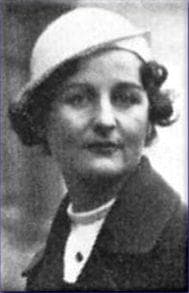
Nancy Freeman-Mitford, known as Nancy Mitford, was an English novelist, biographer, and journalist. The eldest of the Mitford sisters, she was regarded as one of the "bright young things" on the London social scene in the inter-war period. She wrote several novels about upper-class life in England and France, and is considered a sharp and often provocative wit. She also has a reputation as a writer of popular historical biographies.