“Sometimes you have to let go of the life you planned to have the life that is waiting for you.”
— Jack's internal reflection on moving on after a significant loss.

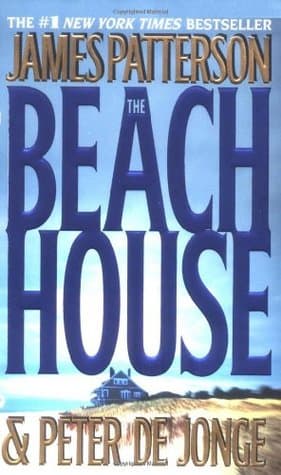
James Patterson (2001)
Genre
Romance
Reading Time
7 hours 30 min
Key Themes
See below
Sign in to track this book
A law student seeks justice for his brother's murder, exposing the Hamptons' elite and orchestrating a plan against powerful figures who believe they are above the law.
Jack Mullen, a law student, learns his younger brother, Peter, has died on a Hamptons beach. Peter, a charming young man, worked as a valet and occasional escort for the area's wealthy elite. Lieutenant Rizzo, leading the local authorities, quickly calls the death an accidental drowning, despite suspicious details. Jack, knowing Peter was an excellent swimmer, immediately suspects a cover-up. He travels to the Hamptons, determined to uncover the truth, convinced that the rich residents are involved.
In the Hamptons, Jack begins his own investigation. He faces resistance from both the police and the insular ultra-rich community. He learns Peter had intimate relationships with several prominent figures, including socialite Leslie Sommers, and knew many of their secrets. Jack discovers Peter was involved in a high-stakes poker game and found information about illegal activities, including drug trafficking and money laundering. Judge Henry Dexter and Peter's employer, attorney Jonathan Bainbridge, were behind these activities. Jack realizes Peter's death is connected to this web of illicit dealings.
Jack finds an unexpected ally in Leslie Sommers, one of Peter's former lovers. She is genuinely upset by his death and seems willing to help. She gives him some insights into Peter's life and his associates, including the manipulative Judge Dexter and the ruthless Bainbridge. Leslie also reveals Peter planned to expose some of the wrongdoings he witnessed. However, Jack soon realizes Leslie is deeply involved in the Hamptons' elite society, and her motives are unclear. Her information is often vague, and Jack suspects she holds back crucial details, possibly out of fear.
As Jack investigates further, pressure against him grows. Unknown assailants physically attack him, his apartment is ransacked, and he receives anonymous threats. These are meant to scare him away. Lieutenant Rizzo, influenced by powerful figures, actively obstructs Jack's efforts, refusing to reopen the case and dismissing his theories. Jack sees the extent of the corruption within local law enforcement and the judicial system. He understands that simply proving Peter's murder is not enough; he needs to outsmart the entire system.
Through relentless investigation, Jack puts the puzzle together. He discovers Peter had gathered evidence against Judge Dexter, Jonathan Bainbridge, and others involved in a vast criminal enterprise. Peter recorded conversations and collected documents detailing their drug operations, money laundering schemes, and even a previous murder cover-up. Jack learns Peter was about to expose them, and his death was a direct result. The accidental drowning was a carefully staged murder, meant to silence him before he could go public.
Frustrated by the corruption and unable to get justice through legal channels, Jack knows he cannot fight the system directly. He realizes the powerful elite are untouchable by normal means. He devises a brilliant plan to expose the truth and get revenge, not through courts, but by turning the tables on his brother's killers in an unexpected way. His strategy uses their own greed, secrets, and vulnerabilities against them, aiming to dismantle their empire and publicly humiliate them, forcing them to face consequences outside a rigged legal system.
Jack's plan involves creating a complex web of deceit and misinformation. He subtly leaks fabricated information, plants false leads, and manipulates the conspirators' paranoia, making them suspect each other. He uses his legal knowledge to craft convincing, yet misleading, documents and creates a sense of imminent exposure. He targets the weakest links in their chain, knowing that fear and self-preservation will make them betray one another. His goal is to make them believe that someone among them is about to turn, causing them to make desperate, incriminating moves.
In a tense confrontation, Jack brings the key conspirators—Judge Dexter, Jonathan Bainbridge, and their associates—together. He makes them believe he has irrefutable evidence that will expose them all. He reveals the extent of Peter's investigation, including the recordings and documents Peter collected. Jack strategically plays snippets of Peter's evidence, showing them Peter was a clever investigator building a case against them. The conspirators, caught off guard and believing their secrets are about to be revealed, panic and turn on each other.
Jack's elaborate scheme ends in the conspirators' public disgrace and financial ruin. Instead of a traditional trial, he orchestrates a scenario where their criminal activities are exposed to the world. This leads to their arrests, the collapse of their businesses, and the loss of their social standing. Judge Dexter and Jonathan Bainbridge face severe legal consequences, and their network of corruption is dismantled. Jack ensures Peter's death is no longer called an accident, and the truth of his murder comes to light, delivering a unique form of justice that the rigged system denied him.
With justice for Peter finally achieved, Jack reflects on his harrowing journey. He realizes his pursuit of truth has changed him, giving him a deeper understanding of justice beyond what he learned in law school. The victory is bittersweet, but he finds closure and purpose. He is no longer just a law student but a man who navigated the darkest corners of power and corruption to honor his brother's memory. Jack looks toward a future where he can use his newfound understanding to make a difference.
The Protagonist
Jack transforms from an idealistic law student into a jaded but effective dispenser of unconventional justice, learning that the law isn't always fair.
The Central Figure (Deceased)
Peter's arc is revealed posthumously, showing his transformation from a carefree youth to a courageous, albeit doomed, whistleblower.
The Supporting
Leslie navigates the dangerous line between loyalty to Peter's memory and self-preservation within the corrupt Hamptons society, ultimately aiding Jack to a limited extent.
The Antagonist
Judge Dexter's arc is one of escalating villainy and eventual downfall, as his carefully constructed empire crumbles under Jack's assault.
The Antagonist
Bainbridge's arc is one of overconfidence leading to his eventual exposure and ruin, as his legal prowess is turned against him.
The Supporting/Antagonist
Rizzo's arc shows his complicity in the cover-up, ultimately facing consequences when the larger conspiracy is exposed.
This theme shows how immense wealth and social standing allow individuals to operate above the law. The Hamptons' elite, especially Judge Dexter and Jonathan Bainbridge, use their positions for illicit activities, from drug trafficking to murder, then use their influence to avoid punishment. The local police, like Lieutenant Rizzo, are either complicit or intimidated, showing how power can twist justice. Peter's death itself results from his exposure to this corruption, and Jack fights a system where money buys silence and protection.
“Money talks. And in the Hamptons, it screams.”
As Jack discovers the traditional legal system is rigged against him, he seeks justice outside its conventional boundaries. This theme explores the idea that when the law fails, alternative, often unconventional, methods are needed for true accountability. Jack's elaborate plan to expose the conspirators, not through a courtroom trial but through manipulation and public humiliation, embodies this idea. It questions what justice means and whether it can be served when those in power can buy their way out of consequences.
“Sometimes, to get justice, you have to break the rules that were broken against you.”
Jack's grief over Peter's murder and his desire for vengeance drive the entire story. His love for Peter fuels his relentless investigation and his determination to expose the truth, even at great personal risk. Initial shock and sorrow become a cold, calculated drive for retribution against those who took his brother's life. This theme explores how grief can be a strong motivator, pushing individuals to extreme lengths for closure and fairness for their lost loved ones.
“Grief can be a paralyzing force, or it can be a weapon.”
The Hamptons, with its beautiful beaches and opulent mansions, appears to be a place of idyllic wealth. However, beneath this polished exterior lies a dark world of crime, betrayal, and moral decay. This theme highlights the contrast between appearances and reality. Peter, too, initially seems like a carefree valet but is revealed as a clever observer caught in dangerous secrets. The novel constantly reveals layers of deception, showing the hidden corruption that thrives in seemingly perfect environments and among seemingly respectable people.
“The most beautiful places often hide the ugliest truths.”
A backdrop of extreme wealth and privilege that conceals deep corruption.
The Hamptons serves as more than just a location; it's a character in itself. Its opulent estates, exclusive clubs, and social circles embody the theme of corrupting wealth. The setting provides a stark contrast between its pristine appearance and the moral decay hidden beneath. This backdrop amplifies the antagonists' power and makes Jack's quest for justice seem almost impossible against such an entrenched, insular community. It highlights how the rich can create their own rules within their gilded cages.
Peter's character and his actions are revealed through Jack's investigation.
Peter Mullen's true nature and the extent of his involvement with the Hamptons' elite are gradually uncovered by Jack throughout the story. Instead of being a passive victim, Peter is revealed to have been an active, albeit naive, investigator, gathering crucial evidence against his killers. This device adds layers to Peter's character, making his death more tragic and his role more significant. It also provides Jack with the necessary tools (Peter's hidden evidence) to execute his plan, turning Peter into a posthumous co-conspirator in his own justice.
Justice is achieved through manipulation and public exposure, not a traditional trial.
This device is crucial to the novel's climax. Realizing the legal system is compromised, Jack orchestrates a complex plan that does not rely on courts or juries. Instead, he uses psychological manipulation, planted evidence, and targeted leaks to turn the conspirators against each other and expose their crimes to the public. This unconventional resolution underscores the theme of 'justice beyond the law' and delivers a satisfying, albeit non-traditional, victory for Jack, highlighting the cleverness required to defeat an unassailable foe.
“Sometimes you have to let go of the life you planned to have the life that is waiting for you.”
— Jack's internal reflection on moving on after a significant loss.
“The past is a place of reference, not a place of residence.”
— A philosophical thought from Jack about dealing with memories.
“It was the kind of house that invited you to stay, to linger, to forget the outside world.”
— Description of the titular beach house and its allure.
“Love isn't supposed to be easy. It's supposed to be worth it.”
— A conversation between Jack and a friend about the challenges of relationships.
“Grief is a peculiar thing. It's a wound that never truly heals, but you learn to live with the scar.”
— Jack contemplating his ongoing grief for his brother.
“Some secrets are meant to stay buried, no matter how much they burn to be revealed.”
— Jack's realization about the hidden truths surrounding his brother's death.
“The ocean has a way of putting things in perspective. Its vastness makes your problems seem small.”
— Jack's thoughts while looking out at the sea.
“You can't outrun your past, but you can choose how it defines your future.”
— A moment of introspection for Jack as he confronts old demons.
“The best kind of love is the one that makes you a better person, without trying to change you.”
— Jack's evolving understanding of true love.
“Hope is a fragile thing, easily broken, but essential for survival.”
— Jack clinging to hope during a difficult investigation.
“Silence can be louder than any scream, especially when it's filled with unspoken truths.”
— Jack reflecting on the quiet tension and hidden motives of others.
“Every wave that crashes on the shore is a reminder that even after a setback, life keeps moving forward.”
— A poetic observation by Jack while walking on the beach.
“Sometimes the greatest strength is not in holding on, but in knowing when to let go.”
— Jack making a difficult decision about a relationship or a path he was pursuing.
“The truth has a way of surfacing, no matter how deep you try to bury it.”
— Jack's growing conviction that he will uncover the full story.
Ready to see how well you understood this book? Take our interactive quiz with 10 questions.

Biography coming soon.