BookBrief
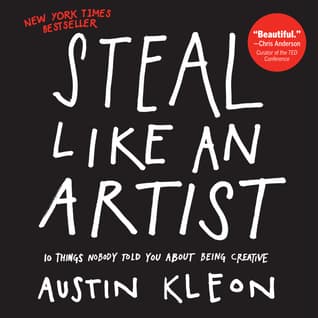
Steal Like an Artist: 10 Things Nobody Told You About Being Creative cover
Archivist's Choice

Steal Like an Artist: 10 Things Nobody Told You About Being Creative

Austin Kleon (2012)

Genre

Business / Psychology / Creativity / Self-Help

Reading Time

12 Minutes

Key Themes

See below

Track Your Reading

Sign in to track this book

Austin Kleon reveals that true creativity isn't about innate genius but about embracing your influences, remixing ideas, and bravely sharing your unique voice with the world.

Core Idea

Creativity is not about inventing something out of nothing, but rather about collecting, remixing, and transforming existing ideas. Austin Kleon argues that all creative work builds upon what came before, and aspiring artists should embrace the concept of 'stealing' (borrowing and reinterpreting) from their influences. He demystifies the creative process, offering practical, actionable advice on how to foster a creative life by observing the world, embracing limitations, sharing your work, and continuously learning.
Difficulty
Easy

Core idea

The central argument and framework that powers the entire book.

Creativity is not about inventing something out of nothing, but rather about collecting, remixing, and transforming existing ideas. Austin Kleon argues that all creative work builds upon what came before, and aspiring artists should embrace the concept of 'stealing' (borrowing and reinterpreting) from their influences. He demystifies the creative process, offering practical, actionable advice on how to foster a creative life by observing the world, embracing limitations, sharing your work, and continuously learning.

At a glance

Difficulty

Easy

Key Takeaways

1

Embrace Creative Theft

No idea is 100% original; all creative work builds on what came before.

Quote

What a good artist understands is that nothing comes from nowhere. All creative work builds on what came before. Nothing is completely original.

Kleon's main idea is that 'stealing' is not only acceptable but necessary for creativity. He says true originality is a myth; every artist gets ideas and techniques from existing works. This is not plagiarism, but learning, remixing, and changing things. He tells artists to be like 'collectors,' gathering ideas and styles they like, then taking them apart to see how they work. By breaking down and rebuilding these elements in their own way, artists can make something new and personal. This view frees creators from the pressure to inve...

Supporting evidence

Kleon points to the history of art, music, and literature, where artists like Pablo Picasso (who famously said, 'Good artists copy, great artists steal') and Bob Dylan openly borrowed and transformed existing works. He emphasizes that even seemingly original works can be traced back to a lineage of influences.

Apply this

Start a 'swipe file' or 'inspiration folder' (physical or digital) where you collect anything that sparks your interest: images, quotes, articles, designs, code snippets. Regularly review and analyze these collections to understand *why* they resonate with you, then experiment with incorporating or transforming elements into your own projects.


2

Start Before You're Ready

Don't wait for perfection or full understanding; begin creating with what you have.

Quote

The way to get started is to quit talking and begin doing.

This idea helps with procrastination and creative block, which often come from fear or waiting for a 'perfect' start. Kleon suggests acting immediately, saying that doing the work clarifies ideas and builds momentum. He argues that artists often find their path, refine their style, and understand their vision by creating, not before. Waiting for inspiration or a full plan is a trap; instead, one should accept messy first drafts or sketches. This approach values ongoing progress over static planning, acknowledging that mistakes are par...

Supporting evidence

Kleon highlights that many successful artists and innovators began with crude prototypes or imperfect early works. He implies that the 'genius' often attributed to them is a result of persistent work rather than an initial perfect vision.

Apply this

Instead of planning extensively, commit to a small, tangible action today. Write for 15 minutes, sketch a rough idea, or create a quick prototype. Embrace the 'ugly first draft' mentality, knowing that you can always refine and improve later. The goal is to overcome inertia and engage with the material.

3

Work with Your Hands

Engage in physical, analog work to foster deeper creative connections and breaks from screens.

Quote

The computer is good for editing your ideas, and it’s good for getting your ideas out into the world, but it’s not so good for generating ideas.

This point stresses the value of using physical methods in a mostly digital creative process. Kleon says computers are useful for polishing and sharing, but they can hinder early, raw idea generation. Drawing, writing by hand, cutting and pasting, or building models uses different parts of the brain, often leading to new ideas and a more direct connection to the work. This physical interaction can also offer a break from screen time, encouraging play and experimentation that digital tools sometimes limit. It is a call to balance digit...

Supporting evidence

Kleon illustrates this by describing his own practice of using index cards, notebooks, and physical collages for brainstorming before moving to digital tools. He suggests that the limitations and tactile nature of analog tools can actually spark more creative solutions.

Apply this

Dedicate specific time each day or week to analog creative tasks. Use a physical notebook for brainstorming, sketch ideas on paper, create mood boards with actual clippings, or experiment with physical materials related to your craft. This can be particularly effective for overcoming creative blocks or generating fresh perspectives.

4

Build a 'Scenius'

Surround yourself with a supportive and inspiring community rather than chasing individual genius.

Quote

The more you share, the more people you get to know, the more you get to know, the more people you can learn from, the more people you can learn from, the more you can improve your work.

Kleon uses 'scenius'—a term from Brian Eno—as an alternative to the idea of the isolated genius. Instead of focusing on one person's brilliance, 'scenius' refers to the shared intelligence and creative energy of a group. This is important, especially when individual creators are often praised. Kleon argues that good work rarely appears alone; it grows within a rich system of peers, mentors, and collaborators who share ideas, give feedback, and motivate each other. This focus on community shows that creativity is social, highlighting t...

Supporting evidence

He cites examples like the vibrant art scenes of Paris in the early 20th century or the Silicon Valley tech culture, where a confluence of talent and shared ambition led to widespread innovation, rather than just a few individual breakthroughs.

Apply this

Actively seek out and engage with creative communities, both online and offline. Attend workshops, join critique groups, collaborate on projects, and share your work (even if imperfect) to solicit feedback. Focus on building relationships and learning from others, rather than just showcasing your own work.

5

Share Your Work (and Your Process)

Overcome fear and put your creations, and even your behind-the-scenes, out into the world.

Quote

Don’t just show your work. Show your process.

This is one of the book's best ideas for modern creators. In a time when many feel pressured to show only perfect final products, Kleon suggests a more open approach. Sharing your process—sketches, drafts, mistakes, inspirations—not only makes your work clearer but also builds a stronger connection with your audience. It helps people understand the effort and thought behind your creations, building empathy and engagement. Also, by sharing, you invite feedback, new opportunities, and connections that might not otherwise happen. This vu...

Supporting evidence

Kleon himself uses his blog and social media to share his drawings, writing process, and influences, demonstrating how this approach builds an audience and a creative network. He implies that the internet has democratized the ability to share, making it easier than ever.

Apply this

Regularly share snippets of your work in progress, behind-the-scenes photos, or insights into your creative journey on social media, a blog, or with trusted peers. Don't wait for perfection; embrace the 'show your work' mentality to build an audience and gather valuable feedback.

6

Stay Curious and Learn Continuously

Maintain a beginner's mind and never stop exploring new fields and ideas.

Quote

Be curious about the world in which you live. Look things up. Chase down every reference. Go deeper than anybody else — that’s how you’ll get ahead.

Kleon champions constant curiosity as the driver of creativity. He believes artists should always keep a 'beginner's mind,' always seeking new knowledge, skills, and experiences. This means not just learning within your field, but also exploring unrelated areas. Connecting different subjects often leads to new ideas and insights that fuel truly original work. The book encourages an active approach to learning—looking things up, following references, and digging deeper than surface understanding. This continuous intellectual input ensu...

Supporting evidence

He cites examples of artists and scientists who drew inspiration from diverse fields, suggesting that cross-pollination of ideas is a common thread in innovation. He implicitly encourages wide reading and active engagement with information.

Apply this

Make curiosity a daily habit. Read widely outside your comfort zone, listen to podcasts on new topics, visit museums, or take online courses on subjects you know little about. Keep a 'wonder journal' where you jot down questions and ideas you want to explore further.

7

Don't Discount Your Day Job

A steady job can provide financial stability, creative freedom, and even unexpected inspiration.

Quote

A day job is not something to be endured until your real work can begin. It’s an opportunity to learn and to hone your craft.

While many romanticize the struggling artist, Kleon offers a practical and fresh view: your day job is not necessarily a barrier to your creative pursuits, but can be a help. This idea has limits for those in truly difficult jobs, but for many, it is a useful way to think about things. A steady income provides financial security, easing the pressure to make money from every creative project and allowing for more artistic experimentation. Further, a day job can offer structure, routine, and even unexpected skills or insights that can f...

Supporting evidence

Kleon himself worked as a web designer while developing his writing and art career, demonstrating how a 'day job' can coexist and even contribute to creative growth. He also cites historical figures who maintained regular employment alongside their artistic practices.

Apply this

Instead of resenting your day job, look for ways it can support your creative life. Use the financial stability to fund your projects, practice time management, or find unexpected connections between your professional skills and your artistic ambitions. Protect dedicated time slots for your creative work.

8

Get Out of Your Head and Into the World

Physical activity and real-world experiences are crucial for generating and processing ideas.

Quote

The artist is a collector. Not a hoarder, mind you, but a selective gatherer of things that speak to them.

This idea highlights the importance of physical activity and engaging with the outside world for creative energy. Kleon suggests that sitting at a desk brainstorming endlessly can be unhelpful; often, the best ideas come when one steps away from the screen and does something physical or simply observes the world. Walking, exercising, traveling, or even running errands can provide the mental space for ideas to develop, connect, and become clear. These activities offer new sensory input, break mental ruts, and let the subconscious mind ...

Supporting evidence

He talks about the importance of taking walks, citing how many writers and thinkers found inspiration and clarity during physical movement. He positions the artist as an active observer and collector of real-world stimuli.

Apply this

Incorporate regular walks, exercise, or breaks from your workspace into your routine. Actively observe your surroundings, pay attention to details, and allow your mind to wander. Carry a small notebook to capture ideas that emerge during these moments of 'unplugged' observation.

9

Creativity is Subtraction

Knowing what to leave out is as important as knowing what to put in.

Quote

In this age of information overload, the only way to make sense of the world is to limit your input.

While much of the book focuses on gathering and generating, Kleon offers an important counterpoint: creativity also involves removing things. This idea is especially relevant today, as creators face vast amounts of information, tools, and possibilities. He argues that true skill often means being able to edit, refine, and simplify, removing anything that does not serve the main message or look. This applies not only to the final product but also to the creative process itself—limiting distractions, focusing on key inputs, and setting ...

Supporting evidence

He draws parallels to minimalist art and design, where the power often comes from what is *not* included. He also discusses the importance of editing in writing, where removing unnecessary words strengthens the overall impact.

Apply this

Practice editing and refining your work mercilessly. Identify and remove superfluous elements, whether they are words, visual details, or features in a product. Apply this principle to your creative input as well: intentionally limit your sources of inspiration and information to avoid overwhelm and focus your energy.

10

Be Boring (to Do Good Work)

Embrace routine, structure, and a stable personal life to free up mental energy for creative breakthroughs.

Quote

It’s the having a boring life that makes you a better artist.

This final idea is surprising but very practical. Kleon argues against the romantic image of the chaotic, troubled artist, suggesting that a stable, somewhat 'boring' personal life actually helps maintain creative output. By having routines, managing money, keeping healthy relationships, and generally reducing drama, artists can free up mental and emotional energy that would otherwise be used by external stresses. This allows them to focus their energy and creative reserves on their work. This does not mean life has to be dull, but ra...

Supporting evidence

Kleon alludes to the lives of many successful artists who maintained surprisingly disciplined and orderly personal lives, such as Charles Darwin or Haruki Murakami, who adheres to strict daily routines for writing and running.

Apply this

Establish healthy routines for sleep, exercise, and work. Organize your physical and digital workspace. Cultivate stable personal relationships and financial habits. By creating a predictable and calm external environment, you can foster a more focused and adventurous internal creative landscape.

Critical analysis

Notable Quotes

Quiz

Test Your Knowledge

Ready to see how well you understood this book? Take our interactive quiz with 10 questions.

10
Questions
~5
Minutes
?
Best Score

Key Questions (FAQ)

The core message of 'Steal Like an Artist' is that creativity is accessible to everyone and you don't need to be a genius to be creative. It encourages readers to embrace their unique selves and understand that creativity involves borrowing, remixing, and building upon existing ideas.

About the author

Austin Kleon

Austin Kleon is a "creative" author and speaker whose work explores creativity, originality, and the digital age. His most famous book, "Steal Like an Artist: 10 Things Nobody Told You About Being Creative," has inspired countless individuals to embrace their creative potential. Kleon's writing is known for its accessible and actionable advice, making complex ideas about creativity easy to understand and apply.