“How do I love thee? Let me count the ways.”
— The opening line of Sonnet 43, one of the most famous love poems in English literature, where the speaker attempts to enumerate the depth of her affection.

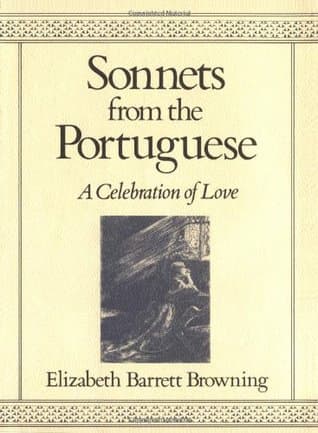
Elizabeth Barrett Browning (1896)
Genre
Romance
Reading Time
20 min
Key Themes
See below
Sign in to track this book
In 44 sonnets, Elizabeth Barrett Browning explores her journey from hesitant adoration to deep, mutual love with Robert Browning, capturing their romance in English poetry.
Elizabeth Barrett Browning, through the speaker, begins by thinking about her life, which she sees as shadowed by death and sadness. She describes herself as a ghost, haunting her own life, accepting a future without joy or companionship. This initial state of sad isolation is suddenly broken when she feels a touch on her head. At first fearing it is Death, she is surprised to find it is Love that has come to her. This unexpected arrival shatters her ideas about her future, bringing a powerful new force into her previously empty life. The sonnet sets the stage for a dramatic shift from despair to hope, started by this deep emotional awakening.
The speaker struggles with strong feelings of unworthiness in the face of her beloved's affection. She questions how her beloved can love her, given her long history of sadness and her perceived lack of beauty and joy. She feels that her past sorrows and the 'shadows' they cast make her unsuitable for someone so bright and full of life. This self-doubt returns often, showing the speaker's internal struggle to accept such a deep and unexpected love. She fears that her own sad nature might spoil the happiness her beloved offers, revealing her deep insecurities about her own worth.
In this sonnet, the speaker gives a clear definition of true love, urging her beloved to love her for herself alone, rather than for any superficial or temporary qualities. She directly states, 'If thou must love me, let it be for nought / Except for love’s sake only.' She warns against loving her for her smile, her voice, or her perceived cleverness, as these things can change or fade. She also rejects love based on pity for her sorrow, knowing that sorrow itself is temporary. The speaker wants a love that is pure, selfless, and directed at her true self, a love that can last beyond physical appearance or fleeting emotions, emphasizing the spiritual and lasting nature she seeks in their bond.
The speaker admits her physical and emotional weakness, acknowledging that she is 'weak for love.' She describes herself as feeling vulnerable and easily overwhelmed by her strong emotions. However, instead of despairing, she finds great strength and comfort in her beloved. She compares herself to a vine clinging to a strong tree, drawing support and stability from it. Her beloved's presence and affection give her a sense of security and resilience she lacked before. This sonnet shows love's transforming power, allowing the speaker to overcome her limits and find a new source of inner strength through her connection with her partner.
The speaker expresses great joy and comfort from receiving letters from her beloved. She describes these letters as precious objects, 'white-winged birds' that fly to her, bringing his thoughts and feelings. Each letter is a direct connection to him, making his presence felt even when they are physically apart. She values the words, reading them again and again, finding his 'soul' imprinted in the ink. These letters bridge the distance between them, offering reassurance and strengthening their bond. For the speaker, they are not just letters but vital lifelines that sustain her spirit and deepen her understanding of his affection, showing the importance of communication in their growing relationship.
The speaker thinks about the terrifying idea of her beloved's love lessening or disappearing. She imagines a future where his 'love should change' and the deep despair such a loss would bring. She considers how she would cope if his affection were to 'fail' or if he were to 'recede' from her. This thought reveals her deep emotional investment and her vulnerability. The fear is not just of a broken heart, but of returning to the desolate solitude from which his love saved her. This sonnet highlights how precious their bond is and the speaker's understanding of how central his love has become to her very existence, showing the fragility of human happiness.
The speaker thinks about her past life of suffering and sorrow, and how her beloved's love has changed how she sees it. She declares that all her previous pain, 'all my past life, all my grief,' has been redeemed and given new meaning by his affection. She no longer views her past as a burden but as a necessary step before their love. His love acts as a purifying fire, refining her experiences and turning her former 'dross' into 'gold.' This sonnet marks a key turning point, where the speaker fully accepts love's redemptive power, seeing it as a force that not only brings joy but also redefines and ennobles her entire life story, filling her existence with purpose.
The speaker expresses her deep delight and contentment in simply looking at her beloved's face. She describes his face as a source of deep peace and happiness, a 'heaven' for her eyes. When she gazes at him, she feels complete and reassured, as if all her doubts and fears disappear. His face becomes a focal point for her love, embodying all the qualities she adores. This sonnet emphasizes the intimate and personal nature of their connection, where even a simple glance can convey many emotions and understanding. It shows how physical presence and visual connection strengthen their spiritual bond, bringing her great joy and comfort.
The speaker dedicates her poetic gift and her 'song' to her beloved. She states that her verses, which once might have been dedicated to abstract ideas or personal sorrows, are now entirely for him. He has become her muse, her inspiration, and the only subject worthy of her creative expression. She says that her love for him is so deep that it fills her art, making every line and word a sign of their bond. This sonnet highlights how her personal life and artistic identity are connected, showing how deeply her love has influenced and enriched her creative work, transforming her into a poet of love.
This famous sonnet, perhaps the best known of the collection, shows the speaker expressing the vastness and intensity of her love. She begins with the famous question, 'How do I love thee? Let me count the ways.' She then lists various aspects of her love: it reaches to the 'depth and breadth and height' her soul can reach, it is as constant as 'daily' need, as free as 'men strive for Right,' and as pure as 'they turn from Praise.' She loves him with an intensity that includes her entire being, her past sorrows, her childhood faith, and even beyond death, if God allows. It is a love that goes beyond the physical and temporary, aiming for an eternal spiritual bond, affirming its lasting and all-encompassing nature.
The speaker declares that her love is not merely a fleeting earthly emotion but is deeply rooted in her immortal soul. She states that 'My love is of a birth as rare / As that of Love itself.' Because her soul is eternal, so too will her love be eternal. She believes that their bond goes beyond the physical world and will continue even after death. This sonnet strengthens the spiritual dimension of their relationship, raising it beyond mere human affection to something sacred and everlasting. It offers a powerful statement of faith in love's lasting power, suggesting that true love is an echo of the divine and therefore immortal, providing comfort and hope for a love that defies death.
The speaker uses a metaphor to portray her beloved as a source of radiant light that removes all darkness and sorrow from her life. She describes his presence as a 'light' that falls upon her, illuminating everything around her and within her. Before his arrival, she felt as if she lived in constant shadow, but now her world is full of brightness and warmth. This sonnet emphasizes the transforming power of his love, which not only brings joy but also clarity and meaning to her existence. His light is not just external but also internal, allowing her to see herself and the world in a more positive and hopeful way, symbolizing the deep impact he has had on her spirit.
The speaker thinks about the deep meaning she gives to her beloved's name. She describes it as a sacred and cherished word, one that she holds 'close to my heart.' More than just a label, his name represents his entire being, his love, and the joy he brings into her life. She finds comfort and strength in simply saying or thinking of his name, as if it embodies his presence. This sonnet highlights the intimate and personal nature of their bond, where even the sound of his name evokes strong emotions and strengthens her deep affection. It underscores the idea that every part of her beloved, even his identity, is filled with meaning and love for her.
The speaker declares that her beloved has not only brought her joy but has, in essence, given her a new life. She feels that before his love, she was merely existing, but now she truly lives. She credits her spiritual and emotional rebirth to his affection, stating that he has 'redeemed her life.' His love has restored her health, her hope, and her sense of purpose. This sonnet emphasizes the deep, life-giving power of their bond, portraying him not just as a lover but as a savior who has rescued her from a life of desolation. It is a strong statement of the transforming and redemptive qualities of their love, showing its ability to revitalize and renew her entire being.
In the final sonnet of the collection, the speaker expresses deep gratitude and hope for an eternal union with her beloved. She looks beyond their earthly life, imagining a future where their love continues in heaven. She declares that their love is so pure and strong that it is 'twice blest' – blessed on Earth and destined for a divine blessing in the afterlife. There is a sense of completion and fulfillment, as she has fully accepted and embraced this love. The sonnet ends with a strong affirmation of their lasting bond, suggesting that their love is not limited by mortal boundaries but is destined for eternity, a testament to its spiritual depth and power.
The Protagonist
She transforms from a desolate, self-deprecating invalid to a woman fully awakened to life, love, and spiritual joy through the redemptive power of her beloved's affection.
The Supporting
Remains a constant, unwavering source of love and support, serving as the stable anchor for the speaker's emotional journey.
The Mentioned
Introduced as an external, surprising force, it evolves into the central, internal driving power of the speaker's life.
The Mentioned
Represents the initial state of the speaker's life, which is ultimately overcome and replaced by the power of love.
This is the main theme, showing how love can change a life from despair to joy. The speaker, initially resigned to a life of solitude and illness, is completely transformed by her beloved's affection. In Sonnet I, she expects Death but finds Love, a symbolic resurrection. Sonnet XXXIII clearly states that her beloved's love redeems 'all my past life, all my grief,' turning her sorrows into a meaningful preparation for their union. Love becomes a spiritual and emotional lifeline, restoring her health, hope, and sense of purpose, as seen in Sonnet LVII where she credits her very life to his love.
“Since mine own soul hath somewhere lost her way / In trailing clouds of glory she did stray, / And now, by love, she hath found her perfect day.”
Despite the deep love offered to her, the speaker often struggles with feelings of unworthiness. Her long history of illness and sorrow leads her to question why anyone would love her, believing her past makes her unsuitable for happiness. In Sonnet VII, she wonders how her beloved can love her 'for these things' (her sadness and perceived flaws), fearing her 'shadows' will dim his light. This inner conflict shows the psychological impact of her previous suffering and her difficulty in fully accepting such an overwhelming gift. Her journey partly involves overcoming these deep-seated insecurities.
“I think of thee!—my thoughts do twine and bud / About thee, as wild vines, about a tree, / Put out broad leaves, and soon there's nought to see / Except the tree they cling to.”
The speaker elevates her love beyond mere earthly affection, portraying it as a spiritual and eternal bond. In Sonnet XLIII ('How Do I Love Thee?'), she expresses a love that reaches 'to the depth and breadth and height / My soul can reach,' and one that she hopes to continue 'after death.' Sonnet XLIV further emphasizes this, stating that her love is rooted in her 'immortal soul' and thus will endure beyond physical life. This theme suggests that true love reflects the divine, capable of going beyond mortal limits and offering a glimpse into an everlasting connection, providing deep comfort and hope.
“I love thee with a love I seemed to lose / With my lost saints,—I love thee with the breath, / Smiles, tears, of all my life!—and, if God choose, / I shall but love thee better after death.”
As a poet, the speaker uses her art to explore and express the depths of her love. The sonnet form itself provides a structured yet emotionally rich way for her strong feelings. In Sonnet XXXVIII, she dedicates her poetic talent entirely to her beloved, declaring him her muse and the only subject worthy of her 'song.' Her verses become a sign of their bond, showing how love inspires and transforms artistic creation. The collection itself is an extended act of poetic devotion, proving the power of language to capture and convey the deepest human emotions.
“My own beloved, who hast lifted me / From this drear flat of earth to higher place.”
The sonnets explore the complex relationship between past suffering and present joy. The speaker's deep happiness is often set against her former despair, making her current bliss feel even more precious and miraculous. She acknowledges her 'weakness' and 'past griefs' (Sonnet XXIII, Sonnet XXXIII) but sees them ultimately redeemed by love. This theme suggests that suffering, while painful, can deepen one's appreciation for joy and can even be a necessary step toward deep personal growth. Her journey is not about forgetting pain, but about integrating it into a richer, more meaningful existence through the lens of love.
“And if God choose, I shall but love thee better after death.”
A 14-line poetic structure used to explore intense emotional states.
The entire collection is composed of 44 sonnets, primarily Petrarchan (Italian) in form, with an octave (eight lines, ABBAABBA rhyme scheme) and a sestet (six lines, typically CDECDE or CDCDCD rhyme scheme). This structured form provides a framework for the intense emotional and philosophical exploration of love. The constraint of the sonnet forces precision and concentration of thought, allowing the speaker to delve deeply into a single facet of her love or doubt within each poem. The turn (volta) between the octave and sestet often marks a shift in perspective or a resolution, mirroring the speaker's internal journey from doubt to affirmation.
Figurative language comparing love and emotion to concrete images.
Browning frequently employs metaphors and similes to articulate the abstract and overwhelming nature of her emotions. Love is compared to a 'white-winged' visitor (Sonnet I), the beloved's letters are 'white-winged birds' (Sonnet XXVIII), and the speaker herself is a 'wild vine' clinging to a 'tree' (Sonnet XXIX), representing her dependence and the beloved's strength. These vivid comparisons help readers grasp the depth and complexity of the speaker's feelings, making her internal experiences tangible and relatable. They enrich the emotional landscape of the sonnets and provide powerful imagery.
Attributing human qualities to abstract concepts like Love and Death.
Personification is a key device, particularly in Sonnet I, where 'Love' is depicted as a distinct entity that visits the speaker, and 'Death' is the entity she initially expects. This gives abstract forces a tangible presence and agency, making their impact on the speaker's life more dramatic and immediate. By personifying Love, the poet emphasizes its transformative power as an active, almost divine, force that intervenes in her life, rather than just a passive emotion. This device heightens the sense of a profound, life-altering event.
Repetition of a word or phrase at the beginning of successive clauses.
Most famously used in Sonnet XLIII, 'How Do I Love Thee? Let me count the ways,' where the phrase 'I love thee' is repeated at the beginning of several lines. This rhetorical device builds intensity and emphasizes the exhaustive, comprehensive nature of the speaker's love. The repetition creates a rhythmic, incantatory effect, underscoring the sincerity and boundless quality of her affection. It serves to drive home the central message of unwavering devotion and deep emotional commitment, making the declaration of love feel both profound and undeniable.
Placing two contrasting elements side-by-side to highlight their differences.
The sonnets frequently juxtapose the speaker's past life of sorrow, illness, and solitude with her present state of joy, health, and companionship brought by love. For example, Sonnet I contrasts the expectation of 'Death' with the arrival of 'Love.' This stark contrast emphasizes the dramatic transformation she undergoes and underscores the redemptive power of her beloved's affection. By highlighting the 'before and after,' the poet magnifies the significance of the love she has found, making her happiness feel hard-won and precious, and demonstrating the profound impact of the relationship.
“How do I love thee? Let me count the ways.”
— The opening line of Sonnet 43, one of the most famous love poems in English literature, where the speaker attempts to enumerate the depth of her affection.
“I love thee to the depth and breadth and height / My soul can reach, when feeling out of sight / For the ends of Being and ideal Grace.”
— From Sonnet 43, where the speaker describes the immeasurable, spiritual extent of her love.
“I love thee with the passion put to use / In my old griefs, and with my childhood's faith.”
— Also from Sonnet 43, indicating that her love draws upon the intensity of past sorrows and the innocence of youth.
“I love thee with a love I seemed to lose / With my lost saints,—I love thee with the breath, / Smiles, tears, of all my life!—and, if God choose, / I shall but love thee better after death.”
— The concluding lines of Sonnet 43, expressing an eternal and all-encompassing love that transcends life itself.
“If thou must love me, let it be for nought / Except for love's sake only.”
— From Sonnet 14, where the speaker asks to be loved for intrinsic reasons, not for superficial qualities or benefits.
“Say over again, and yet once over again, / That thou dost love me.—Though the word repeated / Should seem a 'cuckoo-song,' as thou dost treat it,”
— The opening of Sonnet 21, where the speaker yearns for constant reassurance of her beloved's love, even if it seems repetitive.
“I never gave a lock of hair away / To a man, dearest, except this to thee,”
— From Sonnet 18, a tender and intimate confession of her unique affection for her beloved, symbolized by a lock of hair.
“And if God choose, I shall but love thee better after death.”
— The very last line of Sonnet 43, a powerful declaration of enduring love beyond the grave.
“My own, my own, my soul's elect!”
— From Sonnet 22, a passionate and possessive declaration of her beloved as her chosen one, her soulmate.
“What art thou, that my life need with thine / Be wedded, in the fair prophetic sign?”
— From Sonnet 26, reflecting on the profound and fated connection between her life and her beloved's.
“The face of all the world is changed, I think, / Since first I heard the footsteps of thy soul / Move still, oh, still, across me from the brink / Of the great silence, to my spirit's goal.”
— From Sonnet 7, describing the transformative impact of her beloved's presence on her perception of the world and her life's purpose.
“And I who have toiled long and loved for long / Through a whole life, and all for nought, before,”
— From Sonnet 17, contrasting her past unfulfilled life and loves with the profound and meaningful love she now experiences.
“Beloved, my Beloved, when I think / That thou wast in the world a year ago, / I cannot comprehend a love so slow / To find me, —or, what if it shrink / And drop from out my arms, and prove a blink / In the great sun, which makes my blisses flow?”
— From Sonnet 2, expressing a mix of wonder at their delayed meeting and fear of losing the love that now enriches her life.
“I lift my heavy heart up solemnly, / As once Electra her sepulchral urn,”
— The opening of Sonnet 1, where the speaker describes metaphorically lifting her long-held sorrow and doubt, preparing to embrace new love.
Ready to see how well you understood this book? Take our interactive quiz with 10 questions.

Biography coming soon.