“Life wasn't a dress rehearsal. You had to live it, even the parts that weren't perfect.”
— Brenda reflecting on her life and choices.

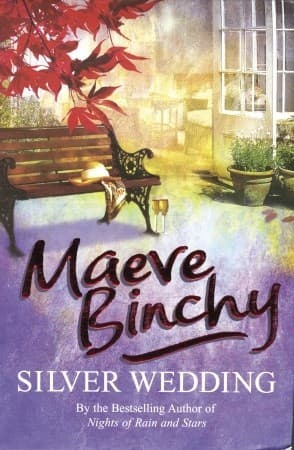
Maeve Binchy (1905)
Genre
Romance
Reading Time
10-12 hours (based on 400 pages)
Key Themes
See below
Sign in to track this book
A silver wedding anniversary celebration becomes a crucible for a seemingly perfect Irish family, exposing a quarter-century of hidden betrayals, secret wounds, and the fragile facades they’ve meticulously maintained.
The novel opens with Anna Doyle, the eldest daughter of Desmond and Deirdre, thinking about her parents' upcoming twenty-fifth wedding anniversary. She feels she must organize a celebration, despite the clear distance and unspoken tensions within the family. Her sister, Helen, is a nun in a London convent, seemingly apart from family life, while her brother, Brendan, lives a reclusive life on a farm in the West of Ireland, having cut ties with his parents. Anna, a practical and responsible woman, knows that while a party might be difficult, it is necessary to mark such a milestone for her parents, who often present a respectable image to the outside world, hiding their true feelings and hidden resentments.
Deirdre Doyle, a beautiful but often passive woman, reflects on her marriage to Desmond. She feels a deep sense of unfulfillment, having given up her own aspirations for a life centered on her husband's career and social standing. She sees Desmond as charming but ultimately self-absorbed, always seeking admiration and controlling their life story. Deirdre holds a secret resentment, feeling that her husband has never truly seen or appreciated her beyond her role as his elegant wife. She anticipates the anniversary with dread and a faint hope that it might somehow change things, though she doubts it will.
Desmond Doyle is a successful, charismatic barrister, well-liked in his professional circles. He enjoys the praise he receives and believes he has provided an excellent life for his family. He remains largely unaware of the emotional turmoil in his household, genuinely believing his marriage is a happy one, at least on the surface. He sees the silver wedding as another chance to display his achievements and Deirdre's elegance. He focuses on maintaining appearances and his public image, often dismissing any subtle signs of unhappiness from his wife or children as minor issues.
Helen, the middle child, lives a quiet life as a nun in London. Her decision to enter the convent was not just a religious calling, but also an escape from the suffocating atmosphere of her family home and her parents' troubled relationship. She carries a secret burden from her youth, a past mistake that she believes makes her unworthy of a conventional life. The thought of returning for the anniversary party fills her with anxiety, forcing her to confront the memories and the people she tried to leave behind, while also questioning her own path and the true nature of her faith.
Brendan, the Doyle's only son, lives a solitary, almost isolated life on a remote farm in the West of Ireland. He left home after a difficult childhood marked by his father's harsh criticism and high expectations, and his mother's inability to protect him. He feels like a failure in his parents' eyes and has chosen a life opposite to their aspirations. Brendan resents his past and his family, and the idea of attending the silver wedding party forces him to confront the anger and pain he has tried to bury, making him question if he can ever truly escape his past.
Anna, always the dutiful eldest daughter, takes on the large task of organizing the silver wedding party. She tries to contact Helen and Brendan, hoping to bring the fragmented family together, despite their resistance. She is aware of the deep-seated issues within her family, having often been the mediator and the one who tried to keep peace. As she plans the event, she deals with her own resentment towards her parents for the emotional burdens they've placed on her, and the sacrifices she's made for their perceived happiness and stability. The party becomes a symbol of her attempt to create some normalcy.
As the anniversary nears, the novel explores the individual secrets and hidden betrayals that have shaped each character's life. Deirdre's long-held secret about a past love and a missed opportunity is hinted at, while Desmond's own indiscretions and his controlling nature become clearer. Helen's traumatic teenage experience, a source of her guilt and her flight to the convent, slowly comes to light. Brendan's deep anger stems from his father's emotional abuse and a sense of abandonment. These revelations create mounting tension, threatening to unravel the carefully constructed facade of the Doyle family.
The day of the silver wedding party arrives, and guests gather at the Doyle's home. The guest list includes friends, colleagues, and extended family members, each bringing their own views and observations about the Doyles. The atmosphere is filled with polite conversation and social niceties, but beneath the surface, the family's internal struggles are clear. Helen and Brendan reluctantly arrive, their presence adding to the already tense dynamic. Anna watches everyone, trying to keep up appearances, while Desmond enjoys the attention and Deirdre tries to stay composed, feeling the weight of their collective secrets.
As the party continues, the careful decorum begins to crack. Alcohol loosens tongues, and the pressure of the occasion brings long-suppressed emotions to the forefront. Subtle glances, sharp remarks, and accidental revelations start to expose the hidden truths. A significant confrontation occurs between Brendan and Desmond, where Brendan finally voices his long-held grievances against his father. Helen must confront her past, and Deirdre reaches a breaking point, no longer able to maintain her passive facade. The party, meant to celebrate unity, instead becomes a reason for the exposure of deep-seated resentments and betrayals.
The silver wedding party ends in emotional explosions that shatter the Doyle family's facade. While not everything is resolved, the airing of grievances and the exposure of secrets create a painful but necessary reckoning. Desmond must confront the reality of his family's unhappiness and his own role in it. Deirdre, having finally expressed some of her long-held pain, feels a glimmer of liberation. Anna, Helen, and Brendan, though still scarred, find a new, albeit fragile, understanding among themselves. The party does not magically fix everything, but it opens the door for a more honest and potentially healing future for the fractured Doyle family.
The Protagonist
Deirdre moves from passive resentment to a moment of emotional release, beginning to reclaim her voice and agency.
The Protagonist/Antagonist
Desmond is forced to confront the reality of his family's unhappiness and his own role in their estrangement, leading to a painful but necessary self-reckoning.
The Protagonist/Supporting
Anna moves from being the burdened family caretaker to acknowledging her own needs and finding a new, more honest understanding with her siblings.
The Supporting Protagonist
Helen confronts her past trauma and finds a path towards self-forgiveness and a more authentic understanding of her faith and family.
The Supporting Protagonist
Brendan moves from silent, bitter exile to a powerful confrontation with his father, beginning the long process of healing and finding his own voice.
The Supporting
Stella remains a loyal friend, witnessing the family's unraveling and offering quiet support.
The Supporting
Father Brian provides a steady, compassionate presence amidst the family's turmoil.
The Mentioned
Liam's memory serves as a constant reminder of Deirdre's lost opportunities.
The novel carefully dissects the facade of the 'perfect family' maintained by the Doyles, especially Desmond and Deirdre. Outwardly, they are a respected couple with successful children, but internally, they are fractured by unspoken resentments, secrets, and a lack of communication. The silver wedding party, meant to celebrate their unity, instead exposes the cracks in this illusion. For example, Desmond's insistence on a grand celebration highlights his focus on appearances, while Deirdre's quiet despair behind her elegant smile reveals the true cost of maintaining such a front. The children's various forms of escape (Helen's convent, Brendan's farm) are direct results of this pervasive pretense.
“For each of them is keeping up a front, nursing a secret wound, or smarting over a hidden betrayal.”
A central theme is the cost of unfulfilled desires and the sacrifices made, often by women, for societal expectations or perceived family stability. Deirdre's life is a prime example; she gave up her own dreams and passions to become Desmond's wife, leading to deep resentment and a sense of lost self. Helen's decision to enter the convent, while partly spiritual, is also a sacrifice of a conventional life, driven by a desire to escape her family's dysfunction and a past trauma. The novel explores how these unaddressed longings fester and contribute to the family's unhappiness, highlighting the personal cost of suppressing one's true self.
“Deirdre wondered if she had ever made a choice in her life, or if things had just happened to her.”
Secrets, both individual and collective, weigh heavily on every member of the Doyle family. Deirdre harbors a secret about a past love, Helen carries the burden of a traumatic teenage experience, and Desmond has his own hidden indiscretions. These secrets create emotional distance, prevent genuine intimacy, and fuel misunderstanding. The novel shows how the effort to keep these secrets hidden consumes emotional energy and distorts communication, leading to an atmosphere of unease. The silver wedding party acts as a pressure cooker, forcing these long-buried truths to the surface, showing that while painful, their exposure is necessary for any possibility of healing.
“The house was full of things unsaid, things understood without words, and things deliberately hidden.”
The book explores the complex and often flawed nature of love and marriage, especially through Desmond and Deirdre's twenty-five-year union. Their marriage is not one of deep affection or mutual respect, but rather convenience, societal expectation, and Desmond's need for a presentable wife. The novel questions what truly makes a successful marriage, contrasting their outwardly 'silver' union with inner emptiness and resentment. It suggests that without genuine communication, empathy, and shared vulnerability, even a long-standing marriage can become a prison for one or both partners, highlighting the difference between a partnership and a performance.
“Twenty-five years. A lifetime. And what had they built, really?”
The silver wedding anniversary party serves as the central event that forces all characters to confront their past and present.
The silver wedding anniversary party is not merely a backdrop but a crucial plot device. It is the inescapable event that compels the estranged children, Helen and Brendan, to return home, and forces Desmond and Deirdre to present a united front. The pressure of the occasion, combined with the presence of both family and external observers, acts as a catalyst for the exposure of long-held secrets, resentments, and betrayals. Without the fixed point of the party, the family's internal conflicts might have continued to simmer indefinitely. It creates a confined space and a deadline, intensifying the emotional stakes and leading to the inevitable eruption of truth.
The narrative shifts between the internal thoughts and experiences of different family members, offering a multifaceted view of events.
The novel employs a shifting point of view, allowing the reader access to the inner lives of Desmond, Deirdre, Anna, Helen, and Brendan. This device is essential for revealing the deep disparity between the family's public facade and their private realities. By presenting each character's individual perspective, the author gradually uncovers their secrets, motivations, and resentments, showing how each person experiences the same family dynamic in a profoundly different way. This technique builds suspense and empathy, as the reader piece by piece understands the complex web of misunderstanding and unfulfilled desires that defines the Doyle family.
The 'silver' of the anniversary symbolizes both preciousness and the tarnished, superficial nature of the Doyle's marriage.
The title 'Silver Wedding' itself functions as a significant plot device. Silver traditionally symbolizes twenty-five years of marriage, representing something precious and enduring. However, in the context of the Doyle family, the 'silver' is deeply ironic. While outwardly polished and respectable, their marriage is tarnished by resentment, lack of intimacy, and unfulfilled dreams. The term highlights the superficiality of their union – a celebration of longevity rather than genuine love or happiness. It sets up a contrast between public perception and private reality, making the eventual unraveling of their facade all the more poignant and impactful.
Brief recollections and internal monologues provide insight into the characters' past experiences and the origins of their current unhappiness.
Throughout the narrative, characters frequently engage in internal monologues and brief flashbacks or reminiscences about their past. These moments are crucial for revealing the historical context of the family's dysfunction. Deirdre's memories of Liam Kelly or her early hopes for marriage, Helen's recollections of a traumatic event, and Brendan's painful memories of his father's criticism all serve to explain their current emotional states and decisions. This device allows the author to gradually unfold the layers of each character's backstory, providing depth and justification for their present-day actions and reactions without interrupting the main narrative flow of the anniversary preparation.
“Life wasn't a dress rehearsal. You had to live it, even the parts that weren't perfect.”
— Brenda reflecting on her life and choices.
“The past was like a foreign country; they did things differently there.”
— A general reflection on how people change over time and memories shift.
“It was amazing how much you could miss someone you hadn't seen in years, just by hearing their name.”
— Frank coming to terms with his feelings about his ex-wife, Deirdre.
“Families were like that, full of unspoken rules and ancient resentments, all wrapped up in a package of love.”
— Helen observing the dynamics of the Doyle family.
“Sometimes the greatest love stories were the ones that never quite happened, the what-ifs and the might-have-beens.”
— Describing the enduring appeal of unfulfilled desires.
“People always thought they knew what was best for you, but only you truly knew your own heart.”
— Brenda feeling the pressure of her family's expectations.
“A silver wedding anniversary was a time for looking back, but also for looking forward, to whatever came next.”
— The overarching theme of the celebration.
“Secrets had a way of festering, didn't they? Like a bad tooth that kept throbbing until you finally pulled it out.”
— Anna contemplating the impact of long-held family secrets.
“It wasn't about being perfect; it was about being present, about showing up for the people you loved.”
— Describing the essence of strong relationships.
“You couldn't force happiness, but you could create the conditions for it.”
— Reflecting on the proactive nature of seeking contentment.
“The silence between people could be louder than any argument.”
— Describing the unspoken tensions within the Doyle family.
“Sometimes the greatest acts of love were the ones nobody ever saw.”
— Brenda's quiet sacrifices for her family.
“Memory was a tricky thing, always editing, always adding its own flourishes.”
— Characters recalling shared events differently.
Ready to see how well you understood this book? Take our interactive quiz with 10 questions.

Biography coming soon.