“She has a nice smile, but it's not a genuine smile. It's a smile she wears for the world, a smile that says, 'I'm okay,' even when she's not.”
— Mirabelle's internal thoughts about herself, early in the story.

Sign in to track this book
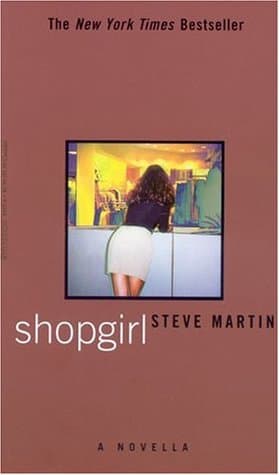
A lonely shopgirl in Beverly Hills navigates the affections of an older, wealthy man and a younger, aimless suitor, all while wrestling with her own quiet desperation and the allure of fleeting connection.
Mirabelle Buttersfield, a young woman from Vermont, works at the glove counter in Neiman Marcus, Beverly Hills. Her job is mostly boring, as few customers buy evening gloves. She lives in a modest apartment with her two cats, often spending her evenings alone watching television, feeling isolated and wanting connection. Her thoughts show her struggles with depression and feeling like an outsider in superficial Los Angeles. She occasionally has brief, unsatisfying encounters, showing her general lack of success in finding meaningful relationships. Her financial situation is also uncertain, adding to her stress.
One day, at a laundromat, Mirabelle has an awkward meeting with Jeremy, a young, somewhat aimless sign painter. He is smitten by her quiet beauty and asks her out, despite his obvious social awkwardness. Mirabelle, wanting human connection, agrees. Their first date is uncomfortable, marked by Jeremy's lack of sophistication and Mirabelle's unspoken doubts. Jeremy clearly likes her, but his romantic approach is clumsy, contrasting with Mirabelle's ideal view of love. Despite the awkwardness, Mirabelle appreciates his genuine, if fumbling, interest.
Mirabelle receives an unexpected package at Neiman Marcus addressed to her. Inside, she finds a beautiful black evening gown and a card inviting her to dinner. The sender is Ray Porter, a much older, wealthy businessman from Seattle, who had briefly seen her at the glove counter. Intrigued and flattered by the grand gesture, Mirabelle is immediately drawn to the idea of a sophisticated, mature man. This extravagant gift contrasts sharply with her mundane life and Jeremy's modest advances, sparking excitement she hasn't felt in a long time. She accepts the invitation, eager to see where this new development might lead.
Mirabelle's first date with Ray Porter is lavish, starting with a limousine ride and dinner at a high-end restaurant. Ray is charming, intelligent, and worldly, showing Mirabelle a life of luxury she has only dreamed of. He is attentive and makes her feel special, though there is an underlying emotional distance. Mirabelle is captivated by his generosity and the easy way he moves in his privileged world. The evening ends with her returning to his luxurious hotel suite, where their physical relationship begins. This experience is a stark contrast to her dates with Jeremy and her solitary life, making her feel desired and valued.
Mirabelle finds herself in a complex situation, dating both Ray Porter and Jeremy. Her relationship with Ray involves expensive gifts, luxurious dinners, and discreet, passionate encounters, but also an emotional detachment. Ray makes it clear he is not looking for a committed, long-term relationship, which Mirabelle, despite her desires, accepts for now. In contrast, her dates with Jeremy are simple, often involving everyday activities like going to the movies or just talking. Jeremy offers genuine, if clumsy, affection and a desire for a real connection, but lacks the sophistication and financial stability Ray provides. Mirabelle feels pulled in two directions, appreciating what each man offers, yet feeling unfulfilled by both.
Jeremy, feeling more and more inadequate and overshadowed by Mirabelle's relationship with Ray, decides to take a spontaneous road trip across America. He buys a used van and sets off without a clear plan, sending Mirabelle postcards from various places. This journey is his attempt to find himself and gain perspective, as well as an unspoken challenge to Mirabelle to recognize his worth. His departure leaves a void in Mirabelle's life, as she misses his simple companionship and genuine affection. While she continues her relationship with Ray, Jeremy's absence makes her think about what she truly wants in a partner and the sincerity of his feelings for her.
Despite the material comforts and excitement Ray provides, Mirabelle increasingly feels the emotional void in their relationship. Ray, while kind and generous, is emotionally guarded and maintains a clear boundary, never expressing deep affection or commitment. He explicitly states that he cannot fall in love with her, which leaves Mirabelle feeling unfulfilled and wanting a deeper connection. She realizes that while he offers a temporary escape from her loneliness, he cannot provide the love and partnership she truly desires. This realization brings a growing sadness and a recognition of the imbalance in their dynamic, leading her to question if their affair can last.
After several months, Jeremy returns from his cross-country journey, noticeably changed. He has gained confidence, a sense of direction, and even a more refined appearance. His experiences on the road have matured him, and he now acts with more assurance. He explains his travels and the insights he gained, showing new self-awareness. He still cares for Mirabelle deeply and tries to rekindle their connection, but Mirabelle, having experienced Ray's world, struggles to connect the 'old' Jeremy with this 'new' version and her own changing desires. His transformation, however, does make her reconsider his potential as a long-term partner.
The limitations of Mirabelle and Ray's relationship become impossible to ignore. Mirabelle's longing for true love and Ray's refusal to commit or express deep emotional attachment lead to their eventual breakup. Ray, always practical, acknowledges that he cannot give her what she truly needs and, with gentle finality, ends their affair. While the separation is painful for Mirabelle, it is also a necessary step toward her own emotional growth and her pursuit of a more meaningful connection. She understands that while Ray offered a valuable, temporary experience, he was never going to be her true partner.
With Ray out of the picture, Mirabelle gives Jeremy another chance. She sees the genuine love and commitment he offers, and his newfound maturity and self-awareness make him a more appealing prospect. They begin to spend more time together, and Mirabelle starts to appreciate his steady devotion and the simple, honest connection they share. While she still carries the lingering influence of Ray's sophisticated world, she recognizes the value in Jeremy's unwavering affection. The story suggests a potential future for them, built on mutual understanding and a more grounded love, marking a hopeful, if uncertain, new chapter for Mirabelle.
The Protagonist
Mirabelle evolves from a passive, lonely woman accepting superficial relationships to someone who understands her own needs and actively seeks a genuine, committed connection.
The Supporting/Love Interest
Ray remains largely static, representing a particular lifestyle and philosophy, never truly changing his stance on commitment.
The Supporting/Love Interest
Jeremy transforms from an aimless, awkward young man into a more mature, confident, and self-aware individual, proving his worth as a potential partner.
The Mentioned
They remain a static presence, serving as a backdrop to Mirabelle's emotional journey.
The Mentioned
Remain static, providing context for Mirabelle's work environment.
Loneliness is a pervasive theme in Mirabelle's life, from her solitary evenings with her cats to her unfulfilling job selling gloves no one buys. She constantly feels an internal void, a longing for connection that drives her decisions. Her initial acceptance of Ray's emotionally distant relationship and Jeremy's awkward advances stems from this deep need to ease her isolation, as seen when she agrees to Jeremy's first date despite his clumsiness. The superficiality of Beverly Hills further increases her feeling of being an outsider.
“She feels like a small boat in a vast ocean, bobbing aimlessly, waiting for a current to take her somewhere.”
The novel explores different kinds of love and connection through Mirabelle's two relationships. Ray offers a love based on material comfort, sophistication, and physical intimacy, but lacks emotional depth and commitment. Jeremy, conversely, offers genuine affection, loyalty, and the potential for a deeper emotional bond, despite his initial lack of polish. Mirabelle's journey is about figuring out which form of connection truly fulfills her, ultimately realizing that emotional intimacy and shared vulnerability are more valuable than superficial glamour. Her decision to pursue a future with Jeremy reflects this understanding.
“He offered her a dream, but she longed for a reality.”
This theme is central to Mirabelle's dilemma. Ray Porter represents the appeal of wealth, luxury, and a glamorous lifestyle, which first captivates Mirabelle and offers an escape from her financial struggles and mundane existence. She receives expensive gifts and experiences a world she could only dream of. However, she eventually realizes that these material comforts cannot make up for the emotional emptiness and lack of genuine connection in her relationship with Ray. Jeremy, in contrast, offers little in terms of material wealth but provides sincere affection and the promise of a deeper, more emotionally fulfilling partnership, leading Mirabelle to question the true cost of luxury.
“The gifts were beautiful, but they couldn't fill the space in her heart.”
Both Mirabelle and Jeremy grow significantly throughout the story. Mirabelle, initially passive and adrift, learns to identify her own needs and desires, moving from accepting an unfulfilling relationship with Ray to actively seeking a genuine connection. Her experiences with both men force her to confront her romantic ideals and understand what true partnership means. Jeremy's cross-country trip is a literal and metaphorical journey of self-discovery, changing him from an aimless slacker into a more confident and mature individual, making him a more suitable partner for Mirabelle's evolved self.
“She had to lose herself a little to find out what she truly wanted.”
A symbolic item representing Mirabelle's isolation and the elusive nature of her desires.
The expensive evening gloves Mirabelle sells at Neiman Marcus are a potent symbol. They are beautiful, luxurious, and aspirational, yet rarely purchased, much like Mirabelle's own dreams of a perfect love. They represent an outdated elegance and a lack of practical necessity, mirroring Mirabelle's feeling of being out of place in modern, superficial Los Angeles. The fact that she sells them, but no one buys them, emphasizes her professional futility and her internal sense of being overlooked and unfulfilled. They are a constant reminder of beauty that remains untouched and desired but ultimately ungrasped, much like her own romantic aspirations.
Material offerings that highlight the allure and limitations of wealth.
Ray Porter's extravagant gifts—the black evening gown, the expensive dinners, the luxurious hotel suites—serve as a key plot device to illustrate the seductive power of wealth and the lifestyle it affords. These gifts initially sweep Mirabelle off her feet, representing an escape from her mundane existence and financial struggles. However, as the story progresses, they become a symbol of the emotional distance in their relationship. The gifts are substitutes for genuine emotional connection, highlighting the theme of materialism versus emotional fulfillment. They are a constant reminder that while Ray can provide everything money can buy, he cannot provide true love.
A journey of self-discovery that enables character transformation.
Jeremy's impulsive cross-country road trip functions as a classic journey of self-discovery. His departure from Los Angeles is a physical and metaphorical escape from his aimlessness and his feelings of inadequacy compared to Ray Porter. The experiences he has on the road, though not explicitly detailed, are transformative, allowing him to mature, gain confidence, and find a sense of purpose. His return as a more self-assured and grounded individual is crucial for Mirabelle to reconsider him as a viable partner. The trip is a catalyst for his personal growth, making him a more appealing and suitable counterpart to Mirabelle's evolving desires.
Companions that underscore Mirabelle's loneliness and provide comfort.
Mirabelle's two cats are more than just pets; they are a symbolic device highlighting her profound loneliness and her need for companionship. In her quiet apartment, they are often her only source of consistent affection and presence. Their uncritical companionship contrasts with the complexities and disappointments of her human relationships. They underscore her isolation and her longing for deeper connection, serving as a constant reminder of her solitary evenings and her yearning for someone to share her life with. They are a poignant detail that consistently reinforces her emotional state.
“She has a nice smile, but it's not a genuine smile. It's a smile she wears for the world, a smile that says, 'I'm okay,' even when she's not.”
— Mirabelle's internal thoughts about herself, early in the story.
“He was like a new suit, tailored just for her, and she had never worn anything so comfortable or so exciting.”
— Mirabelle's initial feelings about Jeremy.
“Sometimes the world seems to be a big, impersonal place, and all you can do is try to find your own small corner in it.”
— Mirabelle reflecting on her place in Los Angeles.
“There are two kinds of people in the world: those who have money and those who don't. And never the twain shall meet, unless, of course, they do.”
— A reflection on the class differences between Mirabelle and Ray.
“She was a moth to his flame, drawn to a warmth that might ultimately consume her.”
— Mirabelle's growing attraction to Ray Porter.
“He knew, with a certainty that was both comforting and terrifying, that he was falling in love with a woman who was light years away from him.”
— Ray Porter's feelings developing for Mirabelle.
“The problem with being a shopgirl is that you're always on the outside looking in, never truly a part of the world you help create.”
— Mirabelle's observations about her job at the glove counter.
“Love is not a game you play to win; it's a game you play to feel.”
— Mirabelle's evolving understanding of love and relationships.
“He preferred the company of women who were a little broken, a little lost, because they were easier to impress.”
— Ray Porter's cynical internal thoughts about his preferences in women.
“She was a painting waiting to be finished, a song waiting to be sung, a story waiting to be told.”
— A poetic description of Mirabelle's potential and longing.
“Sometimes, the most significant events in our lives happen quietly, without fanfare, in the spaces between the grand gestures.”
— A general observation on the nature of life and love.
“He was a man who knew how to get what he wanted, and what he wanted, at least for now, was her.”
— Ray's determination regarding Mirabelle.
“She realized that sometimes, the only way to move forward is to let go of the things that are holding you back, even if they're beautiful.”
— Mirabelle's eventual decision about her relationship with Ray.
“The quiet sadness of knowing that some stories, no matter how much you wish they would, just don't have a happy ending.”
— Mirabelle's reflection on the conclusion of her relationship.
Ready to see how well you understood this book? Take our interactive quiz with 10 questions.

Biography coming soon.