“The thing about credit cards is that they have a lot of power. You can literally buy anything you want.”
— Becky musing on the allure of credit cards early in the book.

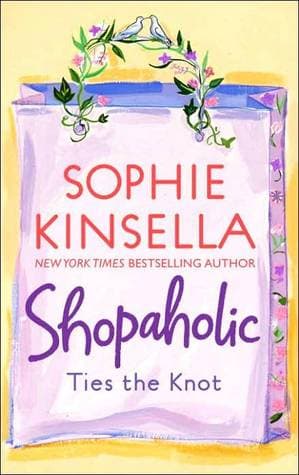
Sophie Kinsella (2003)
Genre
Romance
Reading Time
500 min
Key Themes
See below
Sign in to track this book
A Manhattan shopaholic gets caught in a wedding mess when her mother plans a backyard party and her fiancé's socialite mother insists on a lavish Plaza event, both on the same day.
Becky Bloomwood lives happily in New York with her successful boyfriend, Luke Brandon. Her job as a personal shopper at Barneys is going well. When her best friend Suze announces her engagement, Becky notices her own bare ring finger. Luke proposes, and Becky accepts, imagining a perfect, shopaholic-friendly wedding. The initial joy soon turns to chaos as two powerful women in her life decide to plan the wedding. Her mother, Jane Bloomwood, wants a traditional, sentimental backyard wedding in Surrey, England, using her own vintage wedding dress. At the same time, Luke's strong high-society mother, Elinor Sherman, insists on an extravagant, glamorous event at The Plaza in New York, offering to pay for everything. Both mothers pick the same wedding date, leaving Becky in an impossible situation.
To satisfy both mothers, Becky agrees to two engagement parties. The first is a small, heartfelt gathering at her parents' home in Surrey, with family and local friends. Her mother proudly shows off her vintage wedding dress. The second is a lavish, high-society event hosted by Elinor at The Plaza, filled with Luke's influential business contacts and glamorous socialites. Becky tries to keep up the lie that only one wedding is planned, constantly changing her persona and stories. The stress of the secret, plus the growing demands from both sides, begins to wear on her. She relies more on shopping for comfort. Luke sees the absurdity and tries to help but feels powerless against the determined mothers.
With two weddings approaching, Becky needs to find a wedding dress. Her mother insists she wear the family heirloom, while Elinor expects something couture and spectacular for The Plaza. Becky, a shopaholic, sees this as a chance to indulge. She convinces Luke that a trip to Milan is necessary to find 'the perfect dress'—a single gown that could work for both very different ceremonies. The trip becomes a blur of high-end boutiques and fashion shows. Becky gets sidetracked by other purchases and struggles to find anything that fits either vision, let alone both. As the wedding date nears, the pressure builds, and her inability to decide makes the problem worse.
Becky attends her best friend Suze's wedding, a beautiful and emotional event that shows her the reality of her own upcoming nuptials. Watching Suze walk down the aisle, Becky feels overwhelmed by the difference between her friend's simple wedding and her own chaotic, two-part affair. The stress of keeping the secret from her parents, Luke's mother, and even Luke himself, reaches a breaking point. During the reception, several close calls and awkward conversations almost expose her double-wedding secret. She sees how impossible her situation is and the emotional toll it takes, but still cannot face either determined mother, fearing their disappointment and anger.
The pre-wedding parties continue to get out of control with separate bachelor and bachelorette parties planned by both sets of friends and family. Becky's friends plan a lively, traditional bachelorette party in London, while Elinor arranges a sophisticated, exclusive spa retreat in the Hamptons. Luke faces similar dilemmas with his own bachelor parties. The need to be in two places at once, along with the constant fear of revealing the truth, leaves Becky and Luke exhausted and frustrated. The parties, meant to be celebrations, instead become more chances for misunderstandings and near-exposure of their secret, pushing their relationship to its limits.
Just when Becky thinks things cannot get worse, Alicia Bitchy, her long-time rival and Luke's ex-girlfriend, reappears. Alicia, now seemingly working for Elinor, gets involved in the Plaza wedding plans, quietly undermining Becky at every turn. Her presence increases Becky's insecurities and competitive nature, especially concerning Luke. Alicia's perfectly put-together demeanor and efficiency highlight Becky's own disorganization and the growing chaos of her double wedding plans. Becky suspects Alicia is trying to sabotage her, leading to petty rivalries and confrontations that further distract Becky from her main wedding problem.
The inevitable happens: both Becky's mother and Luke's mother have planned their weddings for the same day. Becky and Luke now face the impossible task of being in two places at once, on two different continents. The full reality hits them, and the absurdity of their situation is clear. Frantic attempts to manage preparations, expectations, and keep the secret from truly exploding reach a peak. Becky is torn between loyalty to her family and her desire to please Luke's mother, while Luke is increasingly fed up with the whole situation, caught between his fiancée and his powerful mother.
Under great pressure, Becky finally breaks down and tells Luke the truth about the two weddings. This leads to a major confrontation where both mothers learn of the other's plans. The reaction is explosive. Jane Bloomwood feels deeply hurt and betrayed, while Elinor Sherman is furious about the deception and perceived disrespect. The families clash, each convinced their wedding is the 'real' one. Luke tries to mediate the hostile situation, while Becky feels overwhelmed by guilt and the complete failure of her plan.
The growing conflict and pressure become too much for Becky. Feeling she has pleased no one and ruined everything, she thinks about canceling both weddings. She withdraws, overwhelmed by the public drama and intense family conflict. Luke, seeing her distress, supports her, saying their relationship matters most, not the wedding itself. During this time, Becky starts to understand what she truly wants for her wedding, apart from others' expectations. She begins to make a plan that puts her and Luke's happiness first, rather than trying to please everyone.
After the dramatic fallout, Becky and Luke decide to take charge. They realize the only way to get married without more chaos is to escape the influence of both mothers. They secretly plan a small, private ceremony in a place that means something to them, far from family expectations. This decision shows Becky's growth. She finally prioritizes her desires and her relationship with Luke over her people-pleasing habits and shopping impulses. The new plan is kept secret, meant as a surprise for everyone, ensuring the focus stays on their commitment to each other.
Becky and Luke travel to their chosen destination, excited for their private ceremony. In a surprising turn, their families, having reconciled and realized their mistakes, arrive. Both Jane and Elinor, along with other key family members, found them, not to interfere, but to witness their union and offer blessings. This unexpected reunion turns the private ceremony into a joyful, though still small, family event. With both families present and united, Becky finally has the wedding she wanted—one filled with love, compromise, and true happiness.
With both families present and supportive, Becky and Luke exchange vows. The ceremony subtly includes elements from both the traditional English backyard wedding and the elegant Plaza affair, showing the compromise and love that won out. Becky, wearing a dress she loves and feels comfortable in, looks radiant. The day is full of laughter, happy tears, and relief that the long, chaotic journey to marriage is over. The novel ends with Becky and Luke happily married, having navigated family expectations and their own insecurities, ready to start their new life together.
The Protagonist
Becky learns to assert herself and prioritize her own happiness and her relationship with Luke over pleasing others, leading her to make independent decisions about her wedding.
The Supporting
Luke learns to be more assertive with his own mother and to fully trust Becky's ability to make decisions, even if they are unconventional.
The Supporting
Jane learns to compromise and accept that her daughter's happiness is more important than her own traditional wedding dreams.
The Antagonist (initially)
Elinor softens her stance, realizing that her son's happiness is paramount, and eventually accepts Becky and her family, learning to appreciate different traditions.
The Supporting
Suze remains a steadfast friend, providing emotional support and a grounding presence for Becky throughout her wedding chaos.
The Supporting
Graham remains a stable and supportive figure, helping to bring peace to the family conflict when it reaches its peak.
The Antagonist
Alicia remains a consistent source of antagonism, ultimately serving to highlight Becky's growth in confidence and self-worth as Becky ultimately triumphs over her influence.
The Supporting
Tarquin remains a steadfast and supportive character, embodying a stable and loving marriage that Becky aspires to.
The novel shows how family expectations can control personal decisions, especially for big life events like marriage. Becky is caught between her mother's wish for a traditional English wedding and Luke's mother's demand for a lavish, high-society event. This theme appears in Becky's inability to say 'no' to either parent, which leads to her complex deception and great stress. The conflict highlights the struggle to balance personal desires with the need to please loved ones, even if it means sacrificing one's own happiness. It is a funny yet touching look at how families, even with good intentions, can create immense pressure.
““I’ve promised Mum, and I’ve promised Elinor. I can’t go back on my word to either of them!””
Becky's journey in the novel is mostly about self-discovery and learning to be herself. At first, she tries to please everyone, easily swayed by others' opinions, especially her mother and Luke's mother. Her struggle to choose a wedding, or even a dress, shows her deeper struggle to define what she truly wants. As chaos grows, Becky has to face her tendency to avoid conflict and prioritize her own needs and her relationship with Luke. This theme ends with her taking control of her wedding, making choices that truly reflect her and Luke's desires, not outside pressures. It is about finding her voice amid the noise.
““I suddenly realized that all this time, I’d been trying to make everyone else happy, and I hadn’t even thought about what Luke and I wanted.””
At its core, the novel is a romance, and love and compromise are central to Becky and Luke's relationship. Their love is tested by Becky's impulsiveness, her secrets, and overwhelming family interference. Luke, despite his frustration, consistently shows his love and support for Becky, even when she is at her most chaotic. The wedding problem is resolved by their ability to communicate, understand each other's needs, and compromise. It shows that true love involves facing challenges together and making choices that strengthen the bond, rather than giving in to outside pressures. Their decision to plan their own wedding is the ultimate compromise.
““All I want is to marry you, Becky. I don’t care where, or how, or what dress you’re wearing. Just you.””
As a shopaholic, Becky often confuses material possessions with happiness and importance. Her initial excitement about the wedding comes from thoughts of bridal registries, designer dresses, and glamorous events. However, the chaos of the two competing weddings forces her to confront how superficial these desires are. The novel contrasts the extravagance of Elinor's Plaza wedding with the sentimental value of Jane's backyard event, and finally, with the simple, heartfelt meaning of Becky and Luke's chosen ceremony. This theme highlights Becky's growth as she learns that the true meaning of marriage is in the commitment and love between two people, not in the lavishness of the celebration or the price of her dress.
““I’d been so caught up in the idea of the ‘perfect wedding’ – all the trimmings, the glamour, the designer labels – that I’d forgotten the most important thing of all.””
A comedic central conflict where the protagonist is forced to plan two simultaneous, conflicting weddings.
The double wedding is the primary engine of the plot, creating a constant source of comedic chaos and dramatic tension. By agreeing to both her mother's traditional English wedding and Luke's mother's lavish New York affair, Becky finds herself in an impossible predicament. This device allows for numerous farcical situations, near-misses, and escalating lies as Becky tries to keep the two worlds separate. It effectively highlights Becky's people-pleasing nature and her inability to assert herself, driving her character arc and ultimately forcing her to take control of her own destiny.
Becky is caught between the conflicting desires of her mother and Luke's mother.
While not a traditional romantic love triangle, Becky is emotionally torn between her mother, Jane Bloomwood, and Luke's mother, Elinor Sherman. Both women demand her loyalty and adherence to their specific wedding visions, placing Becky in an agonizing bind. This device amplifies the pressure on Becky, forcing her to constantly choose sides or attempt to appease both, which inevitably leads to deception and stress. It underscores the theme of family expectations and Becky's struggle with self-assertion, as she tries to navigate the emotional demands of two powerful matriarchs.
Becky's ingrained shopping addiction often distracts her from solving her core problems.
Becky's shopaholic tendencies serve as both a character trait and a plot device. Her impulse to shop, especially for wedding-related items, often leads her further into debt or distracts her from addressing the fundamental problem of her two weddings. For instance, her trip to Milan for 'the dress' becomes an opportunity for more unnecessary purchases. This device provides comedic relief but also highlights Becky's coping mechanisms and her initial inability to confront reality. It ultimately contrasts with her growth, as she learns to prioritize meaning over materialism.
A recurring nemesis who reappears to complicate the protagonist's life and fuel her insecurities.
Alicia Bitchy's reappearance in Becky's life, especially in the context of Luke's mother's wedding plans, serves as a classic antagonist device. Alicia's perfection and subtle undermining tactics exacerbate Becky's existing insecurities and competitive nature. Her presence adds another layer of external conflict and stress, making Becky's already chaotic situation even more challenging. Alicia's role is to challenge Becky's self-worth and push her to confront her own flaws, ultimately contributing to Becky's journey of self-acceptance and assertiveness.
“The thing about credit cards is that they have a lot of power. You can literally buy anything you want.”
— Becky musing on the allure of credit cards early in the book.
“I mean, it's not like I don't want to get married. I do! It's just... I want to get married *right*.”
— Becky wrestling with the idea of her impending wedding and wanting it to be perfect.
“There are two sorts of people in the world: people who like clothes, and people who don't. And I'm definitely the first sort.”
— Becky justifying her love for fashion and shopping.
“Every single bride wants her wedding to be unique. Which means, by definition, it can't be.”
— Becky's cynical observation about the pressures on brides.
“My mother always says that the best way to get over a man is to get under a new dress.”
— Becky recalling her mother's advice on emotional recovery.
“It's not about the money, it's about the principle. And the shoes. Mainly the shoes.”
— Becky rationalizing a purchase or a financial decision.
“I'm not a compulsive shopper. I'm a strategic shopper. There's a big difference.”
— Becky trying to convince herself (and others) about her shopping habits.
“You can never have too many handbags. They're an investment.”
— Becky's internal monologue about her accessory collection.
“Love is... well, it's complicated. Especially when there are two weddings involved.”
— Becky reflecting on her feelings for Luke and the double wedding dilemma.
“Sometimes, you just have to trust your instincts. Even if your instincts are telling you to buy another pair of shoes.”
— Becky's inner thoughts guiding her decisions.
“The truth is, I just want to be happy. And maybe have a really nice dress.”
— Becky summarizing her ultimate desires.
“It's a universal truth that a woman can never feel truly confident without the right bra.”
— Becky's musing on the importance of lingerie.
“Being an adult is mostly about pretending you know what you're doing.”
— Becky reflecting on the realities of adulthood.
“You know, for someone who hates shopping, you spend a lot of time in shops with me.”
— Becky teasing Luke about his reluctant participation in her shopping trips.
“A good outfit can change your whole day. A great outfit can change your whole life.”
— Becky's philosophy on the transformative power of clothing.
Ready to see how well you understood this book? Take our interactive quiz with 10 questions.

Biography coming soon.