“The thing about being a shopaholic is that you're always just one purchase away from a new life.”
— Becky musing on her shopping habits and the hope each new item brings.

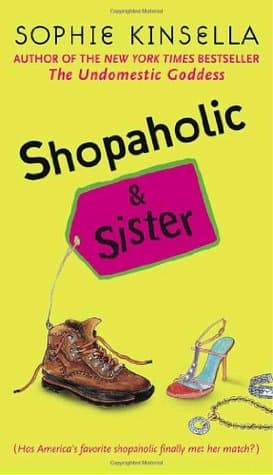
Sophie Kinsella (2004)
Genre
Romance
Reading Time
776 min
Key Themes
See below
Sign in to track this book
Becky Bloomwood's world of designer handbags and best friends is hilariously upended when a long-lost sister with a penchant for thrift stores threatens her carefully curated, albeit shopaholic, life.
Becky Bloomwood Brandon and her new husband, Luke Brandon, return from their round-the-world honeymoon. Luke focuses on expanding his PR company, but Becky immediately returns to shopping, much to Luke's annoyance. Her attempts to 'save money' often result in even more expensive purchases, like a new 'investment' handbag. She also struggles with married life, finding cooking and cleaning less appealing than shopping. Luke loves Becky, but he is often frustrated by her financial irresponsibility and her inability to understand a budget. This leads to their first post-honeymoon arguments about money.
Becky's parents, Graham and Jane Bloomwood, reveal a secret: Becky has a half-sister she never knew about. This sister, Jess, is the result of a brief affair Jane had before marrying Graham. Becky is thrilled, imagining a stylish, shopping-loving sister who will understand her. She immediately pictures joint shopping sprees and shared fashion advice. Her parents, however, are nervous about Jess's reaction and how this revelation will impact their family, especially since Jess's existence has been a secret for many years.
Becky eagerly arranges to meet Jess, only to discover that her half-sister is her complete opposite. Jess is a serious, environmentally conscious, anti-consumerist student who lives in a communal house and dislikes all things materialistic, including shopping and designer labels. She finds Becky's lifestyle frivolous and wasteful. Their first meeting is awkward and full of misunderstandings, as Becky tries to impress Jess with designer gifts, which Jess immediately rejects, preferring recycled goods and ethical products. Becky is deeply disappointed that her new sister is not the shopping companion she dreamed of.
The sharp contrast between Becky and Jess's personalities and values creates significant tension. Jess criticizes Becky's spending habits and superficiality, while Becky finds Jess's earnestness and anti-materialism preachy and dull. Their disagreements extend to family gatherings, making things uncomfortable for Graham and Jane. Becky tries to 'convert' Jess to her way of thinking, including trying to buy her clothes, but Jess remains firm in her beliefs. Luke watches the dynamic with a mix of amusement and concern, recognizing the deep differences between the sisters.
Luke's PR company faces a serious threat from a rival firm, causing him immense stress. He tries to keep Becky out of the details, knowing her tendency for impulsive decisions. However, Becky, wanting to help, tries to get involved in Luke's business problems. Her well-meaning but ill-advised interventions, such as trying to 'network' by buying expensive gifts for potential clients or offering unsolicited advice based on fashion magazines, often complicate matters and add to Luke's frustration, showing her lack of understanding of corporate strategy.
Amidst the family drama and Luke's business troubles, Becky becomes intensely obsessed with acquiring a highly sought-after, limited-edition 'Angel' handbag. This desire consumes her thoughts and energy, leading her to consider extreme measures to afford it, even as Luke struggles financially. She sees the handbag as a symbol of status and happiness, convinced it will solve her problems and prove her worth. Her pursuit of the bag becomes a central comedic and dramatic part of the story, showing her ongoing battle with her shopping addiction.
Becky eventually discovers that Jess is not just a principled environmentalist; she has been actively involved with a group protesting one of Luke's major clients. Jess's actions, driven by her strong ethical beliefs, are inadvertently contributing to the negative publicity surrounding Luke's company. This revelation deeply hurts Becky, making her feel betrayed by her sister and complicating her loyalty between family and husband. It shows how committed Jess is to her beliefs and the potential for real-world consequences from their differing views.
The truth about Jess's involvement with the protest group and its impact on Luke's business finally comes out in a dramatic family confrontation. Becky, Luke, Jess, and their parents are all present, leading to heated arguments and emotional revelations. Jess defends her actions based on her moral principles, while Becky and Luke are furious about the damage she is causing. The tension forces everyone to confront the deep divisions and the long-held secrets within the family, especially regarding Jane's past and Jess's identity.
After the intense confrontation, Becky and Jess slowly begin to reconcile. They start to see beyond their surface differences and recognize each other's underlying values and motivations. Becky begins to appreciate Jess's integrity and passion, while Jess starts to understand Becky's desire for joy and comfort, even if expressed through shopping. They find common ground in their shared family history and their love for their parents. This marks a turning point, as they move from animosity to a hesitant sisterly bond, acknowledging their shared heritage.
In a moment of growth, Becky makes a difficult decision to sacrifice her beloved 'Angel' handbag. She realizes that her obsession with the bag is trivial compared to Luke's business crisis and her desire to mend her relationship with Jess. She uses the money she would have spent on the bag, or the bag itself, in a creative way to help Luke's company or to bridge the gap between him and Jess's cause. This act shows a significant step in her personal development, demonstrating her ability to prioritize love and family over her immediate material desires, proving her maturation.
Luke's business crisis is eventually resolved, partly due to Becky's unexpected contribution and partly through his own strategic efforts. The family, including Jess, finds a new balance. Becky and Jess, while still having their differences, develop a genuine sisterly bond based on respect and understanding. Becky learns valuable lessons about financial responsibility and the importance of family over material possessions, though her love for shopping never entirely disappears. The novel concludes with the Brandon-Bloomwood family unit stronger and more cohesive, embracing their unique, blended dynamic.
The Protagonist
Becky learns to prioritize relationships and financial responsibility over her shopping addiction, making a significant sacrifice for her family.
The Supporting
Luke learns to trust Becky more and appreciates her unique contributions, even if unconventional, while managing his own business challenges.
The Supporting
Jess learns to soften her rigid views and accept her sister's differences, finding a balance between her principles and family bonds.
The Supporting
Graham navigates the emotional complexities of his wife's past and the introduction of a new daughter into the family, maintaining his role as a loving patriarch.
The Supporting
Jane confronts her past and the consequences of her secret, ultimately finding peace and acceptance within her expanded family.
The Supporting
Suze remains a steadfast friend, adapting to Becky's new life and family dynamics.
The Mentioned
Tarquin remains a consistent, if minor, background character.
The Mentioned
Alicia remains a background source of insecurity for Becky.
This theme is central to the entire narrative, shown by Becky's love for shopping and Jess's strong anti-consumerism. The novel explores the tension between finding happiness and identity through possessions versus living a life free from material attachments. Becky's obsession with the 'Angel' handbag directly contrasts with Jess's communal living and ethical buying. The story suggests that while extreme materialism can be problematic, so can rigid minimalism, and that true fulfillment comes from balance and connection with people rather than things. The family must confront these differing philosophies.
“What is it with you and stuff? Don't you ever think about anything else?”
The revelation of Jess's existence as Becky's half-sister drives much of the plot's emotional conflict. Jane Bloomwood's long-held secret about her past affair and the birth of Jess creates a ripple effect of shock, anger, and ultimately, a need for understanding and forgiveness within the family. The theme explores how secrets, even with good intentions, can cause pain, and how confronting the truth, no matter how difficult, is essential for healing and strengthening family bonds. The family's journey to accept Jess and integrate her into their lives shows the power of forgiveness.
“I just wanted to protect everyone. I didn't mean for it to go on so long.”
The novel explores the complexities of sisterly relationships, especially when starting from complete unfamiliarity and contrasting personalities. Becky and Jess initially embody opposing ideals, leading to friction and misunderstanding. However, through shared experiences, conflict, and eventual vulnerability, they slowly discover common ground and a growing bond. The theme highlights that sisterhood is not always about shared interests but about shared history, mutual support, and learning to accept and even appreciate differences. Their journey illustrates the unique challenges and rewards of forming a family connection later in life.
“We're sisters, whether we like it or not. And maybe... maybe that's not such a bad thing.”
Becky's ongoing struggle with her shopping addiction and financial irresponsibility is a core element of her character arc. While she is endearing, the consequences of her choices often impact Luke and her family. Throughout the story, especially when confronted with Luke's business crisis and Jess's principled stance, Becky must mature and consider the broader implications of her actions. Her eventual sacrifice of the 'Angel' handbag symbolizes a significant step towards personal growth, demonstrating her ability to prioritize love and responsibility over her immediate desires. It is a journey of learning that true happiness is not bought.
“Sometimes... sometimes you have to choose what's really important.”
A highly coveted object that drives a character's actions and reveals their priorities.
The 'Angel' handbag serves as a classic MacGuffin. It is an object of intense desire for Becky, driving much of her personal quest and comedic misadventures. While its intrinsic value to the overall plot is limited, its pursuit reveals the depth of Becky's shopping addiction, her capacity for rationalization, and ultimately, her ability to sacrifice for something more important. Its presence highlights the theme of materialism and provides a tangible goal for Becky, whose eventual decision regarding the bag signifies her personal growth and shift in priorities.
Contrasting characters used to highlight each other's qualities.
Jess acts as a direct character foil to Becky. Their opposing values – Becky's consumerism versus Jess's anti-materialism, Becky's impulsiveness versus Jess's principled seriousness – serve to illuminate and exaggerate each other's traits. This contrast creates immediate conflict and comedic tension, but also forces both characters (and the reader) to examine their own beliefs and find common ground. Jess's presence challenges Becky's entire worldview, pushing her towards self-reflection and growth, while Becky's warmth and spontaneity might soften Jess's more rigid outlook.
When the outcome is contrary to what is expected, creating humor or dramatic effect.
Situational irony is frequently employed, particularly in Becky's attempts to 'save money' or 'help' Luke's business. For example, Becky's efforts to be frugal often lead to more expensive purchases, or her well-meaning interventions in Luke's PR crisis inadvertently make things worse. The irony lies in the disparity between her intentions and the actual results. This device adds much of the humor to the story and highlights Becky's endearing cluelessness about practical matters, while also underscoring the challenges of her shopping addiction.
A narrator whose credibility is compromised, often for comedic or character development purposes.
Becky serves as an unreliable narrator, especially when it comes to her financial decisions and justifications for shopping. She often rationalizes her purchases, downplays her debt, and selectively remembers facts in a way that supports her desires. Her internal monologue, while charming, frequently presents a skewed version of reality. This device allows for comedic effect, as the reader is privy to her often-flawed logic, and also provides insight into her deep-seated psychological relationship with shopping, making her character more complex and relatable despite her flaws.
“The thing about being a shopaholic is that you're always just one purchase away from a new life.”
— Becky musing on her shopping habits and the hope each new item brings.
“There's nothing quite like the smell of new shoes. It's the smell of potential.”
— Becky describing her love for new footwear.
“Honestly, I don't know why people say money can't buy happiness. Have they ever tried buying a new handbag?”
— Becky's internal monologue about the joy of shopping.
“I mean, how can you feel bad when you're wearing a really nice scarf?”
— Becky justifying a purchase or feeling better after acquiring something.
“It’s amazing how much difference a tiny bit of glitter can make to your whole outlook.”
— Becky appreciating small details in fashion and life.
“Sometimes you just need to buy something. Not because you need it, but because it needs you.”
— Becky's unique justification for impulse buys.
“The best thing about having a sister is that you always have someone to lend you clothes, even if they don't know it yet.”
— Becky thinking about her relationship with her sister, Jess.
“There's a fine line between a bargain and a mistake. And I'm usually on the wrong side of it.”
— Becky reflecting on her shopping prowess (or lack thereof).
“Love is... finding someone who understands your need for a new pair of boots, even when you already have twenty.”
— Becky contemplating her relationship with Luke.
“You can't put a price on family. Unless it's a really good sale.”
— Becky's internal thought, mixing her priorities.
“I have to admit, seeing someone else get a bargain I wanted is almost as bad as seeing them get the last slice of cake.”
— Becky's competitive nature when it comes to shopping.
“My theory is, if you buy something you love, it's never a waste of money.”
— Becky's personal shopping philosophy.
“It’s not just about the clothes, it’s about the feeling. The feeling of being new, of being shiny, of being… me.”
— Becky reflecting on the deeper meaning of her shopping.
“Sometimes you just need a bit of sparkle to remind you who you are.”
— Becky finding comfort or inspiration in a sparkly item.
Ready to see how well you understood this book? Take our interactive quiz with 10 questions.

Biography coming soon.