“I mean, how hard can it be? You buy a few things, you arrange them nicely. It's not rocket science.”
— Becky contemplating redecorating her flat, oblivious to the potential for overspending.

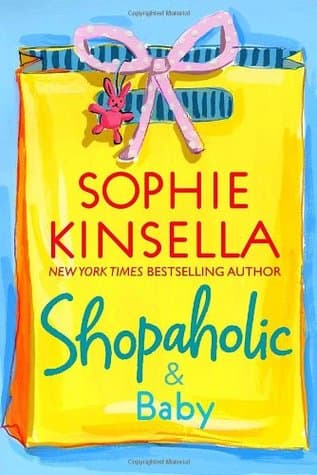
Sophie Kinsella (2007)
Genre
Romance
Reading Time
360 min
Key Themes
See below
Sign in to track this book
As Becky Brandon shops for two, her perfect pregnancy unravels when her husband's ex-girlfriend becomes her obstetrician, forcing her to confront what else is on sale in her marriage.
Becky Brandon (née Bloomwood) is happy to find she's pregnant. Her initial joy is slightly lessened by morning sickness, which she quickly finds retail therapy can fix. She goes on many shopping trips, convinced that every baby item, from designer cot bedding to the latest high-tech pram, must be perfect. Luke Brandon, her husband, is supportive but often confused by how much Becky buys. Becky's parents, Graham and Jane Bloomwood, are happy to become grandparents, while her best friend Suze Cleath-Stuart offers a more down-to-earth view amid Becky's shopping. Becky’s focus quickly moves to getting the most famous, celebrity obstetrician in London.
Becky gets an appointment with the sought-after Dr. Venetia Carter, known for her celebrity clients and exclusive approach to childbirth. Becky goes to the first consultation with Luke, excited to be with such a prestigious doctor. Her excitement turns to horror when she realizes Dr. Carter is Venetia Carter, Luke's intelligent, elegant, and seemingly perfect ex-girlfriend from university. This makes Becky insecure, fearing Venetia's presence will not only complicate her pregnancy but also threaten her marriage to Luke, as Venetia seems to be everything Becky feels she is not.
Overwhelmed by insecurity, Becky decides to keep Venetia's past relationship with Luke a secret from everyone, especially her parents and Suze. She makes up reasons for choosing Dr. Carter, focusing on her professional reputation rather than her personal connection to Luke. This secrecy adds stress to Becky's life, as she constantly fears discovery and misinterprets every interaction between Luke and Venetia. Her shopping increases as a way to cope, leading to even more extravagant and often unnecessary baby purchases, further straining her money and Luke's patience. Becky feels more and more inadequate compared to Dr. Carter.
As her pregnancy continues, Becky decides to throw the most extravagant baby shower possible. She sees it as a way to prove her worth and show off her perfect baby preparations to her friends and, indirectly, to Venetia. She spends a lot on designer decorations, gourmet food, and exclusive party favors. The guest list includes all her friends and family, and Becky even thinks about inviting Venetia, torn between wanting to seem sophisticated and fearing her presence. The planning becomes another source of stress, as Becky aims for an impossible ideal, driven by her insecurities about Venetia and her desire for a perfect life for her baby.
Despite Becky's growing worry, Dr. Carter acts professionally during all appointments, focusing only on Becky's health and the baby's development. However, Becky's anxiety causes her to misinterpret every polite exchange or glance between Luke and Venetia. She imagines secret meanings in their talks and believes Venetia is trying to get back with Luke, or at least subtly undermine Becky's confidence. Luke, for his part, seems unaware of Becky's inner turmoil and sees Venetia only as his wife's doctor, not noticing Becky's distress or her hints about his past with Venetia.
Becky's constant shopping for baby items, combined with her usual shopping habits, quickly uses up her savings and puts a strain on the Brandons' money. Luke, who usually manages money well, becomes worried by the rising bills. To justify her purchases and perhaps earn some money, Becky decides to start a new business: a baby shopping consultancy. She plans to help other expectant mothers with baby products, believing her extensive, though often excessive, research qualifies her. This new project, however, often leads to more spending rather than earning, making their financial situation worse.
During a check-up, Becky has a minor health scare, which alarms her and briefly shifts her focus from Venetia. The incident makes her realize the importance of her baby's health above all else. In a moment of weakness, she partly tells Luke about her worries about Venetia, admitting she feels inadequate compared to his ex. Luke is surprised by her admission and tries to reassure her, though he still doesn't fully understand how insecure she is or how much she believes Venetia is a threat. The scare temporarily brings them closer, but the tension about Venetia remains.
Becky carefully plans every detail of her ideal childbirth, from the music in the delivery room to the specific brand of organic baby clothes her child will wear right after birth. She imagines a calm, controlled event, influenced by celebrity birthing trends. As her due date gets closer, the reality of pregnancy and labor begins. During a final consultation, Dr. Carter gently tries to prepare Becky for how unpredictable childbirth can be, but Becky remains focused on her perfect vision, which increases her anxiety about anything that might change her plans.
Becky unexpectedly goes into labor while shopping for another 'essential' baby item. The sudden start of contractions ruins her plans. Luke rushes her to the hospital, and Dr. Carter is called. The experience is far from the calm, controlled event Becky had imagined. It is filled with pain, urgency, and the chaotic reality of a hospital. Becky's parents, Suze, and even Janice and Martin Webster arrive, adding to the general chaos. Despite her earlier fears, Becky finds herself relying on Venetia's professional guidance during the most intense moments of labor.
After a difficult labor, Becky gives birth to a healthy baby girl. The moment she holds her daughter, Minnie, all her worries about Venetia and her constant need for perfect material things disappear. She realizes that the most important thing is her baby's health and happiness, and the love she shares with Luke. Right after the birth, she talks with Luke, finally telling him the full extent of her fears about Venetia. Luke reassures her of his love and explains that Venetia was just an old acquaintance, never a threat to their marriage. Becky also sees Venetia in a new way, recognizing her professionalism and genuine care.
With Minnie in her arms, Becky's perspective changes. While she doesn't stop loving shopping entirely, her priorities are dramatically reordered. She finds joy in the simple moments of motherhood and understands that true happiness comes from love and family, not from designer baby clothes or celebrity doctors. She apologizes to Luke for her irrational fears, and they confirm their commitment to each other and their new family. Becky even finds a more balanced approach to her baby shopping consultancy, focusing on practical advice rather than extravagant spending, showing growth in her character.
The Protagonist
Becky transforms from a self-absorbed shopaholic driven by superficial desires into a more mature and grounded mother, whose priorities shift from material possessions to the well-being of her child and the strength of her family.
The Supporting
Luke maintains his supportive and loving nature, but grows in his understanding of Becky's emotional vulnerabilities, particularly during her pregnancy, learning to offer more direct reassurance.
The Antagonist (perceived)
Venetia remains consistently professional and kind, serving as a catalyst for Becky's internal struggles rather than undergoing significant personal change herself, ultimately revealed as a non-antagonistic figure.
The Supporting
Suze remains a steadfast and supportive friend, offering consistent, pragmatic advice to Becky throughout her pregnancy.
The Supporting
Graham remains a loving and supportive father, eagerly anticipating the arrival of his grandchild.
The Supporting
Jane remains a loving and slightly anxious mother, excited to become a grandmother, providing a traditional family backdrop to Becky's modern struggles.
The Supporting
Minnie's arrival marks the resolution of Becky's internal conflicts, solidifying her shift towards maturity and a more balanced life.
The Supporting
Janice and Martin remain consistent in their eccentric personalities, serving as a humorous foil to Becky's more conventional (albeit luxury-obsessed) approach to life.
Becky's pregnancy brings out deep insecurities about being a 'perfect' mother and wife. Dr. Venetia Carter, Luke's accomplished ex, makes these feelings worse, making Becky feel inadequate and constantly comparing herself to Venetia's perceived perfection. This theme appears in Becky's frantic shopping for the 'best' baby items, her elaborate baby shower plans, and her desperate attempts to hide Venetia's connection to Luke. All this comes from a fear of not being good enough. Her journey is about learning to value herself for who she is, rather than through outside approval or material things.
“How can I compete with someone like Venetia? She's intelligent, beautiful, a doctor... and I'm just me, a shopaholic.”
The novel shows Becky's ingrained shopping habits, which increase during her pregnancy. She believes that buying the most expensive, designer, or celebrity-endorsed baby items will ensure her baby's happiness and her own success as a mother. This theme is explored through her excessive shopping sprees, the money problems they cause, and her attempts to start a baby shopping consultancy. The birth of Minnie makes Becky realize that true happiness comes from love, family, and simple joys, not from material possessions, challenging her old beliefs. This is clear when she holds Minnie and all her material worries disappear.
“I thought if I bought everything perfect, my baby would be perfect. But it's not about the stuff, is it? It's just... her.”
The book compares Becky's idealized, celebrity-inspired vision of pregnancy and childbirth with the messy, unpredictable, and often difficult reality of becoming a mother. Becky plans every detail, from designer nurseries to specific birthing playlists, creating an unrealistic expectation. The reality of morning sickness, money problems, and an unexpected labor shatters these ideas. This theme explores the journey of adjusting expectations, accepting imperfections, and finding joy in the real experience of motherhood, rather than a perfect picture. Her birth experience, chaotic and unplanned, is a main example.
“All those magazines, all those perfect pictures... they never show this bit. The bit where you just want to cry and you've got no idea what you're doing.”
A main theme is the lack of open talk, especially between Becky and Luke, about Becky's worries about Venetia. Becky's decision to keep Venetia's past with Luke a secret, along with Luke's unawareness of Becky's deep insecurities, creates a source of tension and misunderstanding. Becky misinterprets innocent interactions, while Luke doesn't grasp the depth of her emotional trouble. This shows how unspoken fears and assumptions can lead to unnecessary conflict and stress in a relationship, until finally faced during and after the birth of their baby.
“Why didn't you just tell me, Becky? I would have told you there was nothing to worry about.”
Dr. Venetia Carter serves as a perceived threat without malicious intent.
Venetia Carter functions as the 'unwitting rival' in the story. She is Luke's ex-girlfriend, but her actions are consistently professional and devoid of any intent to harm Becky or her marriage. However, Becky's own deep-seated insecurities project a rivalry onto Venetia, making her the catalyst for Becky's emotional turmoil and escalating shopping habits. This device allows for internal conflict for Becky, driving the plot forward through her misinterpretations and paranoia, rather than through an external, actively malicious antagonist.
The audience is aware of information or truths that Becky is not, or misinterprets.
Dramatic irony is frequently used, particularly concerning Becky's perception of Venetia and Luke. The reader quickly understands that Venetia poses no real threat to Becky's marriage and that Luke is genuinely oblivious to Becky's intense fears. This creates humor and empathy for Becky's exaggerated anxieties, as the audience can see the truth of the situation while Becky remains trapped in her own misinterpretations and self-created drama. It heightens the comedic and emotional impact of Becky's struggles, making her eventual realization more impactful.
Becky uses shopping to manage stress, insecurity, and morning sickness.
Becky's established habit of shopping is amplified and repurposed as a coping mechanism throughout her pregnancy. Initially, it 'cures' her morning sickness. Later, it becomes her primary way of dealing with anxiety about motherhood, financial stress, and especially her insecurity regarding Venetia. Every emotional challenge is met with a new shopping spree for baby items, no matter how extravagant or unnecessary. This device highlights her core character trait and how it evolves, or fails to evolve, under pressure, until the ultimate realization at the end of the book.
Becky's pursuit of an idealized, celebrity-influenced pregnancy and birth.
This device sets up a clear contrast between Becky's fantasy of a perfect, celebrity-style pregnancy and birth, and the messy, unpredictable reality of the experience. Becky's elaborate birth plan, her designer nursery, and her choice of a celebrity obstetrician all stem from this 'perfect' ideal. The plot then unfolds by systematically dismantling these unrealistic expectations, forcing Becky to confront the true nature of motherhood and find beauty in its imperfections. This contrast provides both humor and character development.
“I mean, how hard can it be? You buy a few things, you arrange them nicely. It's not rocket science.”
— Becky contemplating redecorating her flat, oblivious to the potential for overspending.
“The thing about babies is, they don't really need much. Just love and a few essentials. And maybe a cashmere blanket. And a designer buggy. And a tiny little Gucci outfit...”
— Becky's internal monologue about baby essentials, quickly escalating into luxury items.
“I'm not saying I *need* this. I'm just saying it would be *better* if I had it.”
— Becky rationalizing a purchase to herself, a classic shopaholic justification.
“Maternity wear is a minefield. You either look like a tent or a sausage. There's no in-between.”
— Becky's frustration with the limited and often unflattering options for maternity clothes.
“It's not that I'm addicted to shopping. I'm addicted to *newness*.”
— Becky attempting to redefine her shopping habit to sound less problematic.
“Babies are like tiny, adorable, expensive black holes. They just suck up all your money and your sleep.”
— Becky reflecting on the financial and personal demands of having a baby.
“I'm a grown woman. I can make my own decisions. Even if those decisions involve buying a tiny, sparkly tiara for a baby who won't even know what it is.”
— Becky's internal debate about a questionable baby purchase.
“The thing about love is, it's not always logical. Sometimes it's messy and complicated and involves a lot of arguing about credit card bills.”
— Becky's realization about the realities of a long-term relationship, especially with her spending habits.
“You can't put a price on happiness. But you can put a price on a really nice handbag, and sometimes that's close enough.”
— Becky's humorous, yet telling, perspective on the relationship between material possessions and happiness.
“Pregnancy brain is a real thing. One minute I'm remembering where I put my keys, the next I'm trying to pay for my coffee with a tampon.”
— Becky experiencing the humorous and sometimes embarrassing effects of 'pregnancy brain'.
“I just want to be a good mum. And a good wife. And maybe have a really fabulous new scarf.”
— Becky's desire to balance her new responsibilities with her enduring love for shopping.
“There's something deeply satisfying about unwrapping something new. It's like a tiny little present just for you.”
— Becky describing the simple joy she derives from opening a new purchase.
“It's not about the stuff itself. It's about the potential. The potential for a better outfit, a better home, a better life.”
— Becky explaining her underlying motivation for shopping, seeing it as a path to self-improvement.
Ready to see how well you understood this book? Take our interactive quiz with 10 questions.

Biography coming soon.