“O Romeo, Romeo! wherefore art thou Romeo?”
— Juliet on her balcony, lamenting Romeo's family name.

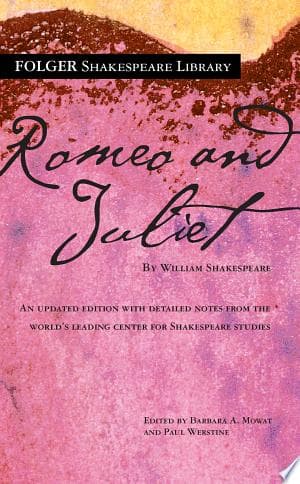
William Shakespeare (2016)
Genre
Romance
Reading Time
240 min
Key Themes
See below
Sign in to track this book
In a city driven by old hatreds and gang fights, two lovers from opposing families find instant, passionate love that challenges their violent world.
The play starts in Verona with a street fight between servants of the Montague and Capulet families. This quickly involves Lord Capulet, Lord Montague, and Prince Escalus. The Prince declares that any future disturbance will result in death for the heads of the households. Romeo, Montague's son, is shown as sad, longing for Rosaline, who has vowed chastity. His cousin Benvolio and friend Mercutio try to cheer him up. Meanwhile, Lord Capulet plans a party and encourages Paris, a kinsman of the Prince, to court his daughter, Juliet. Romeo, persuaded by Benvolio, decides to crash the Capulet party, hoping to see Rosaline.
At the Capulet party, Romeo is immediately taken by Juliet's beauty, forgetting Rosaline. He approaches her, and they share a sonnet and their first kiss. Tybalt, Juliet's hot-headed cousin, recognizes Romeo's voice and is angry about a Montague being there, but Lord Capulet stops him, not wanting to disturb the party. As the party ends, Romeo and Juliet learn each other's identities from the Nurse – that they are from the feuding Montague and Capulet families. Despite this shocking news, their love is already set.
After the party, Romeo, unable to leave, sneaks into the Capulet orchard. He overhears Juliet speaking from her balcony, regretting Romeo's Montague name and expressing her love for him. Romeo reveals himself, and they exchange strong vows of love. Juliet, despite her initial caution, suggests they marry. They agree to send word to each other the next day about their plan. This scene shows their commitment and sets the stage for their secret union, showing their willingness to defy their family feud for love.
Romeo visits Friar Laurence, telling him of his new love for Juliet and his wish to marry her right away. The Friar is at first surprised by Romeo's quick change of affection from Rosaline but agrees to marry them. He believes their union might help end the bitter feud between the Montagues and Capulets, bringing peace to Verona. Juliet's Nurse acts as a go-between, delivering Juliet's message of consent to Romeo. The secret wedding is arranged for that very afternoon, with the Nurse's help.
Soon after the secret wedding, Tybalt, still angered by Romeo's presence at the party, confronts Romeo and his friends, Mercutio and Benvolio. Romeo, now related to Tybalt by marriage, tries to calm the situation, but Mercutio, unaware of the marriage, takes offense at Romeo's seeming submission. Mercutio fights Tybalt and is fatally wounded when Romeo steps in. Angry and sad about Mercutio's death, Romeo kills Tybalt in a duel. Prince Escalus arrives and, instead of executing Romeo, banishes him from Verona.
Juliet is crushed by Tybalt's death and Romeo's banishment. To add to her sorrow, Lord Capulet, believing her grief is for Tybalt, decides to speed up her marriage to Paris. Desperate, Juliet seeks help from Friar Laurence. The Friar plans for Juliet to agree to marry Paris. But the night before the wedding, she will drink a strong sleeping potion that will make her appear dead for 42 hours. She will then be placed in the Capulet family tomb, where Romeo will meet her when she wakes, and they will flee Verona together.
Juliet returns home and, pretending to obey, agrees to marry Paris. She sends away the Nurse and her mother, drinks the potion, and collapses. The next morning, the Nurse finds her seemingly lifeless body. The Capulet household is filled with grief, and Juliet's 'body' is taken to the family tomb as planned. Friar Laurence sends Friar John to deliver a letter to Romeo in Mantua, explaining the plan. However, Friar John is quarantined due to a plague scare and cannot deliver the message.
Balthasar, Romeo's servant, sees Juliet's funeral procession and, unaware of the Friar's plan, races to Mantua to tell Romeo that Juliet is dead. Devastated and believing Juliet is truly gone, Romeo buys a strong poison from an apothecary. He immediately leaves for Verona, determined to die by Juliet's side in the Capulet tomb. The dramatic irony grows as the audience knows Juliet is alive, but Romeo's lack of information seals his tragic fate, setting the stage for the final, devastating act.
Romeo arrives at the Capulet tomb, where he meets Paris, who is mourning Juliet. Paris challenges Romeo, believing he is there to disrespect the tomb. Romeo kills Paris in a duel. He then enters the tomb, finds Juliet's 'lifeless' body, and, after a final declaration of love, drinks the poison and dies. Friar Laurence arrives just as Juliet awakens to find Romeo dead beside her. Realizing Romeo used poison, and with no time for another plan, Juliet takes Romeo's dagger and stabs herself, dying beside her beloved.
The Watch arrives, alerted by Paris's page, and finds the bodies. Prince Escalus, the Capulets, and Lord Montague (Lady Montague having died of grief over Romeo's banishment) gather at the tomb. Friar Laurence tells the whole story, confirmed by Balthasar and a letter from Romeo. Overwhelmed by the loss of their children, Lord Capulet and Lord Montague finally reconcile, ending their long feud. They agree to build golden statues in honor of Romeo and Juliet, acknowledging the high price paid for their hatred.
The Protagonist
From a melancholic, unrequited lover, Romeo transforms into a devoted, passionate husband, ultimately dying for love.
The Protagonist
Juliet evolves from an innocent, obedient girl into a fiercely independent and devoted woman, willing to sacrifice everything for love.
The Supporting
Initially hopeful of ending the feud, Friar Laurence becomes a desperate figure trying to control events, ultimately bearing the burden of responsibility for the tragedy.
The Supporting
Mercutio remains largely unchanged, a vibrant and cynical figure whose death serves as a turning point in the play.
The Antagonist
Tybalt remains a consistent force of aggression and hatred, ultimately dying as a consequence of his own belligerence.
The Supporting
Initially a key ally, the Nurse's practical advice creates a final rift with Juliet, highlighting the lovers' isolation.
The Supporting
Lord Capulet transforms from a somewhat understanding father into a tyrannical figure, only to be humbled and reconciled by the deaths of the lovers.
The Supporting
Lady Capulet remains a static character, driven by societal expectations, ultimately left to mourn the loss of her daughter.
The Supporting
The Prince's authority is tested and ultimately proven insufficient to prevent the tragedy, leading him to acknowledge collective responsibility.
The Supporting
Paris remains a constant, honorable suitor, tragically becoming an obstacle to Romeo and Juliet's love and dying for it.
The main theme of Romeo and Juliet is the crushing impact of long, unreasonable hatred. The feud between the Montagues and Capulets is so deep that it consumes Verona, leading to street fights, public unrest, and ultimately, the deaths of innocent people. The lovers' attempts to rise above this hatred through their marriage are tragically stopped by its widespread influence, as seen when Tybalt's anger towards Romeo leads to Mercutio's death and Romeo's banishment. Even the Prince admits his own fault for not stepping in more strongly, showing that the feud is a community-wide problem.
“See what a scourge is laid upon your hate, / That heaven finds means to kill your joys with love! / And I, for winking at your discords too, / Have lost a brace of kinsmen. All are punished.”
Romeo and Juliet's love is shown as an overpowering, almost destined force that takes over them completely from their first meeting. Their passion is immediate, total, and defies all social and family limits. This intense love, however, also drives their impulsiveness, leading them to marry within a day of meeting and to make drastic, life-changing decisions without thinking them through. Their quick fall into love and their willingness to give up everything for each other, from defying parents to faking death and finally taking their own lives, shows both the great beauty and the dangerous, all-consuming nature of their affection.
“My bounty is as boundless as the sea, / My love as deep; the more I give to thee, / The more I have, for both are infinite.”
The play constantly deals with the idea of destiny. From the prologue, which calls Romeo and Juliet 'star-crossed lovers,' there is a sense that their tragic end is set. Many coincidences and unfortunate events, such as the undelivered letter to Romeo about Juliet's potion, seem to work against them, suggesting a powerful, inescapable fate. However, the characters also make choices that lead to their downfall: Romeo's impulsiveness, Tybalt's aggression, and the Friar's well-meaning but flawed plan. This mix makes the audience wonder if their tragedy was unavoidable or the result of human mistakes and choices made under pressure.
“O, I am fortune's fool!”
The youth and lack of experience of Romeo and Juliet are central to their tragedy. At only fourteen (Juliet) and slightly older (Romeo), they lack the wisdom, patience, and perspective to handle the complex challenges of their families' feud. Their love is intense and immediate, but also innocent and impatient. They rush into marriage, and their desperate solutions, like Juliet's potion plan and Romeo's quick decision to die, show a youthful inability to see consequences or seek more mature advice. Their parents also underestimate their children's capacity for deep emotion, treating them as pawns in social games, which ultimately costs them their lives.
“These violent delights have violent ends / And in their triumph die, like fire and powder, / Which, as they kiss, consume.”
The audience knows more about the characters' situations than the characters themselves.
Dramatic irony is heavily employed throughout the play, creating tension and foreshadowing. The most prominent example is when the audience knows Juliet is merely asleep in the tomb, having taken Friar Laurence's potion, while Romeo believes she is truly dead. This knowledge makes Romeo's despair and subsequent suicide all the more tragic and agonizing for the viewer, as they are privy to the truth that could have saved him, highlighting the role of miscommunication and fate in the tragedy.
Hints or clues about future events that prepare the audience for what is to come.
Foreshadowing is used extensively to build a sense of impending doom. The Prologue explicitly calls Romeo and Juliet 'star-crossed lovers,' indicating their tragic end. Romeo's premonition before the Capulet feast, and Juliet's vision of Romeo 'as one dead in the bottom of a tomb' after their wedding night, all hint at their eventual demise. Friar Laurence's warning about 'violent delights' having 'violent ends' directly foreshadows the rapid and destructive nature of their love, preparing the audience for the tragic climax.
A speech delivered by a character alone on stage, revealing their inner thoughts and feelings.
Soliloquies provide deep insight into the characters' motivations and emotional states. Juliet's balcony soliloquy, where she laments Romeo's name and declares her love, allows the audience to understand her profound feelings and internal conflict. Similarly, Friar Laurence's soliloquies reveal his philosophical views on good and evil, and his hopes for reconciling the families, making his later actions more understandable. These moments allow for direct access to the characters' unguarded minds, enhancing empathy and understanding.
A figure of speech that combines contradictory terms.
Shakespeare uses oxymorons to express the characters' confusion and the paradoxical nature of their situations, particularly Romeo's early lovesickness and Juliet's initial reaction to Romeo killing Tybalt. Romeo's lines like 'O loving hate!' and 'heavy lightness' capture the conflicting emotions of his unrequited love for Rosaline. Juliet's 'beautiful tyrant! fiend angelical!' when she learns Romeo killed Tybalt highlights her internal struggle between her love for him and her grief for her cousin, emphasizing the play's themes of paradox and conflicting loyalties.
“O Romeo, Romeo! wherefore art thou Romeo?”
— Juliet on her balcony, lamenting Romeo's family name.
“What's in a name? That which we call a rose by any other word would smell as sweet.”
— Juliet pondering the irrelevance of names to the essence of things.
“But soft! what light through yonder window breaks? It is the east, and Juliet is the sun.”
— Romeo seeing Juliet at her window for the first time after the party.
“These violent delights have violent ends And in their triumph die, like fire and powder, Which, as they kiss, consume.”
— Friar Laurence warning Romeo about the intensity and potential dangers of his love.
“A plague o' both your houses!”
— Mercutio's dying curse after being fatally wounded by Tybalt.
“For never was a story of more woe than this of Juliet and her Romeo.”
— The Prince's concluding lines, summarizing the tragedy.
“My bounty is as boundless as the sea, My love as deep; the more I give to thee, The more I have, for both are infinite.”
— Juliet expressing the vastness of her love to Romeo during their balcony scene.
“O, I am fortune's fool!”
— Romeo exclaiming his misfortune after killing Tybalt.
“Thus with a kiss I die.”
— Romeo's last words before drinking poison in Juliet's tomb.
“Good night, good night! parting is such sweet sorrow, That I shall say good night till it be morrow.”
— Juliet's reluctance to part with Romeo after their first meeting.
“See, what a scourge is laid upon your hate, That heaven finds means to kill your joys with love!”
— The Prince addressing the Montagues and Capulets after discovering their children's deaths.
“Did my heart love till now? Forswear it, sight! For I ne'er saw true beauty till this night.”
— Romeo upon first seeing Juliet at the Capulet feast, forgetting Rosaline.
“Wisely and slow; they stumble that run fast.”
— Friar Laurence advising Romeo to be cautious and not rush into marriage.
“For never was a story of more woe than this of Juliet and her Romeo.”
— The Prince's concluding lines, summarizing the tragedy.
Ready to see how well you understood this book? Take our interactive quiz with 10 questions.
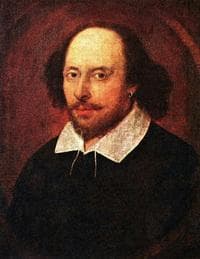
William Shakespeare was an English playwright, poet and actor. He is widely regarded as the greatest writer in the English language and the world's pre-eminent dramatist. He is often called England's national poet and the "Bard of Avon". His extant works, including collaborations, consist of some 39 plays, 154 sonnets, three long narrative poems, and a few other verses, some of uncertain authorship. His plays have been translated into every major living language and are performed more often than those of any other playwright. Shakespeare remains arguably the most influential writer in the English language, and his works continue to be studied and reinterpreted.